以色列将于10月27日举行大选,预计结果将非常接近,这意味着下一届政府将取决于在120席的议会(克内塞特)中谁能组建联盟。
Israel’s Oct 27 election is expected to be close, and the next government will likely depend on coalition talks in the 120-seat Knesset.
可能出现四种结果:联合政府、少数派政府、全国团结政府,或陷入僵局导致重新选举。
Four outcomes are possible: a coalition, a minority government, a national unity deal, or deadlock leading to new elections.
民调显示,内塔尼亚胡阵营和反对派阵营各自接近50至52席,而阿拉伯政党和新兴右翼政党可能决定最终结果。
Polls show Netanyahu’s bloc and the opposition are near 50 to 52 seats each, while Arab parties and new right-wing parties could decide the result.
AI生成 耶路撒冷 —— 以色列将于10月27日投票,预测结果将非常接近,这意味着下一届政府将由谁能在碎片化的政治版图中拼凑出一个联盟来决定。
AI generated Jerusalem – Israel goes to the polls on Oct 27 with results forecast to be close, meaning that the next government will be determined by whoever can cobble together a coalition in a fragmented political landscape.
以色列采用基于全国得票的比例代表制投票,任何单一政党都极不可能接近在120席议会(即克内塞特)中获得61席多数所需的门槛。以下是四种可能的情景:
Israel votes through proportional representation based on the nationwide vote and it is highly unlikely that any single party would come even close to the 61 seats needed for a majority in the 120-seat Parliament, or Knesset. Here are four possible scenarios:
- 联合政府选举结束后,各党派将立即开始谈判,试图达到61席的门槛。
- Coalition Immediately after the election, the parties will begin negotiations to try to reach the 61-seat threshold.
正式宣布结果后,总统伊萨克·赫尔佐格将与各党代表磋商,并指定一名有机会组建政府的候选人——不一定是席位最多的政党,而是被认为最有能力在议会中争取足够席位的政党。
After the official announcement of the results, President Isaac Herzog will consult with party representatives and name a candidate who has the chance to form a government – not necessarily the party with the most seats, but the one deemed best positioned to secure enough seats in Parliament.
谈判可能艰难漫长,各党坚持各自的局部利益,并可能产生不稳定的政府。
The negotiations can be arduous and lengthy, with parties insisting on parochial interests, and can produce unstable governments.
在2022年11月的上一次大选后,本雅明·内塔尼亚胡用了58天才组建政府。
Following the previous election in November 2022, it took Benjamin Netanyahu 58 days to form his government.
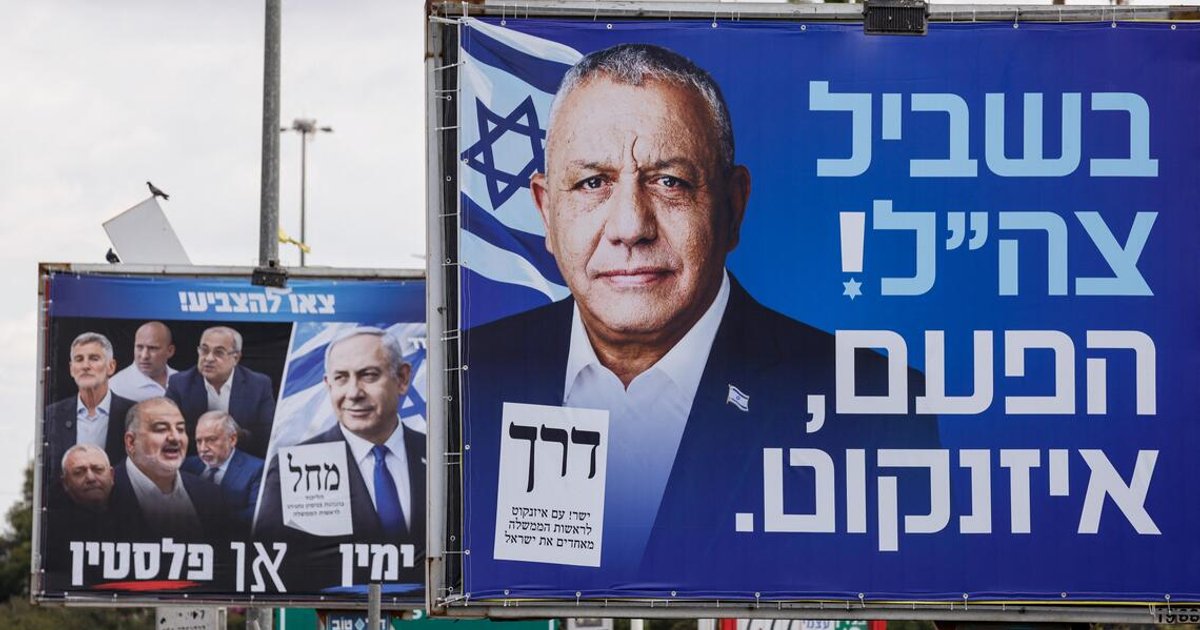
民调显示,内塔尼亚胡领导的右翼和极右翼联盟与反对派阵营势均力敌,后者最突出的人物是前军方总参谋长加迪·艾森科特,双方各自约有50至52席。
Polls show that Netanyahu’s right-wing and far-right coalition and the opposition bloc, whose most prominent figure is former military chief Gadi Eisenkot, are neck and neck, with approximately 50 to 52 seats each.
数周来,双方在民调中几乎持平,预示着双方都将面临一个数学难题,需要寻找组建联盟所需的10席左右。
The two sides have been nearly even in polls for weeks, foreshadowing a mathematical puzzle that both sides will have to solve to find the 10 or so seats needed for a coalition.
以色列政治史充满了曲折变数,叛党和其他意想不到的联盟转移屡见不鲜。
Israeli political history is full of twists and turns, with defections and other unexpected shifts in alliances.
以色列还有两个新的右翼政党,被认为有望跨过进入议会的门槛,届时它们可能将决定性的支持投向两大阵营中的任何一方。
Israel also has two new right-wing parties that are seen as scratching the threshold of entering Parliament, where they could throw their decisive support to one of the two blocs.
- 少数派政府如果没有任何阵营能拿下61个席位,某位候选人可能会尝试在没有多数席位的情况下执政,而是依靠其他议员临时性的支持。
- Minority government If no bloc manages to secure 61 seats, a candidate could attempt to govern without a majority but rather through support on an ad hoc basis by other lawmakers.
在这种情况下,以色列阿拉伯少数群体的议员——他们占人口的20%,通常认同巴勒斯坦人身份——可能发挥关键作用。民调显示,两个阿拉伯裔以色列政党名单“联合名单”和“拉姆党”总共可能赢得12至14个席位。
In this scenario, lawmakers from Israel’s Arab minority – who make up 20% of the population and generally identify as Palestinians – could play a critical role. Polls show that two Arab-Israeli lists, the Joint List and Raam, could win 12 to 14 seats in total.
由曼苏尔·阿巴斯领导的拉姆党过去曾是“造王者”,已表示愿意与艾森科特阵营合作;联合名单则提出,愿为任何能将内塔尼亚胡赶下台的联盟提供“安全网”。
Raam, led by Mansour Abbas, a kingmaker in the past, has stated its willingness to work with Eisenkot’s bloc, and the Joint List has offered to provide a “safety net” for any coalition that ousts Netanyahu from power.
但反对派阵营的领军人物不愿公开承认这种可能性,因为犹太选民中很大一部分对与以色列阿拉伯人结成任何形式的联盟都怀有敌意。
But the leading figures in the opposition bloc are reluctant to publicly acknowledge such a possibility, due to the hostility of a large segment of the Jewish electorate towards any form of alliance with Israeli Arabs.
这并未阻止内塔尼亚胡将竞选重点放在艾森科特可能与阿拉伯政党合作这一可能性上,其竞选口号为:“要么是右翼,要么是巴勒斯坦。”
This has not prevented Netanyahu from focusing his campaign on the possibility of Eisenkot working with Arab parties, campaigning on the slogan, “Either the right wing or Palestine.”
- 民族团结政府考虑到以色列极端的两极分化,民族团结政府似乎不切实际,但理论上可能组建一个不那么极端的政府。
- National unity government Considering Israel’s extreme polarisation, a national unity government would appear fanciful, but it could theoretically create a less extreme government.
以色列评论员常畅想一种民族团结政府的可能性:内塔尼亚胡抛弃其挑衅性的极右翼盟友以及极端正统派政党,转而与艾森科特联手——后者在许多安全问题上与内塔尼亚胡观点一致。这种大联合政府也将排除阿拉伯政党。
Israeli commentators have often mused on the possibility of a national unity government in which Netanyahu would jettison his provocative far-right allies as well as ultra-Orthodox parties and team up with Eisenkot, who shares Netanyahu’s views on many security issues. The grand coalition would also exclude Arab parties.
10月16日发布的一项民调显示,如果选举未能产生明确多数,55%的以色列人倾向于组建全国团结政府,而非举行新一轮选举。
A poll published on Oct 16 found that 55% of Israelis would prefer a national unity government over new elections, if the vote did not produce a clear majority.
这种情形有近期先例。2020年,内塔尼亚胡和本尼·甘茨——后者与艾森科特一样是吸引中间选民的退役将军——在不到一年内经历三次选举后,达成了权力分享协议,规定轮流担任总理。
This scenario has a recent precedent. In 2020, Netanyahu and Benny Gantz, like Eisenkot a retired general appealing to the centre, reached a power-sharing agreement after three elections in less than a year, which stipulated a rotation of the prime ministership.
但这一伙伴关系在一年后破裂,触发了新的选举。据媒体报道,赫尔佐格正在幕后斡旋,试图在10月27日后出现僵局时,促成内塔尼亚胡和艾森科特再次尝试这种模式。
But the partnership fell apart after a year, triggering a new election. According to media reports, Herzog is working behind the scenes to bring Netanyahu and Eisenkot together to repeat the experiment should a deadlock occur after Oct 27.
然而,这一情形将面临双方的强烈反对,尤其是来自反对派阵营的反对,后者将此次选举视为针对内塔尼亚胡的公投,并质疑其人品。
However, the scenario would face strong opposition from both sides, particularly from the opposition bloc, which is treating the election as a referendum against Netanyahu and has questioned his character.
- 僵局与新选举如果没有候选人能够组建政府,以色列将不得不重返投票箱。
- Deadlock and new elections If no candidate manages to form a government, Israel will have to return to the polls.
由于政客们无法缔结持久的联盟,该国在2019年4月至2021年3月期间举行了四次选举。
The country held four elections between April 2019 and March 2021 due to the inability of politicians to forge a lasting coalition.
总统指定的候选人原则上有28天时间组建联盟,可申请14天延期,尽管还有其他程序性途径可防止立即宣布新选举。
The candidate designated by the president will, in principle, have 28 days to form a coalition, with a possible 14-day extension, although there are other procedural ways to prevent an immediate calling of new elections.