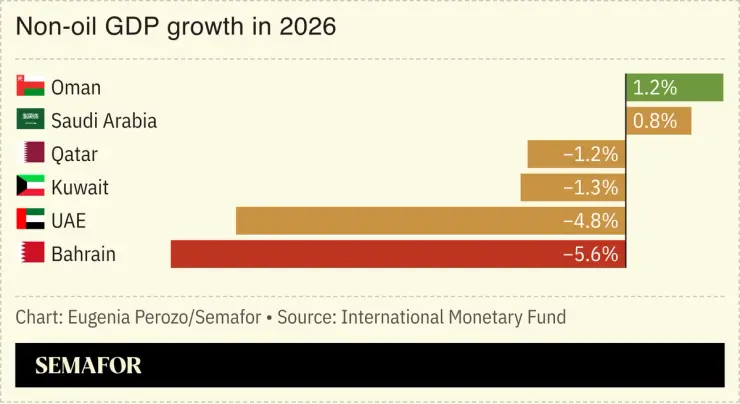
国际货币基金组织(IMF)预计,海湾经济体整体今年将收缩 4.8%,收缩幅度几乎与新冠疫情冲击相当,其中四个国家的非石油产出出现倒退。IMF 中东和中亚部主任吉哈德·阿祖尔在迪拜对记者表示:“这场冲突扰乱了能源生产、航运、旅游、贸易和信心。”
Gulf economies as a whole are expected to shrink 4.8% this year, almost matching the COVID-19 shock, with non-oil output receding in four countries. “This conflict has disrupted energy production, shipping, tourism, trade, and confidence,” Jihad Azour, director of the IMF’s Middle East and Central Asia Department, told reporters in Dubai.
非石油活动是该地区企业密切关注的关键指标,如果冲突得到解决,预计 2027 年将反弹至 4.5% 的增长。根据 IMF 数据,金融缓冲也在减弱,该地区经常账户盈余预计将从去年的 GDP 的 5% 缩窄至 1.3%,而合并财政赤字预计将从 0.8% 扩大至 2.3%。
Non-oil activity, a key metric watched by businesses in the region, is expected to rebound to 4.5% growth in 2027 if the conflict is resolved. Financial buffers are also weakening, with the region’s current-account surplus expected to narrow to 1.3% of GDP, from 5% last year, while the combined fiscal deficit is expected to widen to 2.3%, from 0.8%, according to the IMF.
阿曼是个例外,因在战争前实施了经济改革,且相对未受冲击影响。受创最重的是巴林,这个最小的海湾石油出口国长期依赖邻国支撑其经济。据《中东彭博》报道,随着债务水平现已超过 GDP 的 150%,外汇储备自 3 月以来下降 50%,该国据报正在就由阿联酋牵头的现金注资进行谈判。
Oman is the outlier, having implemented economic reforms before the war and remaining relatively unscathed by the conflict. Worst-hit has been Bahrain, the smallest Gulf oil exporter, which has long relied on its neighbors to prop up its economy. With debt levels now at more than 150% of GDP and foreign reserves down 50% since March, the kingdom is reportedly in talks for a cash infusion led by the UAE, according to Asharq Bloomberg.