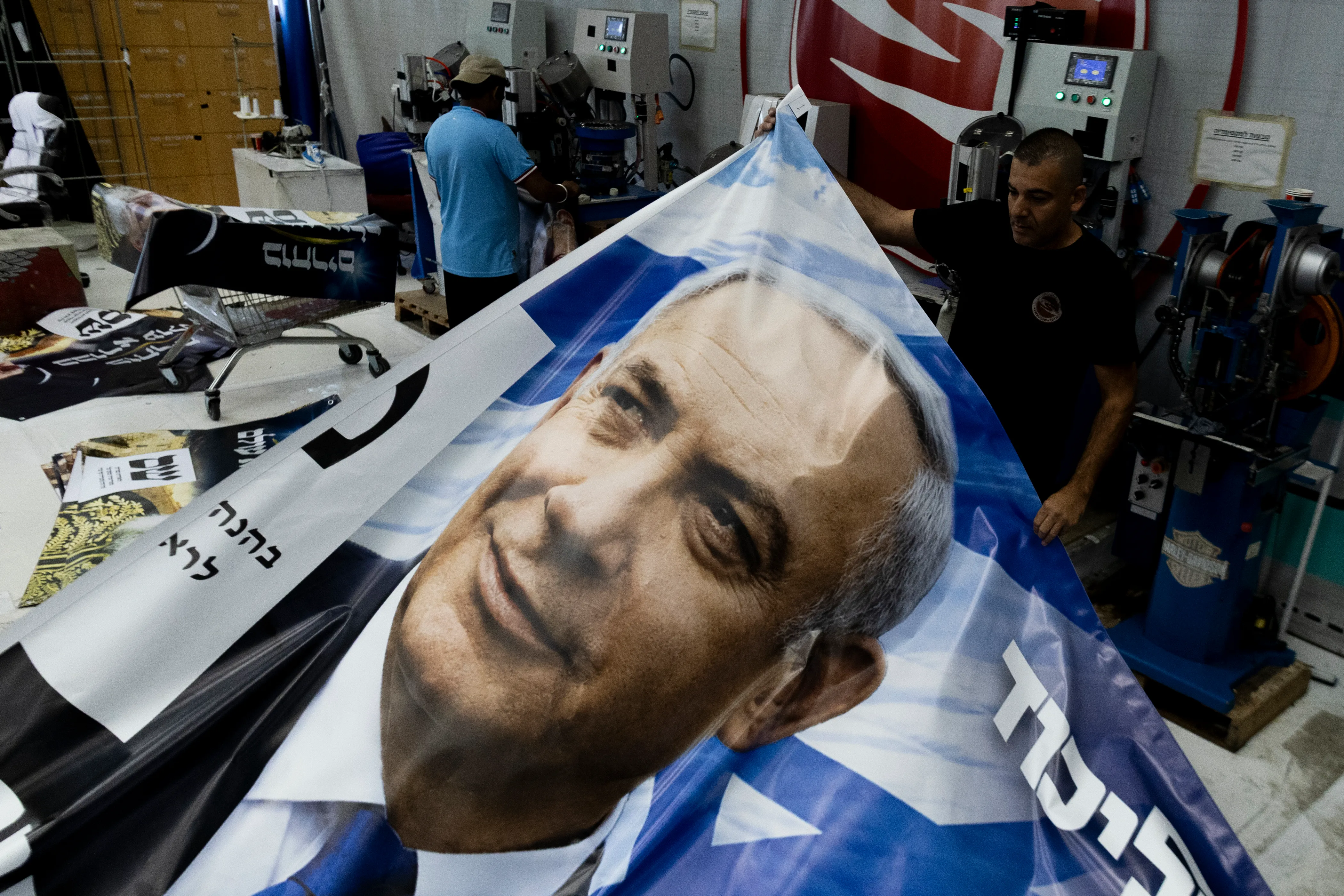
民调显示,以色列总理本雅明·内塔尼亚胡领导的阵营与由前参谋长加迪·艾森科特领导的反对派阵营,在周二大选前势均力敌。
Polls show the blocs linked to Israeli Prime Minister Benjamin Netanyahu and the opposition, led by former Chief of Staff Gadi Eisenkot, are locked in a virtual tie before Tuesday’s general election.
动员支持者、争取选民、攻击对手的努力正通过一系列社交媒体帖文和经过篡改的AI视频在网上展开。许多内容描绘了如果对手获胜,以色列将面临的惨淡前景,具体愿景取决于该党派处于右翼还是中间派。
Efforts to mobilise supporters, win voters and attack opponents are being played out online through a series of social media s and doctored AI videos. Many of these paint a bleak vision, the outcome depending on whether the party is on the right or centre, of Israel if their rivals win.
周四,以色列自由派日报《国土报》报道,数十个原本旨在破坏伊朗政府的网络机器人账号,正被改作他用,传播支持内塔尼亚胡及其利库德集团的竞选宣传,并警告选民艾森科特和前总理纳夫塔利·贝内特构成的危险,二人属于反对派阵营。
On Thursday, the Israeli liberal daily Haaretz reported that dozens of online bots created to undermine the Iranian government were being repurposed to spread campaign propaganda supporting Netanyahu and his Likud party, and warn voters of the dangers posed by Eisenkot and former Prime Minister Naftali Bennett, who make up part of the opposition bloc.
双方阵营都在X平台上推送AI生成和深度伪造视频。其中一些视频显示内塔尼亚胡面对其在2023年10月7日哈马斯发动袭击前的所谓失职;另一些则显示反对派同情阿拉伯政党(代表以色列巴勒斯坦公民的政党),这些政党被许多人视为即将到来的大选中的“关键少数”。
Both camps are pushing AI-generated and deepfake videos on X. Several of them show Netanyahu confronting his alleged failings before the Hamas-led attack of October 7, 2023; others show the opposition being sympathetic to Arab parties (those representing the Palestinian citizens of Israel) which have been perceived by many as kingmakers in the coming election.
“我们面对的对手拥有大得多的预算和技术资源,特别是利库德集团,”阿拉伯主导的联合名单希伯来语竞选活动总监毛里西奥·拉普奇克说。“技术的使用显然正在加剧本已不公平的竞争环境……我们可能没有同样的资源,但我们坚信,我们的信息比其背后的人造技术更重要。” 以色列右翼已投入大量资源对抗左翼的联合名单——哈达什、巴拉德和塔阿尔的联盟——以及拉阿姆,即统一阿拉伯名单。以色列巴勒斯坦公民通常支持这两个阵营之一,所有政党在议会选举前都面临法律挑战。
“We’re competing against parties with far greater budgets and technological resources, particularly the Likud,” Mauricio Lapchik, director of the Arab-dominated Joint List Hebrew-language campaign, said. “The use of technology is clearly deepening an already unequal playing field … We may not have the same resources, but we are convinced that our message matters more than the artificial technology behind it.”Significant resources have been used by the Israeli right against the left-wing Joint List – an alliance of Hadash, Balad and Ta’al – and Ra’am, also known as the United Arab List. Palestinian citizens of Israel generally support one of these two blocs, and all the parties have faced legal challenges before the parliamentary election.
利库德集团原本打算使用“Elector”应用程序,该程序可在选举日追踪选民投票率,但因隐私顾虑受到中央选举委员会限制。他们将改用一款名为“Victory 26”的新应用程序。与“Elector”不同,该程序不会泄露选民身份,但可让利库德集团的活动人士和官员判断哪些地区投票率最低,手动记录已投票人员名单,进而针对尚未投票者进行动员。
Likud were looking to use Elector, an app that tracks voter turnout on election day, but were restricted by the Central Elections Committee due to privacy concerns. They will instead use a new app named Victory 26 Unlike Elector, this does not reveal the identities of voters but would allow Likud activists and officials to determine which areas have the lowest turnout, manually take the names of people who have cast their votes, and then target those who have not yet.
据《国土报》报道,利库德集团正鼓励支持者和潜在同情者在选举日下载并使用该应用程序。
Likud is encouraging supporters and potential sympathisers to download and use the app on election day, according to Haaretz.
这款应用程序可能在选举中发挥关键作用,而选举结果很可能取决于投票率。
This app could play a crucial role in the election, which will likely be determined by voter turnout.
“与以色列军方目前的能力相比,‘Elector’及类似程序非常基础,”研究算法、可计算性和人工智能的博士研究员塞巴斯蒂安·本·丹尼尔表示。“以色列拥有开发此类技术的完美实验室。”隐私问题对以色列的巴勒斯坦公民尤为令人担忧,他们约占人口的20%,其政治活动已受到严密监控。
“Elector and similar programmes are very basic compared to what the Israeli military is capable of now,” Sebastian Ben Daniel, a doctoral researcher into algorithms, computability, and AI, said. “Israel has the perfect laboratory with which to develop this kind of technology.”Privacy issues are a particular concern for the Palestinian citizens of Israel, who make up about 20 percent of the population and whose political activity is already heavily monitored.
近几周,财政部长贝扎莱尔·斯莫特里奇发布的一段AI视频引发轩然大波,视频显示最高法院院长、一名大法官和总检察长——这三人均是极右翼政府的常攻击目标,他们一直试图摆脱司法监督——在反政府抗议中被暴力拖拽。
In recent weeks, Finance Minister Belazel Smotrich caused uproar when he released an AI video showing the Supreme Court’s president, a justice and the attorney general – all frequent targets of the far-right government who have sought to shake off judicial oversight – being violently dragged from an antigovernment protest.

内塔尼亚胡今年早些时候分享的另一段AI视频中,他的主要政治对手艾森科特被看到奔向一个AI人物,许多人认为该人物酷似他的儿子加尔,后者在参与加沙种族灭绝行动中丧生;艾森科特随即越过该人物,拥抱阿拉伯统一党(Ra'am)领导人曼苏尔·阿巴斯。
In another AI video shared by Netanyahu earlier this year, his key political rival Eisenkot is seen running towards an AI figure who many believe resembled his son, Gal, who was killed while taking part in the genocide on Gaza, before passing him entirely and embracing the head of the Arab Ra’am party, Mansour Abbas.
内塔尼亚胡阵营随后表示,他们并无意让该人物影射艾森科特的儿子——后者身穿印有希伯来语“以色列团结”字样的T恤——并将该男性角色替换为女性角色。
Netanyahu’s camp later said they did not intend the figure to mirror Eisenkot’s son, who wears a T-shirt saying “Israel’s Unity” in Hebrew, and replaced the male character with a female one.
人工智能也被大量用于妖魔化以色列的巴勒斯坦公民。极右翼国家安全部长伊塔马尔·本-格维尔分享的一段视频将加沙人描绘成驴子,并将他们“赶往”巴黎。本-格维尔主张通过“自愿移民”实现加沙的“种族清洗”,并经常在政治表演中针对巴勒斯坦人,例如羞辱以色列监狱中的被拘留者和囚犯。
There has also been heavy use of AI to demonise Palestinian citizens of Israel, with a video shared by far-right National Security Minister Itamar Ben-Gvir portraying the people of Gaza as donkeys, and “herding” them to Paris. Ben-Gvir has called for the ethnic cleansing of Gaza via “voluntary emigration” and frequently targets Palestinians in his political stunts, such as humiliating detainees and prisoners in Israeli jails.
据多方报道,内塔尼亚胡和本-格维尔的竞选团队还大量使用机器人账号来放大其政治信息。
There has also been a heavy use of bots by Netanyahu and Ben-Gvir’s campaign to amplify their political messaging, according to numerous accounts.
埃塞克斯大学讲师、投票行为与选举策略专家罗伊·祖尔对半岛电视台表示:“网络竞选活动异常暴力。人工智能、算法和数据管理均被用于巩固我们所谓的‘情感极化’。”政治学家用这一术语指代政治阵营的巩固以及对对立阵营敌意的加剧。
“The online campaign has been especially violent. AI, algorithms and data management are all utilised to cement what we call ‘affective polarisation’,” Roi Zur a lecturer at Essex University and specialist in voting behaviour and election strategies, told Al Jazeera. This term is used by political scientists to refer to the entrenchment of political blocs and an increased animosity towards the opposing side.
“情感极化针对的是边缘选民,他们可能考虑投票给对立阵营的政党,目的是将他们拉回原阵营。”由于这次选举的结果很可能取决于小党的表现和总体投票率,这一点尤为关键。
“Affective polarisation targets people at the fringe, who might be thinking of voting for a party in an opposing bloc, and bring them back into the fold.”As this election will likely be determined by the success of the smaller parties and voter turnout in general, this is a pertinent point.
“投票率和政党动员能力将至关重要。如果你看特拉维夫或海法等大型世俗城市,投票率通常只有60%左右,”他说。“相比之下,耶路撒冷和内盖夫等哈雷迪(极端正统派)人口众多的城市和城镇,投票率约为80%至85%,因此竞选活动的很大一部分也是通过以‘他者’相威胁,来动员民众走出家门投票。”
“Turnout and management of the parties will be essential. If you look at large secular cities, such as Tel Aviv or Haifa, turnout is typically only 60 percent,” he said. “If you compare that to cities and towns with a large Haredi (ultra -Orthodox) population, such as Jerusalem and Bnei Brak, the turnout is around 80 to 85 percent, so a large part of the campaigning is also to get people out to vote by threatening them with the ‘other’.”