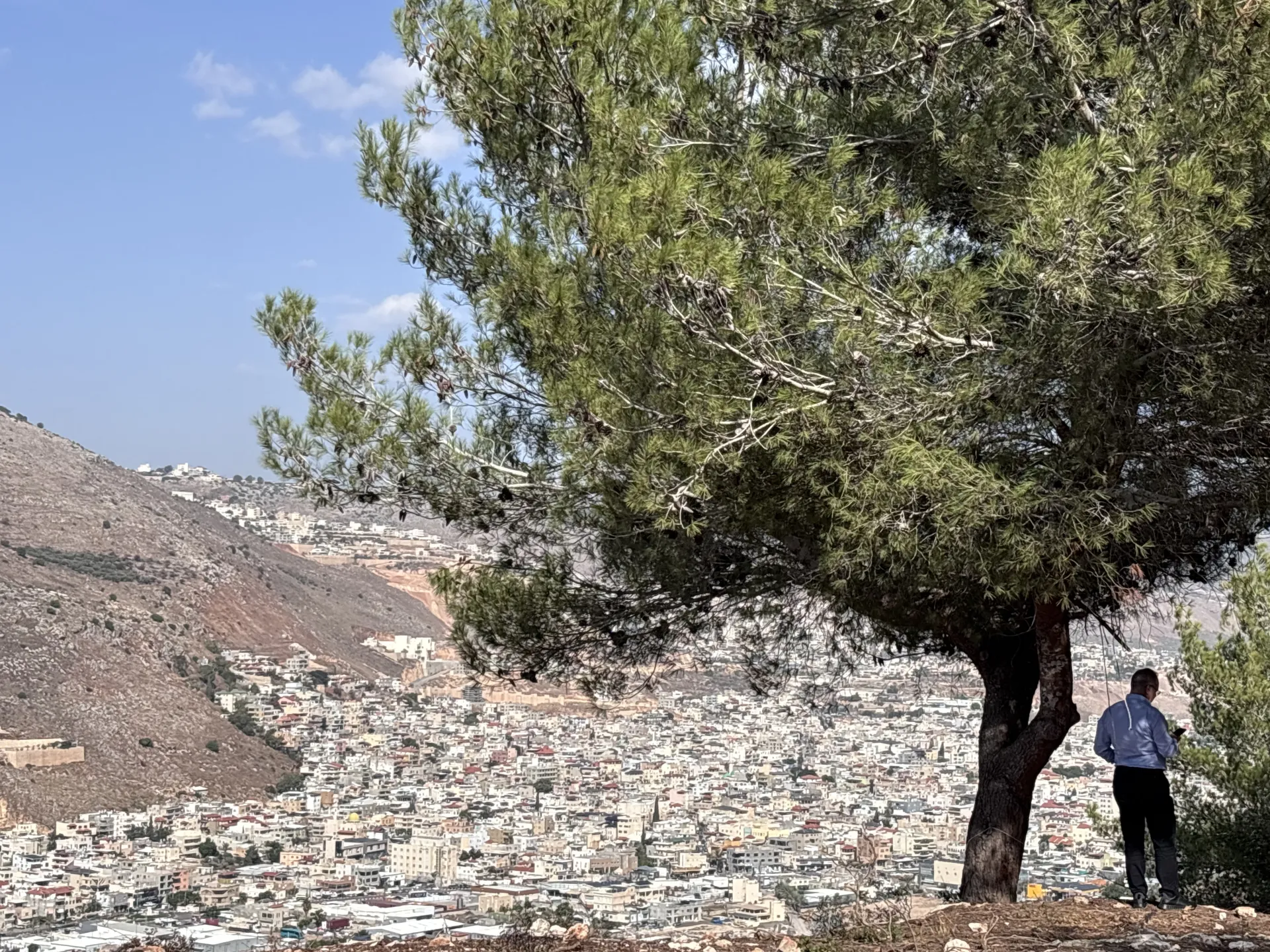
警方封锁了通往鲁斯的道路,因此村民们寻找了其他上山的路径。从9月13日开始,以色列的巴勒斯坦公民徒步、骑马或驾驶越野车艰难攀登马季德·库鲁姆上方覆盖着松树的山顶。几周前,来自被占领约旦河西岸的定居者开始在那里建立前哨,地点位于村庄土地上——这是在绿线这一侧首次出现此类尝试,绿线是以色列与被占领约旦河西岸之间边界的称呼。
The police closed the road to al-Rus, so the villagers found other ways up there. Beginning on September 13, local Palestinian citizens of Israel made the steep climb to the pine-covered hilltop above Majd al-Krum using horses, off-road vehicles and on foot. A couple of weeks earlier, settlers from the occupied West Bank had begun building an outpost there, on village land – one of the first such attempts on this side of the Green Line, the name used for the boundary between Israel and the occupied West Bank.
年轻的以色列定居者称,他们持有犹太国家基金会(JNF)的许可,前来放牧牲畜。但律师、城镇民众委员会成员侯赛因·曼纳(Hussein Mannaa,50岁)指出,现场并没有牲畜。据村民称,一周内,营地从寥寥几人扩大到25至30人,并设有厨房、厕所、供水管线和电力。
The young Israeli settlers said they were there to graze livestock with a Jewish National Fund (JNF) permit. But there was no livestock, noted Hussein Mannaa, 50, a lawyer and member of the town’s Popular Committee. Within a week, the camp had grown from a handful of people to between 25 and 30, according to villagers, with a kitchen, a toilet, a water line and electricity.
村民们蜂拥赶往现场,警方便封锁了通往该地点的道路。尽管如此,当地巴勒斯坦人仍成群结队地前来。
Villagers rushed to the scene, so police closed the road to the site. Yet local Palestinians came in droves nonetheless.
21岁的法学院学生、青年组织者阿纳斯·斯盖尔(Anas Sgaier)进行了近一小时的攀登。“我记得有个瞬间:我正在往上爬,已经喘不上气了,”他说,“在我右边,我看见一位80多岁的老妇人,和她丈夫一起……走了50分钟,只为表明她的存在。”在近一周的和平抗议中,来自马季德·库鲁姆及周边地区的数百名巴勒斯坦人每天都前来抗议,最终犹太国家基金会下令拆除定居者的帐篷。到9月16日,现场已被清空。村庄暂时赢了。
Anas Sgaier, a 21-year-old law student and youth organiser, made the nearly hour-long climb up the mountain. “I remember one moment: I’m going up and it’s hard for me to breathe,” he said. “And to my right, I saw an older woman, in her 80s, with her husband … walking up 50 minutes, just to show her presence.”After almost a week of peaceful protests that saw hundreds of Palestinians from Majd al-Krum and across the region come every day, the JNF ordered the settler tents removed. By September 16, the site was cleared out. The village had won, for now.
以色列巴勒斯坦公民在鲁斯聚集,抗议在该地区建立犹太人定居点的企图 [Basil Sgaier 供图]一场“试点”实验一个多月后,以色列人将于周二前往投票站,巴勒斯坦村民担心鲁斯事件只是未来可能发生之事的前奏。财政部长贝扎莱尔·斯莫特里奇竞选承诺要将加利利地区“犹太化”,该地区以色列巴勒斯坦公民占人口很大比例,并表示将在那里重演“我们在约旦河西岸实施的那场革命”。
“鲁斯实验就像是一个试点……实验:‘来吧,让我们看看反应如何’,”50岁的经济顾问侯赛因·哈利利坐在马季德·库鲁姆的家中说道。
Palestinian citizens of Israel gather on al-Rus during protests against attempts to establish Jewish settlements in the area [Courtesy of Basil Sgaier] A ‘pilot’ experiment A little more than a month later, Israelis head to the polls on Tuesday, and Palestinian villagers fear al-Rus was a prelude to what may come next. Finance Minister Bezalel Smotrich is campaigning on a promise to “Judaise” the Galilee, where Palestinian citizens of Israel make up a large proportion of the population, and says he will repeat there “the revolution we carried out“The al-Rus experiment is like a pilot … experiment: ‘come on, let’s see the reaction’,” said Husein Khalaily, 50, an economic consultant, while sitting at his home in Majd al-Krum.
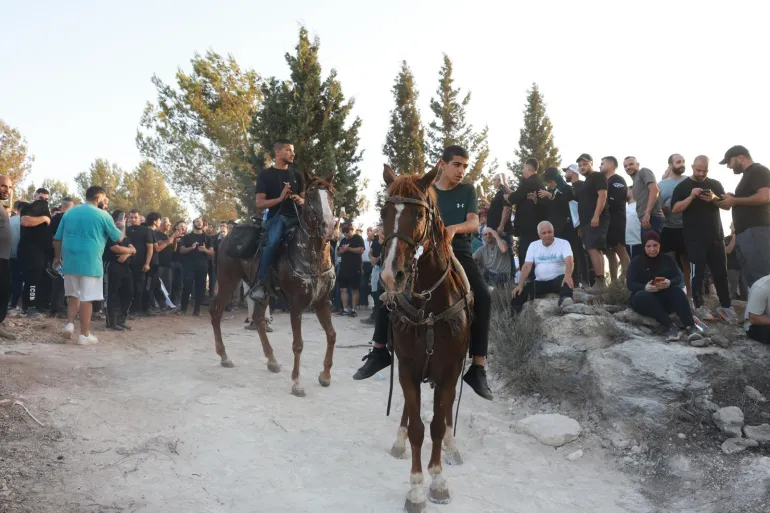
反应迅速:一旦定居者前哨传闻得到证实,村民委员会随即召开会议,并与地方委员会一起发起每日示威。“民众斗争与法律途径并行才取得了成果,”曼纳在为期一周的现场示威活动中是中坚力量,他说道。
Reaction was swift: the village’s Popular Committee met as soon as the rumours of the settler outpost were confirmed and, with the local council, called daily demonstrations. “The popular struggle alongside the legal track is what bore fruit,” said Mannaa, a mainstay at the weeklong demonstrations at the site.
村民们表示,是年轻人推动了抗议活动。“带上咖啡来,”斯加耶在Instagram帖子中与表弟一起招呼道。“我们只是上去喝咖啡,因为那是我们的土地。”“不仅是马季德·库鲁姆的人:代尔阿萨德、比内、萨赫宁、阿拉贝……内盖夫地区的人也来了,”曼纳回忆道。一些住在附近犹太社区的左翼居民也现身了。“存在着难以置信的团结,”哈利利说。
It was young people who drove the protests, villagers said. “Bring your coffee and come,” beckoned Sgaier in Instagram posts alongside his cousin. “We’re only going up to drink coffee, because that’s our land.”“Not only the people of Majd al-Krum: Deir al-Asad, al-Bi’na, Sakhnin, Arrabeh … from the Naqab they came,” recalled Mannaa. Some left-leaning residents of nearby Jewish communities also turned up. “There was this incredible solidarity,” said Khalaily.
来自附近村庄的巴勒斯坦基督徒哈南表示,她在被占领的约旦河西岸读到的前哨基地曾感觉很遥远——直到马季德·库鲁姆。“我从未见过阿拉伯社区如此团结,真正为他们的土地而战,”她说。
Hanan, a Palestinian Christian from a nearby village, said the outposts she read about in the occupied West Bank had felt far away – until Majd al-Krum. “I never saw the Arab community so united and really fighting for their lands,” she said.
斯莫特里奇带着警察部队和一辆水炮车来到马季德·库鲁姆,这个村庄长期以来以政治活跃著称,意在竞选造势。“年轻人血气方刚,想出去跟他对质,”哈利利说,“但当地委员会和政党劝阻了他们。”
Smotrich came to Majd al-Krum, a village long known for its political activism, to campaign with a police force and a water cannon. “The young people were hot-blooded and wanted to go out and confront him,” Khalaily said, but the local committees and political parties talked them down.
但针对性打压持续不断。9月18日,警方宣布逮捕一名32岁的马季德·库鲁姆居民,指控其涉嫌与一名黎巴嫩特工有过接触。斯莫特里奇抓住此事大做文章,声称加利利地区的居民处于“10月6日的氛围”之中,意指2023年10月7日针对以色列的袭击。
But the targeting continued. On September 18, police announced the arrest of a 32-year-old Majd al-Krum resident over alleged contact with a Lebanese agent. Smotrich seized on it, saying Galilee residents were “in the atmosphere of October 6”, a reference to the October 7, 2023 attack on Israel.
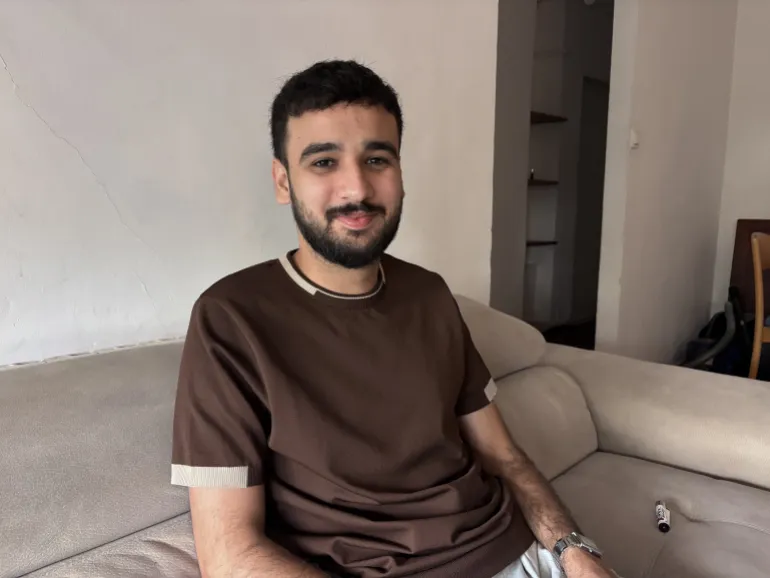
来自马季德·库鲁姆的法学院学生阿纳斯·斯盖尔 [半岛电视台]“言辞清晰明了” 8月27日,斯莫特里奇发布了一项计划,承诺在加利利和内盖夫地区(以色列另一处巴勒斯坦裔居民众多的地区)再增加100万犹太人和40个新的犹太社区。随后,他的政党发布了一段AI生成的视频,画面中一名约旦河西岸的巴勒斯坦人惊慌失措地警告加利利的亲戚:“犹太人来了”,要“对你们做他们对我们做过的事”。
Anas Sgaier, a law student from Majd al-Krum [Al Jazeera]‘The language is clear’ On August 27, Smotrich posted a plan promising one million more Jews and 40 new Jewish communities in the Galilee and al-Naqab, another area of Israel where many of the residents are Palestinian. His party then released an AI-generated video in which a West Bank Palestinian frantically warns a relative in the Galilee that “the Jews are coming” to “do to you what they did to us”.
斯盖尔说,他和朋友们起初嘲笑这段视频的荒诞。随后,他们在鲁斯目睹了视频内容变成现实。
Sgaier said he and his friends laughed at the absurdity of the video. Then they watched it come to life at al-Rus.
“他来到这里,说得很清楚:‘我想要犹太化加利利,’”哈利利说。“过去,他们常说,‘我们要发展加利利。’如今——语言很明确。”
“He came here and said it clearly: ‘I want to Judaise the Galilee,’” said Khalaily. “Back in the day, they used to say, ‘we want to develop the Galilee.’ Today – the language is clear.”
村民认为,最近的挑衅旨在为实现这一目标制造借口,而巴勒斯坦公民拥有的权利是处于军事占领下的约旦河西岸巴勒斯坦人所不具备的,这使得剥夺他们的财产成为一个更难实现的主张。“建立前哨基地,他们想把民众引向对抗,”曼纳说。“他们想制造一种混乱状态,因为混乱对他们有利。”定居者指出,准政府机构犹太国家基金(JNF)在鲁斯的土地上发放了放牧许可。
Villagers believe the recent provocations are intended to create a pretext for making that happen, where Palestinian citizens hold rights that Palestinians under military occupation in the West Bank do not, making dispossession a harder proposition. “Building the outposts, they wanted to lead the people into a confrontation,” said Mannaa. “They want to impose a state of chaos because chaos benefits them.”The settlers pointed to a grazing permit granted on the land of al-Rus from the quasi-governmental JNF.
但据哈利利称,这块约8.4杜纳姆(约合两英亩)的地块,一半由他表弟私人所有,另一半由以色列土地管理局管理,后者长期拒绝对其进行分割,以便所有者能分辨哪部分是自己的。
But according to Khalaily, the plot, about 8.4 dunams (roughly two acres), is half privately owned by his cousin, and half administered by the Israel Land Authority, which has long refused to partition it so the owner can tell which part is his.
“他们选择马杰德·库鲁姆,是因为这里难以攻破,”曼纳说,并指向该村自1948年“大灾难”以来的抗争历史,当时许多村民被驱逐出家园。“如果他们攻破了马杰德·库鲁姆,”来自该村的27岁歌手哈立德·库万说,“[这事]将在整个加利利发生。”
“They chose Majd al-Krum because it’s hard to break,” said Mannaa, pointing to the village’s history of defiance since the Nakba in 1948, when many villagers were expelled from their homes. “If they break Majd al-Krum,” said Khaled Kewan, 27, a singer from the village, “[it’s] going to happen all over the Galilee”.
犹太国家基金随后表示,“放牧”计划将转移到约500米外的另一块地块,村民认为那是他们的土地。但曼纳说,村庄拒绝任何形式的搬迁,“哪怕只有一顶帐篷”。
The JNF later said the “grazing” initiative would move to another plot about 500 metres away on land villagers consider theirs. But the village rejects any relocation, “even one tent”, Mannaa said.
半岛电视台已联系犹太国家基金、以色列警方和以色列财政部置评,但截至发稿尚未收到回复。
Al Jazeera has reached out to the JNF, the Israeli police and the Israeli Finance Ministry for comment, but has yet to receive a response.
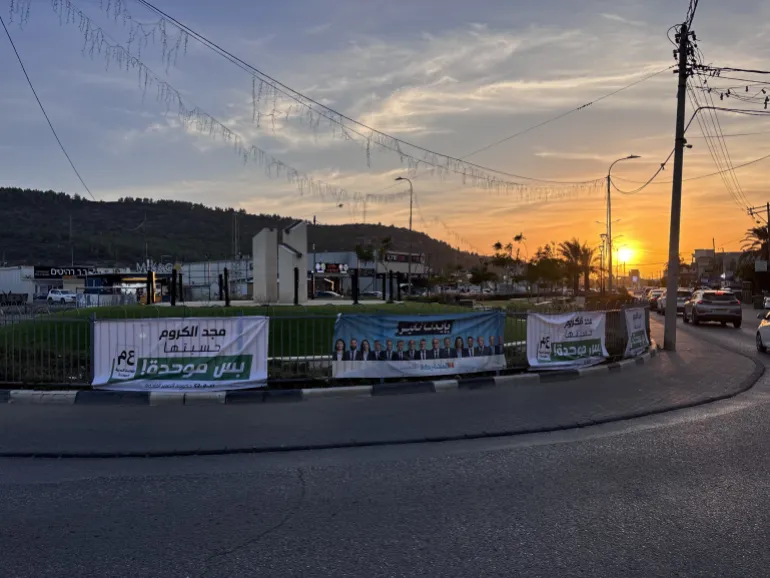
马杰德·库鲁姆的竞选海报 [半岛电视台] “目标不只是马杰德·库鲁姆” 斯莫特里奇能否继续掌权,取决于周二的选举结果——巴勒斯坦选民的表现届时可能举足轻重。民调显示,如果没有阿拉伯政党的支持,主要的两个犹太复国主义阵营均无法达到61个议席。
Election campaign posters in Majd al-Krum [Al Jazeera]‘Coming not just for Majd al-Krum’ Whether Smotrich remains in power depends on the election results on Tuesday – where the Palestinian vote will likely figure prominently. Polls suggest neither of the main Zionist blocs can reach 61 seats without support from the Arab parties.
以色列巴勒斯坦公民的投票率近年来在45%至65%之间徘徊。然而,组织者认为,这一群体的投票率可能达到70%至75%,这是自1999年以来未见的水平。
Turnout by Palestinian citizens of Israel has hovered between 45 and 65 percent in recent years. However, organisers believe the demographic’s turnout may hit 70 to 75 percent, a level last seen in 1999.
在定居者在马季德·库鲁姆的企图和挑衅之后,曼纳大胆预测该镇“将超过80%”。
After the settlers’ attempts and provocations in Majd al-Krum, Mannaa boldly predicted the town “will go past 80 percent”.
长期抵制选举、一生中仅投过一次票的哈利利,现在在每次演讲中都呼吁人们出来投票。“现在掌权的这些著名种族主义者必须被清除,哪怕只是暂时的,”他说。他认为内塔尼亚胡政府及其可能的继任者几乎没有区别,“只不过斯莫特里奇和[极右翼国家安全部长伊塔马尔·]本-格维尔不会在其中罢了”。
Khalaily, a longtime boycotter who has only ever voted once, now urges turnout at every talk he gives. “These prominent racists who are there now have to be removed, even if just for a stage,” he said. He sees little difference between Netanyahu’s government and its likely replacement, “except that Smotrich and [far-right National Security Minister Itamar] Ben-Gvir won’t be in it”.
10月7日之后,恐惧让巴勒斯坦公民远离了示威。“人们忙于其他事情,”哈利莱说。“忙于恐惧,忙于谋生。”该镇的犯罪情况雪上加霜。“我晚上坐在这里,听到枪声,”哈利莱说,他的孩子们目睹了三人被杀。“什么都不动了。这已经变得正常了。”
After October 7, fear kept Palestinian citizens away from demonstrating. “People got busy with other things,” said Khalaily. “Busy with fear, with making a living.”Crime in the town made it worse. “I’ll be sitting here at night and I hear the sound of shooting,” said Khalaily, who has children who witnessed three men murdered. “Nothing moves. It’s become normal.”
巴勒斯坦公民拥有比西岸居民更多的权利,这让他们夹在一个他们反对但必须生活其中的体系中。“我们这里损失最大,”他说,“因为我们定居在自己的土地上,并且留在了那里。”
Palestinian citizens have more rights than those in the West Bank, leaving them caught between a system they oppose but must live in. “We here have the most to lose,” he said, “because we’re settled on our land and we stayed on it.”
因此,近年来许多人保持沉默。“我们不管加沙,不管西岸,不管黎巴嫩,”斯盖尔说。“我说过,之后轮到我们了。”“我只是没想到会来得这么早。”
As a result, many stayed quiet in recent years. “We left Gaza alone, left the West Bank alone, left Lebanon alone,” said Sgaier. “I said after that our time is coming.”“I just didn’t expect it to come this early.”
然而,在斯莫特里奇的言论和定居者的当地入侵之后,“那些对选举漠不关心、不想参与或投票的人:这件事激怒了他们,”曼纳说。“他们很清楚,如果这个政府重新执政,我们将面临什么。”
However, after Smotrich’s rhetoric and the settlers’ local incursions, “the people who were indifferent about the elections, who didn’t want to take part or vote: the matter provoked them,” said Mannaa. “They know well what awaits us if this government returns to power.”
有些人,比如斯盖尔,仍将抵制。“在马杰德·阿尔-库鲁姆发生的事情,我们通过上街解决——而不是通过议会和法律,”斯盖尔说,他看不出两个犹太复国主义政治集团之间有什么区别。“他们不想让巴勒斯坦人待在这里。”斯盖尔认为,真正的变化发生在关键之处:街头。在阿尔-鲁斯的抗议活动中,他看到了意想不到的人。“他们不参与政治,”他说,“但他们也来了。”
Some, like Sgaier, will still boycott. “What happened in Majd al-Krum, we solve it by going out [to] the street – not through the Knesset [parliament] and the laws,” said Sgaier, who sees little difference between the two Zionist political blocs. “They don’t want Palestinians here.”Sgaier believes there was a real change where it counts: on the streets. During the protests at al-Rus, he saw people he never expected. “They are not politically engaged,” he said, “but they came, too”.
定居者的帐篷已经撤走,只留下零星残留物和希伯来语涂鸦,宣称“以色列民族永存”。尽管如此,村民们仍每天徒步登山。家人在那里烧烤,学童在那里画画和演奏音乐。
The settlers’ tents are gone, leaving only sparse remains and Hebrew graffiti proclaiming “the nation of Israel lives”. Nonetheless, villagers keep trekking up the mountain every day. Families barbecue there, and schoolchildren draw and play music.
在为期一周的抗议活动期间,哈立德·科万(Khaled Kewan)每晚都会离开阿尔-鲁斯(al‑Rus),前往录音室。他与镇上的其他音乐人一起创作了歌曲《Ibn Bladi》(我的子民),他在歌中唱道:“哦,我的土地,我祖先的土地!”。“不管他们在我的国家竖起多少墙……我是这片土地的儿子,是我自己国家的儿子。”灵感显而易见,但科万刻意没有明确点名马吉德·阿尔‑克鲁姆(Majd al‑Krum)。“海法是我的城,阿卡是我的城,萨克宁是我的城,阿拉巴是我的城……我爱整个祖国,”他说。
他说,定居者的“犹太化”行动“不仅针对马吉德·阿尔‑克鲁姆,也针对整个加利利”。
During the weeklong protests, Khaled Kewan would leave al-Rus in the evenings to go to a recording studio. He and fellow musicians from the town made the song “Ibn Bladi“Oh, land of mine, land of my ancestors!” he sings. “No matter how many walls they build across my country … I am a son of this land, a son of my own country.” The inspiration was clear, but Kewan deliberately chose not to name Majd al-Krum explicitly. “Haifa’s my town too, Akka’s my town too, Sakhnin’s my town too, Arraba’s my town too … I love the whole homeland,” he said. The settlers’ “Judaisation” efforts, he said, “are coming not just for Majd al-Krum, but for the whole Galilee.”