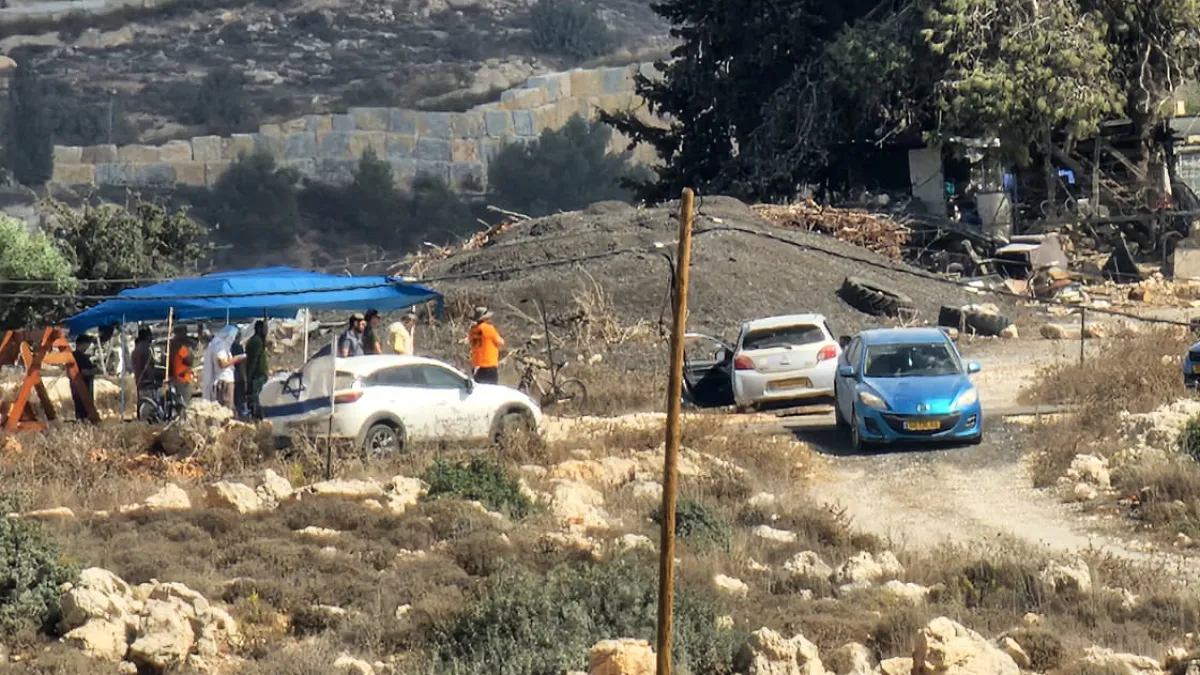
52岁的优素福·沙纳兰在自家房子旁打了一口井,如今却无法靠近。自10月5日起,以色列定居者日夜包围了他在瓦迪·拉希姆的家庭住宅,这里曾是南希伯伦山区石灰岩与荆棘丛中的一片宁静之地。他们无法自行外出,哪怕只是去井边打一点水。
Yousef Shanaran, 52, built a well beside his house, which he can no longer reach. Since October 5, Israeli settlers have besieged his family home in Wadi Rakhim around the clock, a once-quiet corner of the South Hebron Hills among limestone rocks and thorny brush. They are unable to go outside on their own, even to fetch a little water from the well.
以色列军方花了五天时间协调该家庭取水。在断水三天后,军方于周二允许他们从井里取回一些水。
It took five days for the army to coordinate the family’s access to the well. After running out of water three days earlier, the Israeli army on Tuesday allowed them to retrieve some from the well.
“食物,没有了,”沙纳兰通过电话告诉半岛电视台。他在2016年于巴勒斯坦城镇阿斯萨穆与苏西耶村之间的土地上建起了这座坚固的两层楼房,种植了约70株葡萄藤和30至40棵橄榄树。
“Food, there’s none,” Shanaran, who built the sturdy two-storey house in 2016 on land between the Palestinian town of as-Samu and the village of Susiya, planting about 70 grapevines and 30 to 40 olive trees, told Al Jazeera by phone. “My well, full of water; I built it and lost money on it,” he said.
“我的井里满是水;我打的井,亏了本钱,”他说。“他们不让我靠近,因为他们想赶我走出我的房子。”半年多前,定居者在距离沙纳兰住宅300米(约1000英尺)处搭起帐篷,限制该家庭行动,并使他们遭受袭击和恐吓。10月5日,帐篷被移至距他们家仅30米处。当天,约50名定居者用棍棒和胡椒喷雾袭击了该家庭。这标志着对沙纳兰住宅的全面围困开始。
“They keep me from it because they want to get me out of my house.”More than half a year ago, settlers pitched a tent 300 metres (about 1,000 feet) from the Shanaran residence, restricting the family’s movement and exposing them to attacks and intimidation. On October 5, the tent was moved just 30 metres from their home. That day, about 50 settlers attacked the family with sticks and pepper spray. This marked the beginning of the full siege on Shanaran’s home. Yousef Shanaran, whose home has been besieged by Israeli settlers [Al Jazeera] A siege the army ‘doesn’t recognise’
优素福·沙纳兰,其家围遭以色列定居者围困 [半岛电视台] 军方“不予承认”的围困长期担任“以色列人权信息中心”(B’Tselem)实地研究员、现任马萨费尔·亚塔苏西耶村委会主席的纳赛尔·纳瓦杰曾试图向沙纳兰一家运送物资,但大多数尝试均告失败。他对半岛电视台表示:“有一次我试图给这些人送援助,马上就遭到了定居者的袭击。我是说,他们在那里待着,一天24小时都在伺机袭击。”
Nasser Nawajeh, a longtime B’Tselem field researcher who now heads the Susiya village council in Masafer Yatta, has tried to deliver supplies to the Shanaran family during the siege, but most attempts have failed. “Once I tried to bring aid to the people, and right away there was an attack from the settlers,” he told Al Jazeera.
未经军方许可,任何东西都无法进出沙纳兰的家。“这是一种驱逐政策,”他说。“如果他们想送孩子去上学,我们得等军方来接送。如果你想送进食物或水,我们得进行协调。”自10月15日以来,他一直在请求军方协调向该家庭运送物资——却每天都得到借口:“‘军方很忙,过不来,没有兵力’——他们跟我们说‘明天、明天’,”他说。
“I mean they’re there 24 hours to attack.”Nothing can move in or out of Shanaran’s home without the army’s permission. “This is a displacement policy,” he said. “If they want to take the kids out to school, we have to wait for the army to take them. If you want to bring in food or water, we have to do coordination.”
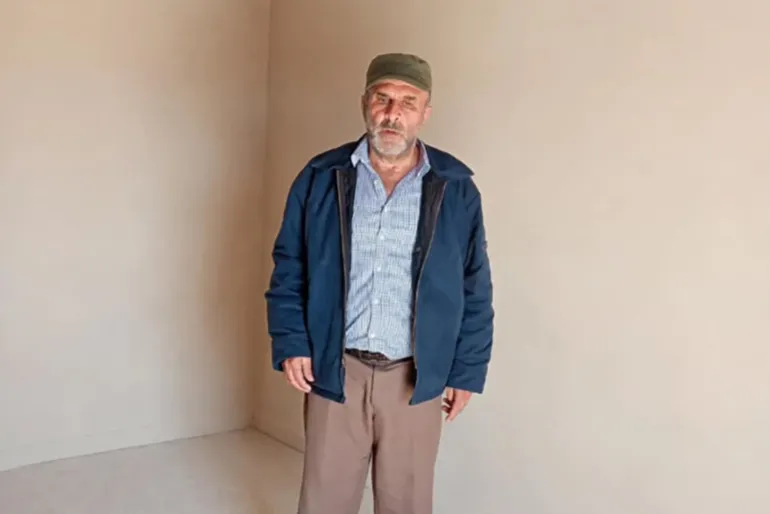
纳瓦杰表示,现在要应付的是两支“军队”:定居者的区域武装单位“Kitat Konenut”,希伯来语意为快速反应小队;以及正规军,“他们来了,拆除[定居者的帐篷]就走”。士兵一走,定居者就又把帐篷支起来。
Since October 15, he has kept asking the army for coordination to deliver supplies to the family — and given excuses each day: “‘The army’s busy, can’t come, there aren’t any forces’ — they tell us ‘tomorrow and tomorrow’,” he said. There are now two armies to contend with, Nawajeh said: the settlers’ regional units, the Kitat Konenut, meaning rapid response squads in Hebrew; and the regular army, which “comes, demolishes [the settlers’ tent] and leaves”.
沙纳兰说,驻守在他家外面的士兵什么都不做。“他们站着坐着,吃喝自在,就守在家门口,”他说。纳瓦杰表示,士兵的存在实质上等于给这场围困亮了绿灯。
When the soldiers leave, the settlers simply pitch up their tent again. Shanaran said the soldiers stationed outside his house do nothing. “They stand and sit, eating and drinking, relaxed, at the door of the house,” he said.
“有时士兵甚至不阻止定居者靠近;他们殴打民众,然后跟士兵一起坐在门口,”他说。由于该房屋位于B区——技术上处于以巴共同管辖之下——军方本可逮捕所有定居者,因为针对他们已有封锁令。“但这些法律根本得不到执行,”他补充道。
Nawajeh said the soldiers’ presence essentially amounts to a green light for the siege to continue. “Sometimes the soldiers don’t even stop the settlers coming close; they hit people and sit with the soldiers at the door,” he said. As the house is in Area B, an area technically under joint Israeli-Palestinian control, the army could arrest all the settlers as there is a closure order against them.
驻守在家门外的士兵认为,他们名义上的职责是保护这家人免遭殴打,而不是结束封锁。“实际上,巴勒斯坦人生活在里面的监狱里。这封锁基本上就是一座监狱,”他补充道。沙纳兰说,被困在家里的家人过着比坐牢更糟糕的生活。
“But there’s no enforcement of these laws,” he added. The soldiers posted outside the family home see their ostensible job as shielding the family from a beating, not ending the blockade. “In practice, the Palestinians are living in a prison inside. The siege is basically a prison,” he added.
“刑期总有结束的时候。可在这里,你坐在自己的房子里,他们却把你锁在里面——而且你还得提心吊胆,”他说。
Shanaran said his family, trapped in their home, is living a life worse than prison.
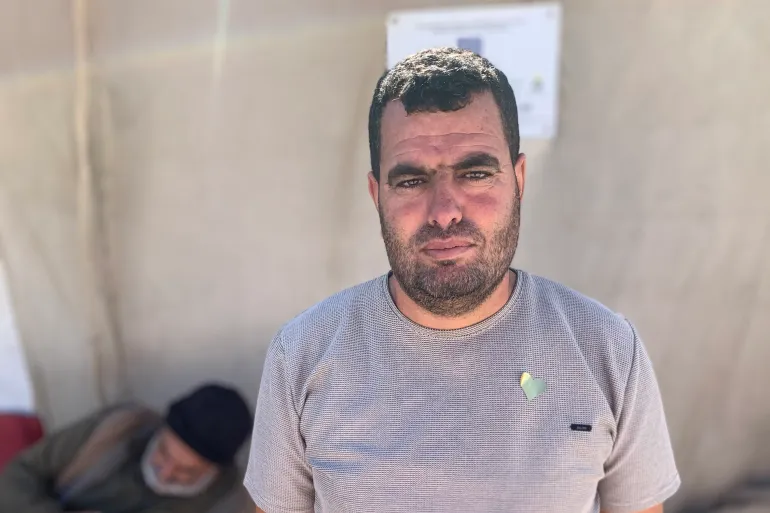
纳赛尔·纳瓦杰是另一位巴勒斯坦人,他在被占领的约旦河西岸的家遭到以色列定居者围困[半岛电视台]。“如果他们赶走第一户,就会赶走第二户” 纳瓦杰说,沙纳兰家是距离侵占而来的前哨基地最近的巴勒斯坦人住宅。定居者不分A区(本应由巴勒斯坦人管理)、B区(在以巴混合管辖下)和C区(完全处于以色列军事和民事控制下)。
“Prison ends. Here, you’re sitting in your own house, and they’ve locked you up in it — and you’re afraid,” he said. Nasser Nawajeh is another Palestinian whose home in the occupied West Bank has been besieged by Israeli settlers [Al Jazeera]‘If they drive out the first house, they drive out the second’ The Shanaran home is the closest Palestinian one to the outposts encroaching on it, Nawajeh said. Settlers see no difference between Area A, intended to be administered by Palestinians, Area B under mixed Israeli-Palestinian authority, and Area C, which is fully under Israeli military and civil control.
“他们从边上、角落里的那户房子下手。如果他们赶走第一户,就会赶走第二户,”他补充道。
“They start with the house on the edge, in the corner. If they drive out the first house, they drive out the second,” he added.
这种战术现在正在马萨费尔·亚塔地区施行,该地区位于被占领的约旦河西岸南部,屡遭以色列定居者和军队袭击。
This tactic is now being applied in Masafer Yatta, an area south of the occupied West Bank which has come under repeated Israeli settler and military attacks.
更北边的贾卢德早前发生过类似围困,图巴西一家在7月被迫离家,9月在法院命令下试图返回时遭到袭击;在库斯拉,定居者围困了三户人家,其中一户属于一名美国公民,随后军队在被围困住宅旁设立了营房。
Following similar sieges further north in Jalud, where the Tubasi family was forced from their home in July and attacked in September when they tried to return under a court order, and in Qusra, where settlers besieged three homes one owned by an American citizen, before the army set up barracks beside the besieged homes.
“以色列人权组织B’Tselem”的亚伊尔·德维尔认为,库斯拉围困事件之所以引发广泛关注,是因为涉事巴勒斯坦人中有一名持有美国国籍。“实际上,此类袭击在约旦河西岸持续不断地发生,”德维尔说。
B’Tselem’s Yair Dvir believes that the fact that the Qusra siege drew wide coverage was because one of the Palestinians involved held US citizenship. “In reality, attacks like these occur continually across the West Bank,” Dvir said.
定居者现已在约旦河西岸建立了400多个前哨基地,通过控制附近的山顶和通道,将巴勒斯坦人的住宅和社区孤立起来。
Settlers have now built more than 400 outposts across the West Bank, isolating Palestinian homes and communities through their control of nearby hilltops and pathways.
定居点监测组织“葡萄园先知”(Kerem Navot)联合创始人德罗尔·埃特克斯(Dror Etkes)表示,随着巴勒斯坦人被包围,这些上门围困反映出“约旦河西岸任何法治、任何执法尝试彻底崩溃的高级阶段”。
Dror Etkes, cofounder of the settlement-monitoring group Kerem Navot, said, with Palestinians surrounded, these doorstep sieges reflect “an advanced stage of the complete collapse of any rule of law, any attempt to enforce law in the West Bank”.
埃特克斯说,曾经让巴勒斯坦人无法进入开放牧场和农田的暴力,正逐渐蔓延至建成区。他说,定居者目前还无法一举赶走整个农业社区,但“他们现在试图做的是驱逐某些家庭……这些家庭居住在建成区主体聚落之外”。
Violence that once kept Palestinians off open grazing and farmland is gradually moving into built-up areas, Etkes said. Driving whole farming communities off their land in one fell swoop is still beyond settlers’ reach, he said, but “what they’re trying to do right now is to expel certain families … who are residing outside of the big cluster of a built-up area”.
阿特雷特定坐落在乌姆萨法土地上在拉马拉西北部的农业村庄乌姆萨法东端,矗立着穆罕默德·阿勒阿巴亚特(Muhammad al-Abayat)的住宅。据村长马尔万·萨巴(Marwan Sabah)称,这户人家自1973年起就住在这里,早于附近非法定居点阿特雷特(Ateret)的建立。如今,这所房子夹在阿特雷特和环绕村庄的六个前哨基地之一之间。
Ateret settlement from Umm Safa landsAt the eastern end of the farming village of Umm Safa, northwest of Ramallah, stands the home of Muhammad al-Abayat. The family has lived there since 1973, before the nearby illegal settlement of Ateret was established, according to the village mayor, Marwan Sabah. It now sits between Ateret and one of the six outposts surrounding the village.
9月下旬,以色列定居者在该家庭家门口搭起帐篷,随后安装了一道大门,封锁了通往他们住宅的路径,屋内住着15人。孩子们无法上学,阿勒阿巴亚特的妻子生病需要做手术。
Late in September, Israeli settlers pitched a tent at the family’s door, then fixed a gate blocking the path to their home, where 15 people live. The children cannot get to school, and al-Abayat’s wife is ill and needs an operation.
“甚至连他的孩子也被禁止通行;这家人几乎无法给他送去基本生活物资,”萨巴说。任何试图接近该家庭的人都会遭到袭击或喷胡椒喷雾。村庄赢得了法院判决和警方开启大门的决定,但“定居者大多数时间自己把大门锁上”,他说。
“Even his kids are banned; the family can barely get the basic supplies to him,” Sabah said. Anyone who tries to reach the family is attacked or pepper-sprayed. The village won a court ruling and a police decision to open the gate, but “the settlers lock the gate themselves most of the time”, he said.
村长称,村庄整体面临“窒息式围困”,非法前哨基地将其包围,军方提供支持为其撑腰。“现在乌姆萨法所有土地都在定居者控制之下,包括村庄公墓,”他说。眼下正值收获季,“所有橄榄都在他们手中”。
The mayor says the village as a whole faces a “suffocating siege”, with illegal outposts surrounding it and military support buttressing them. “Right now all of Umm Safa’s land is under the settlers’ control, including the village cemetery,” he said. Now that the harvest is under way, “all the olives are in their hands”.
甚至基本服务也变得不可能,“所有垃圾——我们无法运出”,他补充道。
Even basic services are becoming impossible, “all the rubbish — we can’t get it out”, he added.
在10月20日定居者的围困期间,以色列民政管理局向阿巴亚特家族的住房发出了拆除通知。
Amid the settler siege on October 20, the Israeli Civil Administration issued a demolition notice for the Abayat family home.
当军队在纳布卢斯以南的马达马实施围困时,北面和西面B区的定居者前哨,以及南面的一个非法定居点和旁路公路,已经包围了该村庄。10月12日,军队用土堆封锁了通往该村庄的三个主要入口。同一天,邻村布林为期一周的围困解除。
When the army carries out the siege In Madama, south of Nablus, settler outposts in Area B to the north and west, along with an illegal settlement and bypass road to the south, have surrounded the village. On October 12, the army sealed all three main entrances to the village with earth mounds. On the same day, a weeklong siege of neighbouring Burin was lifted.
马达马居民、耶路撒冷法律援助与人权中心(JLAC)律师瓦伊勒·库特表示,这迫使包括教师、妇女和儿童在内的村民不得不徒步快速翻越土堆,而两辆汽车分别在土堆两侧等候。他说,一名教师在试图翻越时遭定居者殴打,两名透析患者现在面临前往需要定期接受治疗的医院的路程大幅延长。
This forced villagers, including teachers, women and children, to quickly cross the mounds on foot while two cars waited on either side, said Wail Qut, a Madama resident and lawyer with the Jerusalem Legal Aid and Human Rights Center (JLAC), which is challenging a new Area B outpost near the village before Israel’s High Court. A teacher was beaten by settlers while trying to cross, he said, and two dialysis patients now face a far longer route to the hospital where they need regular treatment.
据村民称,10月18日,一辆来自伊扎尔非法定居点的推土机封锁了最后一条仍在使用的道路——一条通往阿西拉·基比利亚的后路,并连根拔起附近的橄榄树。据库特称,军队的地区协调办公室告诉村长,路障将保留到“农民不去他们的土地[在橄榄收获季],特别是在北方”,那里就是有关定居者前哨所在的位置。
On October 18, a bulldozer that villagers say came from the Yitzhar illegal settlement shut the last road in use – a backroad towards Asira al-Qibliya, uprooting nearby olive trees. According to Qut, the army’s District Coordination Office told the mayor the barriers would stay until “the farmers don’t go to their land [during the olive harvest], especially in the north”, where the settler outpost in question lies.
“我一辈子都住在这里,这对马达马村来说是前所未有的,”库特在后路被封锁后说。“定居者正在抓住一个千载难逢的机会。以色列政府没有任何威慑力……他们只是想在以色列大选前竭尽所能。”乌姆萨法村前村长马尔万·萨巴赫,摄于之前的橄榄收获季 [半岛电视台] 周二,北部入口终于重新开放。但村民报告称,当晚,来自B区前哨的定居者袭击了村庄入口附近的橄榄采摘者。第二天,军方再次封锁了入口,过程中有许多橄榄树被拍下毁坏的画面。居民称,围困仍在继续。
“I’ve lived here all my life, and this is unprecedented for Madama village,” Qut said after the backroad was sealed. “The settlers are seizing a golden opportunity. No deterrence from the Israeli government … they are just trying to do their best before the Israeli election.”Marwan Sabah, mayor of Umm Safavillage, at a previous olive harvest [Al Jazeera] On Tuesday, the northern entrance was finally reopened. But villagers reported that settlers from the Area B outpost attacked olive harvesters near the approach to the village that evening. The next day, the military sealed the entrance again, with many olive trees filmed being destroyed in the process. The siege continues, residents say.
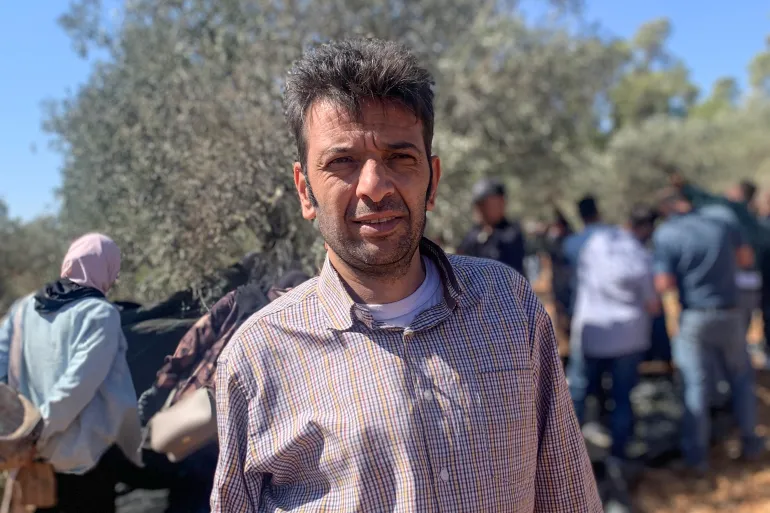
同一挤压的不同阶段 上周,定居者在耶路撒冷以东,在汗阿赫马尔附近的塔布纳和穆赫塔维什贝都因社区周围拉起了带刺铁丝网。苏莱曼·阿里·萨利姆·阿拉伯,人称阿布·拉伊德,说他们的牲畜被圈养,无处放牧,原本只需五分钟就能到达的附近道路现在要花一个小时。定居者正在打桩建造围栏,以完全包围这些社区。“他们把围栏建在房子中间,把人关在里面,以便赶走他们,”阿布·拉伊德说。
Different stages of the same squeeze Last week, settlers east of Jerusalem strung barbed wire around the Bedouin communities of al-Tabna and al-Muhtawish, near Khan al-Ahmar. Suleiman Ali Salem al-Arab, known as Abu Ra’id, said their livestock are penned in and have nowhere to graze, and the five-minute trip to a nearby road now takes an hour. Settlers are driving posts for a fence to enclose the communities completely. “They put it between the houses and shut people in so they can drive people out,” said Abu Raid.
在约旦河谷北部的拉斯艾哈迈尔,围困更接近于彻底剥夺居民的生存基础。随着“深红线”屏障在该地区修建,以色列部队封锁了其他入口,并没收了拖拉机和水箱。
In Ras al-Ahmar, in the northern Jordan Valley, the siege is closer to dispossessing its inhabitants altogether. Israeli forces have sealed other access points and confiscated tractors and water tanks as the “Crimson Thread” barrier is built through the area.
据以色列组织约旦谷活动人士称,过去两周又有11个家庭离开,剩下约59个原住家庭中的20个。“超过一半的家庭因缺水被迫迁离,”当地牧民塔尔·比沙拉特说。“我们禁食得像斋月一样,羊群也变得像骆驼。”
According to the Israeli group Jordan Valley Activists, another 11 families have left in the past two weeks, leaving about 20 of the 59 families that originally lived there. “More than half the families have been displaced because of thirst,” says Thaer Bisharat, a local herder. “We fast like it’s Ramadan, and the sheep become like camels.”
随着定居者围困行动加剧——先由定居者实施,最终被军方取代——纳瓦杰担忧另一波巴勒斯坦人流离失所正在进行。“这正变成一种常态,”他说。“每天都有数十名定居者可能占据巴勒斯坦人的房屋并对其进行围困。”
As settler sieges intensify — enabled and eventually replaced by the military itself — Nawajeh fears another wave of Palestinian displacement is under way. “It’s becoming something normal,” he said. “Every day dozens of settlers could take a Palestinian house and besiege it.”
“想象一下,有人把一个不义的敌人放在你面前,在你窗下搭起帐篷,对你怀恨在心,”被围困的沙纳兰在他的家中说。“每次你外出,他都会出现,殴打你,或阻拦你。你的生活会怎样?”
“Imagine someone set an unjust enemy upon you, pitched a tent under your window, holding a grudge against you,” said Shanaran, from his besieged home. “Every time you go out, he comes, beats you, or stops you. How would your life be?”