巴西左翼阻止了拉丁美洲的右翼浪潮。如今它有四年时间制定继任计划。
The Brazilian left has stopped the right-wing wave in Latin America. Now it has four years to work out a succession plan.
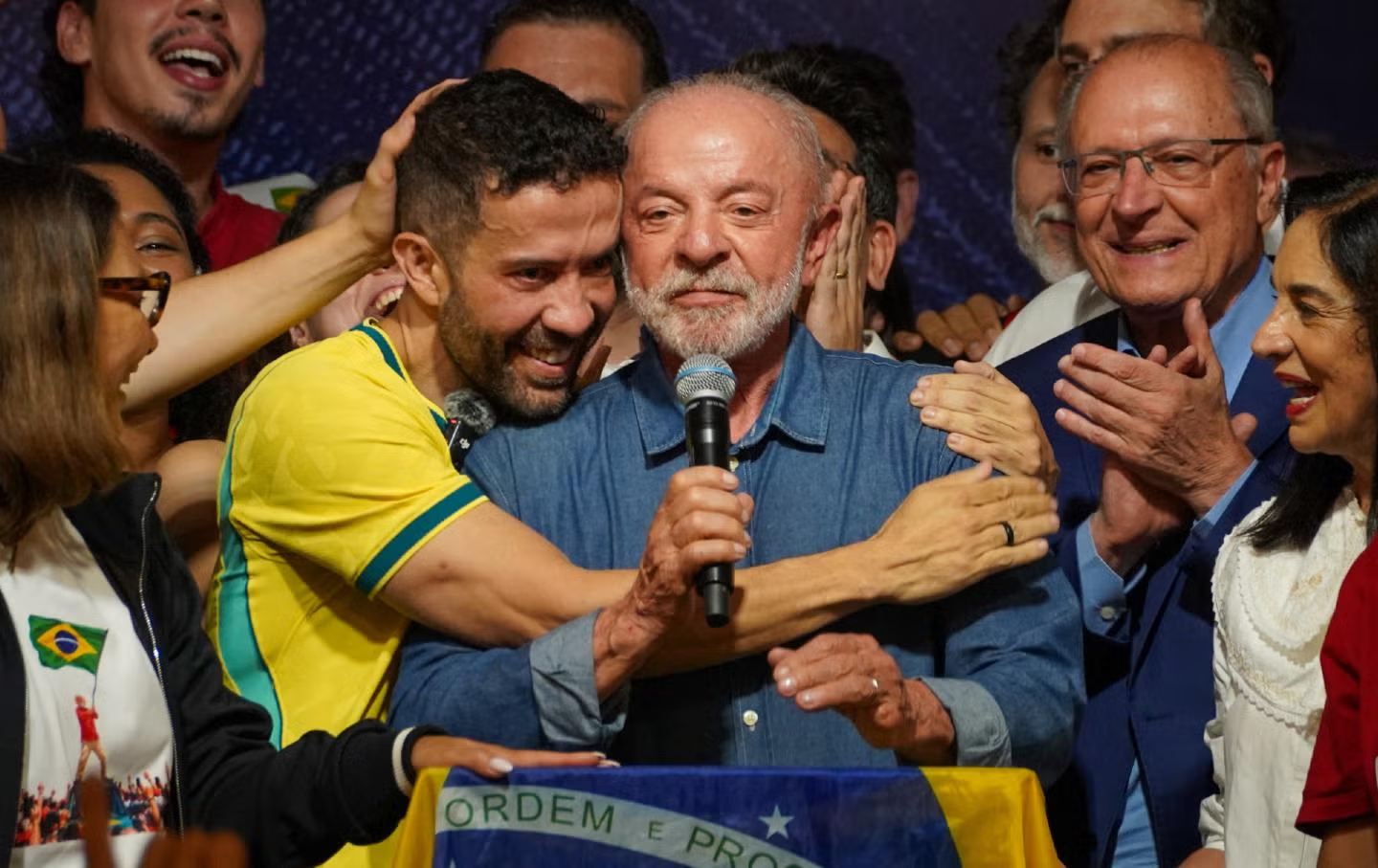
在巴西政治史上最激烈的三周之后,路易斯·伊纳西奥·“卢拉”·达席尔瓦将再次担任总统。尽管他在本月初的总统大选首轮投票中落败,但他随后赢得了历史性的第四个任期,以440万票的优势击败了弗拉维奥·博索纳罗——前总统、已定罪的政变策划者雅伊尔那个腐败的长子(最终得票率为51.79%对48.21%)。如果之前还不清楚的话,现在已经很清楚了:卢拉是这一代最伟大的民众领袖,也是历史上最具天赋的政治家之一。
After three of the most intense weeks in the history of Brazilian politics, Luiz Inácio “Lula” da Silva will be president again. Though he lost the first round of the presidential election earlier this month, he went on to win a historic fourth term, finishing 4.4 million votes ahead of Flávio Bolsonaro, the crooked oldest son of former president and convicted coup plotter Jair (the final tally was 51.79 to 48.21 percent). If it wasn’t clear before, it is now: Lula is the greatest popular leader of his generation and one of history’s most gifted politicians.
弗拉维奥正如预期那样拒绝认输,但卢拉的胜选优势是他在2022年击败雅伊尔时优势的两倍——而且与2022年其父不同,弗拉维奥没有总统职权来试图阻止卢拉就职。他的一些最亲密盟友已经逃往迈阿密,他的兄弟爱德华多——一位前联邦众议员,几年前已将自己流放至得克萨斯州——上周在一档播客节目中建议弗拉维奥也去美国加入他。
Flávio has predictably refused to concede, but Lula’s margin of victory was twice as large as his 2022 margin over Jair—and unlike his father in 2022, Flávio does not have the power of the presidency to try to stop Lula from taking office. Some of his closest allies have already fled to Miami, and his brother Eduardo, a former federal deputy who exiled himself to Texas a few years ago, suggested on a podcast last week that Flávio should join him in the United States.
弗拉维奥的第二轮竞选活动疲软无力,几乎每天都有新丑闻曝光。这些丑闻将他及其最亲密盟友与有组织犯罪、洗钱、社保欺诈、博彩游说集团以及巴西历史上最大的银行欺诈案联系在一起。他还因表现得仿佛已经在执政而疏远了许多选民,宣布了荒诞的内阁任命和不得人心的政策。在辩论中,他先试图恶搞卢拉,再试图摆出政治家的姿态,两者都适得其反。
Flávio ran a weak second-round campaign, as scandal after scandal broke almost daily. Together, they tied him and his closest allies to organized crime, money laundering, social security fraud, the gambling lobby, and the largest banking fraud in Brazilian history. He also alienated many voters by acting as if he were already in government, announcing bizarre cabinet appointments and unpopular policies. During the debates, his attempts to first troll Lula and then to pose as a statesman both backfired.
卢拉的胜利不仅阻止了右翼胜利之浪潮席卷拉丁美洲,也标志着所谓“门罗主义”所概括的“帝国迈阿密”针对该地区的计划遭受重大挫折。事实上,这是自唐纳德·特朗普于2024年赢得第二个任期以来,国际极右翼遭遇的最重大失败。这是一场逆境中的胜利:卢拉在决选中惊人地新增赢得1000多万张选票,而在10月4日的首轮投票中,他曾以220万票之差落后于弗拉维奥(弗拉维奥得票率47.03%,卢拉得票率45.16%)。
Lula’s victory has not only stopped the wave of right-wing victories crashing across Latin America, but it also marks a major setback to Imperial Miami’s project for the region, encapsulated in the so-called Donroe Doctrine. Indeed, it is the most significant defeat for the far right internationally since Donald Trump won a second term in 2024. It was a victory against the odds: Lula won an astonishing 10 million–plus new votes in the runoff after losing to Flávio by 2.2 million votes on October 4 (47.03 percent to Lula’s 45.16).
并且,他在大科技公司、美国、巴西选举法院院长、传统媒体某些势力,以及有史以来组建的最强大网络虚假信息机器之一协同试图破坏其竞选活动的情况下,依然取得了胜利。
And he did it despite coordinated attempts to sabotage his campaign by Big Tech, the United States, the president of Brazil’s Electoral Court, elements of legacy media, and one of the most powerful online disinformation machines ever assembled.
来自巴西的启示 这一结果将在巴西国界之外产生深远回响。巴西拥有拉丁美洲最大的经济体和人口,常被认为具备成为一股主要力量的潜力——不仅因为其拥有关键矿产资源,还因为它有能力抵御来自美国的欺凌、关税和经济战。正是这种力量,使得其邻国的右翼政府——日益妄想的哈维尔·米莱除外——均已承认卢拉的胜利。特朗普迄今保持沉默。
Lessons From Brazil The result will reverberate well beyond Brazil’s borders. The country has the largest economy and population in Latin America, and it has often been credited with the potential to become a major power—not only because it is blessed with critical minerals but also because it has the capacity to withstand bullying, tariffs, and economic warfare from the United States. That power is why even the right-wing governments of its neighbors—with the exception of the increasingly delusional Javier Milei—have already acknowledged Lula’s victory. Trump has so far stayed silent.
那么,其他地方的左翼能从巴西汲取什么教训?首先,我们现在有了答案,回应了我在决选前为《雅各宾》杂志撰文时提出的问题:即“街头政治是否足以抵消社会解体的一些影响”。答案是响亮的肯定:街头政治依然至关重要。
What, then, can the left elsewhere learn from Brazil? First, we now have an answer to the question I posed in a piece for Jacobin before the second round: whether “the politics of the street are enough to counter some of the effects of social disintegration.”The answer is a resounding yes: The politics of the street still matter.
在10月25日决选的前一天,巴西历史上或许规模最大的两场集会同时举行:近百万人(包括我在内)聚集在里约热内卢的科帕卡巴纳海滩参加卢拉的集会,而圣保罗——美洲人口最多的城市——的主干道保利斯塔大道全线被占据,参与人数很可能超过百万。巴西其他所有主要城市、中型城市甚至小城镇也都举行了大规模集会。让民众走上街头,不仅能为政治绝望的病毒提供解药,还能动员选民。
The day before the October 25 runoff saw perhaps the two largest rallies in the history of Brazil: Close to a million people, myself included, joined Lula on Copacabana Beach in Rio, and likely well over a million occupied the entirety of Avenida Paulista, the main thoroughfare in São Paulo, the most populous city in the Americas. There were also significant rallies in all of Brazil’s other major cities, midsize cities, and even small towns. Getting people on the street doesn’t just provide an antidote to the virus of political despair; it can still mobilize voters.
其次,这是我见过的第一次左翼赢得网络舆论战的选举——尽管大型科技公司,特别是Meta,将算法倾向于极右翼。这主要归功于一个中心化的网络大军——“卢拉大军”,由1080万人组成,在不到三周内通过一个WhatsApp频道组建起来,由巴西社交媒体界的“尤利乌斯·凯撒”、米纳斯吉拉斯州联邦众议员安德烈·贾诺内斯指挥。
Second, this is the first election I have witnessed in which the left won the online battle—despite Big Tech, particularly Meta, tilting the algorithm toward the far right. Credit for that goes mostly to a centralized online army—Lula’s Army—of 10.8 million people, organized through a WhatsApp channel in less than three weeks and commanded by the Julius Caesar of Brazilian social media, Minas Gerais Federal Deputy André Janones.
这位“大将”不仅扭转了算法对极右翼的倾向,还夺回了巴西国家足球队球衣等国家象征(通过派遣追随者执行任务,如在周六上午9点身穿球衣在Instagram上发自拍),并推广了代表卢拉的标志性“L”手势。
The general not only turned the algorithm against the far right but also reclaimed symbols of Brazil such as the national football team’s jersey (by sending his followers on missions like posting a selfie on Instagram on a Saturday at 9 am wearing it) and made the trademarked “L” hand sign for Lula.
在这场战争中,贾诺内斯得到了新一代巴西左翼政客的帮助,他们在社交媒体上发起了自己的攻势。其中包括无家可归工人运动领袖吉列尔梅·布洛斯,他同时担任卢拉内阁的总统府部长;被誉为巴西版哈桑·皮克尔的马克思列宁主义者、伯南布哥州联邦众议员若昂·马诺埃尔;以及年仅21岁的米纳斯吉拉斯州工人党联邦众议员安娜·埃利萨·席尔瓦。
In this war, Janones had help from a new generation of Brazilian left-wing politicians who launched their own offensives on social media. Among them were Homeless Workers’ Movement leader Guilherme Boulos, who also serves in Lula’s cabinet as minister for the presidency; Brazil’s Marxist-Leninist answer to Hasan Piker, Pernambuco Federal Deputy Jones Manoel; and the 21-year-old Minas Gerais Workers’ Party Federal Deputy Ana Elisa Silva.
与右翼的对比颇具启示意义。正如政治学家马科斯·诺布雷(Marcos Nobre)所描述的,借用保罗·热尔博杜(Paolo Gerbaudo)的研究成果,博尔索纳罗主义的“激进数字政党”在很大程度上是有机且去中心化的,由一批政治企业家领导,他们各自经营着自己的线上传销骗局(正如哲学家罗德里戈·努内斯在其新作《解体解剖》中所概述的)。它主要在公众视野之外运作,通过隐蔽网络和个性化算法,并拥有来自在线博彩业、有组织犯罪及各类诈骗的大量脏钱。
The contrast with the right is instructive. Bolsonarismo’s Militant Digital Party—as political scientist Marcos Nobre describes it, drawing on the work of Paolo Gerbaudo—is largely organic and decentralized, led by a host of political entrepreneurs who run their own online pyramid schemes (as the philosopher Rodrigo Nunes outlines in his new book Anatomy of Disintegration). It operates largely out of public view, through covert networks and individualized algorithms, and is flush with dirty money from the online gambling industry, organized crime, and various other scams.
据诺布雷称,它拥有约25%选民的强硬基本盘,并通过传统的政党机器吞并了“中间大联盟”(centrão)那些老牌的寻租政党。博尔索纳罗的自由党如今已成为众议院和参议院的主导力量。这些收获并非以牺牲左翼为代价——左翼在国会的代表性实际上有所增加——而是以牺牲老派威权主义、中右翼以及稍具民主色彩的机器政党为代价。
According to Nobre, it has a hard-line base of around 25 percent of voters and has swallowed up the old rent-seeking parties of the centrão (big center) by way of a conventional party apparatus. Bolsonaro’s Liberal Party is now the dominant force in both the Chamber of Deputies and the Senate. Those gains have come not at the expense of the left, which actually increased its representation in Congress, but of old-school authoritarian, center-right, and slightly more democratic machine parties.