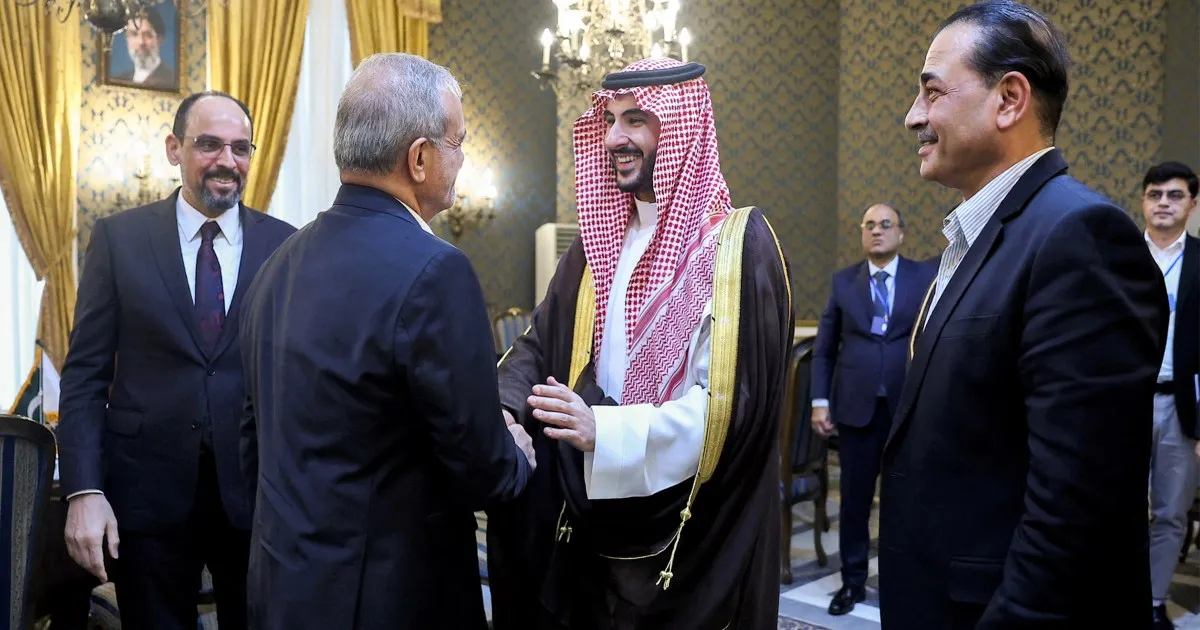
海湾国家加大了与伊朗的外交接触力度,力图缓和整个中东地区的紧张局势。当前,外界担心美国可能再次对德黑兰发动打击,同时伊朗支持的也门胡塞武装与沙特阿拉伯之间的敌对行动不断加剧。
Gulf countries have stepped up diplomacy with Iran in a bid to de-escalate tensions across the Middle East, amid fears of renewed US strikes on Tehran and intensifying hostilities between Iran-backed Houthi rebels in Yemen and Saudi Arabia.
8月签署《麦加联合防务协议》的三个国家——巴基斯坦、沙特阿拉伯和土耳其——以及卡塔尔的外交官于周一与伊朗高级官员会面,努力防止全面战争重启。
The three nations that signed the Mecca Joint Defence Agreement in August – Pakistan, Saudi Arabia and Turkiye – and diplomats from Qatar met with high-ranking Iranian officials on Monday in an effort to prevent the resumption of all-out war.
沙特国防大臣哈立德·本·萨勒曼·阿勒沙特亲王出席了在德黑兰举行的会议,这凸显了局势的高度利害关系。而就在几天前,伊朗结盟的胡塞武装分子袭击了沙特的机场、港口和石油设施。
Underscoring the high stakes, the meeting in Tehran was attended by Saudi Minister of Defence Prince Khalid bin Salman Al Saud, just days after Iran-aligned Houthi fighters struck Saudi airports ports and oil facilities.
与此同时,阿曼外交大臣巴德尔·布赛义迪于周一在对英国剑桥大学进行外交访问期间,呼吁在海湾国家与伊朗之间建立地区安全框架,包括一项“互不侵犯条约”,在该框架下美国将不再是安全的主要提供者。
Meanwhile, during a diplomatic visit to the United Kingdom’s University of Cambridge on Monday, Omani Foreign Minister Badr Albusaidi called for a regional security framework, including a “non-aggression pact”, between the Gulf countries and Iran under which the United States would no longer be the primary provider of security.
尽管海湾国家似乎决心避免又一轮冲突——此前的冲突已经限制了霍尔木兹海峡的通行,扰乱了全球石油和天然气供应,并对海湾国家的能源设施和基础设施造成了严重破坏——但地区协议是否可能达成,以及达成后美国与海湾合作委员会(GCC)之间的关系将走向何方,仍是未知数。地区安全还是局势降级?
While Gulf countries appear determined to avoid another round of conflict – which has already restricted passage through the Strait of Hormuz, disrupted global oil and gas supplies and wreaked havoc on energy facilities and infrastructure in Gulf states – questions remain over whether a regional agreement is possible and where it would leave relations between the US and Gulf Cooperation Council (GCC). Regional security or de-escalation?
周五,美国总统唐纳德·特朗普再次警告称,华盛顿可能对伊朗发动另一次军事行动,原因是不断上涨的燃料价格对定于11月3日举行的美国中期选举构成压力。伊朗伊斯兰革命卫队(IRGC)表示,如果美国再次采取军事行动,伊朗将以更大的力度予以回应,这加剧了人们对冲突进一步扩大升级的担忧。
On Friday, US President Donald Trump repeated warnings that Washington may carry out another military operation against Iran as rising fuel prices weigh on the US midterm elections scheduled for November 3. Iran’s Islamic Revolutionary Guard Corps (IRGC) said Iran would respond more forcefully to any renewed US military action, stoking fears of an even wider escalation.
本周在德黑兰举行的会谈是自2月28日美以对伊朗开战以来,伊朗与麦加共同防御条约国家之间的首次高层接触,但有报道称,双方未能达成协议。
While this week’s talks in Tehran mark the first high-level contact between Iran and the Mecca mutual defence pact nations since the US-Israel war on Iran began on February 28, reports suggest they have stopped short of landing an agreement.
路透社报道,卡塔尔调解人周日向伊朗提交了一份协议草案,德黑兰预计将在本周末前作出回应。周三,该通讯社援引伊朗官员的话称,卡塔尔提出的想法不可接受,德黑兰在核问题上不会展现任何灵活性。
Reuters reported that Qatari mediators presented Iran with a draft deal on Sunday, which Tehran was expected to respond to by the end of the week. On Wednesday, the news agency quoted Iranian officials as saying Qatar had put forward ideas that were unacceptable and that Tehran would show no flexibility regarding the nuclear issue.
沙特政治分析人士、学者哈立德·巴塔菲表示,此次访问德黑兰表明沙特愿意向伊朗发出“最后警告”并“顺应地区关切”,但伊朗迄今拒绝接受。
Khaled Batarfi, a Saudi political analyst and academic, said the visit to Tehran indicated that Saudi Arabia was willing to give Iran a “last warning” and “submit to the region’s concerns”, but that Iran has so far refused.
“分歧[很大],更糟糕的是双方之间缺乏信任,”巴塔菲对半岛电视台说。
“The gap is [wide] and what makes it worse is that there is no trust,” Batarfi told Al Jazeera.
观察人士表示,分歧的观点不太可能使当前的外交努力转变为持久的架构。“很难想象未来几个月甚至几年内会形成一个地区安全框架,”伦敦查塔姆研究所副研究员阿尼塞·巴西里·塔布里齐对半岛电视台说。
Observers say diverging views are unlikely to turn the current diplomatic efforts into a lasting infrastructure. “It’s really hard to see a regional security framework coming out in the coming months or even years,” Aniseh Bassiri Tabrizi, an associate fellow at Chatham House in London, told Al Jazeera.
“我们看到更多的是小规模、灵活的国家集团在牵头尝试达成双边或多边解决方案,”这位分析人士说。“一个地区安全框架需要对地区有共同的愿景,而这一愿景未必……在海湾合作委员会国家之间共享。”前方的挑战国际危机组织高级分析师哈米德雷扎·阿齐兹表示,巴基斯坦、沙特和土耳其都担心,伊朗与美国之间旷日持久的对抗可能进一步破坏地区稳定。
“What we are seeing is more small groups, flexible groups of countries that are taking the lead in trying to reach either bilateral or multilateral solutions,” the analyst said. “A regional security framework would need the same vision for the region, which is not necessarily shared… among the GCC countries themselves.”Challenges ahead Hamidreza Azizi, a senior analyst at the International Crisis Group, said Pakistan, Saudi Arabia and Turkiye share concerns that a prolonged confrontation between Iran and the US could further destabilise the region.
阿齐兹对半岛电视台表示:“主要障碍仍然是德黑兰与华盛顿在承诺顺序上的根本分歧。”“美国希望伊朗做出让步,尤其是在核问题上,而德黑兰坚持认为,必须先满足其结束战争的条件。”他补充说:“地区调解可能有助于弥合这一分歧,或许可以通过一项临时安排来实现,但地区行为体愿意促成协议,并不一定意味着两个主要当事方准备做出必要的妥协。”
“The main obstacle remains the fundamental disagreement between Tehran and Washington over the sequence of commitments,” Azizi told Al Jazeera. “The US wants Iranian concessions, particularly on the nuclear issue, while Tehran insists that its conditions for ending the war must be met first.”“Regional mediation could help bridge this gap, possibly through an interim arrangement, but the willingness of regional actors to facilitate an agreement does not necessarily mean that the two principal parties are prepared to make the necessary compromises,” he added.
至于新的安全秩序,阿齐兹表示,地区国家对这一秩序应该是什么样子、以及美国——迄今为止一直是海湾合作委员会的主要安全伙伴——将剩下什么角色可扮演,并没有共同的理解。
As for a new security order, Azizi said regional countries do not share a common understanding of what it should look like and what role the US – which has so far been the GCC’s main security partner – would have left to play.
伊朗长期以来一直主张建立一种能够减少或消除美国军事存在的地区安全架构。阿齐兹说:“然而,沙特阿拉伯和其他海湾国家仍然深度融入美国的安全体系,几乎没有迹象表明它们打算放弃这一体系。”
Iran has long advocated for a regional security architecture that would reduce or eliminate the US military presence. “Saudi Arabia and other Gulf states, however, remain deeply integrated into the US security system, and there is little indication that they intend to abandon it,” Azizi said.
“最近的战争无疑引发了人们对美国安全保证可靠性的质疑,但这促使这些国家实现安全伙伴关系的多元化,而不是从根本上重新定义它们的战略联盟。”
“The recent war has certainly raised questions about the reliability of American security guarantees, but this has encouraged these countries to diversify their security partnerships rather than fundamentally redefine their strategic alignments.”