彭博的一项分析显示,在亚洲新兴市场中,菲律宾债券对美联储的鹰派立场最为脆弱。
Philippine bonds are the most vulnerable in emerging Asia to a hawkish Federal Reserve, according to an analysis by Bloomberg.
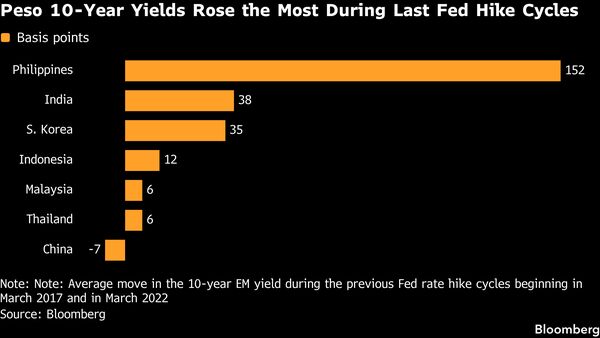
在最近两轮美联储紧缩周期中——即2017年和2022年开始的这两轮——菲律宾主权债券是该地区表现最差的。在这些时期,菲律宾10年期国债收益率平均攀升152个基点,几乎是排名第二的印度的四倍。
The nation’s sovereign debt was the worst performer in the region during the two most recent episodes of Fed tightening, namely those that began in 2017 and 2022. Philippine 10-year yields climbed by an average of 152 basis points during those periods — nearly four times as much as those of second-placed India.
今年以来,随着能源价格飙升和美国国债收益率攀升,菲律宾债券遭到抛售,同时美元走强吸引资金撤离比索计价资产。涉及伊朗的旷日持久的冲突也使油价和通胀居高不下,从而对该国主权债务构成压力。
Philippine bonds have been sold off this year as energy prices have soared and US Treasury yields have climbed, while a strengthening dollar has lured funds away from peso-denominated assets. The prolonged conflict involving Iran is also weighing on the nation’s sovereign debt by keeping oil prices and inflation elevated.
“美国收益率上升可能继续对菲律宾债券收益率构成上行压力,尤其是在长端,同时也会拖累比索,”新加坡瀚亚投资的固定收益投资组合经理吴荣仁表示。他说,菲律宾债券面临的其他不利因素还包括“持续的通胀、比索疲软以及”菲律宾央行政策利率最终水平的“不确定性”。
“Higher US yields could continue to exert upward pressure on Philippine bond yields, particularly at the longer end, while also weighing on the peso,” said Rong Ren Goh, a fixed-income portfolio manager at Eastspring Investments in Singapore. Other headwinds for the bonds include “persistent inflation, peso weakness and uncertainty” over the final level of the Philippine central bank’s policy rate, he said.
彭博汇编的数据显示,截至周四,菲律宾债券今年给美元投资者带来了超过11%的亏损,而亚洲整体同类指标则上涨了3.1%。
Philippine bonds have handed dollar-based investors a loss of more than 11% this year through Thursday, while a similar gauge for Asia as a whole has gained 3.1%, data compiled by Bloomberg show.
美联储主席凯文·沃什周三暗示,美联储今年仍有望再次加息,尽管他依然拒绝就未来政策路径给出任何明确指引。
Fed Chairman Kevin Warsh signaled on Wednesday that the central bank remains on track to raise interest rates again this year, even as he stuck to his refusal to offer any explicit guidance on the future path of policy.
比索今年兑美元贬值约8%,成为继印尼盾之后亚洲表现最差的货币。这一贬值给菲律宾央行带来了进一步加息的压力,此前该行上周加息50个基点,幅度超出预期。
The peso has weakened about 8% against the dollar this year, making it Asia’s worst-performing currency after the Indonesian rupiah. That depreciation is putting further pressure on Bangko Sentral ng Pilipinas to hike rates again after making a bigger-than-expected 50-basis-point increase last week.
新加坡M&G Investments固定收益投资组合经理Peerampa Janjumratsang表示:“汇率稳定已成为政策反应函数中的重要考量,与菲律宾央行遏制通胀预期的努力相辅相成。”她表示,再加上厄尔尼诺天气模式带来的风险,这表明央行“尽管经济增长背景疲弱,仍可能保持鹰派倾向”。
“Currency stability has become an important consideration in the policy reaction function, complementing the BSP’s efforts to contain inflation expectations,” said Peerampa Janjumratsang, a portfolio manager for fixed income at M&G Investments in Singapore. This, together with risks from the El Niño weather pattern, suggests the central bank “may retain a hawkish bias despite the weaker growth backdrop,” she said.
印尼债券历来是亚洲对美联储政策变化最敏感的债券,但印尼央行自2020年开始的债券购买计划似乎减轻了美国加息的部分影响。印尼央行持有的未偿政府债券从2020年初的约10%升至2023年1月的约27%的峰值。
Indonesian bonds were historically the most sensitive in Asia to Fed policy changes but Bank Indonesia’s debt-purchase program that started in 2020 appears to have mitigated some of the impact of US rate hikes. The central bank’s ownership of outstanding government bonds rose to peak at around 27% in January 2023 from around 10% at the start of 2020.
花旗集团策略师Gordon Goh等人在上周的一份报告中写道,在“能源价格高企和厄尔尼诺风险的背景下”,投资者应谨慎对待菲律宾债券。“当前环境下的风险严重偏向于更加鹰派的菲律宾央行。”
Investors should be cautious about Philippine bonds amid a “backdrop of elevated energy prices and El Niño risks,” Citigroup Inc. strategists including Gordon Goh wrote in a note last week. “Risks in the current environment are skewed heavily towards a more hawkish BSP.”