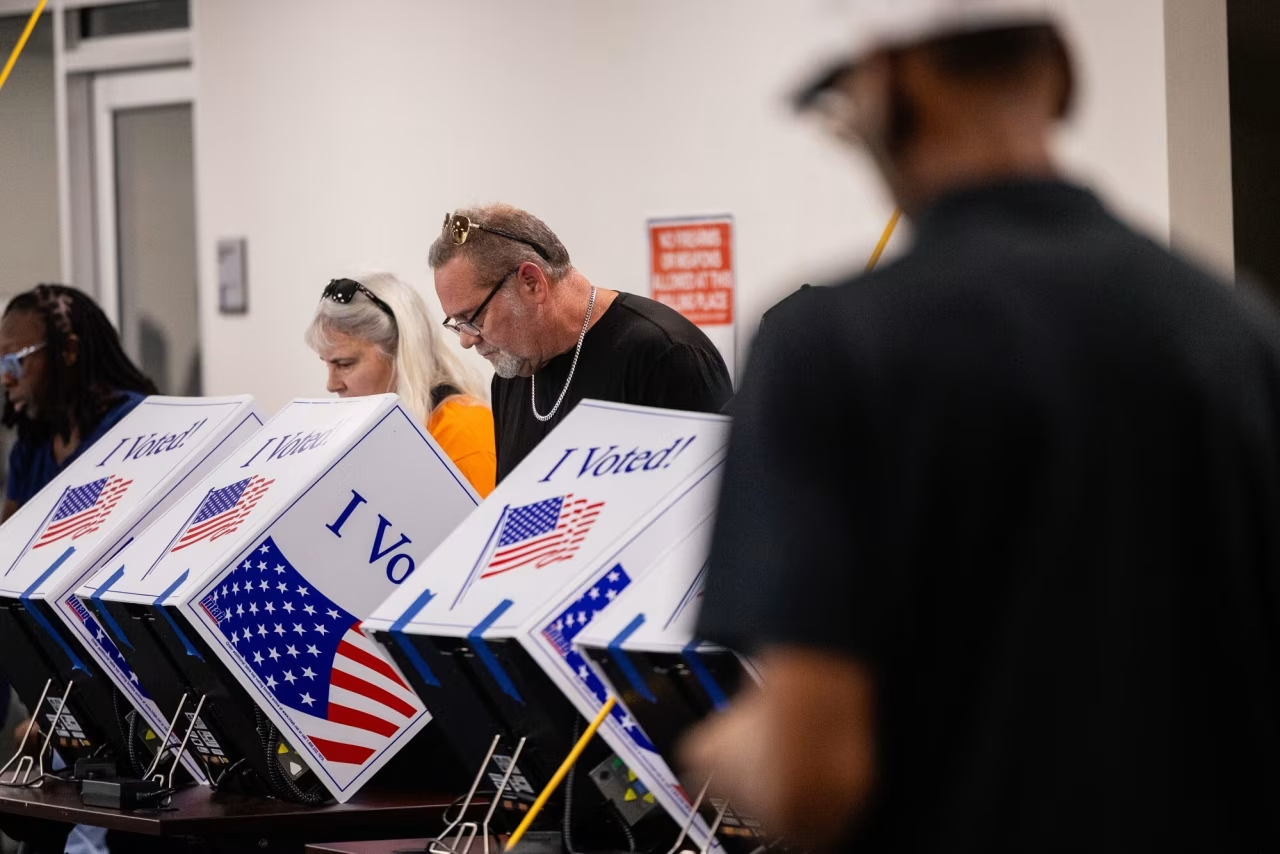
选民将在周二对近150项州级投票议题发表意见。加州那项适得其反的财富税等重大经济议题已在本专栏得到持续报道,但以下是其他值得关注的提案概览:
Voters will have a say Tuesday on nearly 150 state ballot measures. The big economic items, such as California’s backfiring wealth tax, have had sustained coverage in these columns, but here’s a glance at some other proposals worth watching:
- 选举法:六个州将审议选民身份证规则。俄亥俄州已要求出示身份证,但第3号议题若获通过将把此规定写入宪法。北卡罗来纳州亦同。亚利桑那州的第144号提案将要求邮寄投票者“出示”身份证,但未说明具体方式。
• Election laws: Six states will consider voter ID rules. Ohio already requires identification, but Issue 3 would put it in the constitution. Ditto North Carolina. Arizona’s Prop. 144 would require mail voters to “show” ID, without specifying how.
内华达州不要求照片身份证。第7号议题曾在2024年以压倒性优势通过,以改变这一规定,如今需要第二次投票以修宪。更大的考验是两个蓝州。加州的第39号提案将要求投票站出示身份证,并在邮寄选票上填写身份证号码的最后几位。科罗拉多州的第84号修正案对邮寄投票也设有类似规定。
Nevada doesn’t ask for photo ID. Question 7 to change that won resoundingly in 2024, and now a second time is needed to amend the constitution. A bigger test is two blue states. California’s Prop. 39 would require identification at polling sites, plus the final digits of an ID number on mail ballots. Colorado’s Amendment 84 is a similar rule for postal votes.
从南达科他州到阿肯色州的若干州可能会禁止非公民投票。联邦选举目前已禁止非公民投票,但少数州的城镇仍向居住的外籍人士开放地方选举。在红州预先禁止此类投票虽易实现,却无法阻止华盛顿特区以及佛蒙特州、马里兰州和加州的前卫地区。
Several states, from South Dakota to Arkansas, might ban voting by noncitizens. It’s illegal today for federal races, yet towns in a few states open local elections to resident aliens. Pre-emptively prohibiting this in red states is fine, but it won’t stop D.C. or the avant-garde parts of Vermont, Maryland and California.
最后,阿拉斯加的第2号议案将废除该州古怪的排名选择投票制度。公众在2024年以微弱优势保留了该制度,但在今年“双丹·苏利文”事件后,阿拉斯加人可能已经看够了。
Finally, Alaska’s Measure 2 would repeal the state’s kooky ranked-choice voting system. The public narrowly retained it in 2024, but Alaskans may have seen enough after this year’s double Dan Sullivan fiasco.
- 跨性别议题:四个州有关于女子体育的提案。华盛顿州的第638号倡议将“禁止生理男性学生与女性学生同场竞争”。科罗拉多州的第134号提案也将采取同样做法,第135号提案则将禁止对未成年人进行跨性别手术。亚利桑那州和内布拉斯加州也将对此进行表决。或许这些州的通过会最终说服民主党人士,他们在性别议题上已脱离主流。
• Transgender questions: Four states have measures on girls’ sports. Washington’s Initiative 638 would “prohibit biologically male students from competing with and against female students.”Colorado’s Prop. 134 would do the same, and Prop. 135 would ban transgender surgeries on minors. Arizona and Nebraska will weigh in, too. Perhaps approval in these states might finally persuade Democrats they are out of the mainstream on gender.
- 堕胎:弗吉尼亚州有一项宽松的法律,允许堕胎至孕晚期,约27周。第一号问题将增加一项宪法性的“生殖自由权”。在内华达州,堕胎在24周前是合法的。第六号问题将确立一项直至胎儿可存活期的宪法权利。反对者说得有道理:这样的宪法措辞会让州法官判定例如未成年人的父母通知要求无效。
• Abortion: Virginia has a permissive law allowing abortion until the third trimester, about 27 weeks. Question 1 would add a constitutional “right to reproductive freedom.”In Nevada, it’s legal until 24 weeks. Question 6 would create a constitutional right until viability. Opponents have a point that such constitutional language invites state judges to nullify, say, parental notification for minors.
- 选区划分:马里兰州的第三号问题将允许该州自由绘制怪异选区,并形成一张8比0的选区地图,把共和党众议员安迪·哈里斯挤出国会。密苏里州的A号提案将批准共和党新的7比1选区地图。科罗拉多州的第86号修正案将禁止十年中期进行党派性选区划分。
In Idaho, which is restrictive on abortion, Prop. 1 would permit it until about 24 weeks. Many voters might prefer a middling option, but one isn’t on offer. This dynamic is how Missouri wound up passing an abortion constitutional right, 52% to 48%, in 2024. Amendment 3 now proposes to repeal that, while adding an explicit exception to allow abortion after rape or incest.
- DEI(多元化、公平与包容):亚利桑那州的第142号提案将禁止州机构(如学校)索取“多元化”声明。威斯康星州的第三号问题将禁止该州基于种族、民族或性别“给予优惠待遇”。这些举措将使州法律与最高法院关于种族歧视的裁决保持一致。
• Gerrymandering: Maryland’s Question 3 would free the state to draw zany districts and an 8-0 map, squeezing out GOP Rep. Andy Harris. Missouri’s Prop. A would ratify the GOP’s new 7-1 map. Colorado’s Amendment 86 would bar mid-decade partisan gerrymanders. • DEI: Arizona’s Prop. 142 would stop state bodies, such as schools, from soliciting “diversity” statements.
- 其他:威斯康星州的第一号问题将禁止州长利用部分否决权提高税收。州长托尼·埃弗斯曾将一项关于学校税收限制的法律中的“2024-25”改为“2425”,从而使该法律有效期延长至四个世纪。
Wisconsin’s Question 3 would bar the state from “granting preferential treatment” by race, ethnicity or sex. These would make state law consistent with the Supreme Court’s ruling on race discrimination. • Misc: Wisconsin’s Question 1 would stop the Governor from using a partial veto to raise taxes.
肯塔基州的第一号修正案将终止州长在跛脚鸭时期发布赦免的权力,自选举前60天起生效。
Gov. Tony Evers rewrote a law on school taxing limits through “2024-25” to read “2425,” so it would run for four centuries.
科罗拉多州的第81号修正案将要求警方在指控一名非法外国人(非法移民)或国籍不明的人犯有暴力犯罪时,通知联邦当局。
Kentucky’s Amendment 1 would end the Governor’s power to issue pardons as a lame duck, starting 60 days before an election. Colorado’s Amendment 81 would require police to notify the feds when charging a violent crime against an illegal alien or a person whose citizenship is unclear.
亚利桑那州的第319号提案将禁止新建交通“拍照执法系统”。现有的系统必须获得选民批准才能继续使用。
Arizona’s Prop. 319 would ban new traffic “photo enforcement systems.”Existing ones would need to get voter approval.
科罗拉多州第82号修正案将保障“为烹饪或取暖购买天然气的权利”。本不该需要此项保障,但它是防范气候政策强制的必要防线,而这种强制极有可能出现。点燃烧烤架吧![视频] WSJ Opinion:那么,谁将赢得中期选举?
Colorado’s Amendment 82 would guarantee a “right to purchase natural gas for cooking or heating.”This shouldn’t be needed, but it’s protection against climate policy coercion that is all too likely. Fire up the barbecue! [video] WSJ Opinion: So, Who’s Going to Win the Midterms?