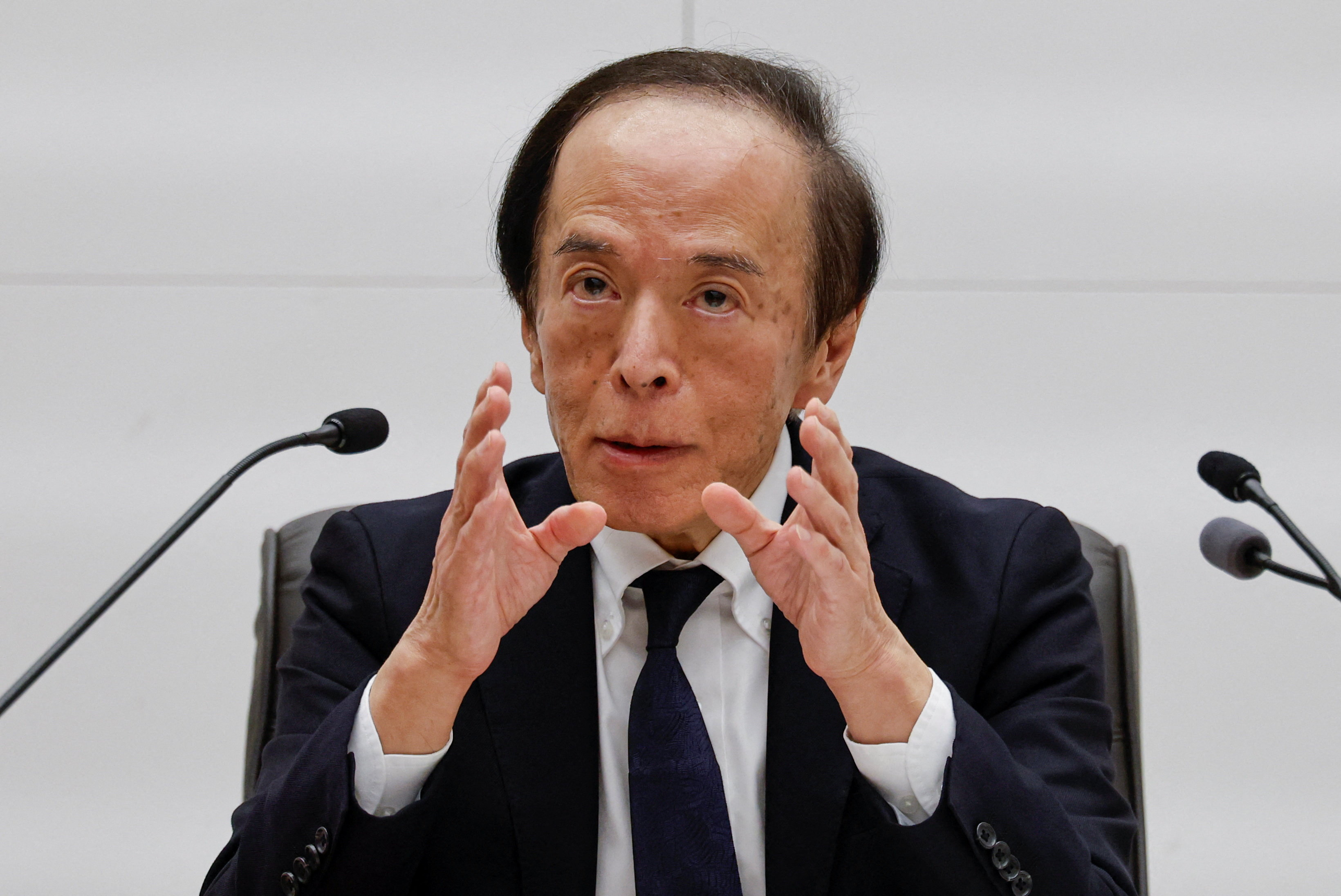
日本央行行长植田和男几乎已确定12月加息,但让投资者猜测,一旦利率接近中性水平,还能进一步加多少。在实施数十年超宽松政策后,这大多是一个陌生的环境。
Bank of Japan Governor Kazuo Ueda has all but locked in a December rate hike, but left investors guessing how much further it could go once rates approach neutral territory, a largely unfamiliar setting after decades of ultra-loose policy.
日本央行鹰派信息背后,是未来的挑战。随着通胀压力日益根深蒂固,决策者必须判断,长期习惯近乎零借贷成本的家庭和企业,能在多大程度上承受更高利率,而不会扼杀脆弱的经济复苏。
Beneath the BOJ's hawkish message lies the challenge ahead. As inflationary pressures become more entrenched, policymakers must judge how quickly households and businesses, long conditioned to near-zero borrowing costs, can absorb higher rates without derailing a fragile economic recovery.
日本央行上周宣布,在为期14年的实现价格目标的斗争中取得胜利,并强调其政策已进入新阶段,重点是避免通胀超调,进一步强化了其鹰派倾向。
The BOJ last week declared victory in its 14-year battle to hit its price target and stressed its policy has entered a new phase focused on avoiding an inflation overshoot, reinforcing its hawkish bias.
植田表示,日本央行决定暂缓加息,以“再仔细审视”经济和物价走势——这一措辞呼应了该行在7月于9月加息前发表的言论。
Ueda said the BOJ decided to forgo a rate hike to scrutinise economic and price developments "a bit more" - language that echoed remarks made in July before the bank raised rates in September.
他还表示,董事会将在包括下次会议在内的政策讨论中关注上行物价风险,暗示12月将政策利率上调至1.5%的可能性很高。
He also said the board will debate policy focusing on upside price risks, including at the next meeting, signalling a high probability of a hike in its policy rate to 1.5% in December.
日本经济第二季度按年率计算增长1.4%,尽管中东冲突带来逆风,企业仍继续增加支出。9月核心通胀率达到2.1%,超过日本央行2%的目标,因为不断上升的价格压力超过了燃油补贴的抑制作用。
Japan's economy expanded an annualised 1.4% in the second quarter, as firms continued to boost spending despite headwinds from the Middle East conflict. Annual core inflation hit 2.1% in September, exceeding the BOJ's 2% target as mounting price pressures outweighed the dampening effect of fuel subsidies.
“根据日本央行最新的沟通,12月加息几乎已成定局,”前日本央行官员、现任乐天证券经济研究所首席经济学家爱宕伸泰表示。
"Judging from the latest BOJ communication, a rate hike in December is pretty much a done deal," said former BOJ official Nobuyasu Atago, who is currently chief economist at Rakuten Securities Economic Research Institute.
“较不明确的是明年会发生什么,因为随后的加息将使日本央行的政策利率达到1.75%,这可能接近被认为对经济中性的水平。”日本央行模棱两可的根源在于,其对日本实际中性利率所在水平缺乏足够信心。
"What's less clear is what happens next year because a subsequent hike would bring the BOJ's policy rate to 1.75%, which could be around levels deemed neutral to the economy." The source of the BOJ's ambiguity is its limited confidence over where Japan's neutral rate actually lies.
日本银行工作人员的计算显示,日本的名义中性利率——即既不会刺激也不会抑制经济的利率——在1.1%至2.5%之间,为政策制定者可能将借贷成本提升至何种水平提供了粗略参考。
BOJ staff calculations place Japan's nominal neutral rate, which neither heats up nor slows the economy, at between 1.1% and 2.5%, offering a rough guide to how far policymakers could lift borrowing costs.
但与许多中央银行一样,日本银行一直故意对该利率在实际中处于何种水平保持模糊,因为该利率无法直接观测,且估算结果会因所使用的模型不同而有所差异。
But like many central banks, the BOJ has been deliberately vague about where that rate sits in practice as it cannot be observed and estimates can vary depending on models used.
这种不确定性解释了为何日本银行在警告通胀风险的同时,并未承诺稳步提高利率。在发出物价压力警告的同时,植田和男也强调,需要密切关注借贷成本上升对企业和家庭贷款的影响。
That uncertainty explains why the BOJ is warning about inflation risks without committing to a steady march higher in rates. While warning of price pressures, Ueda has also stressed the need to watch how higher borrowing costs affect corporate and household lending.
“我们听说,小型企业的贷款条件正在收紧,因此我们将密切关注这种声音是否会蔓延,”植田和男表示,同时他坚称,整体金融状况仍然宽松。
"We're hearing that smaller firms' lending conditions are tightening, so we'll keep a close watch on whether such calls will spread," Ueda said, while maintaining that overall financial conditions remain accommodative.
中性利率不确定性带来的挑战,对日本银行而言比对其海外同行更为紧迫。
The challenge posed by uncertainty over neutral rates is more pressing for the BOJ than for its overseas counterparts.
由于政策利率仍仅为1.25%,官员们面临压力,需要相对较快地将借贷成本推向中性水平,以避免助长过度通胀。
With its policy rate still at just 1.25%, officials face pressure to push borrowing costs toward neutral relatively quickly to avoid fuelling excess inflation.
然而,日本长达三十年的通缩经验,可能也使得家庭和企业对利率上升异常敏感,日本银行认为这一风险值得谨慎对待。
Yet Japan's three-decade-long experience with deflation may also have left households and businesses unusually sensitive to higher rates, a risk the BOJ says warrants caution.
更加棘手的是,日本银行正在摸索陌生的领域。自1998年获得独立以来,它大部分时间都在与通货紧缩和通缩作斗争,因此缺乏对一个习惯于超低利率的经济体如何应对持续货币紧缩的经验。
Compounding the challenge, the BOJ is navigating unfamiliar terrain. Since gaining independence in 1998, it has spent most of its existence battling disinflation and deflation, leaving it with limited experience of how an economy accustomed to ultra-low rates responds to sustained monetary tightening.
董事会内部对日本银行应将利率提升至何种水平并无共识。鹰派官员田村直树认为,中性利率可能接近2%,并主张稳步提高利率。另一位鹰派官员高谷肇也支持更快加息,并在周五提议将利率上调至1.5%,但该提议未获通过。
There is no consensus within the board on how far the BOJ should push up rates. Hawks like Naoki Tamura argue the neutral rate is likely near 2% and have called for steady rate increases. Another hawk, Hajime Takata, also favours faster hikes and proposed unsuccessfully on Friday a hike to 1.5%.
前学者小枝淳子则显得更为谨慎,称中性利率“很可能显著高于1%”。由首相高市早苗任命的两位鸽派委员大概也属于谨慎派,他们曾反对9月的加息决定。
Former academic Junko Koeda appeared more cautious, saying only the neutral rate was "likely significantly above 1%." The two doves appointed by Prime Minister Sanae Takaichi likely are in the cautious camp, having dissented against the September rate hike.
“总的来说,日本银行可能仍认为其政策利率距离中性利率还有相当距离。这将巩固将利率在明年3月左右上调至1.75%的理由,”野村证券利率策略主管岩下真理表示。
"All in all, the BOJ probably still thinks its policy rate is some distance away from neutral. That would cement the case for hiking rates up to 1.75% by around March next year," said Mari Iwashita, executive rates strategist at Nomura Securities.
“之后,日本银行可能会暂停加息。它可能还没有做出最终决定。”
"After that, the BOJ could pause. It probably hasn't made up its mind yet."