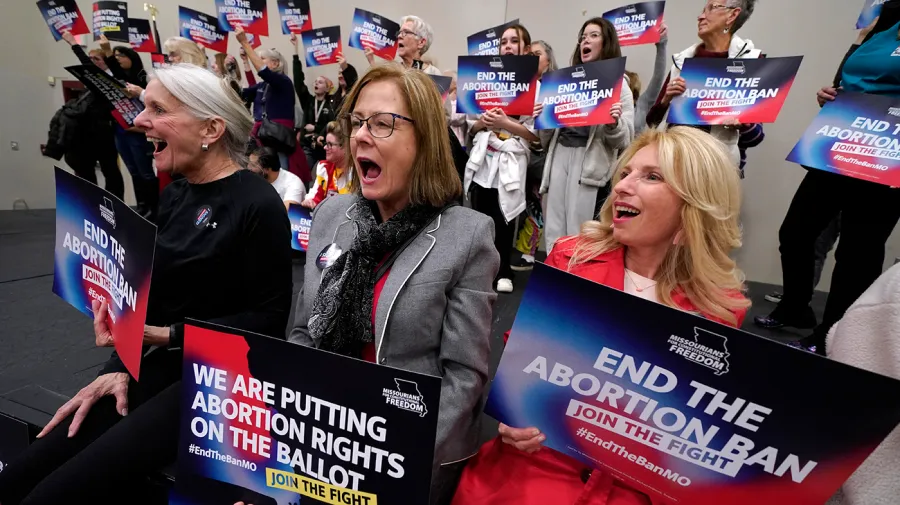
决策台总部预测,密苏里州周二投票决定保护堕胎权,以微弱优势否决了一项投票提案,该提案本将恢复近乎全面的堕胎禁令,距离该禁令被推翻仅两年。
Missouri voted to protect abortion access Tuesday, Decision Desk HQ projects, narrowly rejecting a ballot measure that would have reinstated a near-total abortion ban just two years after it was overturned.
2024年,密苏里州成为首个利用投票提案推翻近乎全面堕胎禁令、并在州宪法中写入生殖自由修正案的州。该提案亦称为第3号修正案,以51.6%的微弱多数获批。目前已统计15%的选票,近54%的选民否决了该提案。占主导地位的共和党控制的立法机构对结果大为光火,着手予以改变。他们利用立法手段将一项问题提交选票,旨在撤销堕胎权,并限制未成年人接受性别肯定药物和手术。
Missouri in 2024 became the first state to use a ballot measure to overturn a near-total abortion ban and put a reproductive freedom amendment in the state constitution. That measure, also called Amendment 3, was approved by a narrow 51.6 percent majority. Nearly 54 percent of voters rejected the measure, with 15 percent of the vote reported. The GOP-dominated legislature, furious at the result, set out to change it. They used a legislative maneuver to place a question on the ballot that would rescind abortion rights, as well as restrict gender-affirming drugs and surgery for minors.
反对者称,共和党试图通过将反跨性别措施与堕胎禁令捆绑包装——批评者称之为“选票糖衣”——以及沿用上届选举相同的修正案名称来误导选民。2024年,对第3号修正案投“赞成票”意味着废除该州堕胎禁令。今年,投“赞成票”则意味着恢复禁令。
Opponents said Republicans tried to mislead voters by packaging an anti-transgender measure with the abortion ban — an effort critics called “ballot candy”— and recycling the same amendment name from the last election. In 2024, a “yes” vote on Amendment 3 repealed the state’s abortion ban. This year, a “yes” vote reinstated it.
该州2022年的法律是全国最严格的,不设强奸或乱伦例外。投票提案支持者辩称,新措辞限制较少,更能反映选民2024年的意图。与2022年多布斯判决后通过的法律不同,第3号修正案为医疗急症和胎儿异常(出生缺陷或先天性疾病),以及强奸或乱伦幸存者(仅限怀孕12周内)设定了有限例外。该提案还将制定宪法层面的禁令,禁止为未成年人实施性别转换手术,以及为未成年人开具或给予异性激素或青春期阻滞药物——尽管两者已被法律禁止。
The state’s 2022 law was the strictest in the country, with no exceptions for rape or incest. Supporters of the ballot measure argued that the new language is less restrictive and better reflects what voters intended in 2024. Unlike the law that was passed in the wake of the Dobbs decision in 2022, Amendment 3 includes limited exceptions for medical emergencies and fetal anomalies (birth defect or congenital disorder), and for survivors of rape or incest only up to the 12th week of pregnancy. The measure would also have enacted a constitutional ban on gender transition surgery for minors as well as the prescription or administration of cross-sex hormones or puberty-blocking drugs to minors — though both are already banned by law.