是韧性还是运气?在最近于曼谷举行的国际货币基金组织-世界银行年会上,这一问题萦绕在每一位政策制定者心头。感到宽慰的理由充分:尽管遭遇一连串冲击,全球经济表现比许多人担心的要好。中东和北非地区亦是如此。
Resilience or luck? At the recent IMF-World Bank Annual Meetings in Bangkok, this question was on every policymaker’s mind. There were good reasons for relief: despite a succession of shocks, the global economy had held up better than many feared. So too has the Middle East and North Africa.
当二月底海湾地区爆发敌对行动,引发史上最大规模的石油和能源冲击时,许多人担心该地区经济将不堪重负:航运通道将关闭,能源价格将飙升,更脆弱的经济体将难以维持。八个月后,那些最坏的担忧并未成真。部分地区活动大幅放缓,但并未崩溃。在许多经济体中,活动仍在持续扩张。
When hostilities erupted in the Gulf at the end of February, provoking the largest oil and energy shock in history, many feared the region’s economies would be overwhelmed: Shipping lanes would close, energy prices would soar, and the more vulnerable economies would struggle to stay afloat. Eight months later, those worst fears have not materialized. Activity has slowed sharply in some places, but it has not collapsed. In many economies, it has continued to expand.
经济体已作出调整,现有缓冲和政策应对有助于吸收冲击。但压力正在积聚,特别是在进口依赖型、低收入和脆弱国家。
Economies have adjusted, while existing buffers and policy responses have helped absorb the shock. But pressures are building, particularly in import-dependent, low-income, and fragile states.
国际货币基金组织最新发布的《中东和中亚地区经济展望》预测,2026年中东和北非地区产出将收缩1.3%,比我们4月份的预测低2.7个百分点。然而,这一主要数字掩盖了横跨20多个国家的该地区内部的巨大差异。
The IMF’s latest Regional Economic Outlook for the Middle East and Central Asia projects output in the Middle East and North Africa to contract by 1.3% in 2026, 2.7 percentage points below our April forecast. Yet that headline figure conceals considerable differences in a region that spans more than 20 countries.
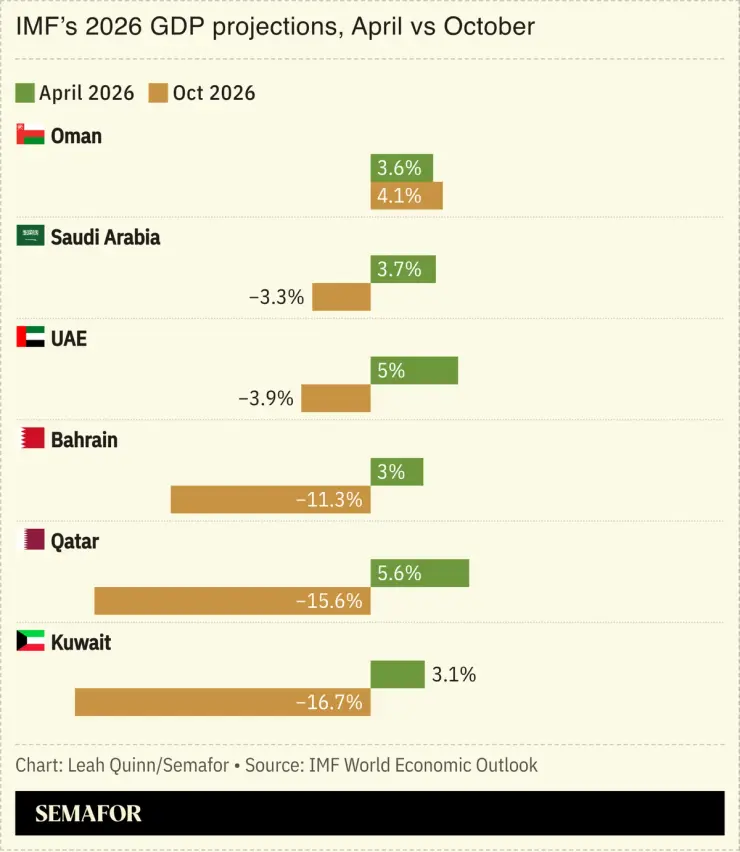
由于能源生产和贸易受阻,几个海湾经济体今年面临深度收缩。假设冲突缓和、贸易逐步恢复正常,预计2027年将强劲反弹。但这无法弥补损失:预计海湾地区产出在中期内将仍低于冲突前的预期。
Several Gulf economies face deep contractions this year as disrupted energy production and trade take their toll. A sharp rebound is expected in 2027, assuming the conflict abates and trade gradually normalizes. But it will not erase the losses: Gulf output is projected to remain below pre-conflict expectations in the medium term.
埃及、约旦、摩洛哥等主要石油进口国表现出令人惊讶的韧性,预计今年增长将超过4%。汇款、旅游、投资和有利的金融条件帮助维持了增长,而政策措施缓冲了家庭面临的较高食品和能源成本。但压力正在积聚,通胀预计下降速度将比春季预测的更慢。
Major oil importers like Egypt, Jordan, and Morocco have shown surprising resilience, with growth expected to exceed 4% this year. Remittances, tourism, investment, and favorable financial conditions have helped sustain growth, while policy measures have cushioned households from higher food and energy costs. But pressures are building, with inflation expected to decline more slowly than forecast in the spring.
冲突相关的中断持续时间越长,风险将越大。低库存和紧张的备用产能可能放大进一步的能源价格飙升。长期的不确定性可能拖累投资、旅游和贸易。最贫穷的经济体尤其脆弱:食品占家庭支出的很大份额,而援助减少留给缓冲另一冲击的空间更少。全球市场修正,无论是由对人工智能驱动收益的重新评估还是利率维持在较高水平更长时间引发,都会增加压力,特别是在融资需求已经很大的地方。
The risks will grow the longer conflict-related disruptions persist. Low inventories and tight spare capacity could magnify further energy price spikes. Prolonged uncertainty could weigh on investment, tourism, and trade. The poorest economies are especially vulnerable: food accounts for a large share of household spending, and declining aid leaves less room to cushion another shock. A global market correction, whether prompted by a reassessment of AI-driven gains or interest rates remaining higher for longer, would add to the strain, particularly where financing needs are already large.
对于中东和北非地区的政策制定者来说,曼谷会议上的共识很明确:在动荡时期,维护宏观经济稳定仍然是当前的政策首要任务。正如一位财政部长所言,“好时候建立的政策框架和缓冲决定了我们在坏时候有多少空间。”政策应侧重于遏制通胀、维护财政可持续性和保护弱势群体。随着食品、能源和交通成本上升,央行需要防范通胀卷土重来。
For MENA policymakers, the consensus in Bangkok was clear: In times of turbulence, preserving macroeconomic stability remains the immediate policy priority. As one finance minister put it, “the policy frameworks and buffers built in good times decide how much room we have in the bad times.”Policies should focus on containing inflation, preserving fiscal sustainability, and protecting the vulnerable. With food, energy, and transport costs rising, central banks need to guard against renewed inflation.
同时,政府应在保持债务可控并追求未来增长所需的投资和改革的同时,保护弱势家庭。这意味着动员税收、确定支出优先级,并确保支持具有针对性和临时性。缓冲较强的国家有更多空间支持复苏和重建。缓冲较弱的国家将面临更艰难的选择,以避免增加债务。
Meanwhile, governments should protect vulnerable households while keeping debt manageable and pursuing the investment and reforms needed for future growth. That means mobilizing revenue, prioritizing spending, and ensuring support is targeted and temporary. Countries with stronger buffers have more room to support recovery and reconstruction. Those with less will face tougher choices to avoid adding to their debt.
但应对这一冲击只是任务的一部分。地区经济体需要为下一次危机做好准备。贸易和生产多元化将减少对狭窄出口篮子和脆弱运输路线的依赖。更好的基础设施和更深度的区域一体化将降低改道成本并强化供应链。对可再生能源的投资将降低对波动燃料市场的敞口。
But managing this shock is only part of the task. Regional economies need to prepare for the next crisis. Diversifying trade and production would reduce reliance on narrow export baskets and vulnerable transport routes. Better infrastructure and deeper regional integration would cut rerouting costs and strengthen supply chains. Investment in renewable energy would limit exposure to volatile fuel markets.
与此同时,该地区需要新的增长引擎。包括人工智能在内的数字技术提供了机遇,因为海湾经济体正在投资数据中心和数字基础设施。将这些投资转化为更广泛的繁荣,将需要更好的教育和技能、更强的治理和竞争,以及与全球市场更深层的联系。
At the same time, the region needs new engines of growth. Digital technologies, including AI, offer opportunities as Gulf economies invest in data centers and digital infrastructure. Turning that investment into broader prosperity will require better education and skills, stronger governance and competition, and deeper links to global markets.
过去八个月的经验表明,韧性是通过调整、更强的政策框架以及冲突前建立的缓冲赢得的。但韧性是一个过程。如果中东冲突持续且缓冲持续耗尽,今天的滞后效应可能成为明天更大规模的调整。
The experience of the past eight months suggests that resilience has been earned, through adjustment, stronger policy frameworks, and buffers built before the conflict. But resilience is a process. If the Middle East conflict persists and buffers are steadily depleted, today’s delayed effects could become tomorrow’s larger adjustment.
政府拥有行动的机会。在反复冲击的时代,在下一次冲击来临前做好准备的经济体,将不仅处于最有利位置去承受它,更能以更强的姿态走出困境。
Governments have an opportunity to act. In an era of recurring shocks, the economies that prepare before the next disruption will be best placed not just to endure it, but to emerge stronger.