驱车沿巴林国王哈利法堤道驶入首都麦纳麦,美国在海湾的主要海军枢纽所遭受的战争破坏便一目了然:一侧是被摧毁的通信天线;另一侧是焦黑的建筑。高层建筑上的裂口被木板封住。
DRIVE ALONG Bahrain’s King Khalifa causeway into Manama, the capital, and the war damage to America’s main naval hub in the Gulf is apparent: destroyed communication antennae on one side; blackened buildings on the other. Gashes in high-rise buildings are boarded up.
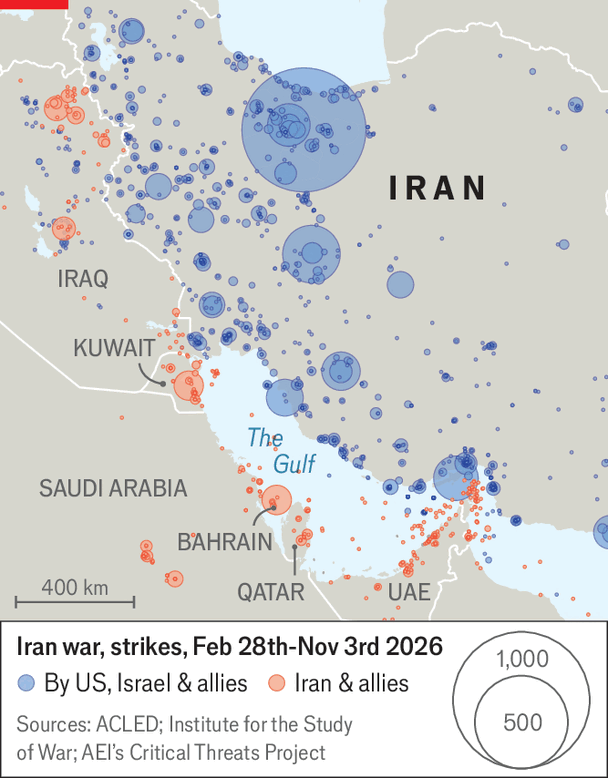
在2月28日至4月8日美国与以色列对伊朗开战的高峰期,伊朗向巴林发射了700多枚导弹和攻击无人机。大部分被拦截,但也有一些造成了实际破坏。伊朗不仅打击了军事目标,还袭击了一座海水淡化厂、多家炼油厂和一家铝厂。海湾其他地区也经历了类似的创伤(见图)。
Iran fired more than 700 missiles and attack drones at Bahrain at the height of the American-Israeli war on Iran between February 28th and April 8th. Most were intercepted but some inflicted real damage. Iran hit not only military targets but also a desalination plant, refineries and an aluminium factory. A similar trauma was felt elsewhere in the Gulf (see map).
如今第二轮战争迫在眉睫。在东侧,西奥多·罗斯福号航母打击群正驶往阿拉伯海,与另外两个航母打击群会合。在西侧,美国正通过空运向以色列和约旦的基地运送军事装备,包括更多“爱国者”防空导弹连。本周美国对格什姆岛上伊朗防空导弹的打击,表面上是由对美国无人机和战机的威胁引发的,但也可能是在为战场做准备。
Now a second round of the war looms. To the east, the USS Theodore Roosevelt carrier strike group is sailing to join two others in the Arabian Sea. To the west, an American airlift is ferrying military equipment to bases in Israel and Jordan, including more Patriot air-defence batteries. American strikes against Iranian anti-aircraft missiles on Qeshm island this week were seemingly provoked by threats to American drones and jets, but may also serve to prepare the battlefield.
海湾国家担心,唐纳德·特朗普总统在国内中期选举受挫后,可能会对外发泄怒火(见简报)。他们还预计自己会成为伊朗怒火的目标,因为伊朗威胁要“不受地理限制”地进行报复。
Gulf states fear that President Donald Trump may lash out abroad after being wounded in the midterm elections at home (see Briefing). They also expect to be the target of Iran’s wrath, as it threatens to respond “without geographical limitations”.
全球范围内,西方导弹拦截器的库存已严重枯竭。乌克兰及其他国家的系统可能帮助海湾国家降低无人机威胁,尽管无人机技术正在快速进步。与此同时,以色列情报官员对伊朗自停火以来导弹库存积累的速度表示惊讶。
Stocks of Western missile interceptors are severely depleted worldwide. Ukrainian and other systems may help Gulf states reduce the threat from drones, though these are improving fast. Israeli intelligence officials, meanwhile, express surprise at the speed of Iran’s build-up of missile stocks since the ceasefire.
在以色列和美国的“史诗之怒”行动进行了数周空袭之后,许多人质疑再多投些炸弹能取得什么成果——用特朗普的话说,就是“来一点史诗之怒”。美以两国很可能已经打击了所有容易得手的目标,而福尔多、纳坦兹和伊斯法罕的主要核设施此前已在2025年遭到轰炸,约400公斤高浓缩铀被埋于地下。
After weeks of air strikes during Israel’s and America’s Operation Epic Fury, many question what can be achieved by more bombing—“a little Epic Fury”, as Mr Trump called it. The pair probably struck all the easy targets and the main nuclear sites at Fordow, Natanz and Isfahan were previously bombed in 2025, burying some 400kg of highly enriched uranium.
剩下的目标大多是难以到达的地点,例如伊朗伊斯兰革命卫队一直在电视上炫耀的地下“导弹城”。此类设施的入口在第一轮打击中已被轰炸,但许多似乎此后又被重新挖开。美国最大的钻地弹库存看来正日渐减少。
What remains are mostly hard-to-reach places, such as underground “missile cities” that Iran’s Islamic Revolutionary Guard Corps has been showing off on television. Entrances to such facilities were bombed in the first round but many seem to have been excavated since. American stocks of the biggest bunker-buster bombs appear to be running low.
大量关注集中在“镐山”的神秘工程上,那里可能是另一处核设施。它深埋于花岗岩之中,常规炸弹或许无法企及(这引发了未经证实的说法,称特朗普可能对其使用核武器)。阿拉伯联合酋长国官员表示,他们“已做好最坏打算”,并誓言保卫自己的国家。
Much attention focuses on mysterious work at “Pickaxe Mountain”, possibly another nuclear facility. It is buried so deep in granite that it may be beyond the reach of conventional bombs (raising unsubstantiated claims that Mr Trump might use a nuclear weapon against it). Officials in the United Arab Emirates (uae) say they are “braced for the worst”, and vow to defend their country.
阿联酋在战争中承受了伊朗最猛烈的火力,共面对超过2800枚伊朗导弹和无人机,这或许是因为它与以色列关系密切。但它也拥有该地区最强大的防空系统,具备层层叠叠的拦截手段,辅以攻击直升机上的机炮、国产电子战装备,或许还有以色列的激光武器。沙特阿拉伯由于国土面积更大、基础设施分布广泛,保卫其领土将更为困难。它还同时面临来自伊朗及其也门盟友胡塞武装的威胁。
The uae endured the heaviest Iranian fire in the war, facing a total of more than 2,800 Iranian missiles and drones, perhaps because of its close ties with Israel. But it also boasts the region’s most powerful air defences with overlapping layers of interceptors, supplemented by guns on attack helicopters, home-made electronic-warfare gear and perhaps Israeli laser weapons. Saudi Arabia will find it harder to defend its territory, given its larger size and sprawling infrastructure. It also faces threats from both Iran and its Yemeni ally, the Houthi militia.
随着美国将部队和装备进一步远离伊朗——主要部署至以色列和约旦——其在海湾地区基地的前景变得扑朔迷离。海湾国家领导人正越来越多地寻求其他方面的保护。例如,沙特阿拉伯已与巴基斯坦和土耳其签署了《麦加协定》,这两国已部署或正考虑派遣部队。它们在实际战争中会采取何种行动,仍有待观察。
As America pulls forces and equipment farther from Iran—mainly to Israel and Jordan—the future of its bases in the Gulf is open to question. Increasingly, Gulf leaders are looking for protection elsewhere. Saudi Arabia, for instance, has signed the Mecca pact with Pakistan and Turkey, which have deployed or are thinking of sending forces. What they would do in an actual war remains to be seen.
海湾国家间的深度融合将有所帮助——尤其是在建立联合防空体系方面。但长期争吵不休的海湾国家主要寻求国家层面或双边安全协议,而非集体安全协议。阿联酋官员承认,海湾国家共同应对伊朗挑战的能力“已被证明是空洞的”。
Deeper integration among Gulf countries would help—not least in setting up joint air defences. But ever-bickering Gulf states have mainly sought national or bilateral security deals rather than collective ones. Gulf states' ability to stand together against the Iran challenge, admit Emirati officials, “has proven hollow”.