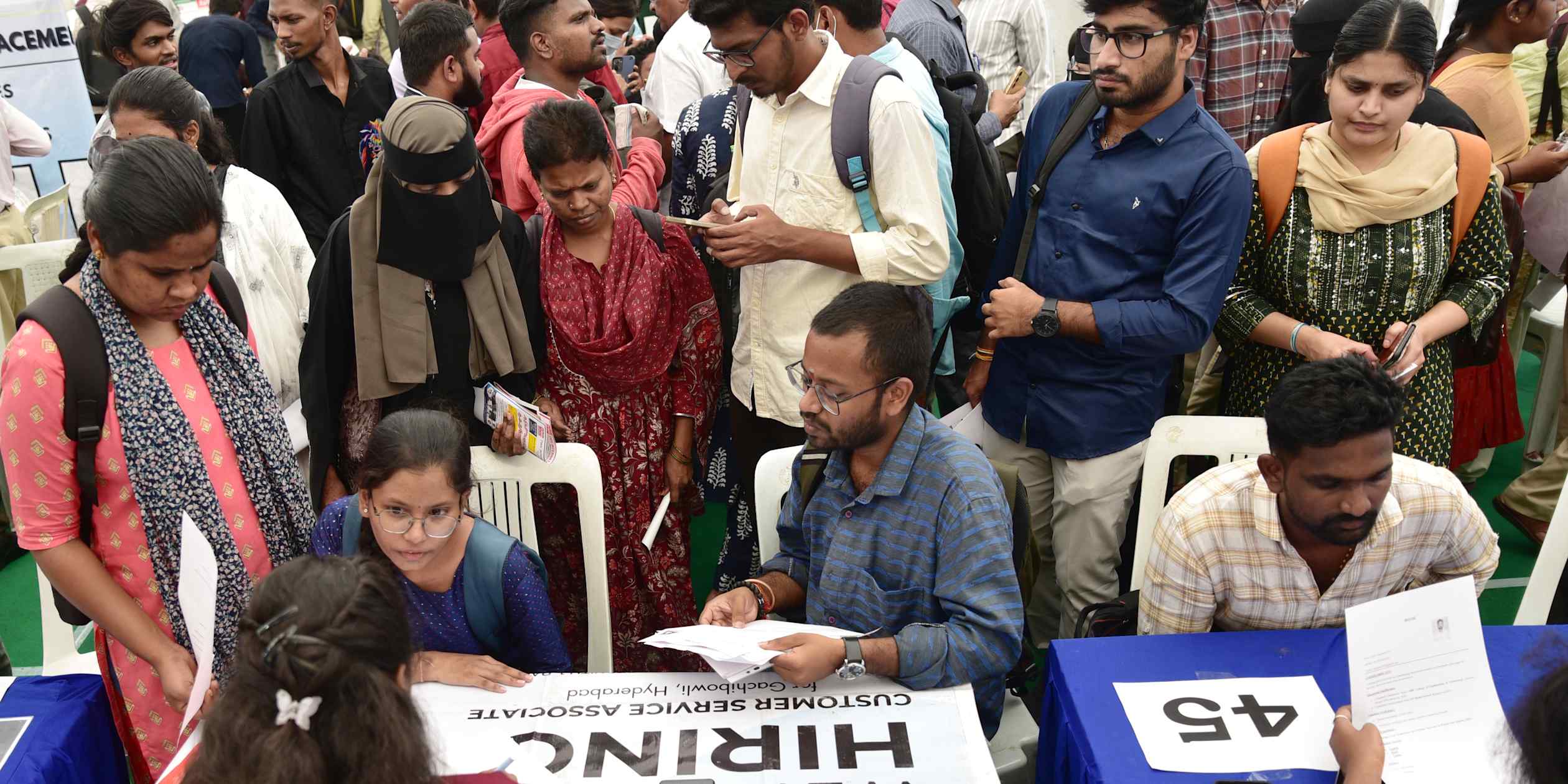
班加罗尔——印度最大科技行业协会的最高管理层对《日经亚洲》表示,由于企业利用人工智能实现初级编程和软件测试工作的自动化,印度应届大学毕业生在获得技术类工作时可能会面临困难。
BENGALURU -- Recent college graduates in India could struggle to land technology jobs as companies automate entry-level coding and software testing work with artificial intelligence, the top executive at the country's largest industry body for technology companies told Nikkei Asia.
印度全国软件和服务企业协会总裁拉杰什·南比亚尔表示,这一障碍可能会持续到印度的软件出口商适应新的商业现实。这将涉及在网络安全、人工智能咨询以及实施和维护等方面开拓新的机遇,以抵消技术基础设施管理等关键收入来源中工作量的减少。
Rajesh Nambiar, president of the National Association of Software and Services Companies, said the hurdle could last until India's software exporters adjust to the new business reality. That would involve opening up new opportunities in cybersecurity and AI consulting as well as implementation and maintenance, among others, in order to offset reduced workloads in key revenue streams such as technology infrastructure management.
曾任信息技术服务公司高知特印度董事长兼董事总经理的南比亚尔说,随着收入模式从基于项目部署的人数转向基于实际成果,应届毕业生的目标也将随之改变。这表明有必要更新计算机专业的课程设置,否则印度可能会出现数以千计技能不匹配的工程专业毕业生。
As revenue models become based on the actual outcome rather than the number of people deployed on a project, the goalposts will shift for fresh graduates, said Nambiar, a former chairman and managing director for India at information technology services company Cognizant. That suggests a need to refresh the computer studies curriculum, otherwise India could find itself with thousands of engineering graduates with mismatched abilities.
南比亚尔在谈到大学生时表示:“从应届生的角度来看,这是一个令人担忧的问题,我不会对此进行任何粉饰。如果我们的教育体系无法非常迅速地完成这种转型,学生们走出来时所掌握的技能可能就已经非常过时了。”
"From a fresher's point of view, it is a concern, (and) I will not sugarcoat it any differently," Nambiar said, referring to college students. "If our education system is unable to make that transition very quickly, students will come out with skill sets which may be very obsolete already." India was home to 5,903 engineering and technology colleges in the fiscal year that ended in March. Enrolments neared 2.6 million, according to official estimates, driven by the perception that technology jobs are the gateway to economic prosperity due to their high salaries. But India is already wrestling with a graduate jobs crisis -- Azim Premji University estimates that the number of unemployed graduates soared nearly fourfold to about 11 million between 2004 and 2023 -- even in this early stage of the AI era.
根据官方估计,在截至3月的财年中,印度拥有5903所工程和技术院校。在认为技术工作薪资高、是通往经济繁荣之门的观念推动下,招生人数接近260万。然而,即便在人工智能时代的早期阶段,印度就已经在苦苦应对毕业生就业危机——阿齐姆·普雷姆吉大学估计,从2004年到2023年,失业毕业生人数飙升了近四倍,达到约1100万。
"The level of transformations required in the curriculum has never been this significant," Nambiar said.
南比亚尔说:“课程设置所需的变革程度从来没有像现在这样意义重大。”
New Delhi has kickstarted some initiatives to get young people AI-ready. Those include teaching the subject to pupils as young as eight and launching an online repository of online courses on AI, data analytics and cybersecurity, with the government saying that 1.3 million people have received course completion certificates.
新德里已经启动了一些旨在让年轻人做好人工智能准备的举措。其中包括向小至八岁的学生教授该学科,并推出一个关于人工智能、数据分析和网络安全的在线课程资料库,政府称已有130万人获得了课程结业证书。
The job crunch for graduates underscores broader challenges for India's software exporters, who are experiencing a slowdown in growth as AI upends their traditional business and revenue models. At the same time, their clients have gone easy on technology spending amid geopolitical uncertainties around the U.S. and Israel's war against Iran, which followed Russia's invasion of Ukraine.
毕业生的就业紧缩凸显了印度软件出口商面临的更广泛挑战,随着人工智能颠覆其传统的商业和收入模式,这些出口商的增长正在放缓。与此同时,在围绕美国以及以色列对伊朗战争(继俄罗斯入侵乌克兰之后)的地缘政治不确定性背景下,其客户在技术支出上也变得谨慎。
India's largest software exporter, Tata Consultancy Services (TCS), reported 0.5% sequential growth in revenues for the July-September period, its weakest in three years. Infosys, the second-largest company, cut its revenue growth forecast for the fiscal year ending March 2027 to between 1% and 2% from an earlier projection of 1.5% to 3%.
印度最大的软件出口商塔塔咨询服务公司公布,7月至9月期间的营收环比增长0.5%,为三年来最弱表现。第二大公司印孚瑟斯将截至2027年3月的财年营收增长预测从先前的1.5%至3%下调至1%至2%。
Nambiar said the industry is going through a "rebalancing," which he expects to continue for "some more time" until AI-related business picks up and offsets the loss of revenue from legacy infrastructure maintenance work. There are early signs of that happening, with TCS reporting a 19% jump in annualized AI revenue to $3.1 billion, while Infosys said AI revenue rose 29% quarter on quarter in the three months through September, which compared with growth of 8% in the previous three-month period.
南比亚尔表示,该行业正在经历一次“再平衡”,他预计这种情况将持续“一段时间”,直到人工智能相关业务回暖并抵消传统基础设施维护工作的营收损失。这方面已经出现了早期迹象,塔塔咨询服务公司报告称,其年度化人工智能营收跃升19%,达到31亿美元;而印孚瑟斯表示,在截至9月的三个月中,人工智能营收较上一季度增长29%,而上一季度的增幅为8%。
There will be "some intermittent pain," Nambiar said, but "when we cross the chasm, if you take a look at a few years down the line, I think this will be very, very positive." There are chances, however, that some companies may struggle as the industry aligns itself with AI.
南比亚尔说,将会“有一些间歇性的阵痛”,但“当我们跨越这道鸿沟,如果你展望几年后,我认为这将是非常非常积极的”。然而,随着行业与人工智能对齐,一些公司可能会遇到困难。
"There is very little doubt about (survival of) the industry, but (it's) more to do with the underlying companies," Nambiar said, adding that he is confident that 80% to 85% of businesses will survive. "[But] maybe some of them will have a little bit of a hard time making the cut only because they are very used to the old way of doing things.
南比亚尔在谈到行业的生存时说:“行业(生存)几乎没有什么疑问,但这更多与底层的公司有关。”他补充说,他有信心80%到85%的企业能够生存下来。“(但)也许其中一些企业会很难过关,仅仅是因为它们非常习惯于旧的做事方式。你需要颠覆自己的业务,否则你就无法进入新世界。”
"You need to disrupt your own business, otherwise you're not going to get into the new world."