美国中期选举中民主党大获全胜,迅速导致唐纳德·特朗普总统淡化美国主导再次打击伊朗的前景。不过,对于海湾阿拉伯国家而言,选举结果仅仅给了它们一点喘息空间。
A sweeping Democratic victory in the US midterms quickly led to President Donald Trump playing down the prospect of another round of US-led strikes against Iran. For the Gulf Arab states, though, the election results merely give them a little breathing room.
在伊朗战争爆发前,海湾面临一个艰巨挑战:减少对石油的依赖。如今它面临三个。要向前发展,海湾必须让经济摆脱对烃类资源的依赖,让安全摆脱对美国的依赖,让地理摆脱对霍尔木兹海峡的依赖。
Before the Iran war began, the Gulf faced one daunting challenge: reducing its reliance on oil. Today it faces three. To move forward, the Gulf must diversify its economies away from hydrocarbons, its security away from the US and its geography away from the Strait of Hormuz.
官员们越来越多地用相似的措辞谈论石油、安全和地理。沙特阿拉伯曾表示,到2030年石油价格对经济几乎不再重要。卡塔尔最近表示,其与美国的同盟关系依然“非常重要”,但也“不够”;阿曼表示,外部伙伴在海湾安全中的作用“不能再是主要的”。几个月前,阿拉伯联合酋长国设定了“零霍尔木兹依赖”的目标。海湾已在所有三条战线上寻找答案。
Officials increasingly talk about oil, security and geography in similar terms. Saudi Arabia once said that by 2030 oil prices would barely matter to the economy. Qatar recently said its US alliance remains “very important,” but also “not enough,” while Oman said external partners’ role in Gulf security “can no longer be primary.”A few months ago, the United Arab Emirates set a goal of “zero Hormuz dependency.”The Gulf is already searching for answers across all three fronts.
它正在建设新产业,从物流、金融到数据中心。它正在寻求地区盟友以减少对美国安全的依赖,同时拓展能源贸易路线、并可能建设海外储存设施以绕过霍尔木兹海峡。伊朗战争考验了这些答案,并提高了赌注。
It’s building new industries, from logistics and finance to data centers. It’s seeking regional allies to reduce reliance on US security while expanding energy trade routes and possibly overseas storage to bypass Hormuz. The Iran war has tested those answers and raised the stakes.
人们仍真切担心,如果受挫的特朗普重新点燃冲突,德黑兰可能袭击机场和数据中心,威胁它们建设石油以外产业的努力。伊朗还可能打击海湾国家用来绕过霍尔木兹海峡的管道和港口。华盛顿也已表明,它优先考虑以色列的需求而非海湾的安全,即使双方关系已成为国内一项有争议的选举议题。
There remain real fears that if a wounded Trump does reignite the conflict, Tehran could target airports and data centers, threatening their efforts to build up industries beyond oil. Iran could also hit the pipelines and ports that Gulf states use to bypass Hormuz. Washington has also shown that it prioritizes Israel’s needs over the Gulf’s security, even as their relationship became a contentious election issue at home.
如果海湾国家处理不当,后果将波及其国界之外。数百万家庭依赖来自海湾的汇款,发展中国家政府则依赖其救助。海湾资本支撑着全球市场,甚至有助于压低美国的借贷成本。在国内,繁荣程度减弱可能会给这些国家维系社会契约带来压力,该契约以经济利益换取政治默许。对生活水平的不满可能转化为变革诉求。
If the Gulf gets this wrong, the fallout will reach beyond its borders. Millions of families depend on remittances from the Gulf and governments in developing countries rely on its bailouts. Gulf capital supports global markets, helping to suppress even US borrowing costs. At home, weaker prosperity could strain the social contract governing these nations, which exchanges economic benefits for political acquiescence. Grievances over living standards could turn into demands for change.
石油和天然气是最古老的多元化难题。但这六个海湾国家拥有不同的能源资源、债务水平和支出需求,并非都以相同方式应对这一问题。
Oil and gas is the oldest diversification problem. But the six Gulf states, with differing energy resources, debt levels and spending needs, don’t all approach it in the same way.
科威特、阿联酋和卡塔尔处于最有利地位。它们拥有巨大的碳氢化合物财富、较少的公民人口——科威特的公民人口甚至在减少——以及低债务。对它们而言,摆脱对石油和天然气的依赖是可取的,但属于奢望,而非必需。
Kuwait, the UAE and Qatar are in the strongest position. They have vast hydrocarbon wealth, small citizen populations — shrinking in Kuwait’s case — and low debt. For them, diversification from oil and gas is desirable, but it’s a luxury, not a necessity.
巴林和阿曼处于较弱阵营。巴林债务高企且仍在攀升,留给冲击的缓冲空间极小,愈发依赖更富裕邻国的支持。阿曼展示了改善的面貌,自2020年以来债务近乎减半。节制开支和新增税收有所助益,但2020年后油价上涨的运气也发挥了作用。
Bahrain and Oman sit in a weaker camp. Bahrain’s debt is high and still climbing, leaving little room for shocks and increasing its reliance on support from wealthier neighbors. Oman shows what improvement can look like, nearly halving debt since 2020. Spending restraint and new taxes helped, but so did the good luck of higher oil prices after 2020.
剩下的是沙特阿拉伯,这是体量最大、影响最深远的案例。“2030愿景”在2016年启动时承诺降低对石油的依赖。十年过去,这种依赖非但未减,反而加深了。
That leaves Saudi Arabia, the biggest and most consequential case. Vision 2030 promised to reduce its reliance on oil when it launched in 2016. Ten years on, that dependence has deepened instead.
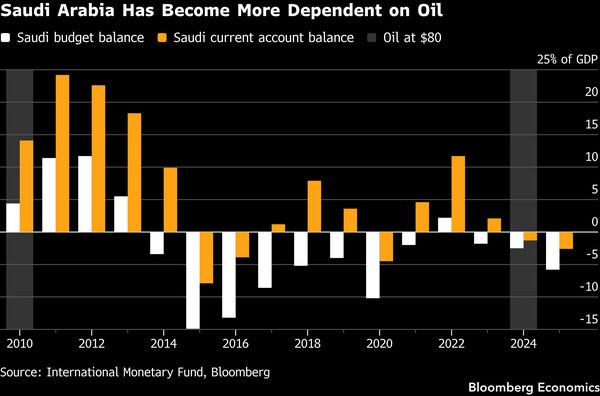
一个简单的对比有助于解释其中的缘由。2010年和2024年,石油平均价格均约为每桶80美元。2010年,这一价格带来了预算盈余,并覆盖了进口和汇款,还留有资金用于海外投资。到了2024年,同样的价格却导致了赤字,不再足以支撑利雅得的开支。这使得该王国从资本输出国变成了向世界的净借款国。需要更高的油价来平衡预算和外部账户,表明对碳氢化合物的依赖程度更高,而非更低。
A simple comparison helps explain how and why. Oil averaged about $80 a barrel in both 2010 and 2024. In 2010 that price delivered a budget surplus, and it covered imports and remittances, leaving cash to invest abroad. By 2024 the same price produced a deficit and was no longer enough to fund Riyadh’s spending. That turned the kingdom into a net borrower from the world instead of an exporter of capital. Needing a higher oil price to balance both its budget and external accounts points to greater dependence on hydrocarbons, not less.
虽然海湾地区可能尚未摆脱对石油和天然气的依赖,但已在金融、港口、机场和旅游业建立了世界级产业,其中迪拜在许多领域是最明显的成功案例。如今,该地区正押注人工智能,特别是数据中心,这可能为经济做出新的有益贡献,而无需取代碳氢化合物。
While the Gulf may not have broken its dependence on oil and gas, it has built world-class industries in finance, ports, airports and tourism, with Dubai the clearest success story in many of these sectors. Now the region is betting on artificial intelligence, especially data centers, which could make a new useful contribution to the economy without replacing hydrocarbons.
人工智能也带来了海湾地区熟悉的风险:重复建设。在早期的多元化努力中,海湾国家往往瞄准相同的领域。但世界不需要六个海湾金融中心,也不需要在一个狭小地区建设多个超大港口。随着各国竞相建设,人工智能可能面临同样的产能过剩问题。
AI also carries a familiar Gulf risk: duplication. In earlier efforts to diversify, Gulf states have often targeted the same sectors. But the world doesn’t need six Gulf finance hubs or multiple megaports in one small region. AI could face the same overcapacity problem as countries race to build.
伊朗战争暴露了海湾多元化计划的另一个脆弱性:新兴产业需要昂贵的基础设施,而这些基础设施本身可能成为攻击目标。冲突早期,阿联酋和巴林的几个数据中心遭到伊朗袭击,这一问题因此变得尤为清晰,因为袭击既能摧毁设施,也能毁掉其中存储的信息。
The Iran war has exposed another vulnerability in the Gulf’s diversification plans: New industries require costly infrastructure that can itself become a target. Early in the conflict, several data centers in the UAE and Bahrain were hit by Iranian strikes, making the problem especially clear because attacks can destroy both facilities and the information they store.
这使得海湾地区的安全关系变得更加重要。仅依赖美国现在似乎是一项冒险的计划,但完全替代美国也不可行。相反,答案看起来越来越像“美国加”:保留美国的安全保护伞,但通过在国内建设更多能力和加强地区内的联盟,减少对其的依赖。
That makes the Gulf’s security relationships even more important. Relying solely on the US now appears to be a risky plan, but replacing it altogether isn’t viable either. Instead, the answer looks increasingly like “America Plus”: Keep the US security umbrella, but depend on it less by building more capabilities at home and strengthening alliances across the region.
这种转变反映了多年来对华盛顿的失望,以及对美国安全保障实际上能提供什么的日益怀疑,从2015年与伊朗的核协议,到2017年对卡塔尔的封锁,再到2019年对阿美公司的袭击,以及2022年也门胡塞武装对阿布扎比的导弹袭击。
That shift reflects years of disappointment with Washington and growing doubts about what the US security umbrella actually guarantees, from the 2015 nuclear deal with Iran to the 2017 blockade of Qatar, the 2019 attacks on Aramco and the 2022 missile strikes on Abu Dhabi by Yemen’s Houthis.
特朗普2.0本应提供恢复信心的机会,但却加深了不安全感。海湾领导人在他2025年回归后拥抱他,举办了他首次计划中的外国访问,承诺数万亿美元的交易和投资,并提高石油产量——这可能违背其自身经济利益。他们想要什么作为回报?安全,尤其是不希望有地区战争。然而,美国和以色列对德黑兰发动了一场重大战争——这是海湾国家曾游说阻止的战争,并使其国家成为战场的一部分。
Trump 2.0 offered an opportunity to restore confidence, but instead deepened the sense of insecurity. Gulf leaders embraced him after his 2025 return, hosting his first planned foreign visit, pledging trillions of dollars in deals and investments and raising oil output — possibly against their own economic interests. What did they want in return? Security and, above all, no regional wars. Instead, the US and Israel launched a major war against Tehran — one Gulf states had lobbied to prevent, and which turned their countries into part of the battlefield.
如果美国没有兑现与海湾国家的“石油换安全”协议,那么替代方案是什么?既不现实的是单打独斗,也不是简单地从华盛顿转向北京。海湾国家可以增加支出,尝试建立自己的国防工业,但受限于人力和技术。而且,尽管与中国的贸易蓬勃发展,安全关系比经济关系更难多元化。数十年的武器、基地、情报和训练将海湾国家与华盛顿绑定在一起。
If the US didn’t deliver on its “oil for security” pact with the Gulf, what are the alternatives? Neither going it alone nor simply switching from Washington to Beijing is realistic. Gulf states can spend more and try to build their own defense industries, but are constrained by manpower and technology. And despite booming trade with China, security relationships are harder to diversify than economic ones. Decades of weapons, bases, intelligence and training bind the Gulf to Washington.
这使得加强地区联盟成为减少对华盛顿依赖的最现实途径。这种联盟已经成形。沙特阿拉伯、土耳其和巴基斯坦于8月签署了一项共同防御协议,将对其中一方的攻击视为对所有成员的攻击。该协议在不取消美国保护伞的前提下,增加了一层安全保障。
That leaves stronger regional alliances as the most realistic way to reduce dependence on Washington. They’re already taking shape. Saudi Arabia, Turkey and Pakistan signed a joint defense pact in August, treating an attack on one as an attack on all. The agreement adds another layer of security without removing the US umbrella.
这种安排已经面临可信度考验。胡塞武装的袭击已瞄准王国各地的机场,击中沙特阿美公司总部,并扰乱了主要的商业和娱乐活动。到目前为止,安卡拉和伊斯兰堡提供的援助有限。
That arrangement is already facing a credibility test. Houthi attacks have targeted airports across the kingdom, hit Saudi Aramco's headquarters, and disrupted major business and entertainment events. So far, Ankara and Islamabad have provided limited assistance.
尽管如此,这可能正是未来的发展方向。预计将出现更多、更广泛的区域防务协议——并可能与非美国大国开展更深层次的合作——而不会完全抛弃华盛顿。目前,更大的风险在于美国退出该地区,而非相反。
Still, that may be the direction of travel. Expect more and broader regional defense agreements — and possibly deeper collaboration with non-US powers — without completely abandoning Washington. For now, the bigger risk is the US walking away from the region, not the other way round.
伊朗战争暴露了第三个依赖问题:地理。海湾国家正努力摆脱对石油的依赖,并觉醒到其与美国安全关系已发生变化的现实之际,冲突正威胁着将其主要收入来源输送至世界的航线的生存能力。
The Iran war has exposed a third dependence problem: geography. Even as Gulf states grapple with the need to move on from oil and wake up to the changed reality of their security relationship with the US, the conflict is threatening the viability of the routes that carry their primary source of revenue to the world.
霍尔木兹海峡已曾关闭一次,并可能再次关闭。战争表明,它对全球能源市场依然至关重要。自2023年底胡塞武装开始扰乱航运以来,红海航道——包括曼德海峡和苏伊士运河——的通行量也从未完全恢复。随着红海被证明是霍尔木兹海峡的主要替代路线,该航道面临的新威胁分量更重。
The Strait of Hormuz has already been shut once, and could be shut again. The war has shown how central it remains to global energy markets. Traffic through the Red Sea — including Bab el-Mandeb and the Suez Canal — has also never fully recovered since the Houthis began disrupting shipping in late 2023. With the Red Sea proving to be the main alternative to Hormuz, renewed threats to that route now carry even more weight.
这种中断威胁着中东能源对全球市场的供应,并切断了收入回流该地区的渠道。一场旷日持久的战争不仅可能改变中东能源出口的数量,还可能改变其将能源输送至世界的方式。
The disruption threatens Middle Eastern energy supplies to global markets and cuts the flow of income back into the region. A protracted war is likely to change not only how much energy the Middle East exports, but also how it gets that energy to the world.
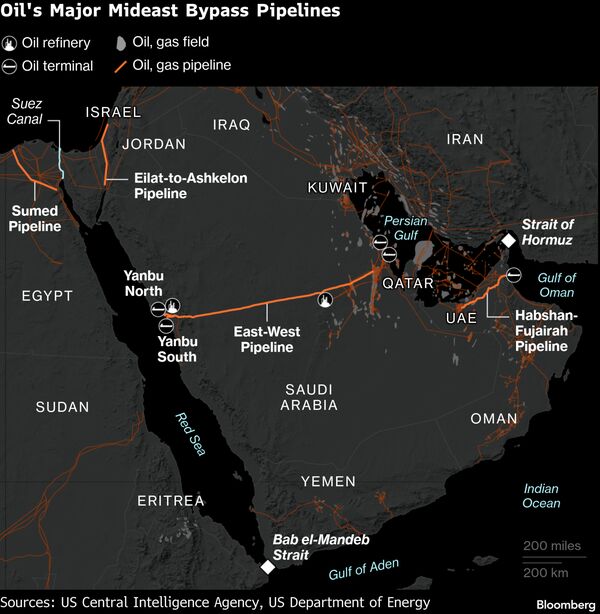
一种解决方案是替代路线。沙特阿拉伯利用其东西向管道通往红海,阿联酋通过霍尔木兹海峡之外的富查伊拉港出口,阿曼则使用海峡以外的港口。
One solution is alternative routes. Saudi Arabia uses its East-West pipeline toward the Red Sea, the UAE exports through Fujairah outside Hormuz, and Oman uses ports beyond the strait.
在伊朗战争期间,这些路线证明了其价值,使能够使用它们的国家保持了出口收入流动,并缓冲了对全球能源市场的冲击。但冲突区内的替代路线本身也存在脆弱性:管道、港口和终端同样可能遭到袭击,导致暂时性或长期性的关闭。
These routes proved valuable during the Iran war, keeping export revenues flowing for countries able to use them and softening the shock to global energy markets. But alternative routes within a conflict zone have their own vulnerability: Pipelines, ports and terminals can also be attacked, inflicting temporary or lasting shutdowns.
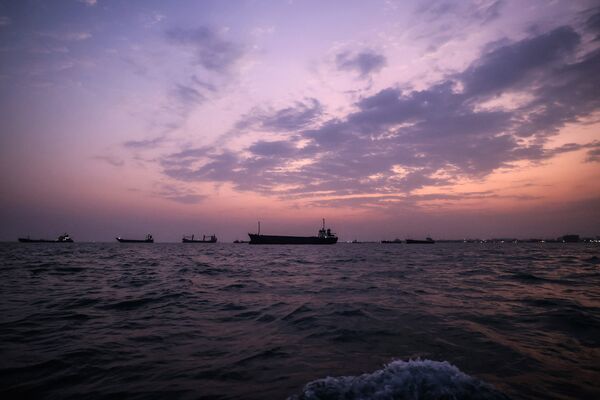
这指向另一种解决方案:在海外储存能源。海湾产油国可能会在中国、印度和韩国等地建设或租赁储存设施,在霍尔木兹海峡开放时储备库存,在海峡关闭时动用这些储备。
That points to another solution: storing energy abroad. Gulf producers will likely build or lease storage in places such as China, India and Korea, filling stocks while Hormuz is open and drawing them down when it shuts.
海外储存之所以有吸引力,有两个原因。首先,科威特、卡塔尔和巴林无法通过本国领土绕过霍尔木兹海峡。经过邻国的管道需要政治协议、耗资巨大,且建设需要数年时间。海外储存提供了一种更简单、单方面的对冲手段。
Overseas storage is attractive for two reasons. First, Kuwait, Qatar and Bahrain can’t bypass Hormuz through their own territory. Pipelines through neighbors require political agreements, cost money and take years to construct. Storage abroad offers a simpler, unilateral hedge.
其次,即使是沙特阿拉伯、阿联酋和阿曼,仍然面临风险。它们的替代路线依赖于地区内的固定基础设施,这些设施依然容易受到攻击。海外储存将部分供应链完全移出战场之外。
Second, even Saudi Arabia, the UAE and Oman still face risks. Their alternative routes depend on fixed infrastructure inside the region, which remains vulnerable to attack. Storage abroad moves part of the supply chain beyond the battlefield altogether.
外部储存并非完美解决方案。储存容量有限:产油国可能储存相当于一个月、三个月或12个月出口量的能源,但无法储存足以应对霍尔木兹海峡无限期关闭的量。这是一种部分对冲,而非永久替代方案。
External storage isn’t a perfect solution. Capacity is finite: Producers might store one, three or 12 months’ worth of exports, but they can’t store enough to survive an indefinite Hormuz closure. It’s a partial hedge, not a permanent substitute.
同样的逻辑也适用于另外两个多元化问题。地区安全集团无法完全取代美国的安全伞。金融、物流和数据中心无法消除对石油的依赖。这些都是没有完整解决方案的重大问题,但部分修复仍远好于毫无作为。
The same logic applies across the other two diversification problems. Regional security blocs can’t replace the US umbrella entirely. Finance, logistics and data centers can’t eliminate dependence on oil. These are big problems with no complete solutions, but partial fixes are still much better than none.
困难在于,海湾地区现在需要同时解决这三个问题。经济多元化需要资金。安全多元化需要资金。地理多元化也需要资金。与伊朗的战争加剧了海湾地区的问题,使每个问题都更加紧迫,同时也更难以承担。
The difficulty is that the Gulf now needs all three at once. Economic diversification costs money. Security diversification costs money. Geographic diversification also costs money. The Iran war has multiplied the Gulf’s problems, making each of them more urgent and at the same time harder to afford.