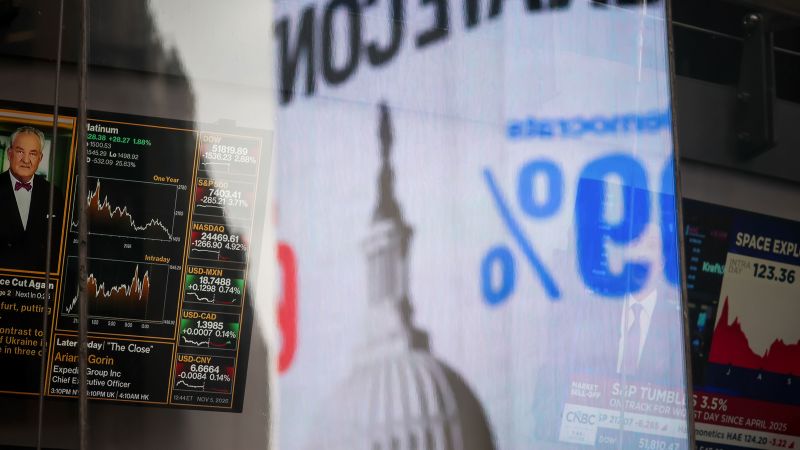
惊人的2.5万亿美元在周四被抹去,导致以科技股为主的纳斯达克指数大幅下跌,投资者因担忧民主党在中期选举中的胜利可能放慢人工智能的建设而纷纷抛售科技股。但另一股力量使抛售更加猛烈:此前大量借贷以押注繁荣的投资者面临抛售压力。
A stunning $2.5 trillion was wiped off the value of the tech-heavy Nasdaq on Thursday as investors rushed to dump tech stocks, rattled by fears that Democrats’ midterm victories could slow the AI buildout. But another force made the sell-off more brutal: Investors who had borrowed heavily to bet on the boom were under pressure to sell.
对冲基金及其他借贷以加大押注的投资者可能需要卖出更多股票,以弥补亏损并满足现金需求,这会加深抛售。
Hedge funds and other investors who borrow to make bigger bets may have to sell more stocks to cover losses and meet demands for cash, which can deepen a sell-off.
市场的突转令人瞩目:期货在选举结果于周二深夜公布后最初下跌,但周三上午,华尔街因投资者欢呼民主党获胜而回升。然而到周四,这种乐观情绪已被担忧取代,担心民主党可能利用新的政治杠杆实施更严格的监管,遏制人工智能的建设。
The market’s sudden reversal was striking: Futures initially fell when election results came in late Tuesday night, but on Wednesday morning, Wall Street had rallied as investors cheered Democrats’ gains. By Thursday, however, that optimism had given way to fears that Democrats could use their new political leverage to impose tighter regulation and rein in the AI buildout.
以德克萨斯州为例。民主党当选州长吉娜·希诺霍萨在竞选时承诺暂时停止新数据中心建设,并撤销对在该州建设数据中心的公司的部分税收优惠。这些承诺如今正加剧投资者对人工智能繁荣前景的担忧。
Take Texas, for example. Democratic Gov.-elect Gina Hinojosa campaigned on temporarily halting new data center construction and rolling back certain tax incentives for companies building them in the state. Those pledges are now adding to investor concerns about the future of the AI boom.

哈里斯金融集团管理合伙人杰米·考克斯说:“接下来一两天,人们会意识到这并不是终点。”他预测公司将向现有数据中心投入更多资金以提升容量。
“What will happen is a day or two from now, people will realize that this isn’t the end,” said Jamie Cox, managing partner at Harris Financial Group. Companies will pour more money into increasing the capacity of existing data centers, he predicts.
随后,一些借贷以加大股票押注的对冲基金介入,使损失进一步放大,考克斯说。
Hedge funds, some of which borrow money to make bigger bets on stocks, then entered the story, amplifying the losses, Cox said.
借贷使基金能够进行比自有资金更大的投资,放大了收益和亏损。当其投资价值下跌时,借钱买入这些股票的基金可能会收到贷方或经纪商要求提供更多现金或抵押品的通知。如果无法满足,基金可能不得不卖出股票以筹集资金。
Borrowing allows funds to make bigger investments than they could with their own cash, magnifying both gains and losses. As the value of their investments drops, funds that borrowed to buy those stocks can face demands from lenders or brokers to put up more cash or collateral. If they can’t, they may have to sell stocks to raise the money.
这种抛售可能会进一步推低股价,引发恶性循环:价格下跌导致对现金的需求增加,迫使更多抛售,进而推低价格。
That selling can push stock prices down further, setting off a vicious cycle: Falling prices lead to more demands for cash, which force more selling and drive prices lower.
考克斯表示,周四的走势“并不预示着崩盘或任何类型的迫在眉睫的灾难”。相反,这是“公司过度扩张和过度杠杆化的结果”。(杠杆是指借钱买入更多资产的行为。)由对冲基金驱动的抛售可能还需要几天时间才能完全走完其过程,即使最初的政治冲击开始消退,这也会增加股市的压力。
Thursday’s moves “are not indicative of a crash or any type of impending disaster,” Cox said. Rather, it’s “companies that have gotten way over their skis and leverage.” (Leverage refers to the act of borrowing money to buy more assets.) The hedge fund-driven selling could take another few days to fully run its course, adding to the pressure on stocks even if the initial political shock begins to fade.
这凸显了AI交易中更大的脆弱性:投资者借钱押注繁荣的程度越深,当信心开始动摇时,后果可能就越痛苦。
That underscores a bigger vulnerability in the AI trade: The more investors borrow to bet on the boom, the more painful the fallout can be when confidence starts to crack.