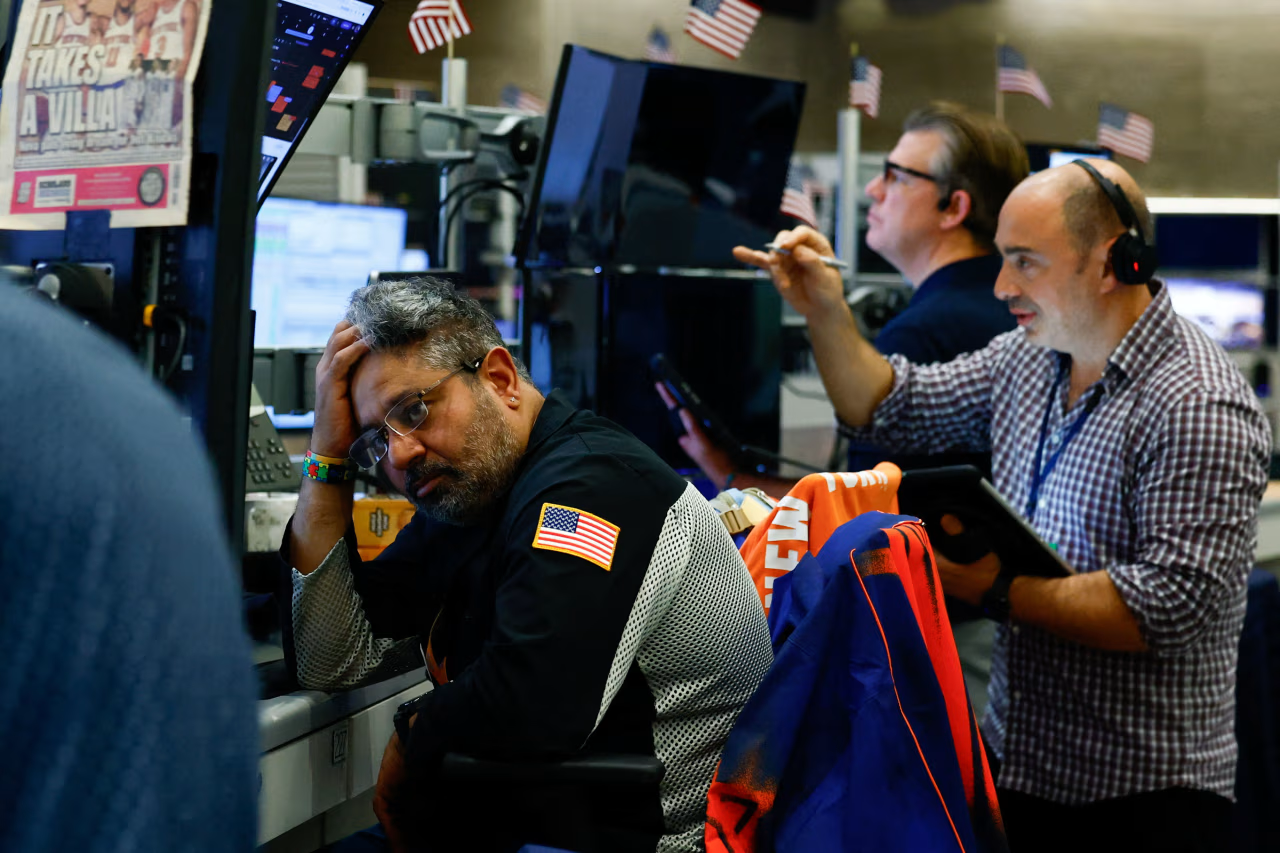
在华尔街,任何上涨的股票迟早都会迎来回调。本周的情况正是如此,科技股价格跌幅巨大,较10月初的近期峰值相比已损失了10%的价值。
On Wall Street, what goes up must become a correction sooner or later. So it proved this week as tech stocks slid far enough down in price that they’ve lost 10% of their value relative to their recent peak in early October.
[audio] It’s the War, Stupid? / Trump’s Next Steps in Iran 这种下跌有着多重原因。随着利率上升,以及市场继续进行着长期、复杂且往往令人心惊肉跳的筛选工作——即从人工智能的失败者中挑出赢家,投资者变得更加挑剔。资金向安全资产轮动(10年期美国国债收益率周四降至约4.84%)表明,一些重新评估正在进行中。
[audio] It’s the War, Stupid? / Trump’s Next Steps in Iran This kind of decline has many fathers. Investors have grown more discerning as interest rates rise and the market continues the long, complex and often hair-raising task of sorting artificial-intelligence winners from losers. The rotation into safe assets (the 10-year U.S. Treasury yield fell to about 4.84% Thursday) is a sign that some reconsideration is afoot.
本周投资者还注意到了在整个中期选举竞选期间显现出的对数据中心建设的敌意。周四的大输家包括芯片制造商、云计算公司以及任何其他参与建设数据中心的企业。以科技股为主的纳斯达克指数下跌了5.52%,市值蒸发了约2.5万亿美元。
Investors this week also picked up on the hostility to data-center construction evident throughout the midterm election campaign. Thursday’s big losers included chip manufacturers, cloud companies, and anyone else involved in building data centers. The tech-heavy Nasdaq fell 5.52% and shed some $2.5 trillion in market value.
周三,投资者由于似乎希望华盛顿的政治僵局可能对经济有利而推高了股价。周四他们注意到,民主党对众多州政府的控制以及在国会中的绝对多数优势,可能对商业(尤其是科技业)并非好事。在经历了这样一场政策后果不确定的震撼选举之后,投资者必须弄清楚该如何着陆。
On Wednesday investors bid up stocks on seeming hope that political gridlock in Washington might be good for the economy. On Thursday they noticed Democratic control of so many state governments, and towering majorities in Congress, might not be great for business, especially tech. Investors have to figure out where to land after such a seismic election with uncertain policy consequences.
值得注意的是,周四的抛售潮蔓延到了科技股之外,标志着几个月来标普500指数中所代表的每一个板块首次全部下跌。而且这一次跌幅巨大。此前曾成为投资者获取科技股利润避难所的消费股也随之下跌。
Notably, Thursday’s selloff spread beyond tech, marking the first time in months that every sector represented in the S&P 500 index declined. And steeply so, this time. Consumer stocks that previously became a refuge for investors taking tech-stock profits also fell.
这可能标志着金融风险重新定价过程中的又一个痛苦步骤。或者它可能预示着市场流动性压力达到新的程度,因为投资者抛售股票以获利套现并筹集资金,来对冲他们所看到的新的政治和经济风险。
This could mark merely another painful step in the repricing of financial risks. Or it could signal a new degree of liquidity stress in the market as investors sell to take profits and raise cash to hedge against what they see as new political and economic risks.
这些都不是恐慌的忠告,特别是考虑到科技股具有波动性的倾向。但这是对华盛顿的一个警告:尽管美国经济的许多领域近来表现良好,但资产价格稳步上涨带来的财富效应一直是消费者支出的基石。如果持续的科技股或股市回调真的来临,可能会让华盛顿不得不寻找其他方式来提振经济增长。
None of this is a counsel of panic, especially given tech stocks’ propensity for volatility. But it’s a warning to Washington: While many corners of the American economy have performed well lately, a wealth effect from steadily rising asset prices has been a cornerstone of consumer spending. A sustained tech or stock-market correction, if one comes, could leave Washington searching for other ways to bolster economic growth.
共和党人可能认为他们可以花接下来的两年时间来争夺伊朗战争。民主党人则希望利用这段时间通过诸如全民医疗保险(Medicare for All)等大型福利立法、加税以及调查特朗普总统。双方都收到警告,有时市场事件会有别的想法。
Republicans may think they can spend the next two years fighting over the Iran war. Democrats hope to use their time passing big entitlement legislation such as Medicare for All, raising taxes, and investigating President Trump. They’re both on notice that sometimes market events have other ideas.