
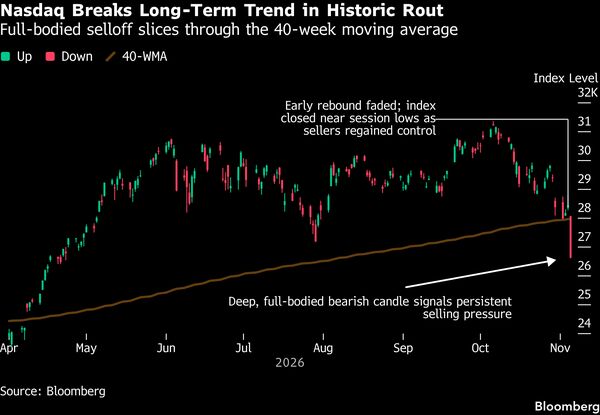
周四,随着投资者纷纷抛售美国科技股,趋势跟踪型系统化策略的抛售放大了纳斯达克100指数市值的暴跌,后者迅速创下单日市值蒸发纪录。
As investors rushed out of US technology stocks on Thursday, selling by trend-following systematic strategies amplified what quickly became a record plunge by market value in the Nasdaq 100 index.
这一科技基准指数下跌6.4%,市值蒸发2.3万亿美元,为单日最大跌幅。市场担忧民主党大获全胜可能意味着对人工智能建设实施更严格监管,从而抑制处于股市牛市核心地位的芯片制造商和数据中心供应商的增长,这一担忧推动了股市下跌。
The tech benchmark sank 6.4%, erasing $2.3 trillion in market value, the most ever in a single day. Concerns that a Democratic sweep could mean tighter regulation of the AI buildout, crimping growth for chipmakers and data-center suppliers at the heart of the equity market’s bullish run, drove the move.
据摩根大通股票衍生品策略师称,随着这些担忧将主要指数推至关键技术位之下,系统化基金被迫削减敞口,加速了跌势。与传统投资者不同,这些量化基金通常顺应股市方向运作,对价格变动和动量信号作出反应,而非依据公司基本面。
As those worries pushed major indexes below key technical levels, systematic funds were forced to cut exposure, speeding the decline, according to equity derivatives strategists at JPMorgan Chase & Co. Unlike traditional investors, these quantitative funds typically follow the direction of the stock market, responding to price movements and momentum signals rather than company fundamentals.
摩根大通由布拉姆·卡普兰率领的策略师团队在一份报告中表示,商品交易顾问(CTA)以及其他趋势跟踪策略可能大幅去杠杆,转为做空美国股票净头寸。早盘交易时段,跌势击穿主要美国指数的多个关键动量信号,触发CTA的额外抛售。
Commodity trading advisers, or CTAs, as well as other trend-following strategies likely deleveraged sharply, turning net short US equities, the JPMorgan strategists led by Bram Kaplan said in a note. The decline broke several key momentum signals across major US indexes during the morning session, triggering additional selling by CTAs.
据摩根大通数据,现货交易前一个半小时,标普500指数期货净卖出额总计约110亿美元。
Net selling in S&P 500 futures totaled about $11 billion during the first hour and a half of cash trading, according to JPMorgan data.
系统化策略的抛售压力可能尚未结束。据摩根大通团队模型测算,波动率目标型投资组合预计未来几天还有约500亿美元股票敞口待抛售,因为它们将目标杠杆从第67百分位削减至第30百分位左右。
Selling pressure from systematic strategies may not be over. Volatility-targeting portfolios have an estimated $50 billion of equity exposure to sell over the next few days, as they cut target leverage to around the 30th percentile from the 67th, according to the JPMorgan team’s model.
另外,巴克莱股票战术策略模型显示,这些基金可能削减约30个百分点的股票敞口,这将是新冠疫情时期市场动荡以来最大单日调整之一。模型显示,这些基金未来24至48小时内可能抛售约1350亿美元美国股指期货。
Separately, Barclays Equities Tactical Strategies models show that these funds could reduce equity exposure by about 30 percentage points, one of the largest one-day adjustments since the Covid-era market turmoil. The funds could sell roughly $135 billion in US equity futures over the next 24 to 48 hours, the models show.
摩根大通团队表示,杠杆交易所交易基金(ETF)在一周内第二次大幅削减敞口,最新的抛售再次集中在科技板块。他们称,这些基金在收盘前抛售了超过600亿美元的股票,其中约90%与科技相关产品挂钩,包括半导体、纳斯达克100指数及科技板块ETF。
The JPMorgan team said that leveraged exchange-traded funds also sharply reduced exposure for the second time in a week, with the latest selling once again concentrated in technology. The funds sold more than $60 billion of stocks into the close, with about 90% of this tied to technology-related products, including semiconductors, Nasdaq 100 and technology-sector ETFs, they said.
随着杠杆ETF已大幅削减敞口,其潜在的再平衡资金流向后应会较小。策略师的估算显示,其隐性空头Gamma敞口已从约75亿美元/每1%市场波动降至约65亿美元。
With leveraged ETFs having already cut exposure sharply, their potential rebalancing flows should be smaller going forward. Their implicit short-gamma exposure has declined to about $6.5 billion per 1% market move from roughly $7.5 billion, the strategists’ estimates show.
卡普兰写道:“投资者逢低买入的资金流入可能抵消了部分这种再平衡需求,这与过往抛售潮时的情况类似。”
“Investor dip-buying inflows may have offset some of this rebalancing need, as in past selloffs,” Kaplan wrote.