Shakeel Sobhan 2026年11月6日 尽管历经多年的政府干预、紧急限制措施和公众愤怒,德里每年冬季依然深陷危险的空气污染泥沼。为何这场可预见的危机始终无法得到根治?
Shakeel Sobhan November 6, 2026 Despite years of government interventions, emergency restrictions and public outrage, Delhi continues to battle dangerously polluted air every winter. Why isn't there a lasting solution to a predictable crisis?
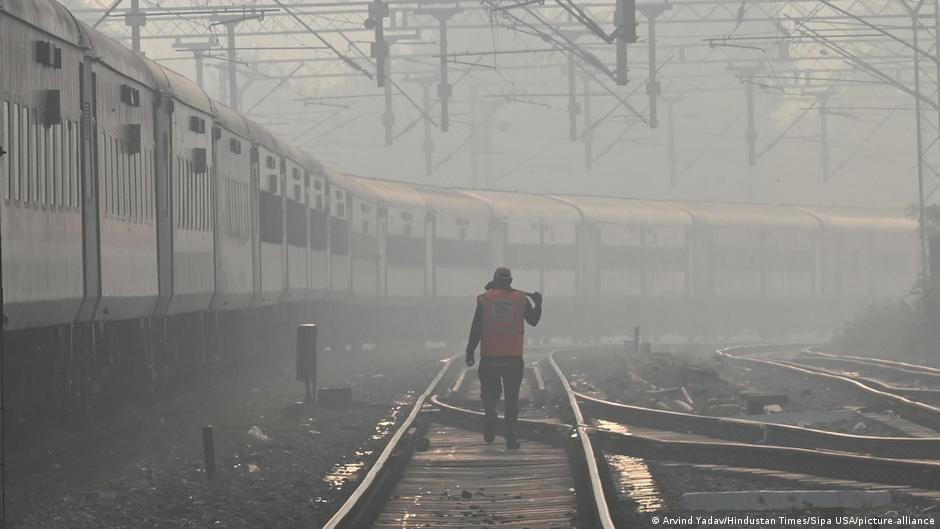
专家指出,限制措施往往只在污染已达危险水平后才启动 [资料图:2025年11月9日] 在新德里一个微寒且雾霾弥漫的清晨,Khushboo Arora 正为患有基础疾病的母亲寻找另一台空气净化器,以应对城市空气质量的进一步恶化。
Prefer DW on Google Experts say restrictions kick in only after pollution has reached dangerous levels [FILE: November 9, 2025] On a slightly chilly and distinctly smoggy morning in New Delhi, Khushboo Arora was looking for another air purifier for her mother, who has underlying health complications, before the city's air quality deteriorated further. "Already, I am starting to get a recurring headache," she said.
“已经开始反复头痛了,”她说,“这些天醒来感觉不舒爽。随着时间推移,我感到头部沉重、眼睛发痒、喉咙持续干燥。” 不太久以前,取出毛衣标志着德里冬天的到来。如今,是屋角空气净化器轻微的嗡嗡声。
"These days when I wake up, I don't feel fresh. As the day progresses, I feel a heaviness in my head, itching in my eye and a constantly parched throat." Not too long ago, the unpacking of woolens announced the advent of winter in Delhi. Now, it's the light hum of an air purifier in the corner.
Arora 表示,她已停止在公园练瑜伽和晨跑。她还在屋里摆满了净化空气的植物,并开始在室内喷洒水雾以降低污染。“父母看我的眼神像我看疯了一样。但我感觉人们没有意识到事态的严重性,”她说。
Arora said she has already stopped doing yoga in the park and her morning walks. She also filled her house with air-purifying plants and started spraying water mist inside the house to bring down the pollution "My parents look at me like I have gone mad. But I feel people are not realizing the gravity of the situation," she said.
周而复始的危机 德里的冬季日益遵循一个熟悉的模式:空气质量恶化、居民呼吸困难、紧急限制措施启动、政府互相推诿。随后季节更替,来年循环重演。
A recurring crisis Winters in Delhi increasingly follow a familiar pattern: air quality deteriorates, residents struggle to breathe, emergency restrictions kick in and governments exchange blame. Then the season changes, only for the cycle to repeat the following year.
周四,据瑞士空气质量监测机构 IQAir 数据,德里空气质量跌入“非常不健康”级别,平均 PM2.5 浓度达 157.9 微克/立方米。世界卫生组织 (WHO) 建议的年度安全限值不超过 5 微克。
On Thursday, Delhi's air fell into the "Very unhealthy" category, according to Swiss air quality monitor IQAir, with an average PM2.5 concentration of 157.9 micrograms per cubic meter of air. The World Health Organization (WHO) recommends an annual safe limit of no more than 5 micrograms.
研究表明,接触 PM2.5 —— 即直径小于 2.5 微米、可深入肺部并进入血液循环的空气颗粒物 —— 与头颈癌(HNC)发病率增加有关,如口腔癌、鼻咽癌和咽喉癌。
Studies have shown that exposure to PM2.5 — air particles with a diameter smaller than 2.5 micrometers that can penetrate deep into the lungs and enter the bloodstream — is associated with an increased incidence of head and neck cancer (HNC), like oral, nasal and throat cancers.
但尽管多年来尝试了各种干预措施,印度首都依然深陷同一场污染危机之中。
But despite years of attempted interventions, India 's capital continues to struggle with the same pollution crisis.
问题多年未解,引发公众愤慨 [资料图:2025年11月6日] 是什么导致了空气污染?德里面临的并非未知问题。科学界对其成因已有相当深入的认识。
The issue has persisted for years despite public outrage [FILE: November 6, 2025] What is causing the air pollution? Delhi is not dealing with an unknown problem. There is considerable scientific understanding of its causes.
一份经德里政府审阅的专家小组 2026 年评估报告指出,冬季 PM2.5 的主要来源为机动车尾气排放、工业活动、道路与建筑扬尘、生物质与垃圾焚烧,以及周边地区传输的污染。
A 2026 assessment by an expert panel reviewed by the Delhi government identified the major winter contributors of PM2.5 as vehicular emissions, industrial activity, road and construction dust, biomass and waste burning, and pollution from neighboring regions.
环保组织 EnviroCatalysts 创始人 Sunil Dahiya 表示,德里属于一个更大的同一气团区域。据这位环保人士称,在大多数冬季日子里,流入德里的污染量多于本地产生的污染量。
Sunil Dahiya, founder of the environmental group EnviroCatalysts, said Delhi is part of a larger airshed. On most winter days, more pollution comes into Delhi than is generated inside it, according to the environmentalist.
他对德国之声(DW)说:“对政府决策支持系统(DSS)2025 年冬季数据的分析发现,德里 PM2.5 约 65% 来自域外,约 35% 来自本地源头。”他补充说,组成国家首都辖区(NCR)的邻近城市诺伊达和古尔冈是最大贡献者之一。
"Analysis of the government's Decision Support System (DSS) data for winter 2025 found that around 65% of Delhi's PM2.5 came from outside the city and about 35% from sources within it," he told DW, adding that neighboring Noida and Gurugram, which comprise the National Capital Region (NCR), are some of the biggest contributors.
跨国家首都辖区(覆盖德里及周边三州部分地区)协同行动,依然是一大障碍。
Coordinating action across the NCR, which spans Delhi and parts of three neighboring states, remains a major obstacle.
Dahiya 说:“这是一个共同的问题,任何单一城市都无法独自解决。”为什么治污政策收效甚微?
"This is a shared problem, and no single city can solve it alone," Dahiya said. Why aren't anti-pollution policies working?
要理解为何现有政策未能带来持续改善,Dahiya 强调了科学建议与政府行动之间的差距。
To understand why existing policies have not delivered sustained improvements Dahiya highlighted the gap between scientific recommendations and state action.
“科学家们十多年来一直在说,我们需要全域、全年、针对具体污染源的行动。而我们大多得到的只是季节性的、被动的应对,”他说。
"Scientists have said for over a decade that we need airshed-wide, year-round, source-specific action. What we mostly get is seasonal and reactive," he said.
据这位环保人士称,紧急限制措施只有在污染达到危险水平后才会启动。洒水车和雾炮塔等短期措施缓解作用有限,而更大的结构性变革却迟迟未能落地。这些变革包括更严格地执行工业排放标准、使用更清洁的燃料、扩大公共交通、车辆电气化,以及为农民提供焚烧秸秆的可行替代方案。
According to the environmentalist, emergency restrictions kick in only after pollution has reached dangerous levels. Short-term measures such as water sprinklers and smog towers provide little relief, while bigger structural changes are slow to materialize. These include stricter enforcement of industrial emissions, cleaner fuels, expanded public transport, vehicle electrification and viable alternatives to crop burning for farmers.
[资料图片:2025年12月19日] 德里对特定排放标准以下的车辆实施了限行 “科学不是瓶颈。执行、区域协调和政治意愿才是,”达希亚说。“除非目标与每个污染源的减排量挂钩,并有人对达标负责,否则我们每年十一月都将进行同样的对话。” “战士妈妈”组织联合创始人巴夫林·坎德哈里同意这一观点,认为官方应对侧重于事后反应而非预防。
Delhi has imposed restrictions on vehicles under a certain emission standard [FILE: December 19, 2025] "The science is not the bottleneck. Implementation, regional coordination and political will are," said Dahiya. "Until targets are tied to emission reductions at each source, and someone is held accountable for meeting them, we will keep having the same conversation every November." Bhavreen Kandhari, co-founder of Warrior Moms, agrees that official responses focus on reacting rather than preventing.
“他们允许污染发生,然后再试图清理——制造洒水车和雾炮作业的漂亮照片机会,或者谈论人工增雨,”坎德哈里告诉德国之声。“制造污染然后再清理,是对公共资金、时间和健康的浪费。” 坎德哈里还补充说,焚烧垃圾取代妥善的垃圾管理只会让局势雪上加霜。
污染治理的政治博弈 另一个阻碍长效解决方案的障碍是,一旦空气质量恶化,政治推诿扯皮的大戏便随即开场。
"They allow pollution to occur and then try to clean it up — producing nice photo opportunities of water sprinklers and smog guns, or talking about cloud seeding," Kandhari told DW. "Creating pollution only to clean it up later is a waste of public funds, time, and health." Kandhari also added that incinerating waste instead of proper waste management has only exacerbated the situation The politics of pollution Another obstacle to a lasting solution has been the political blame game that starts as soon as the air quality worsens.
据公共广播机构全印广播电台报道,周四,德里环境部长曼金德·辛格·西尔萨表示,邻旁旁遮普邦的焚烧秸秆正在加剧首都的污染上升。他坚称,在德里,建筑、车辆和工业污染源均已得到控制。
On Thursday, Delhi Environment Minister Manjinder Singh Sirsa said stubble-burning in the neighboring state of Punjab is contributing to the capital's rising pollution, according to public broadcaster All India Radio. He insisted that in Delhi, construction, vehicle, and industrial sources were controlled.
达希亚也认同,邻邦旁遮普邦和哈里亚纳邦季节性的秸秆焚烧“是一种间歇性但影响剧烈的因素”,它“可能在几周内把‘非常差’的空气推向‘严重’”。但它并不是唯一的因素。
Dahiya agrees that seasonal crop-burning fires in neighboring states of Punjab and Haryana "is an episodic but sharp contributor" which "can tip 'very poor' air into 'severe'" for a few weeks. But it is not the lone contributor.
“在德里本地的污染源中,仅机动车一项就贡献了当地PM2.5的约51%至53%。冬季PM2.5中很大一部分还是由二氧化硫、氮氧化物和氨等气体形成的二次颗粒物,”达希亚说。“这直接指向发电厂、工业和交通运输中的燃烧排放。”他补充说:“就算秸秆焚烧明天就停止,德里在一年的大部分时间里仍会呼吸着不健康的空气。”德国之声联系了德里政府的多名官员寻求回应,但没有收到答复。需要改变什么?
"Among sources within Delhi, vehicles alone contribute roughly 51-53% of local PM2.5. A large share of winter PM2.5 is also secondary particulate formed from gases like sulfur dioxide, nitrogen oxides and ammonia," Dahiya said. "That points straight back to combustion in power plants, industry and transport." "If stubble burning ended tomorrow, Delhi would still breathe unhealthy air for most of the year," he added. DW reached out to several Delhi government officials for a response, but received no reply. What needs to change?
德里还居住着数百万买不起空气净化器、也无法逃离有毒空气的人。
Delhi is also home to millions of people who cannot afford air purifiers and have no escape from the toxic air.
迪皮卡就是其中之一,她在德里南部一个富裕社区做家政帮佣。她已经咳嗽了一个星期。她说,每年都是这样。
Among them is Deepika, who works as domestic help in an affluent South Delhi neighborhood. She has been coughing for a week. It is the same every year, she said.
“我别无选择,只能忍着熬过接下来几个月。”洒水车和除霾塔能带来一些缓解,但专家表示需要更深入的改革[资料图:2025年12月16日]德国之声采访的人士都提到了一系列共同的优先事项:解决德里的污染危机需要全年性的污染管控,而不是季节性的限制措施;需要政府之间更好的协调;还需要更有力地执行现有法规和可衡量的目标。他们说,这座城市需要的是持续的清洁空气战略,而不是又一份冬季应急方案。
"I have no choice but to bear it for the next few months." Water sprinklers and smog towers provide some relief but experts say deeper reform is needed [FILE: December 16, 2025] The people DW spoke to point to a common set of priorities: addressing Delhi's pollution crisis requires year-round pollution control rather than seasonal restrictions, better coordination between governments and stronger enforcement of existing regulations and measurable targets. They say the city needs a sustained clean-air strategy more than another winter emergency plan.
纳姆拉塔·亚达夫是德里居民,也是一个8岁男孩的母亲。他们两人都参加了11月反对空气污染的抗议活动。一年后,问题依然存在。
Namrata Yadav is a Delhi resident and the mother of an 8-year-old boy. They both joined protests against air pollution in November A year later, the problems persist.
“年复一年地重复同样的话,却因为要求清洁空气这样最基本的东西而被斥为偏执或危言耸听,这让人筋疲力尽,”她说。
"It is exhausting to repeat the same things year after year, only to be dismissed as paranoid or alarmist for demanding something as basic as clean air," she said.
呼吁以科学、政策和问责制为驱动的持久解决方案,亚达夫说:“我们花了多年时间学习如何与污染共存。是时候要求那些责任人学习如何终结它了。”印度推动抗污,新德里仍被雾霾窒息
Calling for lasting solutions driven by science, policy and accountability, Yadav said: "We have spent years learning how to live with pollution. It is time we demanded that those responsible learn how to end it." Smog chokes New Delhi despite India's push against pollution