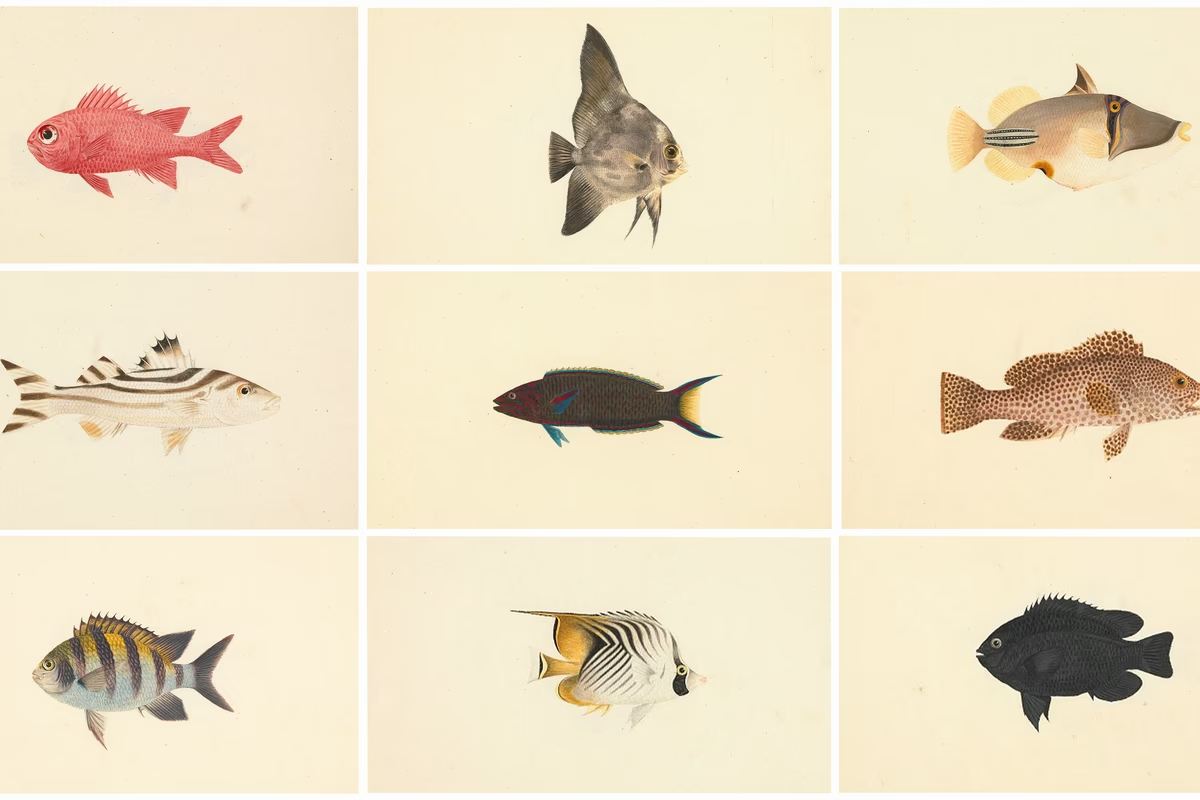
美国西海岸上下,鱼类学家——也就是职业“鱼迷”——们简直按捺不住激动的心情。平时生活在加利福尼亚湾的鲸鲨,已被发现在远至马里布的海域出没。观测飞机拍到了巨型蝠鲼向北游动的画面。平时必须远赴下加利福尼亚半岛才能钓到的甘鲹和蓝马林,现在运动渔民在圣地亚哥近海就能成船地捕获。还有色彩斑斓的礁石鱼类,跑到了比正常分布范围远出数百英里的南加州码头一带游弋。
Up and down the West Coast, ichthyologists—professional fish nerds—can barely contain themselves. Whale sharks normally in the Sea of Cortez have been seen as far north as Malibu. Spotter planes have photographed giant manta rays flapping their way north. Sport fishermen who normally have to travel to Baja for wahoo and blue marlin are now catching them by the boatload off the coast of San Diego. And a rainbow of reef fish that are hundreds of miles beyond their normal range are poking around the piers of Southern California.
来自纽波特比奇的半退休生物学家迈克·库弗,几乎天天潜水,只为一睹星斑石斑鱼那莫西干头式的鳍、微小虹彩橙色的克里奥尔鱼、三带蝴蝶鱼,以及其他极少在该区域出现的异域鱼类。“外面发生的事简直疯了,”他告诉我。今年厄尔尼诺现象带来的暖水,基本上把墨西哥的整个生态系统“搬运”到了这里。加州大学圣塔芭芭拉分校海洋科学研究所的研究生物学家米尔顿·洛夫告诉我:“在有记录的历史中,这是任何人见过的热带鱼类向加利福尼亚迁徙最深远的一次。”
Mike Couffer, a semiretired biologist from Newport Beach, has been scuba diving nearly every day to see the mohawk-style fins of star-studded grouper, tiny iridescent orange creolefish, three-banded butterflyfish, and other exotic fish hardly ever seen in this area. “It’s just nuts, what’s going on out there,” he told me. The balmy waters produced during this year’s El Niño have essentially imported a whole ecosystem from Mexico. In recorded history, “this is the most profound movement of tropical fishes into California that anyone’s ever seen,” Milton Love, a research biologist at UC Santa Barbara’s Marine Science Institute, told me.
从办公室窗户望去,美国国家海洋和大气管理局(NOAA)渔业研究生物学家欧文·斯诺德格拉斯能看到拉霍亚的斯克里普斯码头。他告诉我,父亲曾是一名水族馆馆长,过去每天两次从码头投放探针测量太平洋水温,为一项始于1916年的每日记录做出贡献。今年,赤道太平洋及更广阔海域积聚了异常大量的暖水,正推动着有望成为有记录以来最强厄尔尼诺现象的形成。
From his office window, Owyn Snodgrass, a NOAA Fisheries research biologist, can see the Scripps Pier in La Jolla. He told me that his father, a former aquarium curator, used to drop a probe twice a day off that pier to take the temperature of the Pacific Ocean, contributing to a daily record that stretches back to 1916. This year, an extraordinary amount of warm water has built up in the equatorial Pacific and beyond, driving what promises to be the most intense El Niño ever recorded.
当斯诺德格拉斯和我在周二交谈时,码头处的水温为75华氏度(约23.9摄氏度),比日均值高出11华氏度(约6.1摄氏度),创下11月3日有记录以来的最高温。如果今年日最高温纪录没有已被打破65次,这会让他更惊讶。交谈间,斯诺德格拉斯留意着一条显示码头下水况的直播流。他看见一条剃刀刺尾鱼游过。“这在加利福尼亚水域从未有记录,”他说。
When Snodgrass and I talked on Tuesday, the water temperature at the pier was 75 degrees, 11 degrees warmer than the daily average and the warmest November 3 ever recorded. This would have surprised him more if daily records hadn’t already been broken 65 times this year. As we spoke, Snodgrass was keeping an eye on a livestream showing the water under the pier. He watched a razor surgeonfish swim by. “That has never been documented in California waters,” he said.
斯诺德格拉斯是少数几位正在筛选社交媒体帖子、渔民和潜水员报告的科学家之一,旨在核实并记录那些罕见地游到这么靠北水域的热带“移民”物种。这并不总是那么简单。人们发来的照片有时日期或地点存疑。但该小组认为,他们已经确认了约10种加州新记录物种。8月,一名在洛杉矶威尼斯码头垂钓的渔民钓起了一条——一条长11英寸(约28厘米)、夜行性、体色橙红、大眼的长鳍大眼鲷——这种鱼通常生活在数百英里外的墨西哥水域。它现浸泡在酒精中,保存在洛杉矶县自然历史博物馆。
Snodgrass is one of a handful of scientists who are sifting through social-media posts and reports from fishermen and scuba divers to verify and document the species among the profusion of tropical immigrants that rarely make it this far north. That’s not always so simple. People have sent in photos with dubious dates or locations. But the group thinks that it has already identified about 10 species new to the state. A fisherman on the Venice Pier in Los Angeles pulled up one in August—an 11-inch nocturnal orange fish with big eyes, known as a longfin bigeye—that typically lives hundreds of miles away, in Mexico. It’s now preserved in alcohol at the Natural History Museum of Los Angeles County.
斯诺德格拉斯还在收集巨型金枪鱼的头部,以查明它们的来源。他说,在过去一个月里,渔民捕获了四条蓝鳍金枪鱼,每条都打破了加州此前由竿线钓获的最大金枪鱼纪录。其中一条重达650磅,比原纪录多出200多磅。来自南方的大型鱼类在今年较早的时候就开始出现,它们追随较暖的海水寻找食物;而许多最近出现的较小型珊瑚礁鱼类,则是作为鱼卵和幼虫随洋流漂来的。它们现在才长到足以被轻易辨认的大小,等到这段暖水期在几个月后结束时,“它们大多数可能就会死掉,”洛夫说。
Snodgrass has also been collecting the heads of monster tuna to find out where they came from. In the past month, he said, fishermen have caught four bluefin tuna that each surpassed the previous California record for biggest caught by rod and reel. One of them, a 650-pounder, beat the record by more than 200 pounds. Big fish from the south started showing up earlier in the year, following the warmer waters in search of food; many of the smaller reef fish showing up more recently wafted in on the currents as eggs and larvae. They’re only now big enough to be easily identified, and, when the period of warm water subsides some months from now, “most of them probably will just die,” Love said.
但有些物种可能会在此站稳脚跟。洛夫说,在1983年的厄尔尼诺现象期间,热带扳机鱼游到了加州,至今仍能在该州发现。随着海洋平均温度持续上升,热带鱼类将更适应在这些纬度生存。本季的厄尔尼诺现象就像是未来的预演——像破坏球一样的更高海平面潮汐、将寻得新家园的外来物种、层出不穷的新温度纪录。“这有点像预示,”自然历史博物馆两爬类学馆长格雷格·鲍利告诉我。
But some could gain a foothold here. During the 1983 El Niño, Love said, tropical triggerfish made their way to California, and they can still be found in the state. And as average ocean temperatures keep rising, tropical fish will be more comfortable living at these latitudes. This season’s El Niño is like a preview of the future—wrecking-ball tides of higher sea levels, the exotic species that will find new homes, the endless new temperature records. “A little foreshadowing,” Greg Pauly, the curator of herpetology at the Natural History Museum, told me.
对于加州一些较为熟悉的生物而言,今年的环境状况令人深感忧虑。蒙特雷湾水族馆科学总监艾普丽尔·里德隆表示,她已增派潜水员监测海带林,因为较高的水温会剥夺冷水上涌带来的营养,导致海带林受损。就在十多年前,在被称为“热斑”的海洋热浪期间——当时恰逢另一次厄尔尼诺现象——加州中部失去了超过一半的海带林,她说,加州北部损失更甚。
For some of California’s more familiar life forms, the conditions this year have been deeply alarming. April Ridlon, the director of science at the Monterey Bay Aquarium, in Monterey, has deployed extra divers to monitor kelp forests that can suffer in warmer temperatures, deprived of nutrients from cold upwelling waters. Just over a decade ago, amid the marine heat wave known as “the blob,” which coincided with another El Niño, Central California lost more than half of its kelp forests, she says, and Northern California lost even more.
在某些区域,海带至今仍未恢复。她预计现在也会失去海带,这意味着可能会失去数百个依赖海带作为栖息地和育幼场的其他物种的种群。这些物种可能包括我们食用的动物——如石斑鱼、蟹或鲍鱼——以及我们倾向于关心保护的动物,比如睡觉时会用海带缠绕身体的海獭。
In some areas, the kelp has still not returned. She expects to lose kelp now, too, which means potentially losing populations of hundreds of other species that rely on them for habitat and nursery grounds. These could include animals that we eat—rockfish or Dungeness crab or abalone—as well as those we tend to care about keeping alive, such as the sea otters who wrap themselves in kelp strands when they sleep.
如果这就是我们的未来,而我们只是现在瞥见了一角,至少它提供了几个值得细细品味的时刻。周日下午,40岁的制片人阿里·斯蒂尔骑车来到文图拉的圣布埃纳文图拉州立海滩,寻找漂流木。“像个老太太一样在海滩上捡拾东西,”她告诉我。在一段安静的礁石和沙丘地带,她发现一只海龟半埋在沙子里,正在产卵。“她明显在用力,然后休息。接着又用力,又休息。然后挖沙、用力、再休息,”斯蒂尔说。
If this is our future and we are just glimpsing it now, at least it has offered a few moments to savor. On Sunday afternoon, Ali Steele, a 40-year-old producer, rode her bike to San Buenaventura State Beach, in Ventura, to look for driftwood. “Beachcombing like an old lady,” she told me. On a quiet stretch of rocks and dunes, she noticed a turtle half-burrowed in the sand, laying eggs. “She was very visibly straining and then resting. Then straining and then resting. And then digging and then straining and then resting,” Steele said.
看着这个漫长的仪式,她哭了。她守在海龟身边,直到太阳落山。对她来说,这感觉像是宇宙赐予的一份礼物。
As she watched this long ritual, she started to cry. She stayed near the turtle until the sun went down. It felt to her like a gift from the universe.
她当时并未意识到这有多么罕见。海龟通常不会在加利福尼亚海岸产卵。但今年早些时候,两只太平洋丽龟首次在橙县海滩产卵。这种濒危物种最近的主要产卵海滩在近1000英里之外,位于墨西哥的下加利福尼亚半岛,海龟通常在海上漂泊近二十年后会返回那里。无论是什么让它们偏离了航向,美国国家海洋和大气管理局(NOAA)海龟生态与评估项目负责人杰弗里·塞米诺夫(Jeffrey Seminoff)告诉我,“这肯定与极度温暖的海水有关”。
She didn’t realize then just how rare it was. Sea turtles usually don’t nest on the California coast. But earlier this year, for the first time, two olive ridley sea turtles laid eggs on beaches in Orange County. The closest major nesting beach for this endangered species is nearly 1,000 miles south, on the Baja California Peninsula in Mexico, where the turtles usually return after nearly two decades out at sea. Whatever sent them off course, Jeffrey Seminoff, who leads NOAA’s marine-turtle ecology and assessment program, told me, “it certainly has something to do with the extremely warm waters.”
由于担心即将到来的风暴,联邦官员小心翼翼地将那些龟蛋——共204枚——转移到长滩的太平洋水族馆进行孵化。斯蒂尔(Steele)周日在文图拉码头附近观察到的那只太平洋丽龟,是加利福尼亚有记录以来第三次发现筑巢的海龟,也是位置最靠北的一只。当局已在巢穴周围设置围栏加以保护,但迄今决定不转移蛋卵,尽管在孵化前的45至60天里,潮汐可能威胁该地点。
Concerned about incoming storms, federal officials carefully moved those turtle eggs—204 of them—to be incubated at the Aquarium of the Pacific, in Long Beach. The olive ridley turtle that Steele observed on Sunday near the Ventura Pier was the third nesting sea turtle ever seen in California, and the one farthest north. Authorities have put an enclosure around the nest to protect it, but so far, they have decided not to relocate the eggs, even though tides could threaten the site in the 45 to 60 days until they might hatch.
水族馆里的龟蛋随时可能孵化。一旦孵化,联邦官员将设法迅速将幼龟送往海滩,放归大海。如果它们恰好在海洋中存活下来,20年后,这些海龟或许会回到一个更温暖的加利福尼亚,发现那里比我们所熟知的加利福尼亚更适合它们生存。
The turtle eggs at the aquarium could hatch any day. If they do, federal officials will try to rush the hatchlings to the beach and send them on their way. If they happen to make it out there in the ocean, 20 years from now, these turtles might even come back to a warmer California and find the place more suitable to their needs than the California that we have known.