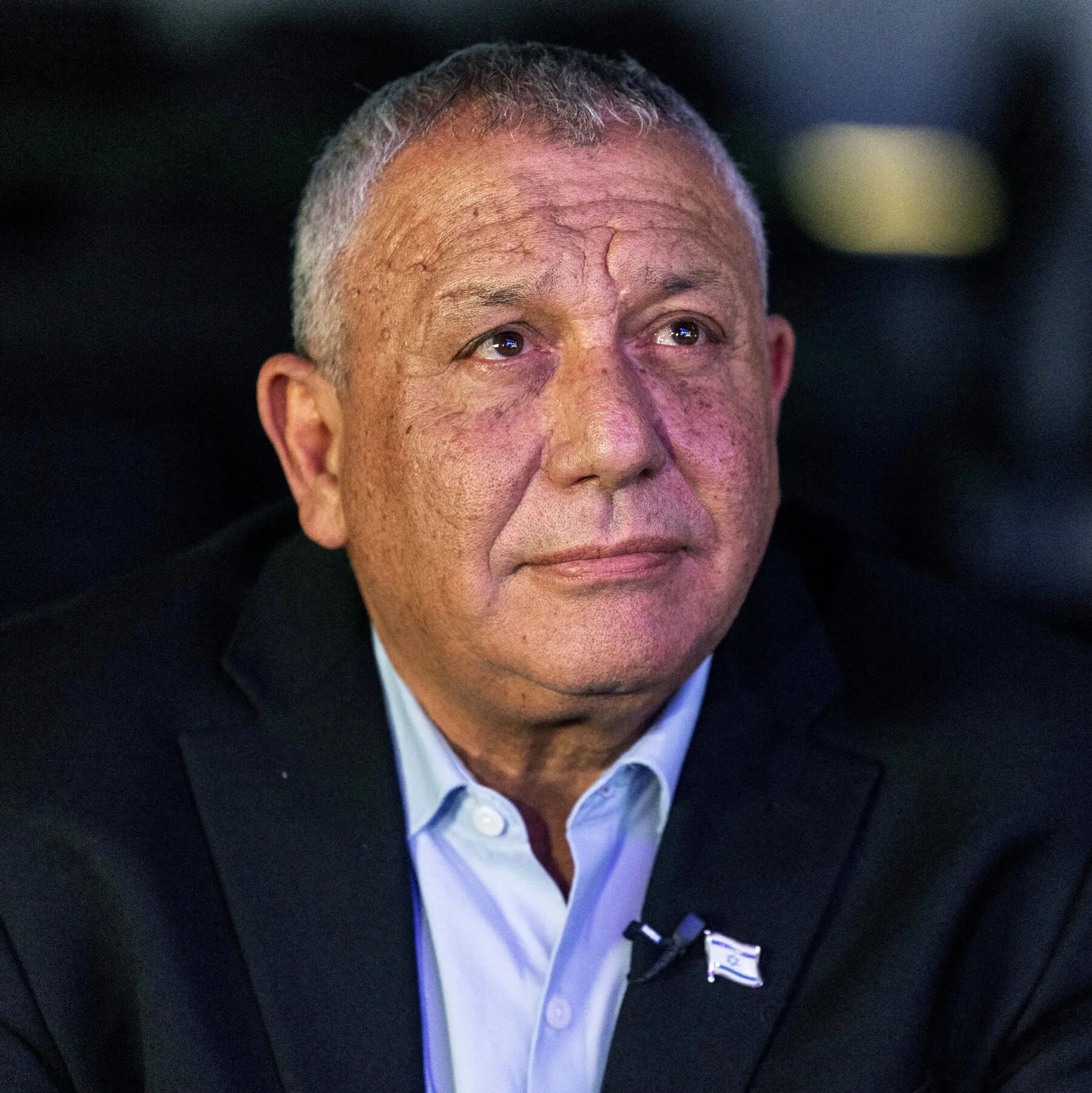
谁是加迪·艾森科特,这位被委以组阁重任的以色列人?艾森科特是一位资深将军,也是以色列总理本雅明·内塔尼亚胡的主要竞争对手,他现在将拥有长达六周的时间来组建联合政府。
Who Is Gadi Eisenkot, the Israeli Tasked With Forming a Government? Mr. Eisenkot, a career general and the leading rival of Prime Minister Benjamin Netanyahu of Israel, will now have up to six weeks to form a coalition.
艾森科特组阁的倒计时将于周日开始。他是以色列总理内塔尼亚胡的主要竞争对手,将致力于组建新政府。
The clock starts ticking on Sunday for Gadi Eisenkot, the leading rival of Prime Minister Benjamin Netanyahu of Israel, to form a new government.
艾森科特将在以色列总统伊萨克·赫尔佐格主持的一个下午仪式上,正式获得组阁授权。在经过数天的磋商后,赫尔佐格周六晚间表示,将给予反对党领袖优先组阁权,以尝试在上个月全国大选结果无定论后组建联合政府。
Mr. Eisenkot is set to be given the official mandate to form a government at an afternoon ceremony presided over by Israel’s president, Isaac Herzog. After days of consultations, Mr. Herzog said late Saturday that he would give the opposition leader first dibs at trying to forge a coalition after the country’s inconclusive national election last month.
这位说话轻声细语的前将军领导着“雅沙尔”党,这是一个中右翼政党,竞选承诺是在保障以色列安全的同时,摆脱那些引发国际愤怒并导致以色列在世界舞台上孤立的政策。
A soft-spoken former general, Mr. Eisenkot leads Yashar, a center-right party that campaigned on a promise of keeping Israel secure while pivoting away from policies that prompted international anger and led to Israel’s isolation on the world stage.
现年66岁的艾森科特拥有长达六周的时间来组建联合政府,之后总统将把机会交给另一位候选人,最有可能是内塔尼亚胡。以下是关于这位从职业将军转型为政治家的人物的相关信息。他的背景如何?
Mr. Eisenkot, 66, has up to six weeks to build a coalition before the president passes the opportunity to another candidate, most likely Mr. Netanyahu. Here’s what to know about the career general-turned-politician. What is his background?
艾森科特已婚,育有五个子女,出生于北部城市提比里亚,父母是摩洛哥移民,他在以色列南部工业城市埃拉特长大。
Mr. Eisenkot, a married father of five, was born in Tiberias, in the north, to Moroccan immigrants and was raised in Eilat, a working-class city in southern Israel.
他涉足政坛时间相对较短,此前职业生涯一直在军队度过,仅担任过部分议员任期和八个月部长职务。
He is relatively new to politics, having spent his career in the military, and has served only part of a single term as a lawmaker and eight months as a minister.
艾森科特从步兵起家,晋升至2003年指挥以色列在约旦河西岸的军事行动,正值第二次巴勒斯坦大起义高峰期。到2015年,他担任国家最高将领——参谋长,并在内塔尼亚胡任下一直担任该职务直到2019年初。
Mr. Eisenkot started out in the infantry and rose through the ranks to take command of Israel’s military operations in the West Bank in 2003, at the height of the Second Intifada. By 2015, he was serving as the country’s top general — the military’s chief of staff — and held that role until early 2019, under Mr. Netanyahu.
他于2022年进入政坛,并在哈马斯主导的2023年10月7日袭击以色列事件发生后,曾在内塔尼亚胡的战时内阁中任职,参与加沙战争的部分阶段。他在任八个月,于2024年6月辞职,原因是内塔尼亚胡坚持推行“彻底胜利”而非与哈马斯达成释放人质协议。
He entered politics in 2022, and, after the Hamas-led Oct. 7, 2023, attack on Israel, served in Mr. Netanyahu’s war cabinet for part of the Gaza war. He lasted eight months, resigning in June 2024 over Mr. Netanyahu’s push for a “total victory” instead of a deal with Hamas to release the hostages.
去年,艾森科特组建了一个新政党——“雅沙尔党”(Yashar,希伯来语意为“正直”或“诚实”),旨在吸引中间派以及中间偏右选民,这些选民担忧内塔尼亚胡的联合政府将把以色列引向何方。
Last year, Mr. Eisenkot formed a new party — Yashar, meaning “straight” or “honest” in Hebrew — which aimed to attract centrists and center-right voters worried about where Mr. Netanyahu’s coalition was leading Israel.
艾森科特的个人经历也打动了选民。他的一个儿子和两个侄子在加沙战争中阵亡。他曾表示,希望自己能“对得起儿子付出的巨大代价”,以便“我们的孩子能在这里拥有更美好的现实”。他的政策主张会是什么样?
Mr. Eisenkot’s personal story also spoke to voters. One of his sons and two of his nephews were killed in the war in Gaza. He has said he hoped to be “worthy of the enormous price paid” by his son, “so that there could be a better reality here for our children.”What would his policies look like?
艾森科特誓言,将在内塔尼亚胡右翼政府执政动荡的四年后,引领以色列走向他所认为的常态。
Mr. Eisenkot has vowed to steer Israel toward what he considers normalcy after four turbulent years under Mr. Netanyahu’s hard-right government.
他在竞选中的政纲直指内塔尼亚胡的弱点,包括支持调查10月7日袭击发生前的安全和情报失误。政纲还聚焦于内塔尼亚胡备受争议的削弱以色列司法体系的举措。
His platform in the election zeroed in on Mr. Netanyahu’s vulnerabilities, including by endorsing calls to investigate the security and intelligence failures that preceded the Oct. 7 attack. It also focused on Mr. Netanyahu’s contentious effort to weaken the Israeli judiciary.
艾森科特表示支持对约旦河西岸以色列定居点进行更为克制的扩张,并承诺遏制那里的定居者暴力行为,他称之为“犹太恐怖主义”。由艾森科特领导的政府不会与前任政府完全决裂。与内塔尼亚胡一样,艾森科特拒绝巴勒斯坦建国的前景——至少在短期内如此。
Mr. Eisenkot has expressed support for a more restrained expansion of Israeli settlements in the West Bank and promised to curb settler violence there, which he has called “Jewish terrorism.”An Eisenkot-led government would not be a complete break with its predecessor. Like Mr. Netanyahu, Mr. Eisenkot has rejected the prospect of Palestinian statehood — at least in the near term.
而他对伊朗及其在黎巴嫩的盟友真主党构成威胁的立场,使其外交政策与其前老板相去不远。正是艾森科特在2008年提出了“达希耶学说”,主张通过以毁灭性打击回应真主党袭击来建立威慑。接下来会发生什么?
And his stance toward the threats posed by Iran and its ally Hezbollah in Lebanon places his foreign policy not too far off that of his former boss. It was Mr. Eisenkot who in 2008 articulated the “Dahiya doctrine,” which called for creating deterrence by responding to Hezbollah attacks with devastation. What happens now?
以色列于10月27日举行的关键选举结果显示,各方均未在议会中获得绝对的61席多数。内塔尼亚胡领导的联盟赢得53个席位;艾森科特及其锡安主义盟友获得48席;两个阿拉伯政党共夺得创纪录的19个席位。如今,艾森科特及其盟友通往执政之路并不平坦。
Israel’s pivotal election on Oct. 27 left all sides short of an outright 61-seat majority in Parliament. Mr. Netanyahu’s coalition won 53 seats; Mr. Eisenkot and his Zionist allies secured 48; and two Arab parties took a record 19. Now, Mr. Eisenkot and his allies have no easy path to power.
他们可以与两个阿拉伯主导的政党联手,但他阵营中的部分右翼犹太政党已表示,不会加入依靠这些政党支持的政府。艾森科特也提出了阿拉伯政党迄今尚未满足的条件,例如公开将哈马斯定性为恐怖组织。
They could join forces with the two Arab-led parties, but some of the right-wing Jewish parties in his bloc have said they would not enter a government that relied on their support. Mr. Eisenkot has also stipulated conditions that the Arab parties have yet to meet, such as publicly labeling Hamas as a terrorist organization.
或者,他可以寻求与内塔尼亚胡联盟中的成员组建团结政府。一种可能是拉拢极端正统派政党。
Or, he could look to partner with members of Mr. Netanyahu’s coalition to form a unity government. One possibility would be to woo the ultra-Orthodox parties.
无论哪种选择都棘手,因为他的部分盟友在竞选期间曾反对极端正统派派系,而另一些盟友则承诺绝不加入由阿拉伯政党支持的联合政府。
Either option would be tricky because some of his allies campaigned against the ultra-Orthodox factions, while others promised never to join a coalition backed by Arab parties.
上周,艾森科特表示,他将致力于建立“国家紧急政府”,以尽快赶走内塔尼亚胡。这很可能意味着组建一个少数派政府,依靠阿拉伯政党的支持来防止针对该政府的不信任投票通过。
Last week, Mr. Eisenkot said he would work to establish a “national emergency government” to eject Mr. Netanyahu as soon as possible. That would probably mean a minority government that would rely on the Arab parties’ support to prevent a no-confidence vote against it.
亚伦·博克斯曼是《纽约时报》驻以色列和加沙记者,常驻耶路撒冷。
Aaron Boxerman is a Times reporter covering Israel and Gaza. He is based in Jerusalem.
大卫·M·哈尔伯芬格是《纽约时报》耶路撒冷分社社长,统筹以色列、加沙和约旦河西岸的报道。他曾于2017年至2021年担任该职,并于2021年至2025年出任政治编辑。
David M. Halbfinger is The Times’s Jerusalem bureau chief, leading coverage of Israel, Gaza and the West Bank. He also held that post from 2017 to 2021. He was the politics editor from 2021 to 2025.