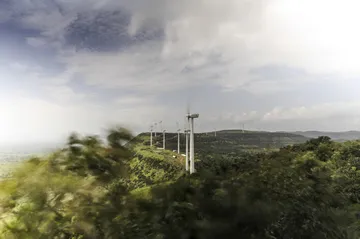
印度正在权衡用更大、更高效的机组替换老旧风力发电机组,以在无需征用更多土地的情况下提升老旧风电场的发电量。
India is weighing replacing aging wind turbines with larger, more efficient machines to boost generation at older farms without having to acquire more land.
印度风力发电机制造商协会首席执行官阿迪蒂亚·皮亚西在接受采访时表示,根据该协会的初步评估,多达 8 吉瓦采用老旧小型机组的装机容量可通过更换现代化机组进行升级。该行业团体正与中央和州政府磋商,以敲定一项计划,有望使这些场址的装机容量增加近 50%。
As much as 8 gigawatts of capacity using old and smaller turbines can be upgraded with modern units, according to a preliminary assessment by the Indian Wind Turbine Manufacturers Association, Chief Executive Officer Aditya Pyasi said in an interview. The lobby group is in talks with federal and state governments to finalize a plan that could help increase capacity at those sites by almost 50%.
风电对于印度满足日落后的用电高峰需求变得日益重要。尽管该国绿色电力装机容量自 2014 年以来已增长四倍,但风电装机量远远落后于光伏,土地征用和通道权获取仍是加快部署的主要障碍。这加上电池储能有限,导致电网难以消纳白天的过剩发电量,迫使光伏发电遭到弃用,同时造成夜间电力短缺。
Wind power has become increasingly important for India to meet peak electricity demand after sunset. Although the country’s green power capacity has quadrupled since 2014, wind installations have lagged far behind solar, with land acquisition and securing right-of-way remaining major hurdles to faster deployment. That — coupled with limited battery storage — has left the grid struggling to absorb excess daytime generation, forcing solar curtailments while creating shortfalls at night.
2025 年风电新增装机达到创纪录的 6.3 吉瓦。即便如此,风电项目部署速度仍低于实现印度 2030 年清洁能源装机容量达 500 吉瓦目标所需的进度。在现有场址将老旧的 2 兆瓦级机组替换为现代化的 3 至 5 兆瓦级机组,有助于规避土地获取难题。
Installations reached a record 6.3 gigawatts in 2025. Still, wind project deployment remains below the pace needed to meet India’s 2030 goal of 500 gigawatts clean power capacity. Replacing older turbines of as much as 2 megawatts with modern 3- to 5-megawatt units at existing sites could help sidestep land-access hurdles.
皮亚西表示,印度风力发电机制造商协会正与古吉拉特邦、马哈拉施特拉邦和卡纳塔克邦等风能资源丰富的邦合作,敲定实施方案。“虽然长期潜力约为 25 吉瓦,但我们的评估显示,可立即启动 5 至 8 吉瓦的改造升级。”根据国际可再生能源机构的数据,全球 2010 年前建成的 178 吉瓦风电项目将在 2030 年前具备改造升级条件,该机构视改造升级为到本世纪末将全球可再生能源装机容量增加两倍(即翻三倍)目标的重要工具。
IWTMA is working with windy states such as Gujarat, Maharashtra and Karnataka to firm up an implementation plan, Pyasi said. “While the longer-term potential is around 25 gigawatts, our assessment shows that we can begin repowering 5 to 8 gigawatts immediately.”Globally, 178 gigawatts of wind power projects built before 2010 will be available for retrofitting by 2030, according to the International Renewable Energy Agency, which sees repowering as an important tool to meet the target of tripling global renewable energy capacity by the end of this decade.
“陆上风电改造升级并非技术层面的注脚,而是战略当务之急,”国际可再生能源机构在6月的网络演示中表示。
“Repowering onshore wind is not a technical footnote. It is a strategic imperative,” IRENA said in a webcast presentation in June.
2023年,印度新能源与可再生能源部估计,该国约25吉瓦的项目,约占当前装机风电容量的40%,使用的风机功率均小于2兆瓦。这些项目可通过更换新型设备进行改造升级。现代风机功率可超过5兆瓦,轮毂高度超过100米,使其能够利用更强劲、无遮挡的风力,并让每英亩土地产出更多电力。
In 2023, India’s renewable energy ministry estimated that about 25 gigawatts of projects, roughly 40% of the country’s current installed wind capacity, use turbines smaller than 2 megawatts. These could be repowered with newer equipment. Modern turbines can exceed 5 megawatts and stand more than 100 meters tall, allowing them to tap into stronger, unobstructed winds and generate more electricity for every acre of land occupied.