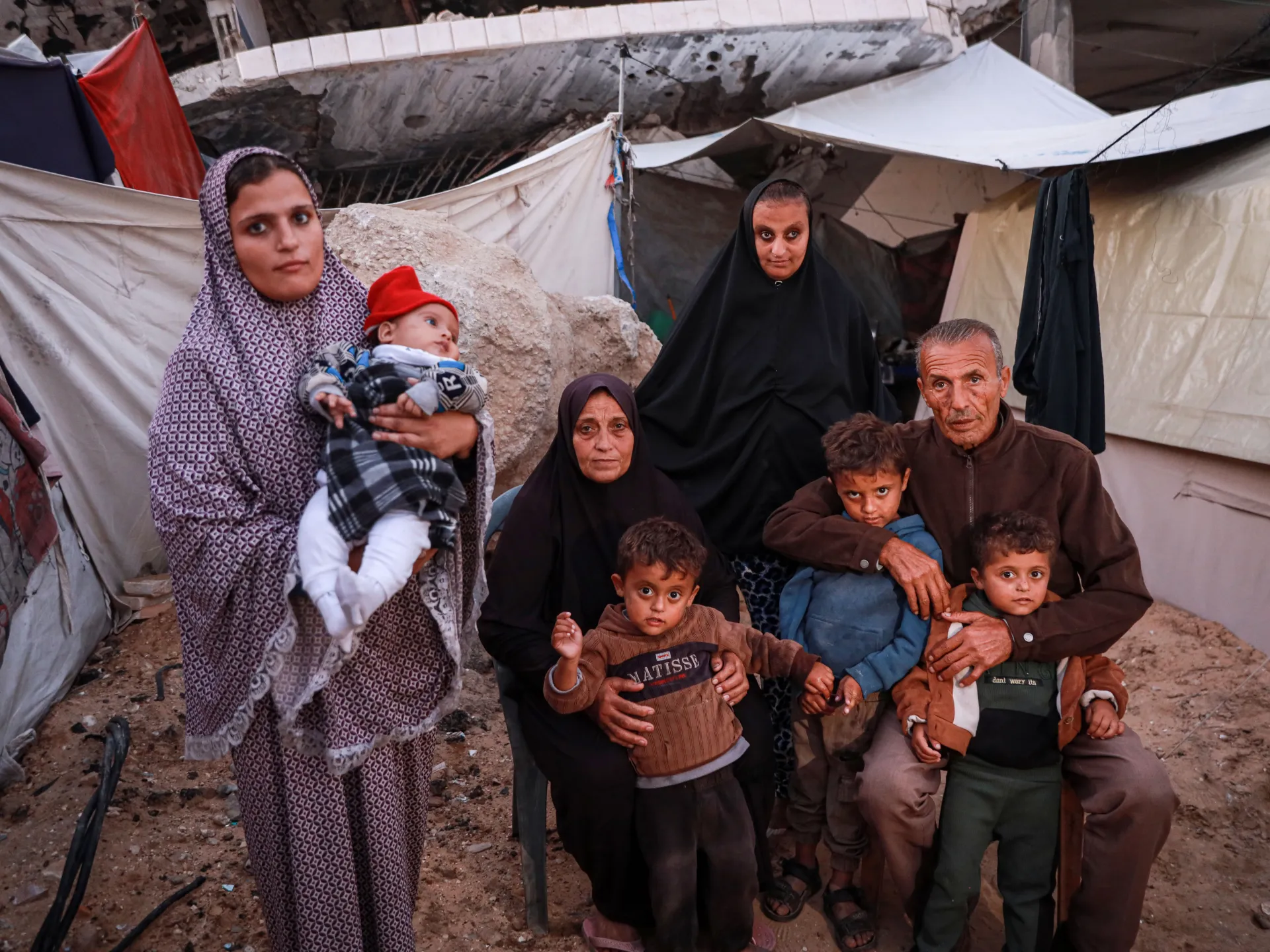
夜幕降临,随着气温下降,阿米拉·萨阿德在加沙城的临时住所里努力让四个月大的婴儿穆罕默德保持温暖。
At night, as temperatures drop inside their makeshift shelter in Gaza City, Amira Saad struggles to keep her four-month-old baby, Mohammed, warm.
婴儿身上大多只穿着薄薄的夏装。27岁的阿米拉买不起冬装,只能向邻居借了一件保暖衣物,但仍担心夜里的寒冷。
The baby mostly only has thin summer clothes. Unable to afford winter clothing, 27-year-old Amira has borrowed a warm garment from a neighbour, but remains worried about the cold during the night.
她和18名家庭成员(包括9个孩子)住在一起,头顶只有一块防水布,几乎无法抵御风雨。为全家找到足够的保暖衣物和毯子变得越来越难。
She lives with 18 family members, including nine children, under a tarp offering little protection from the elements. Finding enough warm clothes and blankets for everyone has become increasingly difficult.
这家人早前在以色列对加沙的种族灭绝战争中从加沙城的舒贾耶社区流离失所,现在住在城西的一个临时营地里。最近的大雨淹没了他们的住所,浸湿了床垫、枕头和毯子。
The family was displaced from Gaza City’s Shujayea neighbourhood earlier in Israel’s genocidal war on Gaza, and now lives in a makeshift camp west of the city. Recent heavy rain has flooded their shelter, soaking mattresses, pillows, and blankets.
“我们睡觉时被淹了。水进来了,把毯子、床垫和枕头都泡湿了。一切都湿透了,”阿米拉说。
“We were flooded while we were sleeping. The water came inside and soaked our blankets, mattresses and pillows. Everything was wet,” Amira says.
孩子们大多穿着旧的、破烂的夏装。阿米拉的婆婆、60岁的巴西马·萨阿德也为自己23岁的女儿担心,女儿有残疾,需要保暖衣物和药物。
The children mostly have old, torn summer clothes. Amira’s mother-in-law, 60-year-old Basima Saad, is also worried about her own 23-year-old daughter, who has a disability, and needs warm clothes and medication.
“她的手变得像冰一样冷。我让她贴着我在床上睡来给她取暖,就像对待一个小孩一样,”巴西马说。“我先给她穿衣服,再给自己穿。我必须确保她先暖和起来。”由于没有固定收入,全家靠社区厨房提供食物度日。根本没有多余的钱买冬装和毯子。
“Her hands become as cold as ice. I keep her beside me in bed to warm her, just as I would a small child,” Basima says. “I dress her before I dress myself. I have to make sure she is warm first.”With no regular income, the family relies on community kitchens for food. Spare money for winter clothes and blankets simply is not available.
“我丈夫没有工作。两天前他出去干碎石头的活,结果摔断了手。情况非常糟糕,寒冷也异常严酷,”阿米拉说。
“My husband does not have a job. Two days ago, he went out to work breaking up rubble, but he broke his hand. The situation is very bad, and the cold is extremely severe,” Amira says.
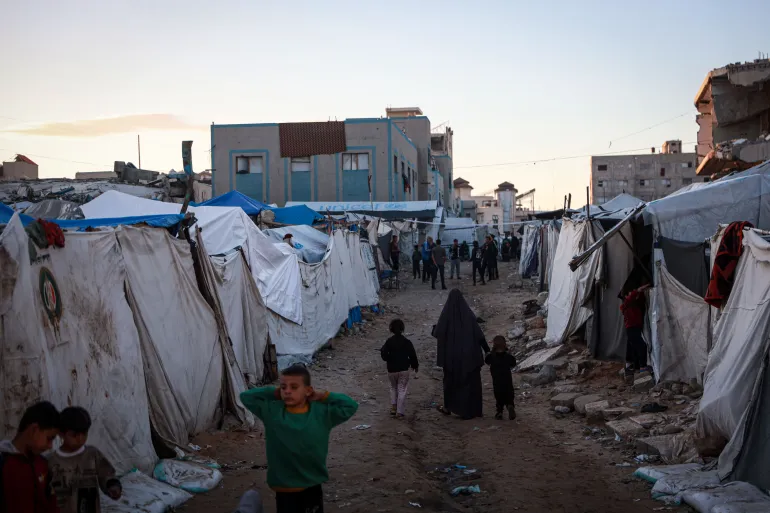
数十万人生活在加沙的临时庇护所中,因以色列的战争而流离失所,并努力保护自己免受冬季天气侵袭 [Abdelhakim Abu Riash/Al Jazeera] 家庭努力让孩子保暖 生活在这些条件下的巴勒斯坦人面临的危险,尤其是年幼的孩子,并非假设性的。
Hundreds of thousands of people live in makeshift shelters in Gaza, displaced by Israel’s war, and struggling to protect themselves from winter weather [Abdelhakim Abu Riash/Al Jazeera] Families struggle to keep children warm The danger to the Palestinians living in these conditions, and particularly the very young, is not hypothetical.
周四,一名九个月大的婴儿基南·艾哈迈德·拉基克死于低温症。他的父亲告诉法新社,他在帐篷里醒来,发现儿子的皮肤已变蓝。这样的悲剧让46岁的七个孩子的母亲阿马勒·迈达纳感到恐惧。
On Thursday, a nine-month-old baby, Kinan Ahmed Raqiq, died of hypothermia. His father told AFP that he woke up in his tent to find that his son’s skin had turned blue. Tragedies like that make Amal al-Maydana, a 46-year-old other of seven, fearful.
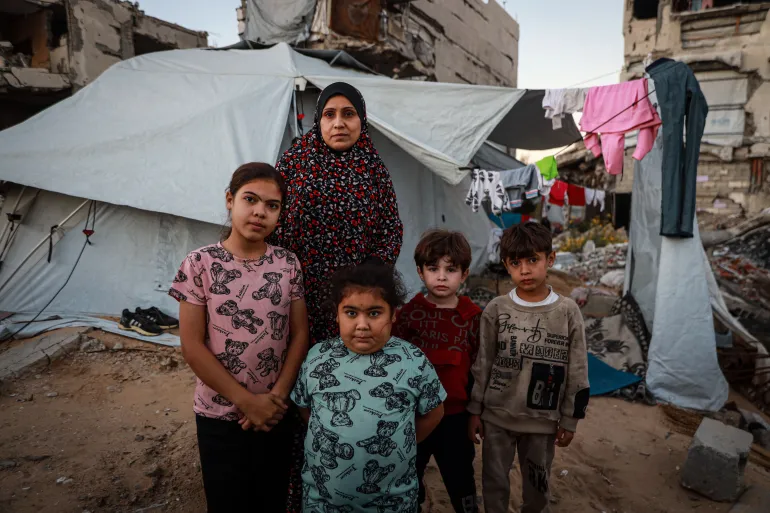
她独自抚养孩子——丈夫哈姆扎于2025年1月被以色列四轴飞行器击毙,长子海萨姆于同年11月被狙击手击毙,时年25岁。
She’s raising her children alone – her husband Hamza was killed by an Israeli quadcopter in January 2025, and her eldest son Haitham was killed by a sniper in November of the same year, age 25 at the time.
她原籍加沙城的宰通社区,在战争期间已流离失所六次,逃离以色列袭击,失去了家庭的房屋、土地和汽车。
She is originally from Gaza City’s Zeitoun neighbourhood and has been displaced six times during the war, fleeing Israeli attacks and losing the family’s home, land, and car.
如今住在帐篷里,阿马勒努力供养孩子。尽管冬季已至,她年幼的女儿里马斯和马拉克仍穿着夏装“所有东西都很贵……童装、鞋子、所有东西,”她说。阿马勒试图利用现有资源应对,但不足以满足女儿们的需求。
Now living in a tent, Amal struggles to provide for her children. Her younger daughters, Rimas and Malak, are still wearing summer clothes despite the arrival of winter“Everything is expensive… children’s clothes, shoes, everything,” she says. Amal tries to make do with what is available, but it is not enough to meet her daughters’ needs.
雨水也渗透进覆盖家庭帐篷的破损防水布。由于没有取暖设备,他们只能依靠毯子御寒。“我们没有取暖手段;只能用毯子盖住孩子,”她说。
Rain also seeps through the damaged tarpaulins covering the family’s tent. With no heating equipment, they rely on blankets to keep warm. “We have no means of heating ourselves; we just cover the children with blankets,” she says.
阿马勒担心另一场风暴会带来更多雨水和寒冷。“我们只祈祷真主让住在帐篷里的人们更容易度过这个冬天,”她说。
Amal fears another storm will bring more rain and cold. “We just pray that God makes this winter easier for the people living in tents,” she says.
阿马勒·迈达纳(Amal al-Maydana)今年46岁,原籍加沙城宰通(Zeitoun)社区,已被迫流离失所六次。在失去丈夫、长子和家园后,她正努力为孩子们寻觅冬衣。[Abdelhakim Abu Riash/Al Jazeera]援助不足,冬季风险加剧联合国人道主义事务协调办公室(OCHA)表示,加沙94%的人口急需庇护援助。约65%的家庭居住在帐篷或临时搭建的简易棚屋中,而65万名儿童需要冬季援助,包括保暖衣物和毛毯。
Amal al-Maydana, 46, displaced six times and originally from Gaza City’s Zeitoun neighbourhood, struggles to provide winter clothes for her children after losing her husband, eldest son and her home [Abdelhakim Abu Riash/Al Jazeera] Aid falls short as winter risks grow The United Nations Office for the Coordination of Humanitarian Affairs (OCHA) says 94 percent of Gaza’s population urgently needs shelter assistance. Some 65 percent of households live in tents or makeshift shelters, while 650,000 children need winter aid, including warm clothing and blankets.
截至9月,援助机构仅为9000户家庭筹集到足够的冬衣,为5万人筹集到床上用品,远低于实际需求。OCHA称,资金短缺进一步阻碍了冬季备战工作。
By September, aid agencies had secured enough winter clothing for just 9,000 households and bedding for 50,000 – far short of what was needed. OCHA said funding shortages were further hampering preparations for winter.
联合国儿童基金会(UNICEF)警告称,冬季条件使加沙儿童面临更高的低体温症和呼吸道感染风险——据加沙卫生部统计,去年冬季至少有11名儿童死于低体温症。该机构正为其2026-2027年冬季应对行动寻求9750万美元资金,旨在支持加沙和被占约旦河西岸的54万名儿童及其家庭。
The UN Children’s Fund (UNICEF) has warned that winter conditions put children in Gaza at increased risk of hypothermia and respiratory infections – at least 11 children died from hypothermia last winter, according to the Gaza Ministry of Health. The agency is seeking $97.5m for its 2026-2027 winter response, which aims to support 540,000 children and their families across Gaza and the occupied West Bank.
近期降雨加剧了危机。联合国儿童基金会于11月9日表示,洪水已影响超过10.6万人,而约95万名流离失所的巴勒斯坦人生活在易发洪水区域。
Recent rains have worsened the crisis. UNICEF said on November 9 that flooding had affected more than 106,000 people, while some 950,000 displaced Palestinians were living in flood-prone areas.
以色列发动的种族灭绝战争已持续三年多,造成超过7.46万名巴勒斯坦人死亡、17.6万多人受伤,加沙各地的住房和生计遭到毁灭性破坏。近200万人流离失所,许多人被迫多次迁徙,数十万人仍滞留在帐篷和受损的庇护所中。
More than three years into Israel’s genocidal war, which has killed more than 74,600 Palestinians and wounded over 176,000, homes and livelihoods across Gaza have been devastated. Nearly two million people have been displaced, many repeatedly, and hundreds of thousands remain in tents and damaged shelters.
随着战争步入第四年,失业和物价上涨使基本生活必需品日益难以负担,家庭们正艰难地设法保护孩子免受严寒侵袭。
As the war enters its fourth year, unemployment and rising prices have made basic necessities increasingly unaffordable, leaving families struggling to protect their children from the cold.
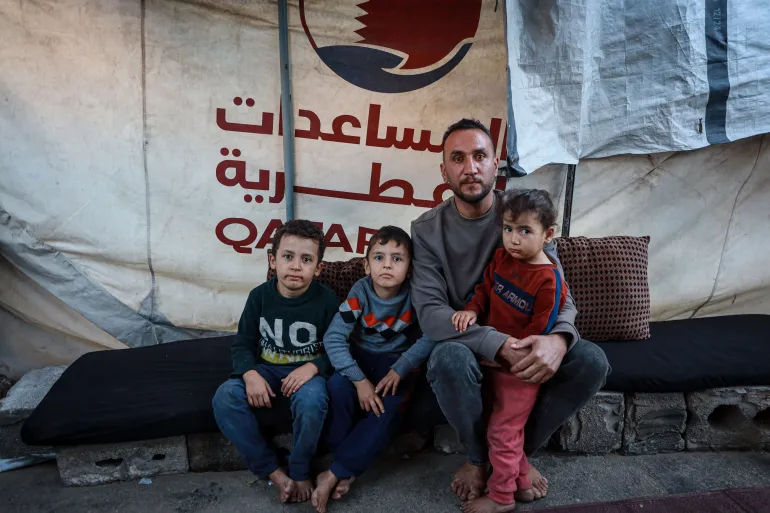
从拜特哈嫩流离失所的阿纳斯·哈马德说,随着冬天临近,他已经买不起三个孩子的新衣服,只能买二手衣物[阿卜杜勒哈基姆·阿布·里亚什/半岛电视台] 二手衣服与别无选择 在加沙城里马尔市场,25岁的店主穆罕默德·阿布·沙纳尔看到顾客们也在经历同样的困境。许多人询问冬衣价格,却什么都没买就离开了。
Anas Hamad, displaced from Beit Hanoun, says he can no longer afford new clothes for his three children and has resorted to buying second-hand garments as winter approaches [Abdelhakim Abu Riash/Al Jazeera] Second-hand clothes and impossible choices In Gaza City’s Rimal market, 25-year-old shop owner Mohammed Abu Shanar sees the same struggle among his customers. Many ask about winter clothing prices, but leave without buying anything.
“价格非常高,不是人人都负担得起。人们进来,问某件东西多少钱,然后因为买不起就走了,”他说。
“The prices are very high. They are not within everyone’s reach. People come in, ask how much something costs, and then leave because they cannot afford it,” he says.
穆罕默德每天大约卖出四到六套冬季运动服。他说,附近流离失所者营地的许多孩子尽管天气寒冷,仍然穿着短袖或薄衣服。
Mohammed sells around four to six winter tracksuits a day. He says many children from nearby displacement camps still wear short-sleeved or lightweight clothes despite the cold.
他把高价归因于进入加沙的货物短缺——这是以色列持续限制的结果——以及从批发商进货的成本。
He attributes the high prices to shortages of goods entering Gaza – the result of continued Israeli restrictions – and the cost of buying stock from wholesalers.
“首先是货物短缺。批发商咬住价格不放,商品对我们来说也很贵。如果这些东西卖20谢克尔(6.25美元)或25谢克尔(7.80美元),而不是40谢克尔(12.60美元)或50谢克尔(15.70美元),也许人们就买得起了,”他说。
“First, there is a shortage of goods. The wholesalers hold on to their prices, and the merchandise is expensive for us, too. If these items were selling for 20 shekels ($6.25) or 25 shekels ($7.80) instead of 40 shekels ($12.60) or 50 shekels ($15.70), perhaps people would be able to buy them,” he says.
穆罕默德说,他在冬季库存上投入了超过2万谢克尔(约合6265美元),但销售三周后,他只收回了不到5000谢克尔(约合1570美元)。
Mohammed says he has invested more than 20,000 shekels (about $6,265) in winter stock, but after three weeks of sales he has recovered less than 5,000 shekels (about $1,570).
像阿纳斯·哈马德这样的人根本没有钱从穆罕默德这样的商贩那里买东西。
People like Anas Hamad simply don’t have the money to buy from traders like Mohammed.
阿纳斯一家从加沙北部的拜特哈嫩流离失所。战前,他经营一家超市,雇用了他的四个兄弟。战争摧毁了他们的家园和生意,让五个大学毕业生全部失业。
Anas and his family are displaced from Beit Hanoun in northern Gaza. Before the war, he ran a supermarket employing his four brothers. The war destroyed their homes and business, leaving all five university graduates without work.
阿纳斯没有收入,也买不起新衣服,只能依靠二手市场和别人给的旧衣服来给三个孩子穿。
With no income and unable to afford new clothes, Anas relies on second-hand markets and hand-me-downs to dress his three children.
他回忆起五岁的女儿贾娜向他要一件新衬衫的情景。他只能指着她身上穿的那一件,那是她哥哥穿过的。
He recalls how his five-year-old daughter, Jana, asked him for a new shirt. He could only point to the one she was wearing, which had belonged to her brother.
这家人住在他们严重破损的帐篷里已经大约两年了。尽管妻子努力缝补,雨水还是从上面和下面渗进来。在最近的暴雨中,他们的被褥和物品都被浸湿了。
The family has lived in their badly torn tent for around two years. Despite his wife’s efforts to sew and patch it, rainwater enters from above and below. During the recent downpour, their bedding and belongings were soaked.
阿纳斯说,他三岁的孩子冷得发抖,而雨水打在帐篷上的声音让孩子们感到害怕。
Anas says his three-year-old child was trembling from the cold, while the sound of rain hitting the tent frightened the children.
“我必须在给孩子买食物、给他们买保暖的衣服和毯子,或者买防水布保护我们的帐篷免受即将到来的雨水侵袭之间做出选择,”他说。“我不知道该优先考虑什么,又该舍弃什么。”
“I have to choose between buying food for my children, getting them warm clothes and blankets, or buying tarpaulins to protect our tent from the coming rain,” he says. “I don’t know what to prioritise or what to leave behind.”