在距离大海仅几米远的加沙海岸、靠近卡拉拉港的地方,33岁的阿纳斯·沙米正试图让他的六口之家在一顶破旧的帐篷里保持温暖和干燥。这顶帐篷几乎无法抵挡风雨,潮湿时刻渗透进他们的床铺和物品。随着冬季临近,海面上不断涌起的巨浪也构成持续威胁。
A few metres from the sea, near al-Qarara port on Gaza’s coast, Anas al-Shami, 33, is trying to keep his family of six warm and dry in a dilapidated tent. It offers little protection from wind and rain, while the damp seeps into their bedding and belongings at every moment. The swelling waves in the sea also pose a constant threat as winter approaches.
海滩并非沙米自愿选择的居住地,而是在他一家被迫离家后,原本避难的难民营变得拥挤不堪,他们才不得不在此栖身。他们负担不起比这顶帐篷更安全的住所。
The beach was not al-Shami’s choice of place to live, but the refuge his family took shelter in after being displaced from their home quickly became overcrowded. They can’t afford anything safer than this tent.
如今,他和家人时刻生活在恐惧中,担心去年冬天的洪水灾难重演。
Now, he and his family are living in constant fear of a repeat of last winter’s flooding.
当以色列将巴尼苏海拉划为所谓的“黄区”——巴勒斯坦人不得越过的区域——时,沙米一家被迫离开了位于汗尤尼斯以东、加沙地带南部的巴尼苏海拉家园。
Al-Shami and his family were forced to leave Bani Suheila, east of Khan Younis in southern Gaza, when it became part of Israel’s so-called “Yellow Zone” beyond which Palestinians are not permitted to go.
“我在流离失所者聚集区寻找可以搭帐篷的土地,但由于过度拥挤和高昂的租金,这根本不可能,”他告诉半岛电视台。“因此我被迫留在海滩上,尽管我和家人面临着危险。”沙米回忆起去年冬天,海水和雨水在他一家入睡时淹没了帐篷。他醒来时发现孩子们躺在水里。他们的床铺和物品反复被浸湿,帐篷变成了一汪塘水,让他无法保护孩子们免受寒冷侵袭。
“I searched for land in displacement areas where I could pitch a tent, but overcrowding and high rental costs made that impossible,” he tells Al Jazeera. “I was therefore forced to stay on the beach, despite the dangers facing my family and me.”Al-Shami recalls last winter, when seawater and rain flooded his tent while the family was asleep. He would wake to find his children lying in water. Their bedding and belongings were repeatedly soaked, leaving him unable to protect them from the cold as the tent turned into a pond.
尽管整年都在尝试,这家人始终无法找到其他去处,只能面临又一个在海滩度过的冬天。
Despite trying all year, the family has been unable to find anywhere else to go, leaving them facing another winter on the beach.
“我孩子反复接触水、寒冷和潮湿,导致严重疾病,威胁到他们的生命,”他说。
“My children’s repeated exposure to water, cold and damp caused serious illness which threatened their lives,” he says.
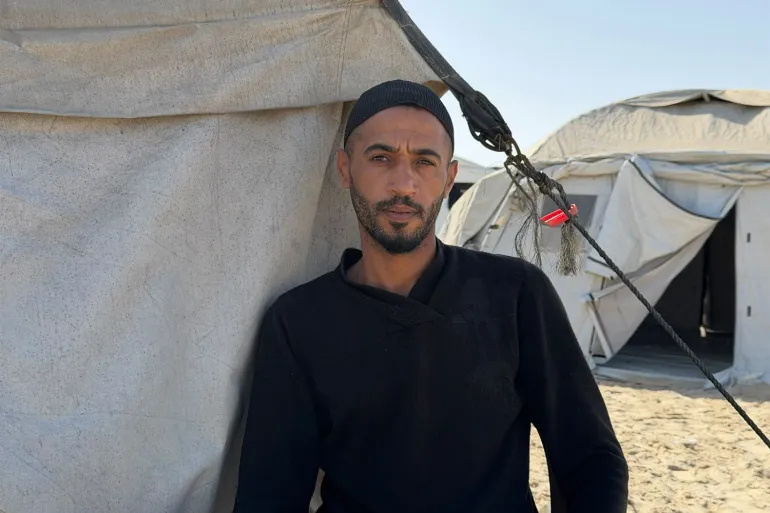
33岁的哈利勒·沙米及其家人别无去处,只能留在海滩上,对即将到来的冬天感到恐惧 [Eyad Al-Qatrawi/Al Jazeera]“面对孩子们我感到无助” 这段海岸线上,这样的故事比比皆是。
Khalil Al-Shami, 33, and his family have nowhere to go other than the beach, and are fearful about what the winter will bring [Eyad Al-Qatrawi/Al Jazeera]‘I feel helpless in front of my children’ It’s a familiar story along this stretch of coastline.
47岁的易卜拉欣·阿布·塔伊尔与家人同样从汗尤尼斯东部流离失所,如今他带着七个孩子挤在港口岸边的一顶狭小帐篷里。这顶破败的住所没有任何基本生活物资,也难以抵御寒冷、风雨。
Ibrahim Abu Tair, 47, whose family has also been displaced from eastern Khan Younis, is sharing a cramped tent with his seven children on the port’s shoreline. The dilapidated shelter lacks any basic necessities and offers little protection from the cold, rain and wind.
“最让我痛苦的是,在孩子们面前我感到无能为力,”他说,“我无法给他们提供御寒的冬衣,甚至连一张干爽的床垫让他们睡觉都做不到。”他说,强风和涨潮的海浪声让他夜不能寐,他非常害怕去年那样的洪水再次发生——当时海水淹没了帐篷,迫使一家人只能在露天挨冻。他最大的愿望是找到一个安全的栖身之所,让孩子们能不再恐惧地入睡。
“What hurts me most is feeling helpless in front of my children,” he says. “I cannot provide winter clothes to protect them from the cold or even a dry mattress for them to sleep on.”The strong wind and the sound of the rising waves keep him awake at night, he says, and he is terrified of another flood like last year’s, when water inundated the tent and forced the family to endure the cold in the open. His greatest wish is to find safe shelter where his children can sleep without fear.
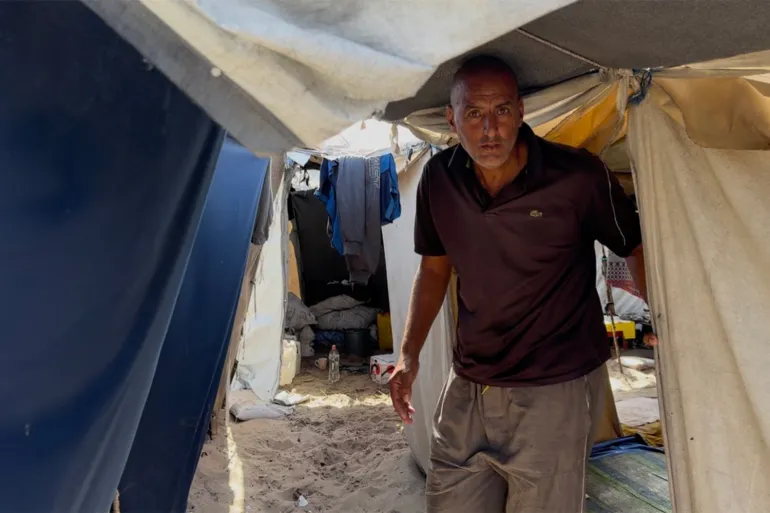
47岁的易卜拉欣·阿布·塔伊尔带着七个孩子住在海滩上一顶破败的帐篷里。他们物资匮乏,几乎无法抵御冬季的海水、风雨 [埃亚德·卡特拉维/半岛电视台] 一些家庭找到了一种临时办法来阻挡海水。
Ibrahim Abu Tair, 47, is living in a dilapidated tent with his seven children on the beach. They have few provisions and little protection from the winter sea, wind and rain [Eyad Al-Qatrawi/Al Jazeera] Some families have found a makeshift solution to keep the water at bay.
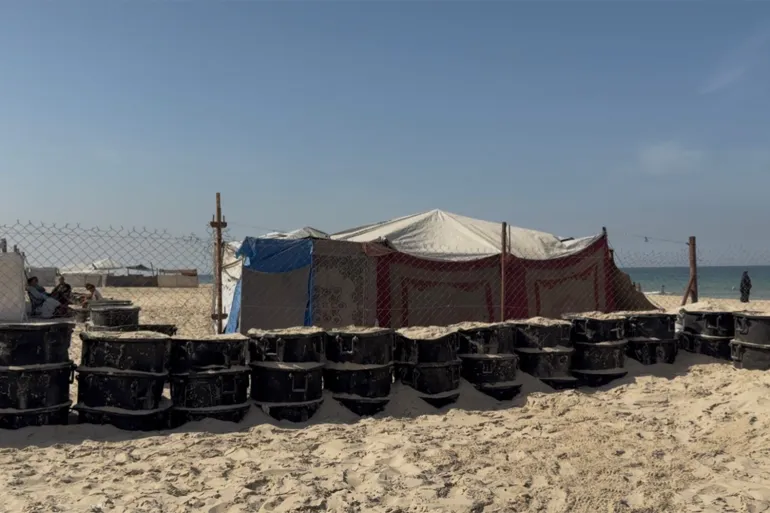
他们把破损的锅装满泥土,在帐篷旁筑起一道屏障,阻挡不断逼近的海水。
By filling damaged cooking pots with earth, they have forged a barrier against encroaching seawater alongside the tents.
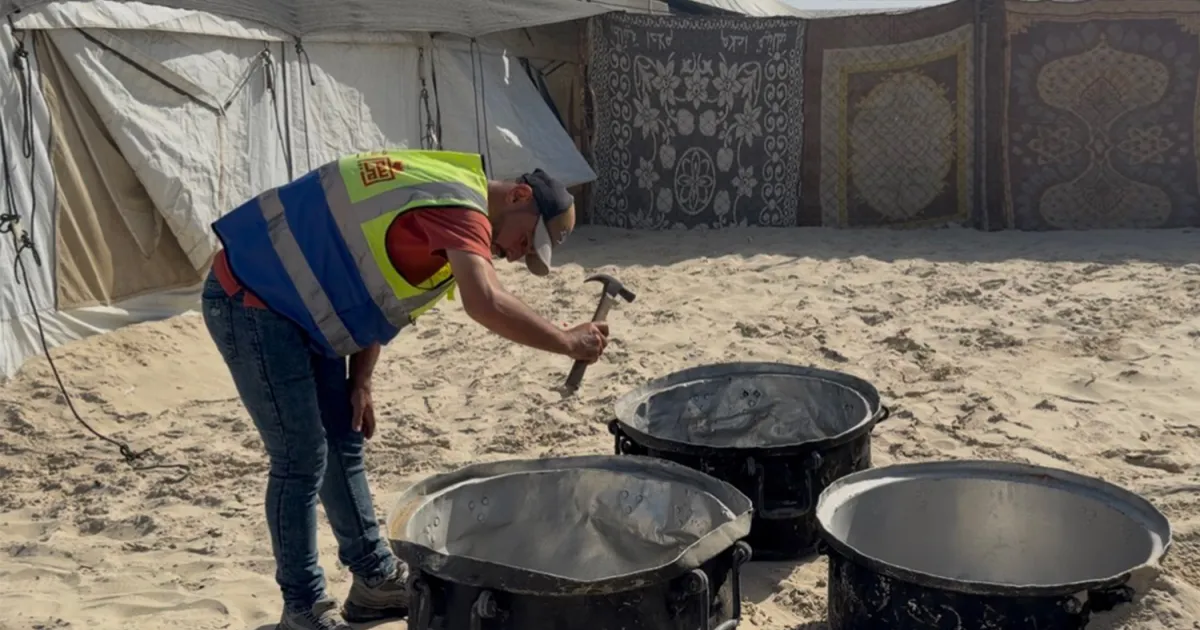
与“世界中央厨房”合作的援助组织“马亚塞姆协会”采纳了这一创新做法,目前正在为卡拉拉港附近地区的家庭制作这种“锅屏障”。
Mayasem Association, an aid organisation which works in cooperation with World Central Kitchen, has seized on this innovation and is now producing these pot-barriers for families in this area close to al-Qarara port.
这一举措将因反复火烧、腐蚀和破洞而无法使用的大锅重新利用。由“世界中央厨房”捐赠的三口锅装满泥土后层层叠放,高度约为150厘米,形成屏障,挡住涌入的海水,防止海浪冲到避难营地。
The initiative reuses large pots rendered unusable by repeated exposure to flames, corrosion and holes. Three pots, donated by World Central Kitchen, are filled with soil and stacked on top of one another, reaching approximately 150 centimetres in height to form barriers that hold back the incoming water and prevent waves from reaching shelter sites.
“该倡议最初旨在建造屏障,以保护协会的安全空间,该空间用于开展教育项目、学校、文化活动、艺术和遗产项目,”协会应急响应协调员哈利勒·阿布·拉希亚告诉半岛电视台。“后来,这一想法发展为试图保护沿海地带流离失所家庭的帐篷。” 一排被改装成水障的烹饪锅具 [Eyad Al-Qatrawi/Al Jazeera] 充满风险的冬季 虽然这是创新思维帮助加沙贫困且处于风险中家庭的一个例证,但这不过是权宜之计,无法弥补安全住所广泛短缺的现状。
“The initiative initially involved building barriers to protect the association’s safe space, which hosts its education programmes, school, cultural activities, arts and heritage programmes,” Khalil Abu Lahia, the association’s emergency response coordinator, tells Al Jazeera. “The idea later developed into an attempt to protect the displaced families’ tents along the coastal strip.”A row of cooking pots which have been fashioned into water barriers [Eyad Al-Qatrawi/Al Jazeera] A winter fraught with risk While this is an example of the innovative thinking which can help families who are destitute and at risk in Gaza, it is nevertheless only a temporary measure which cannot make up for the widespread lack of safe shelter.
该倡议出台之际,加沙冬季应急委员会发出警告,称人道主义灾难正在恶化,因为以色列当局继续阻止帐篷和活动房进入加沙地带,同时也阻碍关键建筑材料和燃料的运入,导致这些物资仍然极度短缺。
The initiative comes amid a warning from Gaza’s Winter Emergency Committee of a worsening humanitarian catastrophe, as tents and caravans remain in critically short supply as Israeli authorities continue to prevent their entry into the Gaza Strip, alongside the delivery of critical construction materials and fuel.
该委员会报告称,以色列部队还摧毁了市政基本运营设备的约70%和民防救援设备的90%。燃料危机意味着机械和发电机很快将完全停止运转,进一步限制了应对洪水、实施救援行动和清理道路的能力。
The committee has reported that Israeli forces have also destroyed about 70 percent of municipalities’ essential operational equipment and 90 percent of civil defence rescue equipment. The fuel crisis means machinery and generators will soon stop functioning altogether, further limiting the ability to respond to floods, carry out rescue operations and clear roads.
总的来说,约有20万顶破旧帐篷为数十万流离失所者提供庇护,其中包括儿童、妇女和残疾人。
In all, there are about 200,000 dilapidated tents sheltering hundreds of thousands of displaced people, including children, women and people with disabilities.
委员会警告称,其中约7800顶帐篷位于极度危险的区域,包括可能发生洪水的干河床、雨水收集池以及面临冬季巨浪冲击的海滩。这些帐篷需要紧急迁移到更安全的地点。
Some 7,800 of them are located in extremely hazardous areas, the committee has warned, including on dry riverbeds which may now flood, rainwater collection ponds and beaches exposed to crashing winter waves. These need to be urgently relocated to safer locations.
约2000栋开裂建筑也面临倒塌风险,威胁到在其中避难的家庭。该委员会表示,建筑材料、活动房屋、庇护所和燃料均急需补充。
About 2,000 cracked buildings are also at risk of collapse, threatening families who have sought refuge inside them. Building materials, caravans, shelter and fuel are all urgently needed, the committee says.