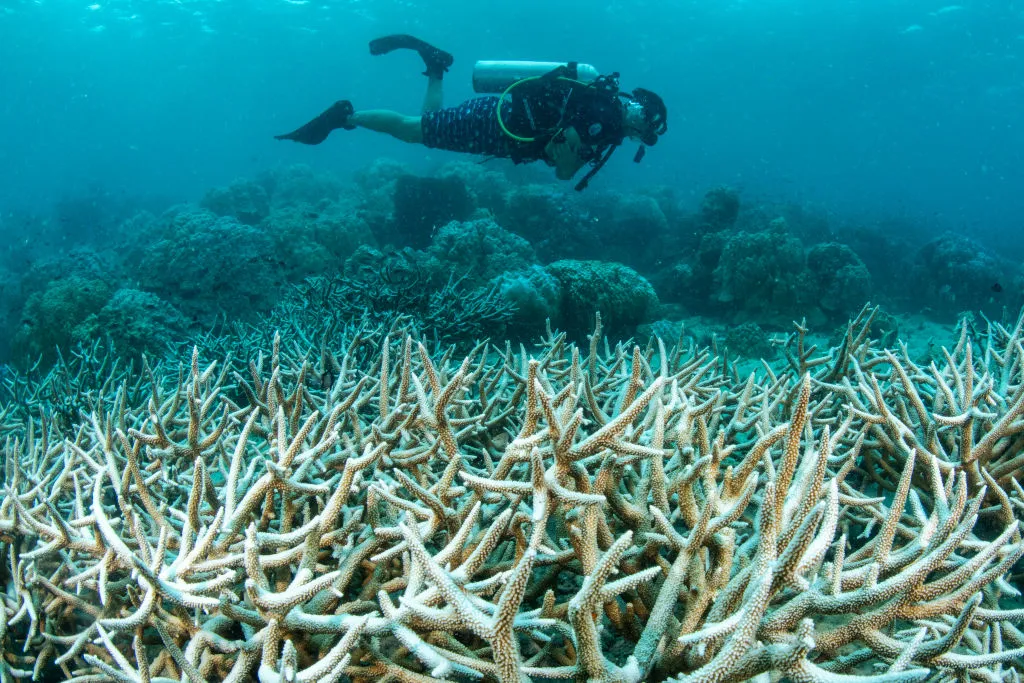
珊瑚礁对高温极其脆弱,如2024年泰国的这些白化珊瑚所示。如果地球继续以当前速率升温,世界上大部分珊瑚礁可能无法生存。
Coral reefs are highly vulnerable to heat, like these bleached corals in Thailand in 2024. If the planet continues to warm at the current rate, the majority of the world's reefs aren't likely to survive.
Sirachai Arunrugstichai/Getty Images 各国已聚集在土耳其COP31峰会的年度气候变化谈判中,讨论如何实现一个日益难以实现的目标。十年前,各国同意将气候变暖限制在1.5摄氏度(2.7华氏度)。现在,这个目标已遥不可及。
Sirachai Arunrugstichai/Getty Images Countries have gathered at the annual climate change negotiations at the COP31 summit in Turkey to discuss how to achieve a goal that is increasingly unachievable. A decade ago, countries agreed to limit climate warming to 1.5 degrees Celsius (2.7 degrees Fahrenheit). Now, that goal is out of reach.
全球平均气温已经比工业革命前高出接近1.5摄氏度。燃烧化石燃料产生的温室气体排放仍在大气中上升,大多数国家未能按计划实现其气候承诺,即通过转向更清洁的能源来减少排放。
Globally, average temperatures are already close to 1.5 degrees Celsius warmer than they were before the Industrial Revolution. Heat-trapping emissions from burning fossil fuels are still rising in the atmosphere, and most countries are not on track to meet their climate pledges to cut emissions by transitioning to cleaner energy.
根据最近的一项联合国研究,地球的最佳情景现在是升温1.7或1.8摄氏度(大约3华氏度)。如果化石燃料排放继续当前路径,到本世纪末,世界将比现在高出约2.8摄氏度(5华氏度)。
The best-case scenario for the planet is now 1.7 or 1.8 degrees Celsius of warming (roughly 3 degrees Fahrenheit), according to a recent United Nations study If fossil fuel emissions stay on their current path, the world would be around 2.8 degrees Celsius (5 degrees Fahrenheit) hotter by the end of the century.
虽然1.5摄氏度和2摄氏度之间的差异看起来微乎其微,但科学研究表明,这些增量可能为地球带来截然不同的后果。升温会提高全球极端天气的风险,并可能导致地球上一些最脆弱生态系统的崩溃。
While the difference between 1.5 and 2 degrees Celsius may seem tiny, scientific research shows those increments can produce dramatically different outcomes for the planet. More warming raises the risk of extreme weather globally and could lead to the collapse of some of the planet's most sensitive ecosystems.
“关键在于,每一度的每一分都至关重要,”埃克塞特大学气候教授蒂姆·伦顿说。“我们避免的每一度的每一分,都能在很大程度上限制危害。”珊瑚礁已濒临边缘珊瑚是整个生态系统的建筑师。随着生长,它们构建起支撑大量其他物种的框架,使珊瑚礁成为生物多样性热点。它们对数以亿计的人口也至关重要,这些人依赖珊瑚获取食物和生计。
"The crucial point is that every fraction of a degree matters," says Tim Lenton, climate professor at the University of Exeter. "Every fraction of a degree that we avoid is really able to do a huge amount of limiting harm." Coral reefs already close to the edge Corals are architects of an entire ecosystem. As they grow, they create the framework that supports vast numbers of other species, making reefs biodiversity hotspots. They're also vital to hundreds of millions of people who depend on them for food and livelihoods.
珊瑚也极易受热影响。长时间的海洋热浪会导致珊瑚白化,使其变白,最终可能杀死珊瑚。自20世纪90年代末以来,已发生四次全球性白化事件。随着一场历史性强势的厄尔尼诺现象推高海水温度,科学家表示,第五次全球性白化事件很可能正在发生。
Corals are also highly vulnerable to heat. Prolonged marine heat waves cause corals to bleach, turning them white, which can eventually kill corals. Since the late 1990s, there have been four global bleaching events. With a historically strong El Niño now raising water temperatures, scientists say the fifth global bleaching event is likely unfolding.
即使在2023年至2025年上一次白化事件之前,研究人员就发现,全球44%的珊瑚物种面临灭绝风险。
Even before the previous bleaching event from 2023 to 2025, researchers found that 44% of coral species globally are at risk of extinction.
“这些统计数据令人极度担忧,但它们也强调,时间至关重要,”大卫·奥布拉说,他是珊瑚研究组织东非CORDIO的主任,参与了上个月在《自然》杂志上发表的这项研究。“每十年,每五年都至关重要。”
"These are incredibly worrying statistics, but they also emphasize that time matters," says David Obura, director of the coral research organization CORDIO East Africa, who worked on the study published last month in the journal Nature. "Every ten years, every five years counts."
鉴于珊瑚对高温的敏感性,大多数珊瑚礁的生存取决于升温1.5摄氏度与2摄氏度之间的差异。政府间气候变化专门委员会发现,在升温超过2摄氏度的情况下,99%的珊瑚将会消失。“在升温2摄氏度的情况下,我们预计大多数珊瑚将无法生存,无法以功能性的方式构建珊瑚礁生态系统,”奥布拉说。“所以你可能仍能找到一些物种,但其中许多可能变得如此罕见或受损,以至于到那时它们已经灭绝。”
Given their susceptibility to heat, the survival of most coral reefs depends on the difference between 1.5 and 2 degrees of warming. The Intergovernmental Panel on Climate Change found that beyond 2 degrees Celsius of warming, 99% of corals would be lost "At 2 degrees of warming, we anticipate most corals just won't survive, not in functional ways to build a reef ecosystem," Obura says. "So you might still find some of the species, but many of them may be so rare or so compromised that they will have gone extinct by then."
面对珊瑚未来的严峻预测,保护团体和沿海社区正在许多地区努力让珊瑚礁尽可能健康,以便更好地抵御气候变化。这包括恢复珊瑚、减少水污染,甚至培育更耐热的珊瑚。“世界上大多数人没有放弃退化生态系统的奢侈,因为那是他们生活的地方,”奥布拉说。“那是他们拥有的一切。所以我们必须想办法让它们重新发挥作用。”数百万人面临极端高温
With the dire forecasts for the future of coral, conservation groups and coastal communities are working to make reefs as healthy as possible in many areas so they can better withstand climate change. That includes restoring corals, reducing water pollution and even breeding more heat-tolerant corals "Most people around the world don't have the luxury of giving up on degraded ecosystems, because that's where they live," Obura says. "That's all they have. So we have to work out how to make them function again." Millions more exposed to extreme heat The goal of 1.5 degrees Celsius is an average temperature, measured across the planet.
1.5摄氏度的目标是一个平均温度,在全球范围内测量。它掩盖的是越来越极端的高温事件,这些事件正在推高平均温度。
What it masks is the increasingly extreme heat events that are raising the average.
研究人员发现,每升高零点一摄氏度,就有额外1.4亿人面临危险水平的高温。
Researchers have found that for every tenth of a degree of warming, an additional 140 million people are exposed to dangerous levels of heat.
热浪已经造成大量死亡,例如在欧洲,过去一个夏天估计有5万人死于与高温相关的原因。高温对患有慢性疾病的人,以及老年人和孕妇尤其危险。热浪的实际死亡人数往往被掩盖,因为许多与高温相关的死亡未被统计。
Heat waves are already causing heavy death tolls, like in Europe, where an estimated 50,000 people died of heat-related causes this past summer. Heat is particularly dangerous for those with chronic health conditions, as well as for people who are elderly or pregnant. The real toll of heat waves is often hidden, since many heat-related deaths are undercounted "You could think of it a bit like a tipping point for the human organism or body," Lenton says.
“你可以把它看作是人体或人体生理机能的一个临界点,”Lenton说。“在某种程度上,我们的生理机能会达到一个临界点,而最糟糕的临界点就是死亡。”
"At some point, our physiology kind of reaches a tipping point and the worst tipping point is death."
强风暴。气候变化每升高一度,也会影响风暴的强度。空气变暖可以产生更强的降水,因为每升高一度,空气能容纳的水汽就多7%。在美国的大部分地区,暴雨已经变得更加强烈。
Powerful storms Every degree of climate change also affects the intensity of storms. Warmer air can produce heavier downpours because it holds 7% more water vapor for every degree. Rainstorms are already getting more intense in most of the U.S.
科学研究还显示,更高的升温水平可能导致其他危险的临界点,例如南极冰川崩塌。如果它们失稳,融化将向海洋注入巨量水分,导致全球海平面上升。
Scientific research also shows higher levels of warming could lead to other risky tipping points like the collapse of Antarctic glaciers. If they destabilize, the melt would add vast volumes of water to the ocean, raising sea levels globally.
“我们永远不确定临界点在哪里,直到跨过它,但我们可以100%确信,对于大多数临界点来说,升温越多,跨越它们的可能性就越大,”Lenton说。“升温越少,就越能控制这种风险,这就是为什么我们应该为每一个能够推迟的零点几度而奋斗。”
"We're never exactly sure where the tipping point is until we cross it, but we can be 100% confident that, for most of them, more warming is a bigger likelihood of crossing them," Lenton says. "Less warming is controlling that risk and that's why we should fight for every fraction of a degree that we can stave off."
在土耳其举行的正在进行的气候谈判中,各国不太可能做出重大新承诺来削减气候排放。讨论重点是电气化的新目标,即更多汽车和家庭将使用电力而非化石燃料。这将有助于减少总体排放,因为世界越来越多的电力来自太阳能和风能等更清洁的能源。COP31 气候变化 珊瑚礁 热浪
At the ongoing climate negotiations in Turkey, countries are not expected to make major new commitments to cut climate emissions. Discussions are focusing on a new goal for electrification, meaning more cars and homes would run on electricity instead of fossil fuels. That would help reduce overall emissions, since a growing share of the world's electricity comes from cleaner sources, like solar and wind. COP31 climate change coral reefs heat