政府似乎正转向一场长期的经济施压行动,因为特朗普总统在达成核协议问题上表现出的紧迫感很低。
The administration appears to be moving toward a long-term economic pressure campaign as President Trump expresses little urgency in securing a nuclear agreement.
特朗普总统表示,他倾向于采取一种新的解决伊朗核危机的办法:宣布危机结束,即使实际情况没有多大变化。
President Trump says he is leaning toward a new solution to the Iran nuclear crisis: Declare it is over, even if not much has changed.
特朗普先生及其团队开始宣称,伊朗人已处于他们想要的境地。他们说,不再需要达成一项新的核协议来将潜在的制造炸弹燃料移出伊朗,也不需要限制伊朗的导弹能力,这两点是总统10个月前引发战争的主要理由。
Mr. Trump and his team have taken to asserting that they have the Iranians right where they want them. They say they no longer need a new nuclear agreement that would remove potential bomb fuel from the country, or to limit Iran’s missile capability, two of the leading reasons the president cited 10 months ago for going to war.
特朗普先生似乎——至少目前——已经拒绝了一系列军事选项,这些选项本将涉及对军事设施、核设施甚至部分能源基础设施进行密集的、尽管是有时限的打击。
Mr. Trump appears — at least for now — to have rejected a series of military options that would involve intense, if time-limited, attacks on military installations, nuclear sites and even some energy infrastructure.
今年所有关于派遣特种部队夺取该国约970磅(约440公斤)、纯度接近武器级的60%浓缩铀的讨论,已被放弃,尽管只是暂时的。对美国最大型“地堡炸弹”是否威力足以深入“镐山”这一地点的详细分析也已搁置,美国情报机构认为——但不确定——那里是先进离心机的所在地,这些离心机能将铀提纯为制造炸弹的燃料。
All the talk this year of sending in commandos to seize roughly 970 pounds of uranium from the country, enriched to a near-bomb-grade level of 60 percent purity, has been abandoned, albeit for the moment. So has the detailed analysis of whether America’s biggest bunker busters are powerful enough to get deep into Pickaxe Mountain, a site U.S. intelligence believes — but is not sure — is the location of advanced centrifuges that can purify uranium into bomb fuel.
国务卿马尔科·鲁比奥本周在巴黎出席七国集团外长会议期间,在接受记者采访时描述了一种最好被定性为“战略耐心”的做法:等待对伊朗的制裁发挥作用,最终击垮其政府。
In comments to reporters this week in Paris, where he was attending a meeting of foreign ministers from the Group of 7, Secretary of State Marco Rubio described an approach best characterized as strategic patience: waiting for sanctions on Iran to take their toll and ultimately crack their government.
鲁比奥说:“目前,经济行动、施压以及我们的经济行动给伊朗政权造成的毁灭性打击效果非常好,以至于总统真的不需要进行大规模战斗行动。”
“At this point, the economic campaign and the pressure and the devastation that our economic campaign is having on the Iranian regime is working so well that the president really doesn’t have any need to conduct major combat operations,” Mr. Rubio said.
他补充说,如果伊朗“跨越某些红线”,美国可能会介入,因为美国拥有“世界上最强大的军队”。周四,特朗普宣布将副总统万斯从与伊朗最高安全官员、最高国家安全委员会秘书、伊斯兰革命卫队前总司令穆赫辛·礼萨伊将军进行直接谈判的工作中调离,这一新做法得到强调。
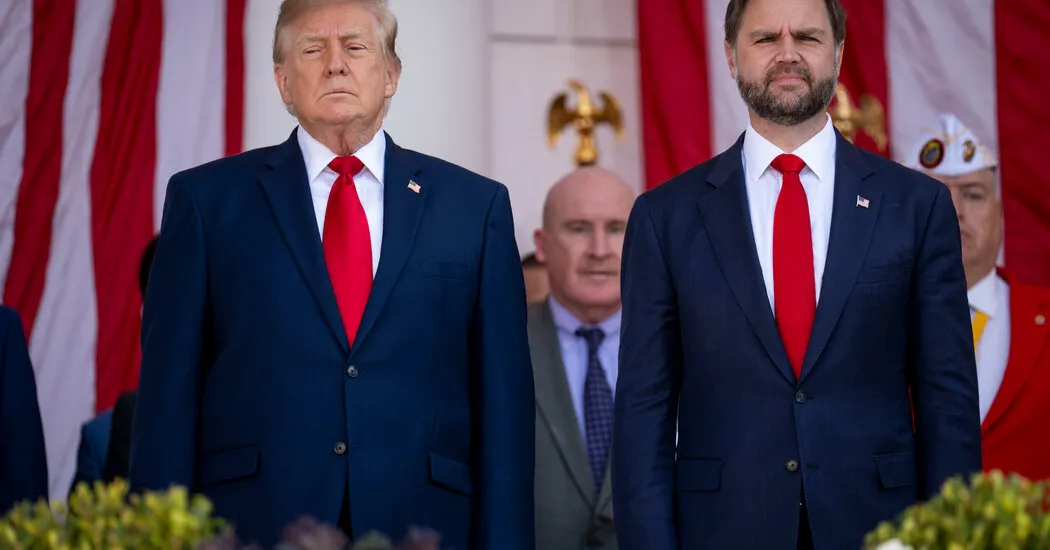
If Iran “crosses certain red lines” the United States could intervene, he added, because it has “the most capable military in the world.”The new approach was underscored on Thursday when Mr. Trump announced that he was redirecting Vice President JD Vance away from his efforts to engage in direct negotiations with Iran’s top security official, Gen. Mohsen Rezaei, the secretary of the Supreme National Security Council and a former commander in chief of the Islamic Revolutionary Guards Corps.
这位副总统曾将中期选举中共和党大面积失利归咎于这场战争,此前他曾定位为在通过谈判结束冲突方面发挥关键作用。
The vice president, who has blamed the war for the widespread Republican losses in the midterm elections, had previously positioned himself to play a key role in bringing the conflict to a negotiated end.
现在特朗普似乎认为谈判会浪费万斯的时间。“我们不需要与伊朗达成协议,”特朗普在社交媒体帖子中写道。“那些日子早已一去不复返。”他说,让万斯调查由民主党执政的城市和州,以及追查被浪费的联邦资金更为重要。
Now Mr. Trump seems to think that a negotiation would be a waste of Mr. Vance’s time. “We don’t need a deal with Iran,” Mr. Trump wrote in a social media post. “Those days have long since passed.”He said it was more important for Mr. Vance to investigate cities and states run by Democrats, and to hunt down wasted federal funds.
与此同时,他宣称自己拥有对伊朗所需的所有筹码。“我们掌握着他们的钱,数千亿美元,”他写道,夸大了美国及其盟友冻结的伊朗资产规模,“而且我们掌握着他们的海峡!”(尽管估算数字差异很大,全球各地冻结的伊朗资金可能高达1000多亿美元,但美国境内仅有20亿美元左右。)霍尔木兹海峡在最初袭击发生后几天内被伊朗扰乱,令美国措手不及,目前仅部分重新开放。每天都在上演猫鼠游戏,美国海军试图护送油轮驶出海峡。
Meanwhile, he asserted that he had all the leverage over Iran he needed. “We’ve got their money, Hundreds of Billions of Dollars,” he wrote, overstating the amount of Iranian assets held by the United States and its allies, “and we’ve got their Strait!” (While estimates differ widely, there may be upward of $100 billion of Iranian funds frozen in various accounts around the world, but only $2 billion or so in the United States.) The Strait of Hormuz, which Iran disrupted within days of the initial attack, catching the United States flat-footed, has only partially reopened. Each day is a game of cat and mouse as the U.S. Navy tries to guide oil tankers out of the strait.
尽管特朗普声称如此,但没有迹象表明美国正在收拾行装离开。官员们表示,阻止伊朗出口石油的海上封锁依然存在,且目前没有立即结束封锁的计划。这意味着该地区将继续维持大规模军事存在——这正是特朗普及其盟友在春季表示想要避免的局面。
Despite Mr. Trump’s claims, there are no signs that the United States is packing up and going away. The naval blockade that has prevented Iran from shipping oil remains, officials say, and there is no immediate plan to end it. That suggests a continued, large-scale military presence in the region — exactly what Mr. Trump and his allies said in the spring they wanted to avoid.
特朗普的希望似乎是,随着时间的推移,伊朗将不再成为头版头条的主要议题,而在日益加大的经济压力下,该政权将会崩溃。但事情可能没那么简单。
Mr. Trump’s hope seems to be that with time, Iran will seep off the front pages as a major issue, and the regime, under greater and greater economic pressure, will crack. But it may not be that simple.
“总统可能对伊朗问题已不想再管,但伊朗还没对他完,”布鲁金斯学会伊朗问题专家苏珊·马洛尼周五表示。她指出,虽然海军目前护送出波斯湾的石油运输量已“接近战前水平”,但这是“以高昂代价和相当大的可持续性不确定性为代价的”。德黑兰将继续扰乱海峡过境通行,重建其导弹和无人机储备,并重启其核计划。随着伊朗经济状况恶化,其领导层很可能会升级事态,以试图缓解压力。因此,美国依然陷入海湾地区的僵局,局势恐将升级而非淡出。
“The president may be finished with Iran, but Iran isn’t finished with him,” Suzanne Maloney, an Iran expert at the Brookings Institution, said on Friday. While the Navy now has oil shipments coming out of the Persian Gulf “near prewar levels,” she noted, it comes “at high cost and considerable uncertainty about its sustainability.”Tehran will continue to disrupt transit through the strait, rebuild its missile and drone stockpiles, and reconstitute its nuclear program. And as Iran’s economic conditions deteriorate, its leadership is likely to escalate in an effort to relieve the pressure. So the United States remains mired in a stalemate in the Gulf that is likely to intensify rather than fade away.
还有一个挥之不去的问题,那就是那60%浓度的浓缩铀。这种接近武器级的核材料是特朗普2月28下令对伊朗发动美军袭击时引述的头号理由。如今,他对这批储备听起来却毫不在意。
And there is the nagging issue of that 60 percent enriched uranium. The near-bomb-grade fuel was the No. 1 reason Mr. Trump cited when he ordered the beginning of American attacks on Iran on Feb. 28. Now he sounds unconcerned about the stockpile.
“他们什么都没有,”特朗普周日在《60分钟》节目中回应罗斯·杜萨特关于核燃料的追问时说,“它埋在数千吨岩石之下,”他补充道,并指出美国间谍卫星正在监视它。
“They have nothing,” Mr. Trump said on “60 Minutes” on Sunday, when Ross Douthat pressed him about the fuel. “It’s buried under thousands of tons of rock,” he said, noting that American spy satellites are watching it.
当然,自2025年6月美国轰炸机首次袭击伊朗三大核设施——福尔多、纳坦兹和伊斯法罕——以来,它就一直躺在那堆岩石下面。
Of course, it has been sitting under that pile of rock since June 2025, when American bombers first struck three major Iranian nuclear sites: Fordo, Natanz and Isfahan.
当时,总统称伊朗的核能力已被“彻底摧毁”。专家表示,这是一种夸大其词——情报评估认为核材料仍在那里,但袭击确实使其难以取回。
At the time, the president said Iran’s nuclear capacity had been “obliterated.”It was an overstatement, experts said — the material was still there, intelligence reports assessed, but the attack certainly made it hard to retrieve.
虽然燃料仍确切地停留在原处,显然未被触动,但特朗普关于它的论调已转变,以符合他当前的需要。他说,他在2025年下令袭击,是因为伊朗“距离能够制造炸弹还有两周”。事实并非如此;如果燃料已被回收,它可能距离将该铀提纯至武器级材料还有两周。将其制成弹头还需要数月甚至数年。
While the fuel remains exactly where it was, apparently untouched, Mr. Trump’s arguments about it have shifted to match his current needs. He has said he ordered the strike in 2025 because Iran was “two weeks from being able to make a bomb.”It was not; if the fuel had been recovered, it might be two weeks away from having that uranium boosted to bomb-grade material. Fashioning it into a warhead would have taken months or years more.
现在他说这没什么好担心的。但特朗普的最新表态引出了核心问题:如果核材料不是威胁,仍确切地停留在2月时的位置,美国为何要开战?
Now he says it is nothing to worry about. But Mr. Trump’s latest declaration raises the central question: If the nuclear material is not a threat, sitting exactly where it was in February, why did America go to war?
“特朗普发动战争时以为自己会成为英雄,”卡内基国际和平基金会伊朗问题专家卡里姆·萨贾德普尔说。“他现在试图想办法在不显得像个失败者的情况下结束战争。”
“Trump began the war thinking he would be a hero,” said Karim Sadjadpour, an Iran expert at the Carnegie Endowment for International Peace. “He’s now trying to figure out how to end the war without looking like a loser.”
萨贾德普尔补充道:“他一开始的目标是极大化的:终结伊朗的核计划、导弹生产、地区代理人,甚至可能是政权本身。他现在似乎正在为一个极小化的结果做准备:接受核材料仍在那里,只要它被埋在岩石之下。”如果特朗普决定放弃回国,他大概会留给海湾盟友,或许还有欧洲人,来处理留下的烂摊子。该地区许多官员担心的是,伊朗为防范未来的袭击,将决定设法生产核武器——这正是特朗普说他下定决心要防止的结果。
“He started with maximalist goals: ending Iran’s nuclear program, its missile production, its regional proxies and potentially the regime itself,” Mr. Sadjadpour added. “He now seems to be preparing for a minimalist outcome: accepting that the nuclear material is still there, as long as it’s buried under rock.”Should Mr. Trump decide to give up and go home, he would presumably leave it to the Gulf allies, and perhaps the Europeans, to deal with what is left behind. The worry of many officials in the region is that Iran, to forestall a future attack, will decide it should find a way to produce a nuclear weapon — exactly the outcome Mr. Trump said he was determined to prevent.
大卫·E·桑格报道特朗普政府及一系列国家安全议题。他已在《纽约时报》任职逾四十年,并撰写了四本关于外交政策和国家安全挑战的书籍。
David E. Sanger covers the Trump administration and a range of national security issues. He has been a Times journalist for more than four decades and has written four books on foreign policy and national security challenges.