秘鲁经济在9月意外放缓,受矿业和农业产出疲软拖累。国家统计局INEI周日报道,作为国内生产总值代理指标的经济活动指数,较去年同期上涨2.43%。该结果低于8月经修订后的3.32%读数,也低于彭博社调查的经济学家中位数预估的3.5%。环比产出上涨0.09%。
Peru’s economy unexpectedly slowed in September, dragged down by weak mining and agriculture output. The economic activity index, a proxy for gross domestic product, rose 2.43% from a year earlier, the national statistics agency INEI reported Sunday. The result was slower than August’s revised 3.32% reading and below the 3.5% median estimate of economists surveyed by Bloomberg. Output rose 0.09% from a month earlier.
9月不及预期的增长表明,秘鲁可能难以实现央行预测的2026年3.2%增长,尽管私人投资强劲,金属价格高企。
Slower-than-expected growth in September indicates that Peru may struggle to meet the central bank forecast of 3.2% growth for 2026, despite strong private investment and high metal prices.
这些有利因素预计将有助于缓解即将来临的强厄尔尼诺天气现象对经济的影响,该现象已经削弱了农业、渔业及相关行业。2026年前九个月,经济活动增长3.18%。
Those tailwinds are expected to help cushion the impact on the economy from a looming strong El Niño weather phenomenon that has already been undercutting agriculture, fishing and related industries. In the first nine months of 2026, economic activity rose 3.18%.
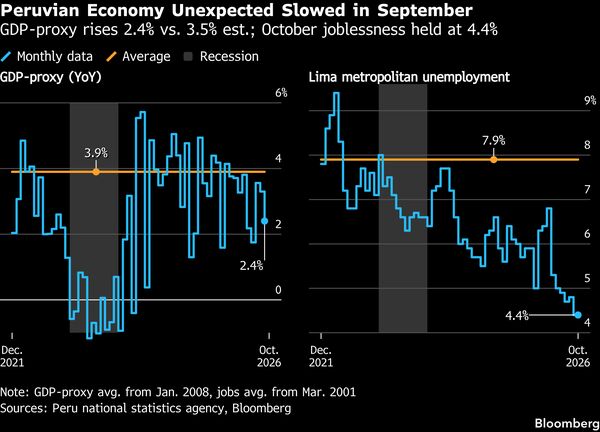
按年计算,9月增长受零售销售和建筑业推动,两者分别增长6.29%和8.84%。相比之下,受金属产量下降影响,矿业较去年同期下降6.32%,农业下降5.44%。
On an annual basis, growth in September was boosted by retail sales and construction, which expanded 6.29% and 8.84%, respectively. By contrast, mining fell 6.32% compared to a year earlier due to lower metals output, while agriculture declined 5.44%.
秘鲁长期以来一直是拉丁美洲表现最好的经济体之一,享有更快的增长、稳定的货币和相对较低的利率。通胀也总体低于地区同行,直到最近八个月出现激增,突破并持续高于央行目标区间3%的上限,食品成本上升叠加全球能源冲击,进一步推高通胀。
Peru has long been among Latin America’s top performing economies, enjoying faster growth, a stable currency and relatively lower interest rates. Inflation, too, has generally come in below regional peers until a surge saw it breach and then continue to run above the 3% ceiling of the central bank’s target range over the last eight months with rising food costs adding to the global energy shock.
本周早些时候,决策者将借贷成本上调四分之一至4.50%,这是近四年来首次加息。委员会表示,其决定不一定意味着紧缩周期的开始,并称将根据需要调整政策,将通胀重新带回目标区间。
Earlier this week, policymakers raised borrowing costs by a quarter-point to 4.50% for the first time in nearly four years. The board said that its decision doesn’t necessarily imply the start of a tightening cycle, adding that it will adjust policy as needed to bring inflation back within the target band.
秘鲁于11月9日时隔一年多首次再次进入国际债券市场。这个铜矿资源丰富的国家通过一项两部分交易出售了价值45亿美元的新债券,并启动了一项债券置换要约,让债券持有人有权将2027年、2030年和2031年到期的债券置换为2038年到期的新债券。
Peru on Nov. 9 tapped international bond markets for the first time in more than a year. The copper-rich nation sold $4.5 billion worth of new bonds in a two-part deal and launched a debt exchange offer, giving bondholders the option to trade bonds due in 2027, 2030 and 2031 for new bonds due 2038.
秘鲁总统藤森·惠子的政府10月下旬表示,计划通过修改秘鲁的财政规则,将明年的财政赤字从之前的国内生产总值的1.4%提高到2.4%,从而为2027年增加最多180亿索尔(约合53亿美元)的支出,让官员们有更多空间保护经济免受恶劣天气和全球燃料价格上涨的影响。
The administration of President Keiko Fujimori said in late October it is planning as much as 18 billion soles ($5.3 billion) in additional spending for 2027 by changing Peru’s fiscal rules and allowing the deficit to rise to 2.4% of gross domestic product next year, above 1.4% previously, giving officials more room to protect the economy from severe weather and higher global fuel prices.