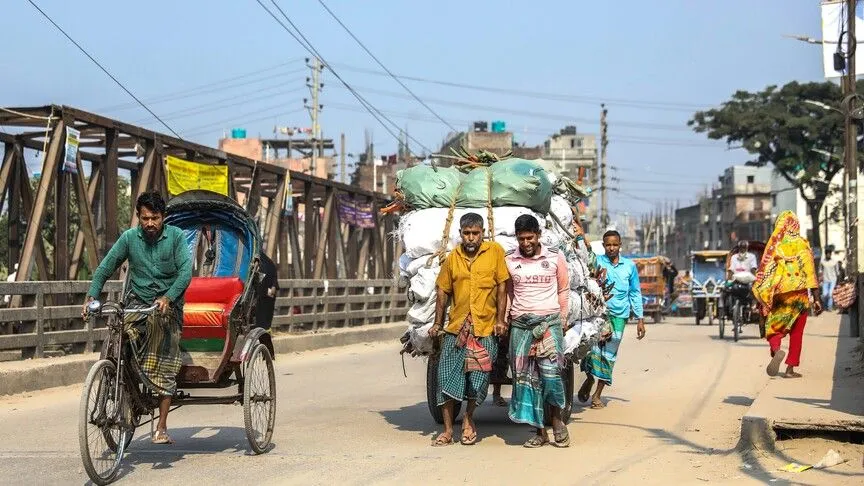
一名服装工人表示,由于食品价格上涨,一公斤牛肉的价格已接近两天工资,他已有六个月没吃过牛肉。
Garment worker says he has not eaten beef in 6 months as rising food prices make a kilo cost nearly 2 days’ wages.
制造商警告称,更高的劳动力成本可能威胁竞争力,尽管随着美国需求增强,出口正在复苏。
Manufacturers warn that higher labour costs could threaten competitiveness, even as exports recover on stronger US demand.
工厂主指控,前总理谢赫·哈西娜的支持者正在利用工资抗议活动扰乱生产。
Factory owners allege that supporters of former Prime Minister Sheikh Hasina are exploiting wage protests to disrupt production.
在孟加拉国首都达卡郊外的工业带阿舒利亚,成排的服装工厂生产出数百万件衬衫、裤子、运动服和夹克,销往西方首都灯火通明的商店。
In Ashulia, an industrial belt on the outskirts of Bangladesh’s capital Dhaka, rows of garment factories produce millions of shirts, trousers, sportswear and jackets destined for the brightly lit stores of Western capitals.
但近几周,数十家工厂的缝纫机停止了运转。生产车间空无一人。工人们走上街头,要求体面工资。
But in recent weeks, sewing machines have fallen silent in scores of factories. Production floors have emptied. Workers have taken to the streets, demanding living wages.
他们的要求是将月最低工资提高150%以上,从12500塔卡(约合102美元)增至32000塔卡(约合261美元)。孟加拉国最大的出口产业对这种动荡与讨薪的熟悉循环并不陌生。
Their demand is a more than 150% increase in the monthly minimum wage, from 12,500 takas ($102) to 32,000 takas ($261). Bangladesh's largest export industry is no stranger to this familiar cycle of unrest and wage demands.
生活成本上升,工资购买力下降。当谈判未能带来缓解时,抗议蔓延至公路,生产订单面临中断。
Living costs rise and wages lose purchasing power. When negotiations fail to deliver relief, protests spill onto highways and production orders face disruption.
“我已经六个多月没尝过牛肉味了,”在阿舒利亚工作的服装工人阿克拉姆·侯赛因感叹道。
“I haven’t tasted beef for more than six months now,” lamented Akram Hossain, a garment worker in Ashulia.
“一公斤牛肉的价格几乎相当于我两天的工资,”侯赛因告诉阿纳多卢通讯社。
“A kilo of beef costs almost two days of my salary,” Hossain told Anadolu.
另一名工人萨吉布·米亚告诉阿纳多卢通讯社,工厂主和政府只听得懂“街头语言”。“这一次我们将留在街头,”米亚说。
Sajib Mia, another worker, told Anadolu that factory owners and the government only understand the “language of the street.”“We will stay on the streets this time,” said Mia.
通胀侵蚀收入 最低工资上一次调整是在2023年12月,当时上调了56.25%,从8000塔卡(约合65美元)增至现行水平。
Inflation erodes earnings The minimum wage was last revised in December 2023, when it rose 56.25% from 8,000 taka ($65).
当时工人们要求最低工资超过20000塔卡。近三年后,通胀进一步削弱了该协议的价值。
Workers had sought more than 20,000 taka at the time. Nearly three years later, inflation has further eroded the value of the settlement.
孟加拉国全国性报纸《每日承诺》发表的分析估计,自2023年12月以来,现行最低工资的购买力已损失约22.5%。收入与支出之间的差距很大。
alysis published by Daily Waadaa, a national newspaper in Bangladesh, estimated that the current minimum wage has lost about 22.5% of its purchasing power since December 2023. The gap between earnings and expenditure is substantial.
孟加拉国统计局2025年的一项调查显示,城市家庭月均支出为37344塔卡(305美元),接近最低工资的三倍。
A 2025 Bangladesh Bureau of Statistics survey put average monthly urban household expenditure at 37,344 taka ($305), nearly three times the minimum wage.
工会组织“联合服装工人联合会”主席纳兹玛·阿克特对阿纳多卢通讯社表示,生活必需品成本的上涨使得重新调整工资不可避免。
Speaking to Anadolu, Nazma Akter, president of the Sommilito Garments Sramik Federation, a labor union, said that the cost of essentials had made a wage revision unavoidable.
“工人当然需要更高的工资,”她说,并指出烹饪用气价格不断上涨。
"Of course, workers need higher wages," she said, pointing to the rising cost of cooking gas.
抗议活动在10月底和11月初加剧,蔓延至加济布尔、阿舒利亚、萨瓦尔、纳拉扬甘杰以及达卡部分地区。
The protests intensified in late October and early November, spreading across Gazipur, Ashulia, Savar, Narayanganj and parts of Dhaka.
根据服装行业协会汇编的数据,11月2日,至少690家工厂停产,涉及超过170万名工人。
On Nov. 2, production was suspended at at least 690 factories employing more than 1.7 million workers, according to figures compiled by garment trade associations.
警方在与示威者的冲突中使用了催泪瓦斯和高压水枪,工人则封锁了连接工业区与首都的主要公路。政府如何回应?政府回应的方式是成立一个由六名成员组成的最低工资委员会。
Police used tear gas and water cannons during confrontations with demonstrators, while workers blocked major highways connecting industrial districts to the capital. How has the government responded? The government responded by establishing a six-member Minimum Wage Board.
工人最初要求30000塔卡,但他们的代表在委员会会议上正式提出32000塔卡(261美元)。
Workers initially demanded 30,000 taka, but their representatives formally proposed 32,000 taka ($261) at the board's meeting.
政府表示,修订后的工资结构将于12月生效,工人将在1月领到新工资。然而谈判已经出现拖延。委员会的第三次会议尚未举行。
The government has indicated that the revised wage structure will take effect in December, with workers receiving the new salaries in January. Yet negotiations have already encountered delays. The board's third meeting is yet to take place.
工厂主称利润微薄。制造商表示,他们利润微薄,将更高成本转嫁给海外买家的能力有限。
Factory owners say they operate on thin margins Manufacturers say they operate on thin margins with limited ability to pass higher costs on to overseas buyers.
孟加拉国服装业雇用了约400万名工人,仍是该国主要的出口收入来源。
Bangladesh's garment industry employs about 4 million workers and remains the country's principal source of export earnings.
孟加拉国服装制造商和出口商协会高级成员米贾努尔·拉赫曼对阿纳多卢通讯社表示,工人有权要求提高工资,但委员会必须评估工厂能够承受的水平。“我们完全信任工资委员会,”他说。
Mijanur Rahman, a senior member of the Bangladesh Garment Manufacturers and Exporters Association, told Anadolu that workers had the right to demand higher pay, but the board must assess what factories could sustain. "We have complete trust in the wage board," he said.
协会理事拉希德·艾哈迈德·侯赛尼警告称,大幅加薪可能危及就业,尤其是规模较小的工厂。
Rashid Ahmed Hossaini, a director at the association, warned that a steep increase could put jobs at risk, particularly in smaller factories.
“如果实施如此大幅度的加薪,部分工人可能会失去工作。”他对阿纳多卢通讯社说。
"If such a significant increase is implemented, there is a possibility that some of these workers could lose their jobs," he told Anadolu.
制造商将能源价格上涨、天然气短缺、借贷成本和航运中断列为制约因素。
Manufacturers cite higher energy prices, gas shortages, borrowing costs and shipping disruptions as constraints.
国际买家还经常在生产开始前数月就谈好价格,使供应商无法弥补劳动力成本的突然上涨。尽管如此,该行业的整体出口表现仍显示出韧性。
International buyers also frequently negotiate prices months before production begins, leaving suppliers unable to recover sudden increases in labor costs. The industry's aggregate export performance nevertheless shows resilience.
根据出口促进局的数据,7月至10月期间,孟加拉国服装出口同比增长5.82%,达到137.5亿美元。
Bangladesh's garment exports rose 5.82% year-on-year to $13.75 billion during July-October, according to Export Promotion Bureau figures.
对美出口增长10.16%,达到28.5亿美元;对欧盟出口达到64.3亿美元,增长2.79%。
Shipments to the US increased 10.16% to $2.85 billion, while exports to the European Union reached $6.43 billion, up 2.79%.
孟加拉国还在美国新的贸易制度下获得了关税优势,其10%的附加关税税率比越南和中国等几个主要竞争对手所适用的税率低2.5个百分点。
Bangladesh has also gained a tariff advantage under a new US trade regime, with its 10% additional tariff rate standing 2.5 percentage points below those imposed on several major competitors, including Vietnam and China.
工资纠纷之际浮现政治指控 抗议活动发生在政治紧张局势之中。此前,总理塔里克·拉赫曼领导的政府于2月重新掌权,前总理谢赫·哈西娜所属被禁的人民联盟党支持者也重新活跃起来。
Political allegations emerge amid wage dispute The protests are unfolding amid political tensions following the return to power of Prime Minister Tarique Rahman's government in February and renewed activity by supporters of former Prime Minister Sheikh Hasina's banned Awami League party.
工厂主声称,哈西娜的支持者是骚乱的幕后推手,利用工人的加薪要求扰乱生产、破坏政府稳定。
Factory owners have alleged that Hasina's supporters are behind the unrest, exploiting workers' wage demands to disrupt production and destabilize the government.
本月早些时候的一次新闻发布会上,服装协会官员指责有组织团体阻挠工厂运营,并恐吓愿意返岗的工人。
At a news conference earlier this month, garment association officials accused organized groups of obstructing factory operations and intimidating workers willing to return to work.
这些指控尚未得到独立证实,也没有经核实的证据表明哈西娜的支持者在指挥这场加薪抗议。
The allegations have not been independently substantiated, and no verified evidence has established that Hasina's supporters are directing the wage protests.
劳工权益倡导者表示,政治指控不应掩盖引发这场纠纷的经济状况。
Labor advocates say political allegations should not overshadow the economic conditions driving the dispute.
劳工权利专家穆罕默德·阿尼斯在接受阿纳多卢通讯社采访时表示,工厂管理层与有独立代表的工人之间定期谈判“可以防止纠纷升级为停工”。“确实需要建立更强有力的国家工资制定机制,并加强国际供应链各环节的问责,”他说,并补充说全球时尚品牌的作用仍然至关重要。
Speaking to Anadolu, labor rights specialist Mohamad Anis said regular negotiations between factory management and independently represented workers “could prevent disputes from escalating into industrial shutdowns.”“There is a genuine need for stronger national wage-setting mechanisms and greater accountability across international supply chains,” he said, adding that the role of global fashion brands remains central.
“他们必须在成本这块蛋糕中分得更大的一份。他们需要向孟加拉国制造商支付更多,”阿尼斯说。
“They have to share a larger chunk of the cost pie. They need to pay more to Bangladeshi manufacturers,” said Anis.