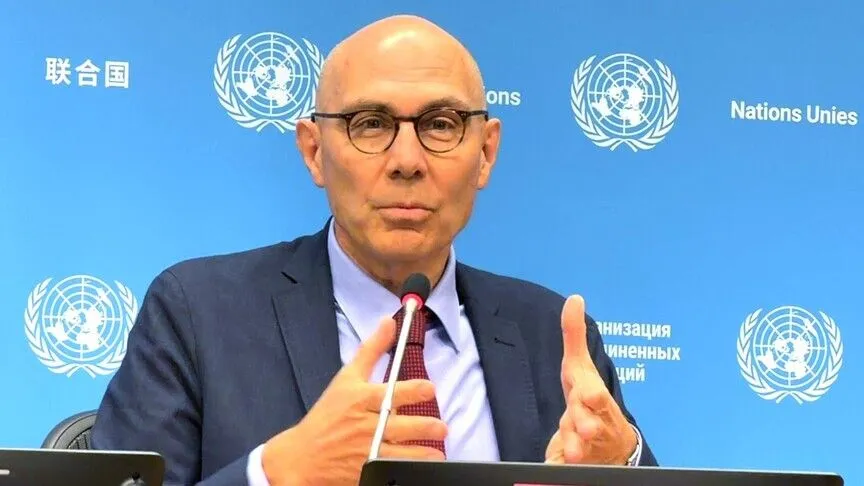
联合国人权事务高级专员周二警告,将移民转移到遥远国家无法解决更广泛的移民挑战,并呼吁采取全面政策,解决移民问题的根源。
The UN high commissioner for human rights on Tuesday warned that transferring migrants to distant countries cannot address broader migration challenges, calling instead for comprehensive policies tackling the underlying causes of migration.
沃尔克·图尔克的上述表态出自他就五个欧盟国家近日宣布计划在非洲国家卢旺达建立一个遣返中心一事发表的声明。他在声明中对只关注移民管理个别方面的做法提出质疑。
Volker Turk’s remarks came in a statement on five EU countries' recently announced plan to establish a return hub in the African country of Rwanda, in which he questioned approaches that focus on individual aspects of migration management.
这位奥地利律师、联合国官员表示:“解决办法不在于采取单一措施——往往代价高昂——去寻找遥远的国家来处理移民治理的某一个方面,也不在于将人权义务外包。”
"The solution does not lie in single measures – often very costly – of finding countries far away to deal with one aspect of migration governance, or in externalising human rights obligations," said the Austrian lawyer and UN official.
图尔克主张,各国政府必须解决驱动移民的因素,包括人权挑战、全球不平等、不利于许多发展中国家的国际经济和金融体系、暴力冲突以及地缘政治紧张局势。他呼吁加大投资,以解决这些问题,并在原籍国创造机会。
Turk argued that governments must address the factors driving migration, including human rights challenges, global inequalities, an international economic and financial system that disadvantages many developing countries, violent conflicts, and geopolitical tensions. He called for greater investment to tackle these problems and create opportunities in countries of origin.
这位联合国人权事务负责人还指出,发达国家存在人口老龄化和劳动力短缺问题,并强调需要扩大合法移民渠道,承认移民对欧洲经济的贡献。
The UN rights chief also highlighted aging populations and labor shortages in developed countries, stressing the need to expand regular migration pathways and recognize migrants' contributions to European economies.
在他表态之前,奥地利、丹麦、德国、希腊和荷兰于周一宣布,它们正在探讨在卢旺达建立一个遣返中心,目标是到2027年开始转移人员。
His remarks followed Monday's announcement by Austria, Denmark, Germany, Greece, and the Netherlands that they were exploring the establishment of a return hub in Rwanda, aiming to begin transfers by 2027.