韩国国营智库大幅上调明年经济增长预期,押注全球人工智能热潮将继续推动半导体出口和投资,助力经济保持增长势头。
Korea’s state-run think tank sharply raised its growth outlook for next year, betting the global artificial intelligence boom will continue to power semiconductor exports and investment to help sustain the economy’s momentum.
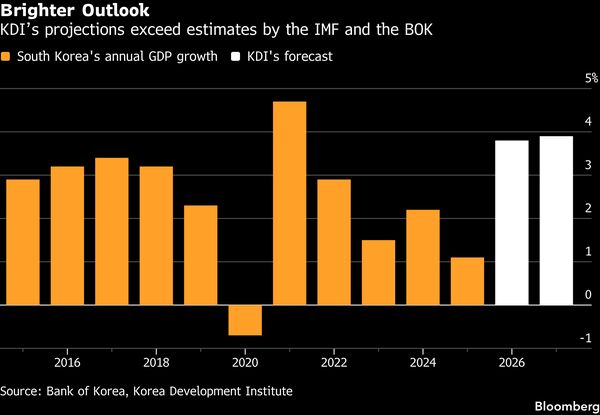
韩国开发研究院(KDI)周三表示,预计亚洲第四大经济体2027年将增长3.9%,大幅高于其8月预测的2.2%。该院同时将今年增长预期从3.2%上调至3.8%,凸显了由人工智能驱动的芯片繁荣展现出的非凡强劲势头。
The Korea Development Institute said Wednesday that it expects Asia’s fourth-largest economy to expand 3.9% in 2027, a substantial upgrade from its August projection of 2.2%. It also raised its growth forecast for this year to 3.8% from 3.2%, underscoring the extraordinary strength of the AI-driven chip boom.
韩国开发研究院的最新预测比其他一些近期预测乐观得多。国际货币基金组织(IMF)周二预计明年增长3.3%,彭博社上周调查的经济学家预测扩张2.7%。韩国央行8月预测2027年增长2.9%,将于11月26日的下一次货币政策会议上修订展望。
The KDI’s latest estimates are considerably more optimistic than some other recent forecasts. The International Monetary Fund on Tuesday said it expected growth of 3.3% next year, while economists surveyed by Bloomberg last week predicted a 2.7% expansion. The Bank of Korea, which forecast 2.9% growth for 2027 in August, is set to revise its outlook at its next monetary policy meeting on Nov. 26.
日益乐观的预测反映了市场预期:对人工智能基础设施的大规模支出将继续支撑韩国芯片制造商及其依赖出口的经济。韩国开发研究院预计,明年出口将增长8.1%,继2026年增长10.3%之后,因半导体和人工智能基础设施相关产品的强劲需求持续,且国内产能扩大。
The increasingly bullish forecasts reflect expectations that massive spending on AI infrastructure will continue to support South Korea’s chipmakers and its export-dependent economy. KDI expects exports to expand 8.1% next year, following a 10.3% increase in 2026, as strong demand for semiconductors and AI infrastructure-related products persists and domestic production capacity expands.
韩国开发研究院表示,设备投资预计2027年增长8.1%,继今年增长8.7%之后,因芯片制造商继续扩产,其他行业投资也有所改善。与此同时,建设投资预计增长2.5%,摆脱今年的停滞,得益于芯片工厂及相关基础设施项目。自7月以来,韩国央行已两次上调基准利率至3%,因为出口激增和经济活动增强增加了物价压力。彭博社调查的经济学家预计,11月将再加息25个基点,并在2027年第二季度进一步加息,将政策利率推高至3.5%。
Facilities investment is projected to rise 8.1% in 2027, after an 8.7% gain this year, as chipmakers continue expanding capacity and investment in other sectors improves, KDI said. Meanwhile, construction investment is expected to grow by 2.5% after stagnating this year, helped by chip factories and related infrastructure projects. Read Also: S. Korea Growth Tops Forecast as Chip Boom Masks Weak Demand The stronger growth complicates the central bank’s efforts to bring inflation back to its 2% target. The BOK has raised its benchmark interest rate twice since July to 3% as surging exports and strengthening economic activity add to price pressures.
韩国开发研究院表示,货币政策应保持紧缩,因为预计明年需求驱动的通胀压力将加剧。该院预测,核心通胀(不含食品和能源)将在2027年达到2.5%,而今年为2.6%,尽管油价下跌有助于将总体通胀从2.7%放缓至2.4%。
Economists surveyed by Bloomberg expect another quarter-point increase in November, and a further hike in the second quarter of 2027, taking the policy rate to 3.5%. KDI said monetary policy should remain restrictive as demand-driven inflation pressures are expected to intensify next year. It projects core inflation, which excludes food and energy, at 2.5% in 2027, compared with 2.6% this year, even as falling oil prices help slow headline inflation to 2.4% from 2.7%.
这一建议是在国际货币基金组织呼吁进一步货币紧缩以防止通胀压力固化的第二天提出的。该组织还敦促采取某种程度更紧缩的财政立场,理由是经济运行高于潜在水平,更强劲的需求有使通胀维持高位的风险。
The recommendation comes a day after the IMF called for further monetary tightening to prevent inflationary pressures from becoming entrenched. The fund also urged a somewhat more contractionary fiscal stance, arguing that the economy is operating above potential and that stronger demand risks keeping inflation elevated.
尽管如此,芯片繁荣尚未转化为家庭支出的广泛复苏。韩国开发研究院预计,明年私人消费将增长2.4%,高于2026年的1.8%,因为科技部门收入的增加将逐渐惠及家庭。疲软的实际工资增长和持续高企的通胀迄今限制了出口激增给消费者带来的红利。
Still, the chip boom has yet to translate into a broad-based recovery in household spending. KDI expects private consumption to grow 2.4% next year, up from 1.8% in 2026, as rising incomes from the technology sector gradually filter through to households. Weak real wage growth and persistently high inflation have so far limited the benefits of the export surge for consumers.
该智库还警告称,韩国对芯片需求日益增长的依赖可能使增长更加波动。全球人工智能投资放缓,包括美国数据中心建设延迟或主要科技公司融资条件收紧,可能严重削弱经济,而更快的产能扩张和持续的芯片需求则构成上行风险。
The think tank also warned that South Korea’s growing dependence on chip demand could make growth more volatile. A slowdown in global AI investment, including delays in US data center construction or tighter financing conditions for major technology companies, could sharply weaken the economy, while faster capacity expansion and sustained chip demand present upside risks.