乌克兰对俄罗斯炼油厂的打击,正迫使这个世界第二大能源出口国从海外大量购买汽油,并指示官员优先使用低质量燃料。这场危机经过了几个月的酝酿,基辅发动了一场远程打击行动,轰炸俄罗斯能源设施,并于本周声称迄今已瘫痪了约55%的总炼油能力。周二俄罗斯政府会议的一份新纪要显示出克里姆林宫的燃料困境正在加深。
Ukraine's refinery strikes on Russia are pushing the world's second-biggest energy exporter to buy vast volumes of petrol from overseas and instruct officials to prioritize lower-quality fuel. The crisis has been months in the making, as Kyiv wages a long-range strike campaign pummeling Russian energy facilities, claiming this week to have knocked out about 55% of total refinery capacity so far. A new readout from a Russian government meeting on Tuesday signals how deep the Kremlin's fuel woes are growing.
主管能源的俄罗斯副总理亚历山大·诺瓦克被引述要求下属优先扩大汽油进口,并“确保获得额外数量的超标燃料”。后者意味着莫斯科现在正专注于提供低品级燃料。传统上,这些燃料保持在K5评级,这是其加油站已经维持了10年的质量标准。低于此评级的燃料通常留给俄罗斯欧亚贸易集团以外的出口,以及军事、国家储备或油田等小众用途。
Alexander Novak, a deputy prime minister and Russia's senior official overseeing energy, was cited telling his subordinates to prioritize expanding petrol imports and "securing additional volumes of out-of-class fuel." The latter means that Moscow is now focusing on making lower-grade fuel available. It's traditionally held to a K5 rating, a quality standard its gas stations have maintained for 10 years. Fuel below this rating was typically reserved for exports outside Russia's Eurasian trade bloc, as well as for niche uses such as the military, state reserves, or oilfields.
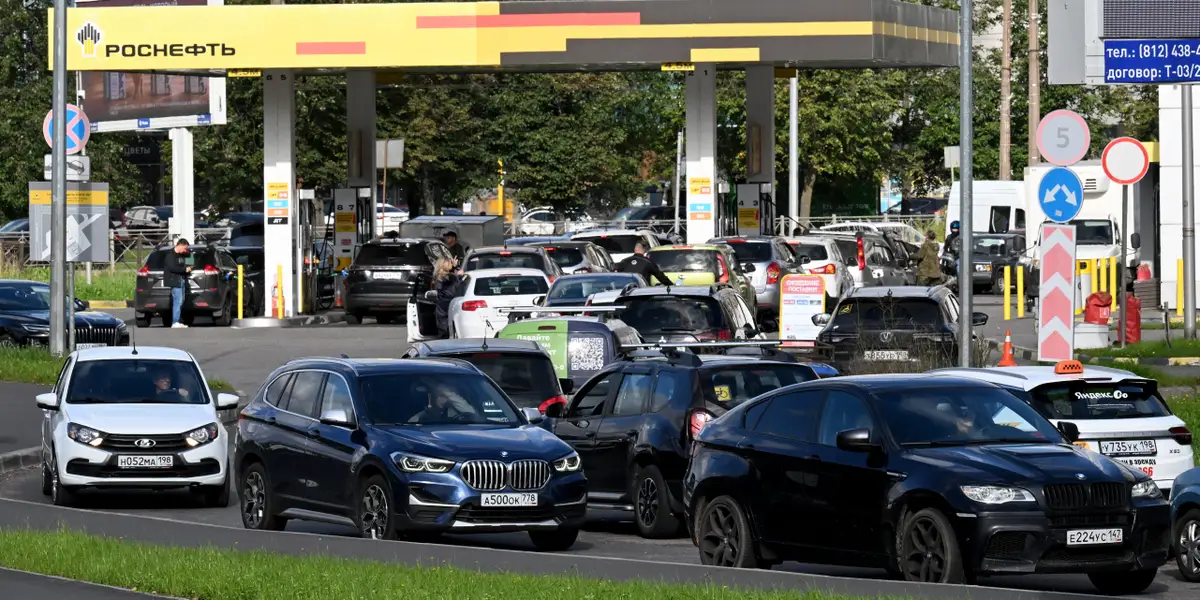
与此同时,至少六个俄罗斯地区的当地官员和媒体本月早些时候宣布在一些加油站实行汽油限购,通常将每位顾客的汽油用量限制在每天30升(约合7.93加仑)左右。路透社8月报道称,莫斯科周边地区的一些连锁加油站已经根据加油站类型推出了类似限制,首都附近的某些加油站外排起了长队。
Meanwhile, local officials and media in at least six Russian regions announced gasoline rationing at some pump stations earlier this month, typically capping customers at 30 liters of petrol, or about 7.93 gallons, a day. Reuters reported in August that similar restrictions had rolled out in Moscow areas among some chains, depending on the station type, with long queues forming outside some pumps near the capital.
俄罗斯仍然是一个燃料净出口国,向海外运送数百万吨原油和柴油等其他产品。但在炼油厂遭到围困的情况下,俄罗斯一直难以将足够的原油转化为国内加油站所需的精炼汽油。
Russia remains a net fuel exporter, shipping millions of tons of crude oil and other products like diesel abroad. But with its refineries under siege, it's struggled to turn enough of that crude into refined petrol for gas stations at home.
追踪燃料运输的国际组织表示,过去几个月莫斯科大幅增加了这些产品的进口,主要来自摩洛哥、印度和土耳其。能源与清洁空气研究中心的数据显示,2023年至2025年期间,俄罗斯每月的燃料进口量大致最高为5,000公吨的汽油产品和添加剂,而今年8月,俄罗斯通过海运进口了超过41.6万公吨此类货物。这家总部位于赫尔辛基的非营利组织称,俄罗斯在9月进一步进口了23.4万公吨的海运石油产品。总部位于伦敦的航运分析公司Vortexa则独立估计俄罗斯8月的燃料进口量约为47万公吨。
International organizations that track fuel shipments say Moscow has surged imports for those products over the last few months, mostly from Morocco, India, and Turkey. While Russia's monthly fuel imports roughly maxed out at 5,000 metric tons of petrol products and additives from 2023 to 2025, it brought in over 416,000 metric tons of such goods by sea this August, according to the Center for Research on Energy and Clean Air. The Helsinki-based non-profit said Russia further imported another 234,000 metric tons of seaborne oil products in September. London-based shipping analytics firm Vortexa separately put Russia's August fuel imports at about 470,000 metric tons.
与此同时,乌克兰军方情报机构GUR周二表示,基辅的攻击迫使俄罗斯在7月18日至10月23日期间通过海运从白俄罗斯或哈萨克斯坦等国进口了约98.9万公吨的燃料和高辛烷值添加剂。俄罗斯还通过铁路从白俄罗斯或哈萨克斯坦等国进口燃料,尽管这些进口没有受到如此密切的追踪。路透社7月报道称,俄罗斯在2026年前六个月通过陆路进口了约45.3万公吨,同比约增长20倍。
Meanwhile, Ukraine's military intelligence agency, GUR, said on Tuesday that Kyiv's attacks had forced Russia to import about 989,000 metric tons of fuel and high-octane additives by sea from July 18 to October 23. Russia has also been importing fuel by rail, from countries like Belarus or Kazakhstan, though these aren't tracked as closely. Reuters reported in July that Russia had imported about 453,000 metric tons in the first six months of 2026 over land, or about a 20-fold increase year-on-year.
俄罗斯上一次以这种规模运入燃料是在2014年,当时在内需紧缩的情况下,该国进口了160万公吨的车用汽油。莫斯科曾与白俄罗斯达成协议,用俄罗斯原油换取此前出售给明斯克的精炼汽油。这一安排在2015年又引入了80.8万公吨。但这些进口是在整年内进行的,而GUR对近100万公吨进口量的估计仅涵盖四个月。
The most recent time Russia shipped in fuel on those levels was in 2014, when it imported 1.6 million metric tons of motor gasoline amid a domestic supply squeeze. Moscow had arranged a deal with Belarus to trade Russian crude oil for refined petrol it had previously sold to Minsk. The arrangement brought in another 808,000 metric tons in 2015. But those imports took place over entire years, while GUR's estimate of nearly 1 million metric tons in imports covers just four months.
*诺瓦克在10月表示,俄罗斯正在进口其大约10%的汽油,不过他没有提供具体的贸易数据。“我们至少会进口到年底,”诺瓦克对官媒表示,并补充说俄罗斯还必须补充在夏季燃油短缺期间耗尽的储备。
Novak, the senior Russian energy official, said in October that Russia was importing about 10% of its gasoline, though he did not provide any specific trade figures. "We'll be importing at least until the end of the year," Novak told state media, adding that Russia also had to top up reserves depleted during the summer when gas ran short.
诺瓦克的办公室和俄罗斯能源部没有立即回应《商业内幕》在正常营业时间之外发送的置评请求。
Novak's office and the Russian energy ministry did not immediately respond to comment requests sent outside regular business hours by Business Insider.