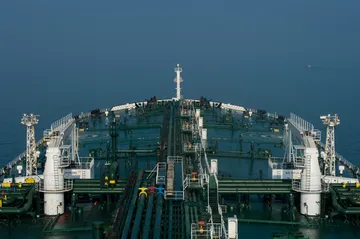
俄罗斯出口的原油量达到7月下旬以来最高水平,因乌克兰加大了对俄罗斯炼油厂的袭击力度,迫使生产商将原本运往这些炼油厂的原油转而投入出口渠道。
Russia shipped the most crude since late July as Ukraine stepped up its attacks on the country’s refineries, forcing producers to divert crude intended for those plants into export streams instead.
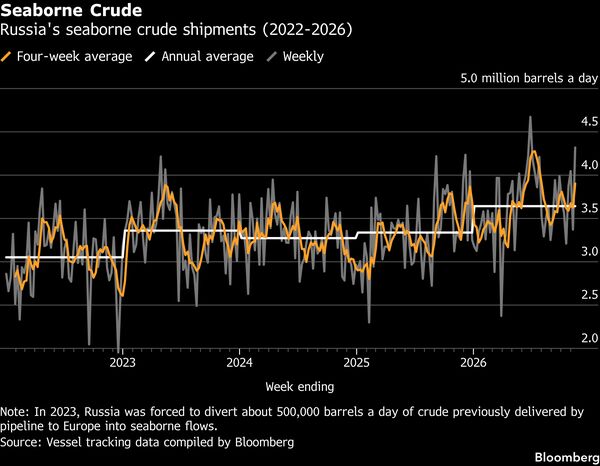
彭博汇编的油轮数据显示,在截至11月15日的四周内,俄罗斯的海运原油出口量升至每日390万桶。这比截至11月8日的期间增加了每日28万桶。
Overseas flows rose to 3.9 million barrels a day in the four weeks through Nov. 15, tanker data compiled by Bloomberg showed. That was up by 280,000 barrels a day from the period to Nov. 8.
根据彭博统计,截至周二,自11月初以来乌克兰已袭击了13家俄罗斯炼油厂,包括对下卡姆斯克的TAIF-NK工厂和克拉斯诺达尔地区的伊利斯基炼油厂的打击。乌克兰总统弗拉基米尔·泽连斯基周日在X上发布的一段视频中表示,乌克兰的行动已使俄罗斯超过55%的炼油能力瘫痪。彭博新闻社无法独立核实他的说法。
As of Tuesday, Ukraine had attacked 13 Russian refineries since the start of November, according to a Bloomberg tally, including strikes on the TAIF-NK plant in Nizhnekamsk and the Ilsky refinery in the Krasnodar region. Ukraine has disabled more that 55% of Russian oil refining capacity through its campaign, President Volodymyr Zelenskyy said Sunday in a video posted on X. Bloomberg News couldn’t independently verify his claim.
出口量上升加剧了来自波斯湾的供应膨胀,已促使一些市场分析师预测全球石油将重回供应过剩,可能拖累油价走低。
The higher exports add to swelling supplies from the Persian Gulf that have prompted some market analysts to forecast a return to a global oil surplus, potentially dragging prices lower.
对炼油厂的袭击迫使莫斯科将无法加工的原油转入出口渠道,从而提振了海外原油销售。此类袭击的间歇通常允许进行维修,从而提高加工量并将原油拉回国内炼油厂。
Strikes on its refineries force Moscow to divert crude that it can’t process into the export stream, lifting overseas crude sales. A lull in those attacks typically allows repairs to be done, boosting processing and pulling crude back into domestic refineries.
在最新的敌对行动中,基辅瞄准了连接俄罗斯与所占领克里米亚的刻赤大桥,俄罗斯也多次打击乌克兰的能源基础设施和其他民用目标。这些袭击发生在由美国斡旋的和平谈判之后,谈判在囚犯交换问题上取得了一些进展,但在领土和安全保障等关键问题上没有进展。
The latest hostilities have seen Kyiv target the Kerch Bridge linking Russia to occupied Crimea, as well as repeated Russian strikes on Ukraine’s energy infrastructure and other civilian targets. They come despite peace talks, mediated by the US, that ended with some progress on a prisoner swap, but no movement on key issues of territory and security guarantees.
另外,美国总统唐纳德·特朗普与莫斯科达成的向美国进口俄罗斯柴油的协议遇到了麻烦,未能为任何货物找到买家,目前这些货物正被向巴西燃料分销商推销。
Separately, President Donald Trump’s deal with Moscow to import Russian diesel fuel into the US has run into trouble, failing to find buyers for any of the cargoes, which are now being touted to Brazilian fuel distributors.
截至11月15日当周,船舶追踪数据和行业报告显示,约39艘油轮装载了3027万桶俄罗斯原油。相比之下,前一周为31艘船只装载2360万桶。
In the week to Nov. 15, some 39 tankers loaded 30.27 million barrels of Russian crude, vessel-tracking data and industry reports show. That compared with 23.6 million barrels on 31 ships the previous week.
上周出货量每日增加95万桶,达到日均432万桶,为6月以来最高水平。
Shipments jumped by 950,000 barrels a day last week to average 4.32 million barrels a day, the highest since June.
周度出货量可能出现波动,受天气、维护工作、制裁、军事活动以及出发时间等因素影响。
Weekly shipments can be volatile, affected by weather, maintenance work, sanctions, military activity and the timing of departures.
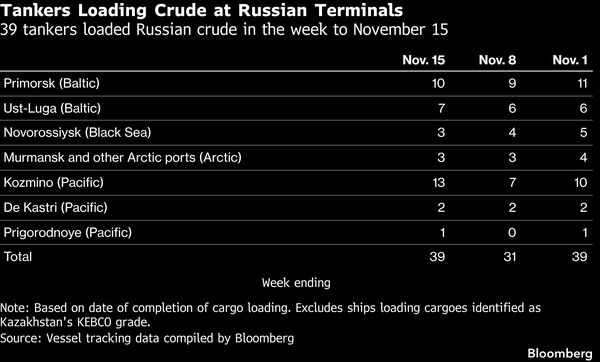
当周有两批哈萨克斯坦Kebco等级原油从新罗西斯克装运。自9月初以来,莫斯科已将哈萨克斯坦原油的所有货运改道经黑海港口,从而在波罗的海乌斯特-卢加为自身原油腾出更多运力,该港口被认为更不易受到乌克兰袭击。
There were two shipments of Kazakhstan’s Kebco grade from Novorossiysk during the week. Since the start of September, Moscow has diverted all shipments of Kazakh crude through the Black Sea port, freeing up more capacity for its own barrels at Ust-Luga on the Baltic, which is seen as safer from Ukrainian attacks.
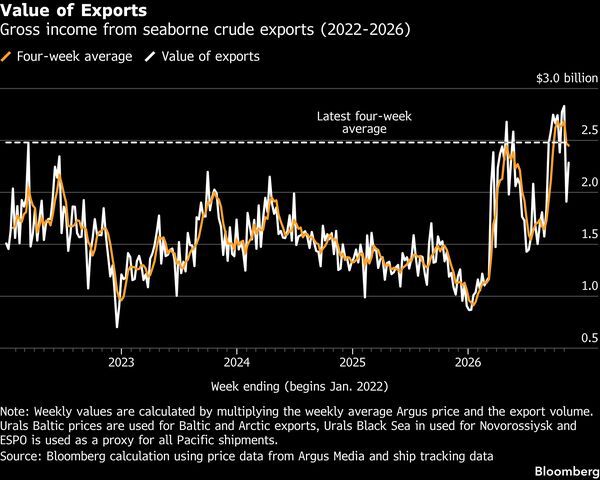
按四周平均值计算,在截至11月15日的28天里,莫斯科石油货运的总价值降至每周24.5亿美元的七周低点。总流量的增加被俄罗斯关键乌拉尔原油价格连续第五次下跌所抵消而有余。
On a four-week average basis, the gross value of Moscow’s oil shipments slipped to a seven-week low of $2.45 billion a week in the 28 days to Nov. 15. The increase in total flows was more than offset by a fifth straight drop in prices for Russia’s key Urals crude.
按周计算,出口价值跃升至约22.9亿美元,扭转了前一周降幅的约40%。乌拉尔和ESPO原油价格每桶下跌近10美元,但出货量的激增抵消了这一跌幅而有余。
On a weekly basis, the value of exports jumped to about $2.29 billion, reversing about 40% of the previous week’s drop. A near-$10/bbl decline in Urals and ESPO prices was more than offset by the jump in shipments.
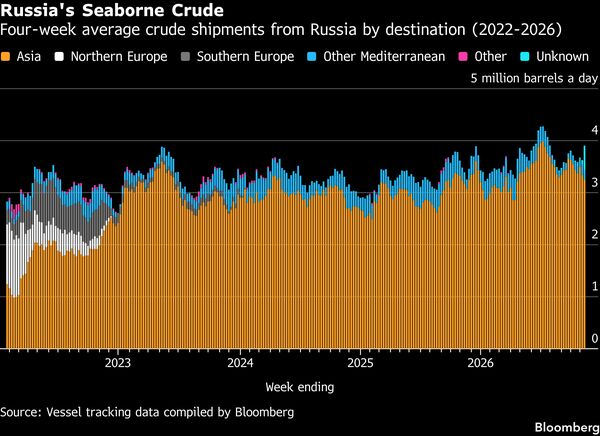
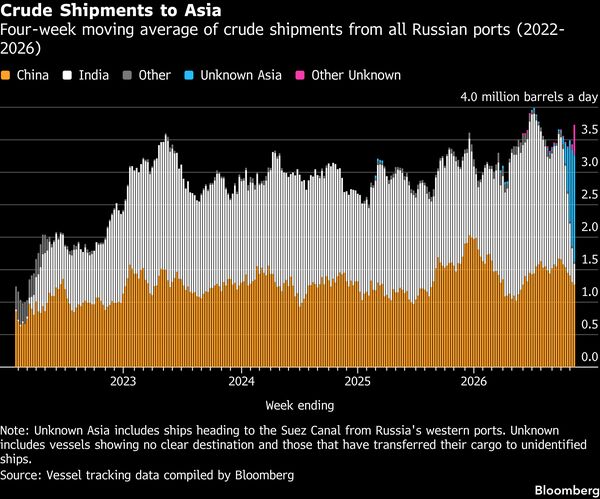
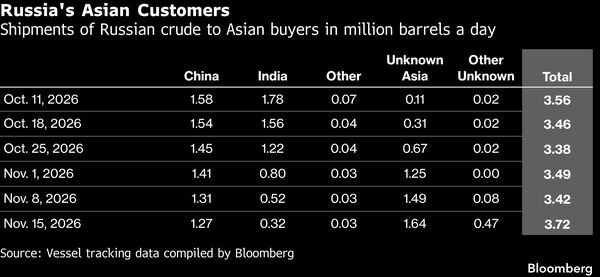
中国和印度仍以相当大的优势保持俄罗斯原油最大买家的地位。但直到航程进行到相当程度时,往往无法确定个别货物的最终目的地,因此许多近期装船的货物在油轮上显示的是中途目的地,如苏伊士、苏丹港或新加坡。在获得可信的最终目的地之前,这些货物被记录为“未知亚洲”。仍显示目的地为俄罗斯装货港或直布罗陀等地的船只,则被记录为“其他未知”。
China and India remain the biggest buyers of Russian crude by a considerable margin. But it’s not always possible to assign a final destination to individual cargoes until well into their voyage, leaving many of the more recent shipments on tankers showing interim destinations, such as Suez, Port Sudan, or Singapore. These are recorded as “Unknown Asia” until a credible final destination is available. Ships still showing their destinations as their Russian loading ports, or places such as Gibraltar, are recorded as “Other Unknown.”
观测到的发往俄罗斯亚洲客户的货物(包括未显示最终目的地的货物)在截至11月15日的28天里上升至日均372万桶,高于截至11月8日修正后的日均342万桶。
Observed shipments to Russia’s Asian customers, including those showing no final destination, rose to 3.72 million barrels a day in the 28 days to Nov. 15, up from a revised 3.42 million in the period to Nov. 8.
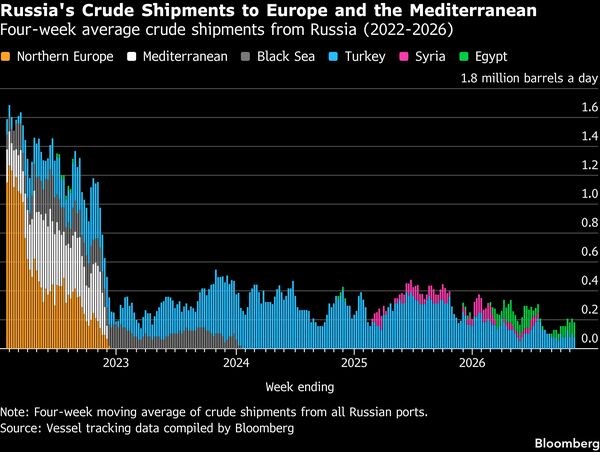
在截至11月15日的四周里,发往莫斯科在地中海地区剩余客户的货物约为日均18万桶,低于截至11月8日修正后的日均21万桶。
Shipments to Moscow’s remaining customers in the Mediterranean region stood at about 180,000 barrels a day in the four weeks to Nov. 15, down from a revised 210,000 barrels a day in the four weeks to Nov. 8.
在最近的四周期间,发往土耳其的货物约为日均10万桶,发往埃及的数量相同。
About 100,000 barrels a day headed to Turkey in the most recent four-week period, with the same amount being shipped to Egypt.
与此同时,自8月以来发往叙利亚的货物已停止,此前该地中海国家在与美国就解除剩余制裁的谈判中同意“大幅”削减俄罗斯石油进口。
Meanwhile, flows to Syria have ceased since August, after the Mediterranean nation agreed to “drastically” reduce Russian oil imports in negotiations with the US on lifting remaining sanctions.
一旦日均超过210万桶原油的目的地明确,发往该地区的货物量可能会被上调。但从历史来看,显示中途目的地的船只所载货物大多最终交付给印度或中国。
Shipments to the region may be revised higher once destinations for more than 2.1 million barrels a day of crude become clear. Historically, though, most cargoes on ships showing intermediate destinations have been delivered to India or China.
本报道属于每周系列报道的一部分,追踪从俄罗斯出口终端发运的原油货物及其总价值。下一次更新将于11月25日(周三)发布。
This story forms part of a weekly series tracking shipments of crude from Russian export terminals and the gross value of those flows. The next update will be on Wednesday, Nov. 25.
所有数据均不包括被认定为哈萨克斯坦 KEBCO 等级的货物。这些货物由哈萨克斯坦国家石油运输股份公司运输,经俄罗斯过境,通过新罗西斯克和乌斯特-卢加港出口,不受欧盟制裁或价格上限限制。哈萨克斯坦原油与俄罗斯产原油混合,形成统一的出口原油流。自俄罗斯入侵乌克兰以来,哈萨克斯坦已对其货物进行重新品牌化,以将其与俄罗斯公司运输的货物区分开来。
All figures exclude cargoes identified as Kazakhstan’s KEBCO grade. Those are shipments made by KazTransoil JSC that transit Russia for export through Novorossiysk and Ust-Luga and are not subject to European Union sanctions or a price cap. The Kazakh barrels are blended with crude of Russian origin to create a uniform export stream. Since Russia’s invasion of Ukraine, Kazakhstan has rebranded its cargoes to distinguish them from those shipped by Russian companies.
如果自动定位信号似乎被关闭或伪造——这种手段称为“欺骗定位”——以隐瞒两艘船只会合进行货物转运,彭博社将该船对船转运归类为隐蔽转运。
Bloomberg classifies ship-to-ship transfers as clandestine if automated position signals appear to be switched off or falsified — a tactic known as spoofing — to hide the two vessels involved coming together to make the cargo switch.
船舶跟踪数据将与港口代理报告以及其他信息提供商(包括 Kpler 和 Vortexa Ltd.)报告的流向和船舶动向、覆盖俄罗斯港口的卫星图像进行交叉核对。
Vessel-tracking data are cross-checked against port-agent reports as well as flows and ship movements reported by other information providers including Kpler and Vortexa Ltd. and satellite imagery covering Russian ports.
如果您在彭博终端阅读此报道,请点击此处获取一份 PDF 文件链接,其中包含俄罗斯输往主要目的地的四周平均流量数据。
If you are reading this story on the Bloomberg terminal, click for a link to a PDF file of four-week average flows from Russia to key destinations.