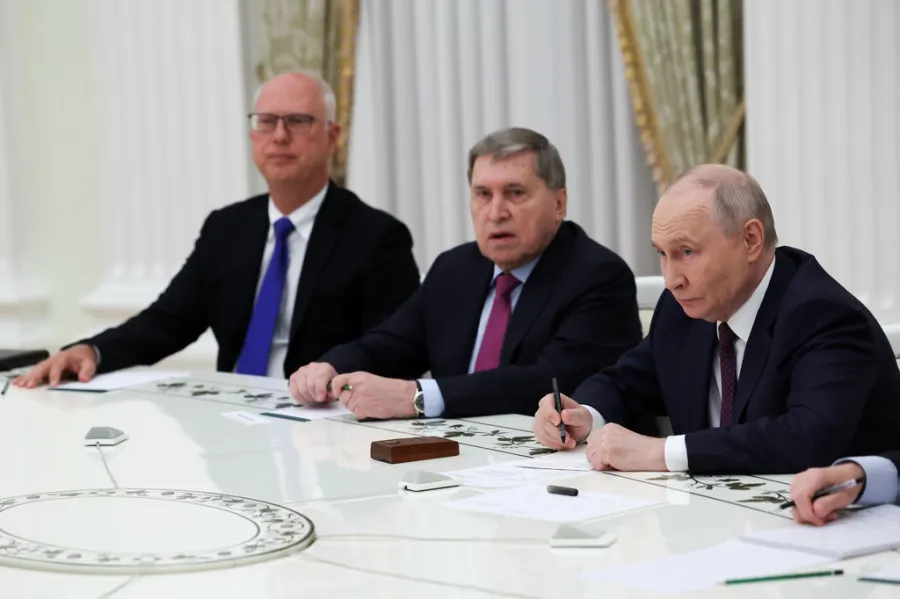
世界上所有事情中,俄罗斯总统弗拉基米尔·普京——一名被通缉的战争罪犯——最喜欢的莫过于和平谈判。注意,不是和平,而是和平谈判。他对此无法抗拒,就像纵火犯对消防安全研讨会感到兴奋一样。
Of all things in the world, Russian President Vladimir Putin, a wanted war criminal, adores peace talks the most. Not peace, mind you — peace talks. He finds them irresistible, the way an arsonist gets giddy over a fire-safety seminar.
上周,所有人的目光都聚焦在阿布扎比,仿佛缺少会议才是问题所在。被怪异地描述为“和平谈判”的活动,看起来更像是一次模仿的模仿。莫斯科在表演外交,华盛顿在表演调解。但幸运的是,确实出现了一个实际成果:一项承诺的囚犯交换。
Last week, all eyes were on Abu Dhabi, as if a shortage of meetings were the problem. What was bizarrely described as “peace negotiations” looked more like an imitation of an imitation. Moscow performing diplomacy, Washington performing mediation. But, thankfully, one real outcome emerged: a promised prisoner swap.
其余部分则漂浮着,不受基本事实的束缚。俄罗斯入侵了乌克兰。侵略者随时可以选择回家来结束战争。乌克兰已经为和平做了一切及更多,但它不能通过在某条虚线上签字来获得和平。
The rest floated unencumbered by basic facts. Russia invaded Ukraine. The aggressor can end the war any day it chooses by going home. Ukraine is already doing everything and more for peace, but it cannot secure it byg on some dotted line.
乌克兰士兵的勇气,是俄罗斯的战争尚未将整个欧洲卷入的原因——包括美国有条约义务保卫的盟友。
The courage of Ukrainian soldiers is the reason Russia’s war has yet to engulf the rest of Europe — including allies America is bound by treaty to defend.
莫斯科没有讨论如何结束战争,而是又搞出了一个花招,声称需要重新审视欧洲安全架构。
Instead of discussing how to end the war, Moscow came up with yet another sleight of hand, a need to revisit European security architecture.
北约威胁俄罗斯的说法,是克里姆林宫乐于散布但自己并不真正相信的谎言。2023年芬兰加入北约,使北约与俄罗斯的边界增加了830英里,莫斯科的回应是将该边境线上约80%的部队派往乌克兰作战。
The claim that NATO threatens Russia is a fabrication the Kremlin happily spreads but doesn’t actually believe. When Finland joined the alliance in 2023, adding 830 miles to NATO’s border with Russia, Moscow responded by sending some 80 percent of its troops on that frontier to fight in Ukraine.
谈判前夕,乌克兰军队报告前线出现新纪录:一天内有3000名敌方战斗人员死亡或重伤。正如北约秘书长马克·吕特所说:俄罗斯每月损失的士兵,几乎相当于美国在越南战争14年内损失的总人数。
On the eve of the talks, the Ukrainian military reported a new record from the front: 3,000 enemy combatants killed or seriously wounded in a single day. As NATO’s Secretary General Mark Rutte put it: Russia loses nearly as many troops each month as the U.S. lost over 14 years in Vietnam.
为侵略者提供安全保障,是莫斯科所追求的荒谬程度,它深知这类要求本质上无法得到满足。不过,普京拒绝讨论的一件事是停火——和平的必要前提。
Security guarantees for the aggressor is the level of absurdity Moscow is aiming for, knowing that such demands can’t be met by definition. Though, one thing Putin refuses to discuss is a ceasefire — the necessary precondition for peace.
乌克兰用了整整24小时,在2025年3月接受了无条件停火。俄罗斯至今仍未接受。
It took Ukraine all of 24 hours to accept an unconditional ceasefire in March 2025. Russia still hasn’t.
在阿布扎比,克里姆林宫首席谈判代表弗拉基米尔·梅金斯基重申了俄罗斯的消灭性议程:“每一寸俄罗斯领土,不惜一切代价都将归还俄罗斯。”这究竟是什么意思?俄罗斯曾两次在乌克兰边界问题上签字,分别是1994年和1997年。
In Abu Dhabi, the Kremlin’s chief negotiator, Vladimir Medinsky, restated Russia’s eliminationist agenda: “every inch of Russian land will be returned to Russia, one way or another.”What does that even mean? Russia signed its name to Ukraine’s borders twice, in 1994 and 1997.
想象一下,一个暴力窃贼闯入一户人家,杀死五个孩子中的两个,占据孩子们睡觉的房间,并宣布他现在就住在那里。一位调解人到来,毫不夸张地说,他邀请这家人与凶手坐下来,讨论双方的安全问题。
Picture a violent burglar who breaks into a family’s home, kills two of the five children, takes the room where they slept and announces he lives there now. A mediator arrives and, no joke, invites the family to sit down with the murderer to discuss security concerns of both sides.
重要的是,他同时也是对自己最大的危险:闯入民宅正是罪犯受伤的方式。俄罗斯的安全始于问责,这种问责能让一个国家的治理优先事项,从执着于入侵邻国,转变为致力于为俄罗斯人民提供更好、更自由、更繁荣的生活。
Importantly, he is also the main danger to himself: breaking into homes is how criminals get hurt. Security for Russia begins with accountability, the kind that turns a country’s governing priorities from a fixation on invading neighbors to an effort to offer Russian people better — freer and more prosperous — lives.
遗憾的是,史蒂夫·维特科夫对这个嗜杀的疯子有不同的称呼。上个月他在圣彼得堡对普京说:“先生,您也是一位人道主义者,我向您致敬。”记录俄罗斯战争罪行并因此获得诺贝尔和平奖的奥列克桑德拉·马特维丘克,从不厌倦重复:占领不是和平,只是另一种形式的战争。施压乌克兰接受俄罗斯占领,更甚者,割让基辅目前控制的领土,这与和平进展背道而驰。
Regrettably, Steve Witkoff has a different word for the homicidal maniac. “You are a humanitarian also, sir, and I salute that,” he told Putin in St. Petersburg last month. Oleksandra Matviichuk, who won the Nobel Peace Prize for documenting Russian war crimes, never tires of repeating: occupation is not peace, it is just another form of war. Pressuring Ukraine to accept Russian occupation, or worse yet, to cede territory Kyiv currently controls, is the opposite of progress toward peace.
11月12日,当美国特使从阿布扎比飞往莫斯科与普京会面时,泽连斯基发布了一条令人不安的战场动态:“我们的部队几天来一直在记录星盾系统在乌克兰领土上运行的严重中断。”外交值得一试,但必须以结果来评判。不产生停火的谈判是有代价的。它们削弱华盛顿的公信力,并推迟美国行使本可迫使莫斯科结束战争的力量。特朗普两年前承诺的“以实力求和平”在哪里?
On Nov. 12, as American envoys flew from Abu Dhabi to Moscow to meet with Putin, Zelensky posted about a disturbing battlefield development: “our units have been recording significant disruptions to Starshield’s operations over the territory of Ukraine for several days now.”Diplomacy deserves a chance, but it must be judged by results. Talks that produce no ceasefire have costs. They erode Washington’s credibility and delay the exercise of American power that could compel Moscow to wind down its war. Where is that peace through strength Trump promised two years ago?
美国民众压倒性地支持乌克兰,厌恶俄罗斯。等到明年1月,新一届国会将有机会把这种情绪转化为两院和两党都能宣称的胜利。何不把向乌克兰提供100亿美元武器作为第一项立法优先事项?法律规定:四个月后,自动追加200亿美元;再过四个月,追加300亿美元;此后每年500亿美元。每一笔拨款之前,只需检验一项:俄罗斯是否仍在向乌克兰开火?如果是,援助就继续;如果枪声沉寂,援助就停止。
Americans overwhelmingly support Ukraine and despise Russia. Come January, the new Congress will have a chance to turn that sentiment into a win both houses and both parties can claim. Why not make $10 billion in weapons for Ukraine the first legislative priority? Write the law so that four months later, another $20 billion follows automatically. Four months after that, $30 billion, then $50 billion every year. Before each tranche, one test applies: is Russia still firing at Ukraine? If yes, the aid flows. If the guns fall silent, it stops.
国会以前就做过这样的事。2017年,它几乎一致投票通过,禁止任何总统未经国会审查就放松对俄罗斯的制裁。
Congress has done this before. In 2017, it voted almost unanimously to bar any president from easing Russia sanctions without its review.
对于美国32万亿美元的经济体量而言,这只是个四舍五入的误差。每年500亿美元,只占GDP一个百分点的几分之一中的几分之一。在一个俄罗斯暴力复仇主义胃口未受遏制的世界里,战火向西蔓延,五角大楼万亿美元的预算将不得不翻倍甚至增至三倍。那就好比每周都要通过一项500亿美元的援助计划。
For America’s $32 trillion economy, this is a rounding error. Fifty billion dollars a year comes to a fraction of a fraction of one percent of GDP. In a world where Russia’s appetite for violent revanchism isn’t curbed, the war spreads west, and the Pentagon’s trillion-dollar budget has to double or triple. That would be like passing a $50 billion package every single week.
为什么要这样做?为了让莫斯科认识到侵略注定失败,为了让莫斯科认识到美国将信守1994年作出的承诺——当年美国说服乌克兰放弃了世界第三大核武库。有一个教训,世界在任何情况下都不应学到:放弃核武器,你就会遭到入侵。如果这一点深入人心,那么核不扩散就可以告别了。整个星球将变成一座炸药库。
Why do this? So Moscow learns that aggression is doomed to fail, that America will keep the promise it made in 1994, when it talked Ukraine out of the world’s third-largest nuclear arsenal. There’s a lesson the world should under no circumstances learn: give up your nukes and you get invaded. If that sticks, kiss nonproliferation goodbye. The whole planet turns into a house of dynamite.
阿布扎比会谈结束之际,俄罗斯无人机在敖德萨杀害了两人,并点燃了基辅一家医院,迫使拄着拐杖和坐着轮椅的病人逃离。一项正在国会推进的法案可能实现两天谈判未能实现的目标:让克里姆林宫想要和平,而不是沉醉于和平谈判。
As the Abu Dhabi talks concluded, Russian drones killed two people in Odesa and set a Kyiv hospital ablaze, forcing patients on crutches and in wheelchairs to flee. A bill moving through Congress could achieve what two days of negotiations could not: make the Kremlin want peace instead of reveling in peace talks.
安德鲁·查霍扬是阿姆斯特丹大学的学术主任。他此前曾在美国政府的千年挑战公司任职,并曾在哈佛肯尼迪学院和顿涅茨克国立技术大学学习。
Andrew Chakhoyan is an academic director at the University of Amsterdam. He previously served in the U.S. government at the Millennium Challenge Corporation and studied at Harvard Kennedy School and Donetsk State Tech University.