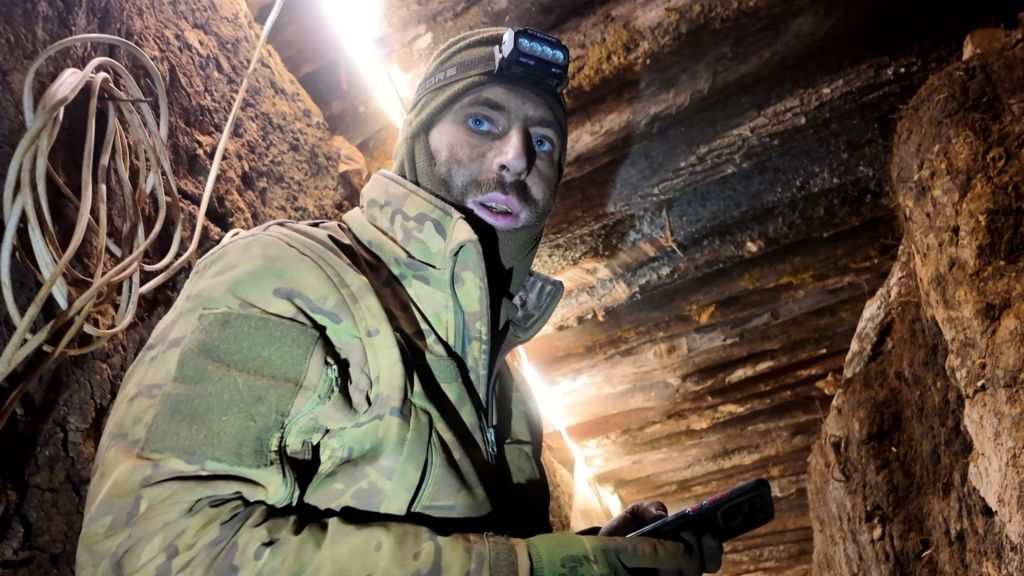
乌克兰部队在哈尔科夫地区的一条苏联时期旧隧道内与俄军交战。发布时间:2026-11-18T17:00:04Z乌克兰在旧天然气管道内与俄军展开地下作战乌克兰战争出现了一个新战场,而且在地下。
Inside the old gas pipeline where Ukraine is fighting an underground war ## Ukrainian forces are fighting Russian troops in an old Soviet tunnel in the Kharkiv region. Published: 2026-11-18T17:00:04Z Inside the old gas pipeline where Ukraine is fighting an underground war
过去七个月里,乌克兰部队一直在哈尔科夫地区一条苏联时期的旧天然气管道内生活、作战,对抗俄军。
There's a new front in the war in Ukraine, and it is underground. For the past seven months Ukrainian forces have been living and fighting Russian troops in an old Soviet gas pipeline in the Kharkiv region.
管道直径仅略超一米,仅容许人爬行通过。但这里相对安全,免受如今饱和前线上空的无人机威胁——这些无人机使双方几乎都无法在地面推进。
With a diameter of just over a metre there is enough room only to crawl. But it is relatively safe from the drones that now saturate the skies above the front line – and make it nigh-on impossible for either side to advance.
参与规划乌克兰隧道作战行动的“扎努达”表示,转入地下如今是“唯一选择”,并称这是一个全新的作战世界。但他也承认,这非常艰难。“在地面上你总有一定的机动空间,但在这里你只能正面交锋。”
Going underground is now the "only option", says Zanuda, who has helped plan Ukraine's tunnel operation and calls it a new world of fighting. But, he acknowledges, it is hard. "On the surface you always have some room to manoeuvre, but here you can only engage the enemy head-on."
前往哈尔科夫地区这一地下战场的旅程,更凸显了地面上的危险:车辆高速穿越开阔田野,随后在全副武装、随时准备击落俄军无人机的乌克兰士兵护送下,长途跋涉穿越泥泞地带。
The journey to get to this subterranean battleground in the Kharkiv region only reinforced the dangers on the ground: a high-speed move by vehicle across open fields, followed by a long march across muddy ground – accompanied by Ukrainian troops with their weapons loaded, ready to shoot down Russian drones.
地图显示乌克兰东北部库皮扬斯克附近一条天然气管道的位置。红线标示管道由东向西延伸,位于库皮扬斯克以北。地图显示地图东北部区域目前处于俄军控制之下。该区域向南和向西延伸,以红色斜线阴影标示俄军控制程度有限的区域。一幅乌克兰局部地图以阴影标示东部和南部俄控领土,并注明俄罗斯于2014年吞并克里米亚。
Map showing the location of a gas pipeline in north-eastern Ukraine near Kupyansk. A red line marks the pipeline running from east to west to the north of the Kupyansk. The map indicates that the area in the north east of the map is currently under Russian military control. This area is extended to the south and west with red diagonal hatching to show where there is more limited Russian military control. This area An inset map of Ukraine highlights Russian-held territory in the east and south and notes that Russia annexed Crimea in 2014.
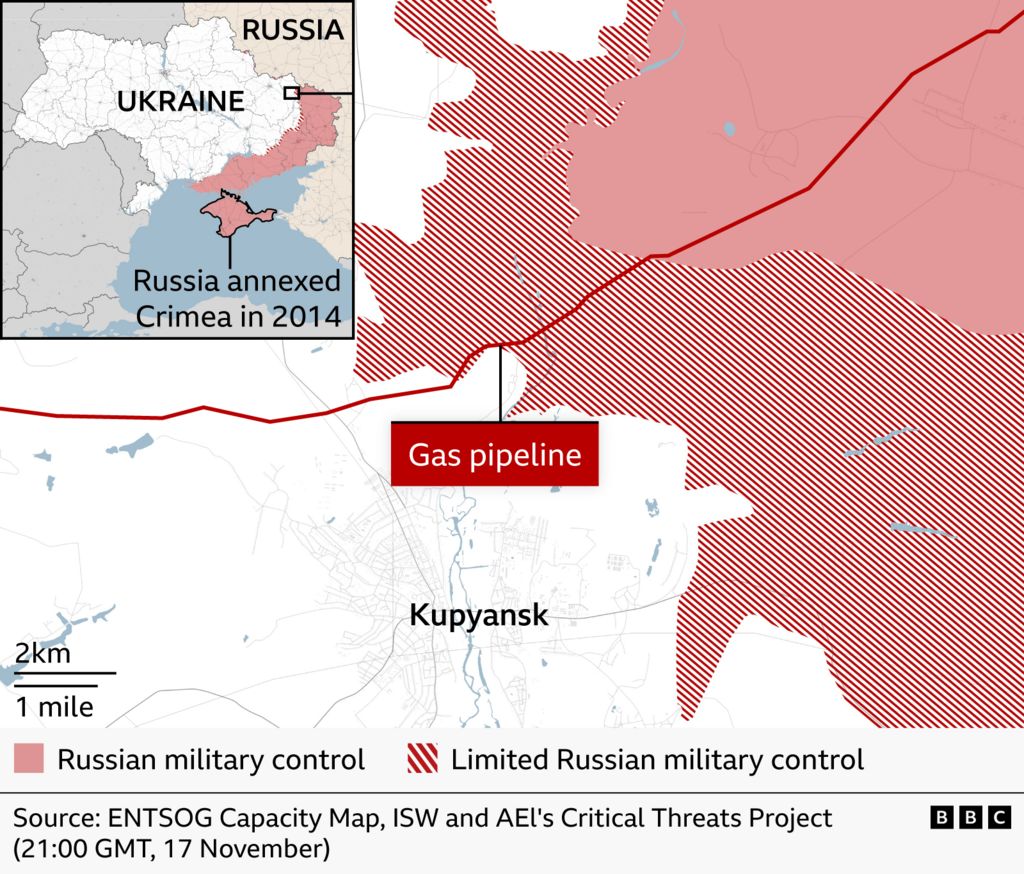
来源:ENTSOG产能图、战争研究所(ISW)及美国企业研究所(AEI)关键威胁项目(2024年11月17日21:00 GMT)。到达隧道入口,首先扑面而来的是残留的燃气味和污浊空气。
Source: ENTSOG Capacity Map, ISW and AEI's Critical Threats Project (21:00 GMT, 17 November). Arriving at the tunnel entrance, the first thing to hit you is the lingering smell of gas and fetid air.
双方都利用管道上的开口到达地面,大部分战斗都在那里发生。他们在管道上凿开了口子,并使用焊接工具切开厚厚的钢管。
Both sides use openings in the pipeline to get to the surface, where most of the fighting takes place. They have made breaches in the ground, and used welding tools to break though the thick steel.
2025年9月,俄军最先利用这条管道渗透进附近的库皮扬斯克市。他们以前也利用过地下管道,在2024年攻占阿夫杰耶夫卡市时,以及去年试图夺回俄罗斯库尔斯克州部分地区时。但乌克兰部队已慢慢扭转了局势。
The Russians were the first to exploit the pipe to infiltrate the nearby city of Kupyansk in September 2025. They have used underground pipelines before, during the capture of the city of Avdiivka in 2024, and last year in their bid to recapture areas of Russia's Kursk region. But Ukrainian forces have slowly turned the tables.
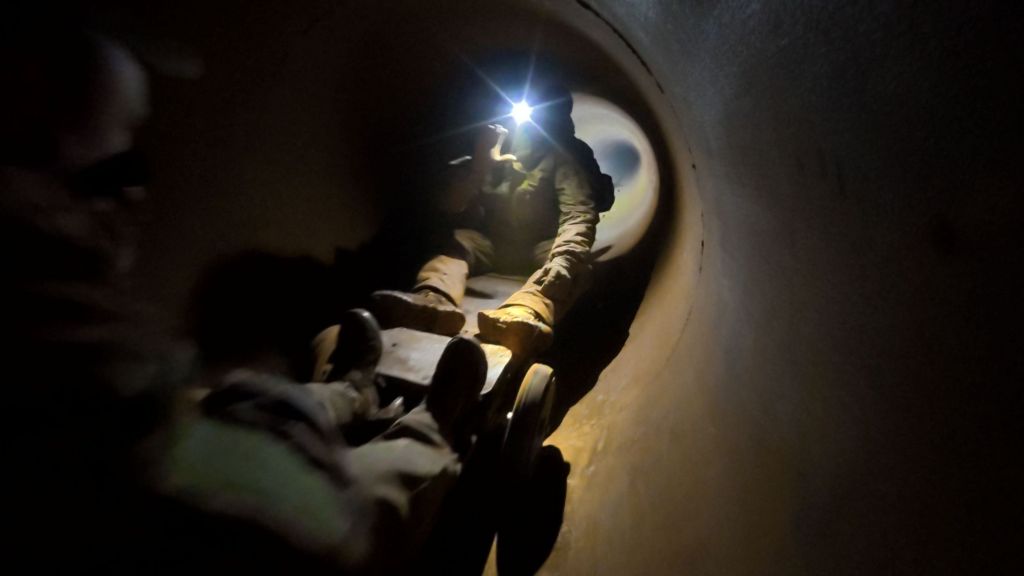
部队乘坐特制雪橇在隧道中穿行——他们称之为“库皮扬斯克地铁”。一辆特制电动手推车在管道内运送士兵和物资。
Troops move through the tunnel on special sleds - they call it the Kupyansk metro A specially designed electric cart transports troops and supplies through the pipeline.
他们称之为“库皮扬斯克地铁”。它偶尔会抛锚。我们乘坐它行驶了40分钟,低着头、盘着腿。每经过一段焊接管口都会颠簸一下。这就像一个简陋的游乐场项目,只是毫无乐趣可言。
They call it the Kupyansk metro. It occasionally breaks down. We travelled on it for 40 minutes, heads bowed and legs crossed. There is a regular bump as you cross the welded sections of the pipe. It is like an austere fairground ride, without the fun.
目的地是管道的一个破口处,乌克兰军队在那里挖掘了掩体存放弹药和装备,空间仅容一人站立。这就是他们口中的“音乐家”指挥部队和物资调动的地方。他像鼹鼠一样生活在那里,满脸嵌着泥土和尘埃。
Our destination was a break in the pipeline where Ukrainian troops have built dug-outs to store ammunition and equipment, with just enough room to stand. It is where the man they call Musician conducts the movement of troops and supplies. He has been living like a mole, his face engrained with dirt and earth.
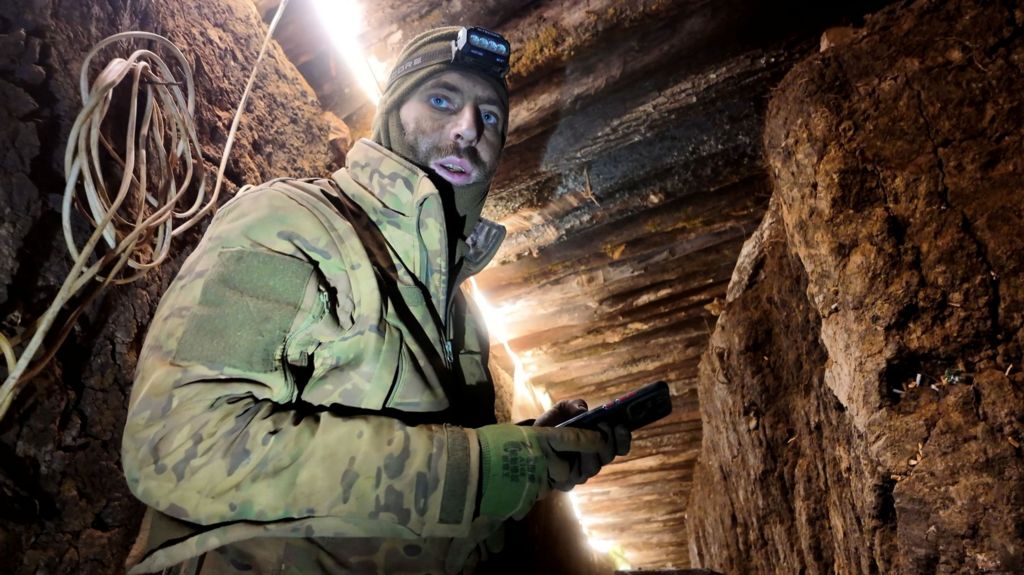
音乐家告诉我,他已在那里度过了过去三个月,只有极少数几次短暂地回地面清洁或上厕所。不时能听到头顶炮弹落地的闷响。音乐家告诉我,我们离接触线很近:“但在地下是安全的。”
Musician tells me he has spent the past three months there, with a few brief visits above ground to clean up or go to the toilet. From time to time we can hear the thuds of artillery rounds above. Musician tells me we are close to the line of contact: "But it's safe underground."
像音乐家这样的乌克兰士兵很少见到阳光——但他们说在地下感觉更安全。
Ukrainian troops like Musician rarely see the sun - but they say they feel safer underground
手推车继续深入地底。约半小时后返回,载回更多满身泥土的士兵。他们一直在阵地上作战。他们布满尘土的脸上露出了如释重负的神情。
The cart continues its journey into the bowels of the earth. It returns about half an hour later with more troops covered in dirt. They have been fighting in positions on the surface. There is a look of relief on their dust-caked faces.
“在管道里更舒服,因为无人机飞不到这儿,炮弹和滑翔炸弹也打不进来,”沃沃奇卡说。过去三周他一直在一线作战。
"It's more comfortable in the pipe because drones don't fly here, and neither do artillery shells or glide bombs," says Vovochka, who has been fighting on the ground for the past three weeks.
但管道内也发生过战斗。代号“维莱斯行动”(Operation Veles,以斯拉夫神话中的冥界之神命名)于4月开始。自那时起,乌克兰已沿管道推进了15公里(约9.3英里)。
But there has been fighting in the pipeline, too. Operation Veles, named after a mythical Slavic god of the underworld, began in April. Since then Ukraine has advanced 15km (9.3 miles) along the pipeline.
这是一项极其艰辛、累人断骨的工作——时刻伴随着与敌人遭遇的恐惧。
It has been painstaking, backbreaking work – with the ever-present fear of coming into contact with the enemy.
回到地面,我们见到了几名参与任务的士兵,他们来自乌克兰国民警卫队第13“哈尔蒂亚”旅。他们的首要任务是清理管道内的碎片、积水和俄军设置的路障。
Back above ground we meet a few of the soldiers, from the 13th Khartiia Brigade of Ukraine's National Guard, who have taken part in the mission. Their first task was to clear the detritus, water and Russian barricades inside the pipeline.
乌克兰士兵称,部分路障安装了诡雷,或堆放着俄军尸体。“搬动或翻越它们时,我们完全不知道下面是什么,”奇日说。
The Ukrainian troops say some of the barriers were boobytrapped or piled with Russian bodies. "When we moved them or climbed over them, we had no idea what was underneath," says Chyzh.
他表示,另一大危险是推进时枪击产生的跳弹。“子弹会飞向哪里、怎么弹,根本无法预料。”
The other danger, he said, was the ricochets from gunfire when they tried to advance. "You never know where a bullet is going to go or how it will bounce."
战友科尔特说:“我们全员开火,把他们逼了回去。”乌克兰方面称,行动期间共击毙俄军100余人,俘虏30人。“是的,有尸体,”科尔特说,“我甚至不得不紧挨着它们睡觉。”
His comrade Kort says "we were all firing, we were pushing them back". Over the course of the operation Ukraine says it killed more than 100 Russian soldiers and took 30 prisoners. "Yes, there were bodies," says Kort. "I even had to sleep right next to them."
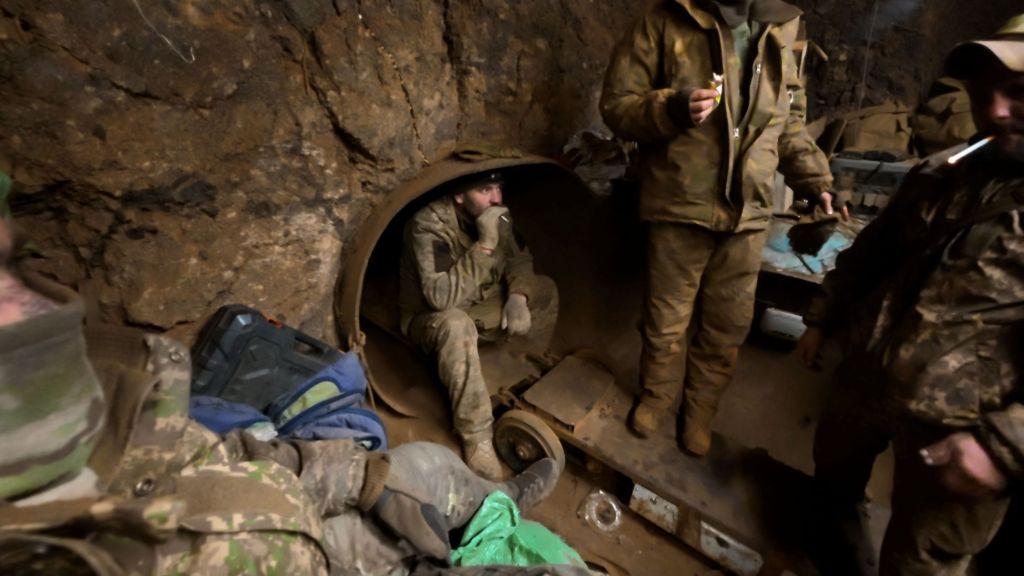
官兵们在极其狭窄的空间里生活作战——但已设法清理出15公里管道指挥官曾当过矿工,这段经历帮助他们应对地下作业的体能与心理挑战。
The men live and fight in very tight quarters - but have managed to clear 15km of the pipe Their commander's former life as a miner helped prepare them for the physical and psychological challenges of operating underground.
在一栋地面建筑内,比亚希姆与仍在管道里的部下保持着定期联络。他身后是一柜子药品。
From a building on the surface, Biashym keeps in regular contact with his men still in the pipeline. Behind him is a cabinet full of medicine.
管道内的士兵大多时间跪着行动,身上磨出了擦伤。比亚希姆承认,有人因长期处于密闭空间而发作惊恐障碍,也有人出现呼吸困难。
Soldiers in the pipeline spend much of their time on their knees and suffer abrasions. Biashym admits some have had panic attacks from living in such a confined space. Others have struggled to breathe.
数百名哥伦比亚志愿者也参与了此次行动,他们隶属于第23突击团。
Hundreds of Colombian volunteers have also been involved in the operation, part of the RUG 23rd Assault Regiment.
外国战斗人员帮助补充了乌克兰捉襟见肘的兵力。一名代号“壁虎”的哥伦比亚志愿者告诉我,他们花了30天时间才清理出500米。
Foreign fighters have helped boost Ukraine's depleted ranks. One of the Colombians, whose call sign is Gecko, tells me it took them 30 days to just clear 500m.
“很困难,很热,我在管道里感到恐惧,”他说。“但在某个时刻我就想,好吧,就应付过去吧,咱们继续推进。”管道之战尚未结束。
"It was difficult, it was hot and I had fear inside the pipe," he said. "But at some point I just thought, OK, just deal with it and let's advance." The battle of the pipeline is not over.
俄军像乌军一样,在管道内构筑了坚固阵地。他们仍试图渗透乌军阵地,在管道里挖掘通道进出。从地面上的一个指挥室,我们看着乌克兰无人机打击俄军另一次试图包抄的行动。
Russian forces, like Ukraine's, have built fortified positions inside the pipeline. They still try to infiltrate Ukrainian positions, burrowing their way in and out of the pipe. From a control room above ground we watched Ukrainian drones target another Russian attempt to outflank them.
虽然部分战斗在地下进行,但地面和空中仍在交战。这是一次联合行动。
While some of the fighting taking place underground, there are still battles on the surface and in the air. It has been a combined operation.
但“扎努达”认为,这是未来作战的最佳方式。“地面行动现在几乎不可能,”他说,并补充道,“大家都明白,目前唯一的作战方式就是地下作战。”
But, Zanuda believes it is the best way to fight in the future. "Ground operations are now nearly impossible," he said, adding that "everyone understands, for now, the only way to fight is underground".
他相信,未来还会有更多此类任务。“管道到处都有,”他说。“你得记住,苏联时期,石油、天然气和氨经由乌克兰全程过境运往欧洲。”实际上,这是在最恶劣条件下进行的残酷、艰苦且危险的工作。乌克兰花了七个月时间才清理了15公里管道。
There'll be more missions like this, he believes. "Pipelines run everywhere," he said. "You have to remember, back in the Soviet times, oil, gas and ammonia were being transported to Europe, with the entire transit route running through Ukraine." In reality it has been brutal, gruelling and dangerous work in the harshest of conditions. It has taken Ukraine seven months to clear 15km of the pipeline.
乌克兰总统泽连斯基称其为一次成功。这有助于收复失地,也振奋了士气。但仅凭这一点并未改变战争进程。对乌克兰而言,隧道尽头仍不见光明。莫斯·坎贝尔、弗拉基米尔·洛日科和丽贝卡·哈特曼补充报道阅读BBC原文
Ukraine's President Volodymyr Zelensky has hailed it as a success. It has helped retake lost territory and been a boost for morale. But on its own it has not changed the course of the war. For Ukraine, there is still no light at the end of the tunnel. Additional reporting by Moose Campbell, Volodymyr Lozhko and Rebecca Hartmann Read the original article on BBC