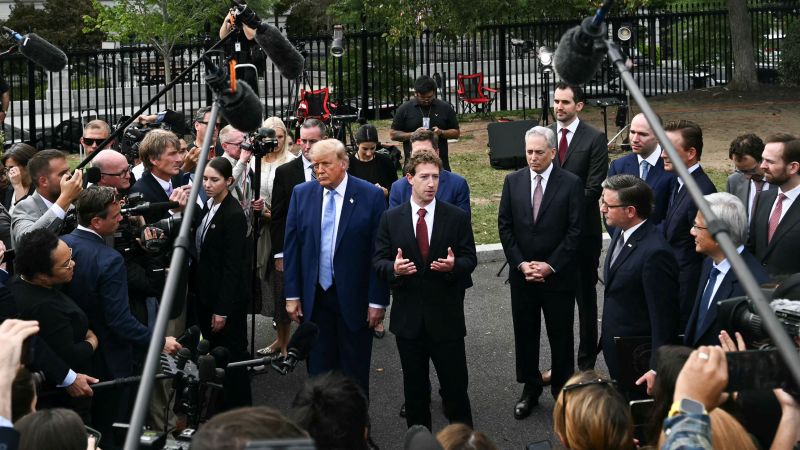
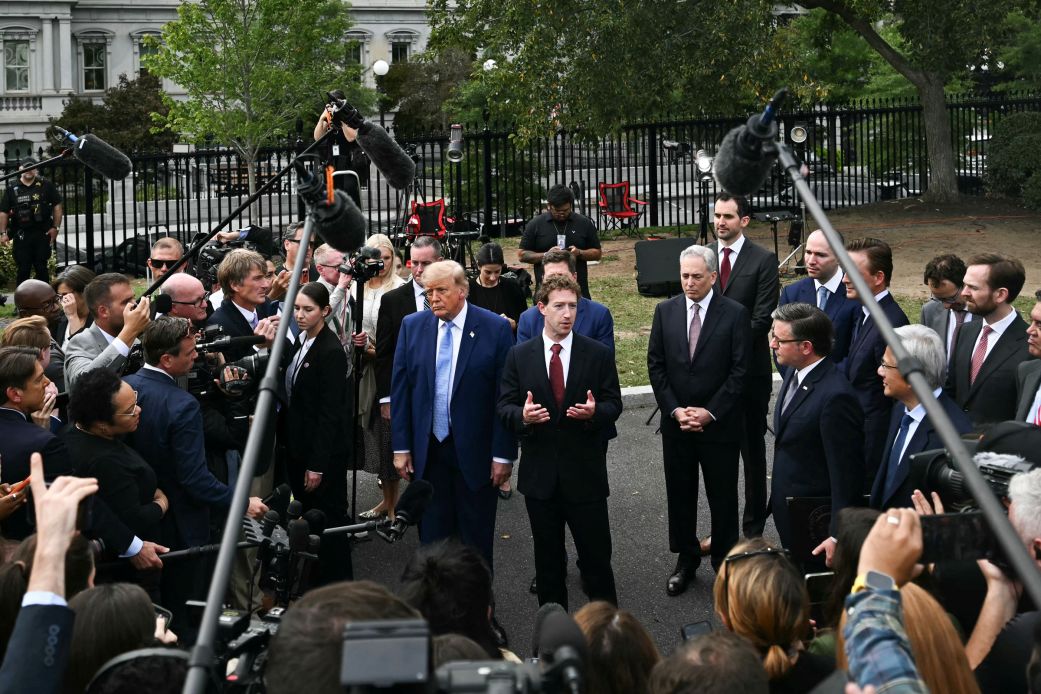
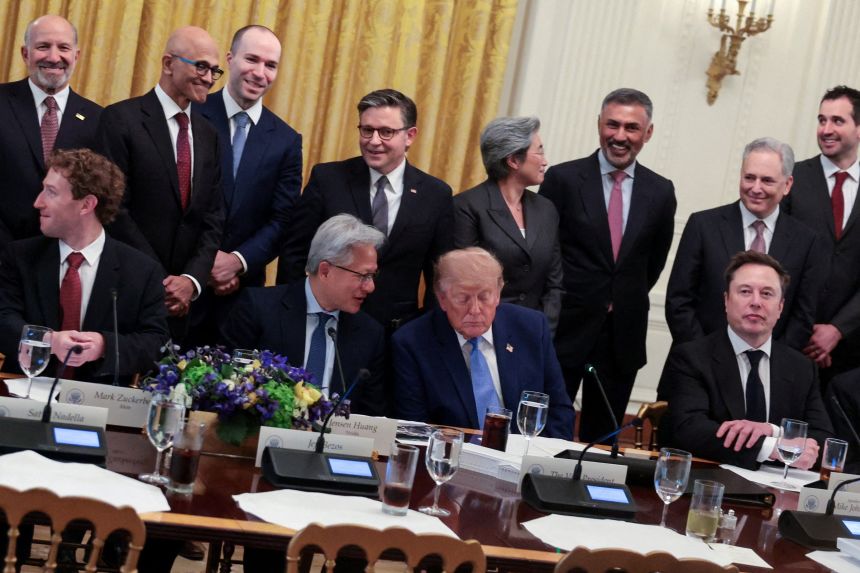
唐纳德·特朗普总统22个月前上任时,预示着与科技巨头结成联盟,这一联盟似乎有望重塑美国政治的未来。他在就职典礼上,有效地将他拉拢到身边的强大高管们展示了一番。
President Donald Trump came into office 22 months ago previewing an alliance with Big Tech that seemed primed to recast the future of American politics. He effectively paraded the powerful executives he had wooed to his side at his inauguration.
如今,不仅特朗普的命运发生了彻底的逆转,科技巨头也看起来越来越像一个强大的政治妖魔。
Now, it’s not just Trump whose fortunes have been turned decidedly upside down; Big Tech is looking like an increasingly potent political boogeyman, too.
美国人对人工智能的明显担忧以及对数据中心的反感,为此奠定了基础。而过去一周的宕机事件,似乎有助于在2028年总统大选之前,巩固科技巨头作为潜在政治靶子的地位。
Americans’ palpable fears about AI and distaste for data centers set the stage. And the outages of the past week appear likely to help solidify Big Tech’s status as a potential political punching bag ahead of the 2028 presidential election.
目前还没有关于近期科技宕机事件的高质量民调。但美国人对科技巨头的感受,其趋势已经清晰一段时间了。其方向是明确的负面。
There isn’t yet quality polling about the recent tech outages. But the trajectory of Americans’ feelings about Big Tech has been clear for some time. It’s headed in a decidedly negative direction.
今年夏天盖洛普的民调显示,十分之八的美国人对大型科技公司只有“部分”或“很少到没有”信心,使其成为受测机构中最不受信任的机构之一。
Gallup polling this summer showed 8 in 10 Americans had only “some” or little-to-no confidence in large technology companies, placing them among the least-trusted institutions that were tested.
更有甚者,持有很少或没有信心的41%的人,比去年的32%上升,也比2020年的24%上升。
What’s more, the 41% who had little or no confidence was up from 32% last year and up from 24% in 2020.

同样,福克斯新闻6月的民调显示,大型科技公司取代大政府,成为登记选民视为更大威胁的机构(分别为52%和47%)。这标志着与2019年的重大转变,当时登记选民以58%对35%的显著差距,将大政府视为更大威胁。
Similarly, Fox News polling in June showed big technology companies supplanting big government as the one registered voters viewed as the greater threat (52% to 47%, respectively). That marked a big shift from 2019, when registered voters viewed big government as the bigger threat by a substantial margin, 58%-35%.
而CNN在5月的民调显示,69%的美国人表示,他们不信任谷歌、脸书和亚马逊等大型科技公司会为客户的最佳利益行事——这一数字自2019年的58%以来一直在上升。
And CNN polling in May showed 69% of Americans said they didn’t trust big technology companies like Google, Facebook and Amazon to do what’s best for their customers — a number that has continued to rise from 58% in 2019.
该民调显示,同样比例(69%)的人也不信任OpenAI、Anthropic、谷歌和Meta等人工智能公司。
The poll showed the same number (69%) also didn’t trust AI companies like OpenAI, Anthropic, Google and Meta.
这些数字叠加了所有证据,表明美国人对这些人工智能公司可能对日常生活意味着什么感到担忧。
Those numbers come on top of all the evidence that Americans are apprehensive about what those AI companies could mean for daily life.
美国有线电视新闻网(CNN)今年夏天的民调显示,认为人工智能产生负面影响的人(48%)是认为产生正面影响的人(16%)的三倍。
CNN polling this summer showed three times as many people thought AI was having a negative impact (48%) as a positive one (16%).
此外,75%的人表示,他们对人工智能的主要情绪是恐惧或担忧,而非积极情绪。81%的人“非常”(45%)或“有些”(36%)担心人工智能会从根本上“改变我们的生活方式”。民调也长期显示,美国人对人工智能风险的关注远远超过对其潜在益处的关注。《华盛顿邮报》/美国广播公司新闻部和美联社/全国民意研究中心(NORC)的民调都证明了这一点。
In addition, 75% said their prevailing emotion about AI was fear or concern rather than something positive. And 81% were “very” (45%) or “somewhat” (36%) concerned that AI would fundamentally “change our way of life.”Polls have also long shown that Americans are much more animated by the risks of AI than its potential benefits. That’s been shown in both Washington Post/ABC News polling and AP/NORC polling.
前一项民调中有一个说明问题的数据:认为人工智能导致人类灭绝的风险“很高”的美国人(33%),多于认为它让人更有生产力的可能性“很大”的美国人(20%)。
A telling stat from the former poll: More Americans felt there was a “high” risk that AI would lead to human extinction (33%) than said there was a “big” chance that it would make people more productive (20%).
盖洛普近期的一项民调显示,27%的美国劳动者表示担心技术会让他们的工作被淘汰,这一比例是2017年同一数字的两倍。
And a recent Gallup poll showed 27% of US workers said they were worried that technology would make their job obsolete — double where the same number stood in 2017.
这个新数字只占受访者的大约四分之一。但这四分之一的人似乎会因这个问题而极具行动意愿;很少有事情能像对生计的担忧那样激发选民的积极性。
The new figure is only around a quarter of those surveyed. But that’s a quarter that would seem to be extremely motivated by this issue; few things motivate voters as much as fear for their livelihood.
而这正是关键所在。不只是人们不喜欢大型科技公司,而是他们越来越多地将其视为对自身的威胁。科技在日常生活和经济中日益重要的作用,很可能让这个问题变得更加紧迫。人工智能在2026年选举中似乎没有发挥太大作用。
And that’s what’s really important here. It’s not just that people don’t like Big Tech; it’s that they’re increasingly seeing it as a threat to themselves personally. And its growing role in daily life and the economy is likely to make the issue a lot more urgent. AI didn’t seem to play a huge role in the 2026 elections.
CNN选民民调显示,30%的选民在人工智能问题上更信任民主党,而信任共和党的为26%。总体而言,只有23%的选民表示人工智能和数据中心问题对他们的投票至关重要,远低于腐败、生活成本、伊朗战争和移民问题。
The CNN Voter Poll showed 30% of voters trusted Democrats more on AI, compared to 26% for Republicans. And only 23% of voters overall said the issue of AI and data centers was crucial to their vote — significantly less than corruption, the cost of living, the Iran war and immigration.
但这也许是因为这个问题太新,美国人尚未消化两党在该议题上的分歧。在2028年之前,候选人还有大量时间阐明和完善自己的立场。
But that might be because the issue was so new and Americans hadn’t digested the differences between the two parties on the topic. There’s a lot more time for candidates to articulate and refine their positions ahead of 2028.
至少有一位大型科技公司首席执行官似乎对该行业未来的政治前景相当担忧。
And at least one Big Tech CEO seems pretty concerned about what lies ahead for the industry politically.
亚马逊创始人杰夫·贝索斯周二在 Semafor 举办的会议上出席时,告诫不要将大型科技公司妖魔化。
Appearing at a Semafor conference Tuesday, Amazon founder Jeff Bezos cautioned against villainizing Big Tech.
“这是一种好的政治手段,但却是解决问题的糟糕手段,”贝索斯说。
“It’s a good political technique, but it’s a terrible technique for solving problems,” Bezos said.
他说,一些政客描绘的大型科技公司形象“并非真实写照。科技界的大多数人只想低调地埋头工作。”当然,贝索斯曾是特朗普自豪邀请出席其就职典礼的科技高管之一。但在政治上,22 个月是很长一段时间。
He said the image some politicians present of Big Tech is “not a true picture. Most people in tech just want to stay heads down doing the work.”Bezos, of course, was among the technology executives that Trump proudly invited to his inauguration. But 22 months is a long time in politics.