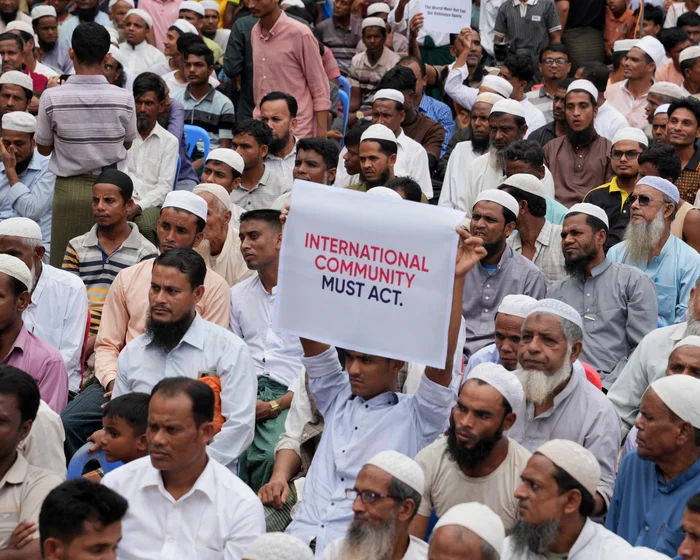
该裁决被誉为“难得的正义时刻”,法官们的决定为评估意图问题制定了路线图。
Hailed as ‘a rare moment of justice’, judges’ decision sets out a roadmap for assessing the question of intent The international court of justice (ICJ) verdict making Myanmar the first country in history to be found guilty of committing genocide does not just deliver justice for Rohingya victims.
国际法院(ICJ)作出裁决,认定缅甸成为历史上第一个被判定犯有灭绝种族罪的国家,这不仅为罗兴亚族受害者伸张了正义。它还让1948年《防止及惩治灭绝种族罪公约》在约束民族国家行为方面获得了新的现实意义。
It also gives the 1948 genocide convention new relevance in governing the actions of nation states.
在海牙,法官小组以九票对六票的多数作出裁决,详细列出了该公约应如何应用于现实世界中政府被指控对整个人口群体犯下灭绝种族罪的情况,特别是在评估意图问题方面。
In their nine votes to six majority ruling, the panel of judges in The Hague set out a detailed roadmap for how the convention should be applied to real-world situations in which a government is accused of committing genocide against a whole population group, especially when it comes to assessing the question of intent.