日本消费者物价涨幅加速至年内最快,巩固了日本央行下月加息的理由。
Published: 2026-11-20T07:34:12+08:00 Gains by Japan’s consumer prices accelerated to the fastest pace this year, firming up the case for the Bank of Japan to raise its benchmark interest rate next month.
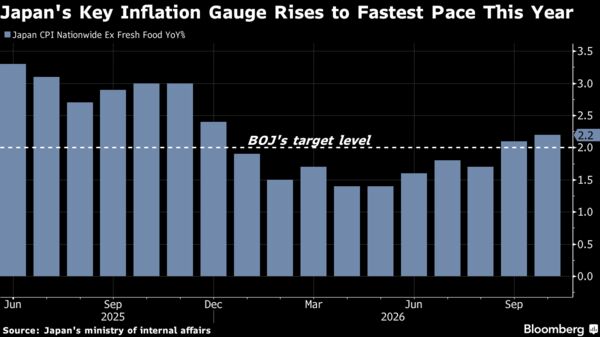
总务省周五公布,10月剔除生鲜食品的消费者物价指数同比上涨2.2%,连续第二个月加速,为去年12月以来最大涨幅,但略低于经济学家预估中位数2.3%。
The consumer price index excluding fresh food picked up for a second month to 2.2% in October compared with a year earlier, the Ministry of Internal Affairs and Communications reported Friday. While it was the biggest advance since December, the result was a tad weaker than the median economist forecast of 2.3%.
剔除生鲜食品和能源的指数——日本央行密切关注的基础通胀指标——也上涨2.2%,整体CPI上涨2.3%。
The index that strips out both fresh food and energy, a measure closely monitored by the BOJ as a measure of underlying inflation, also climbed 2.2%, and overall CPI rose 2.3%.
能源成本推动了本月涨幅,整体能源价格同比上涨2.2%,扭转了9月的下跌。手机相关费用涨幅从10.9%扩大至17.2%,也推高了整体指数。
Energy costs drove gains in the latest month, with overall energy prices rising 2.2% on year, reversing from a decline in September. The increase in costs related to mobile phones accelerated to 17.2% from 10.9%, also pushing the overall index higher.
周五的数据将强化日本央行12月议息会议上调基准利率的理由。央行已明确,其政策目标不再是引导基础通胀向2%目标上行,而是将其锚定在该水平附近。上月央行表示,基础通胀自2013年设定目标以来首次达到目标。
Friday’s data will bolster the case for raising the benchmark interest rate when the BOJ’s board meets in December. The bank has made it clear that its policy aim is no longer to coax underlying inflation higher toward its 2% target but rather to anchor it around that level. Last month it said underlying inflation reached the target for the first time since the goal was established in 2013.
截至周五东京上午,掉期合约隐含央行在12月18日加息的概率约为86%。
As of Friday morning in Tokyo, swap contracts implied a roughly 86% probability that the bank will raise its policy rate on Dec. 18.
服务价格——衡量通胀可持续性的关键指标——同比上涨1.4%。剔除生鲜食品的食品价格涨幅放缓至2.2%,大米价格下跌近30%,为1971年有数据以来最大跌幅。一年前,大米曾是推动整体通胀的主要因素之一。
Service prices — a key measure of the sustainability of inflation — increased 1.4% from a year earlier. Gains in food prices excluding fresh items slowed to 2.2%, as rice prices dropped almost 30% the biggest decline in the data going back to 1971. A year ago, rice was among major drivers of overall inflation.
日本央行上月发布的经济预测显示,生活成本将进一步上升。鉴于迄今的数据,要实现本财年物价上涨2.5%的预测,截至3月的月均核心通胀率须超过3%。
The BOJ’s economic projections last month pointed to further increases in the cost of living. Its price forecast of 2.5% growth for the current fiscal year would require core inflation to advance at a pace exceeding 3% as a monthly average until March, given data to date.
企业一直在灵活应对从能源到运输和包装等各种成本上涨带来的经营负担,这些成本上涨是伊朗战争以及日元持续疲软的结果。此外,劳动力短缺迫使企业提高工资以留住员工。据帝国数据银行统计,日本大型食品饮料企业计划本月上调1477种商品的价格,几乎是去年同期的十倍。
Businesses have been nimble in responding to the operational burden stemming from heightened costs for everything from energy to shipping and packaging, a result of the Iran war along with persistent yen weakness. Also, a labor crunch has forced companies to raise wages to retain staff. Japan’s major food and beverage companies are planning to raise the price of 1,477 items this month, almost ten times more than a year ago, according to Teikoku Databank.