NurPhoto via Getty Images 随着食品通胀上升,蔬菜正成为家庭预算中日益昂贵的一部分 Soutik Biswas 印度特约记者 3小时前 印度通胀再次上升。最大的担忧是食品价格正在发生什么。
NurPhoto via Getty Images As food inflation rises, vegetables are becoming an increasingly expensive part of the household budget Soutik Biswas India correspondent 3 hours ago India's inflation is rising again. And the biggest worry is what's happening to food prices.
最新政府数据显示,10月零售通胀率攀升至6.09%,高于9月的5.54%。但仔细看食品通胀。它已飙升至8.94%。
The latest government data shows retail inflation climbed to 6.09% in October, up from 5.54% in September. But look more closely at food inflation. It has surged to 8.94%.
农村印度的挤压更为剧烈,那里的食品通胀为9.09%,而城市地区为8.68%。换句话说,食品价格上涨的速度明显快于总体通胀率。
The squeeze was sharper in rural India, where food inflation was 9.09%, compared with 8.68% in urban areas. In other words, food prices are rising considerably faster than the overall rate of inflation.
经济学家表示,今年食品通胀是由天气干扰、供应短缺和投入成本上升共同推动的。
Food inflation this year has been driven by a combination of weather disruptions, supply shortages and rising input costs, say economists.
由于近60%的农田依赖降雨,印度仍极易受季风变幻莫测的影响。今年,西南季风较常年偏少13%且分布不均,而增强的厄尔尼诺现象加剧了对农业生产的风险。
With nearly 60% of its farmland dependent on rainfall India remains acutely vulnerable to the vagaries of the monsoon. This year, the southwest monsoon was 13% below normal and unevenly distributed, while intensifying El Niño conditions have heightened risks to farm production.
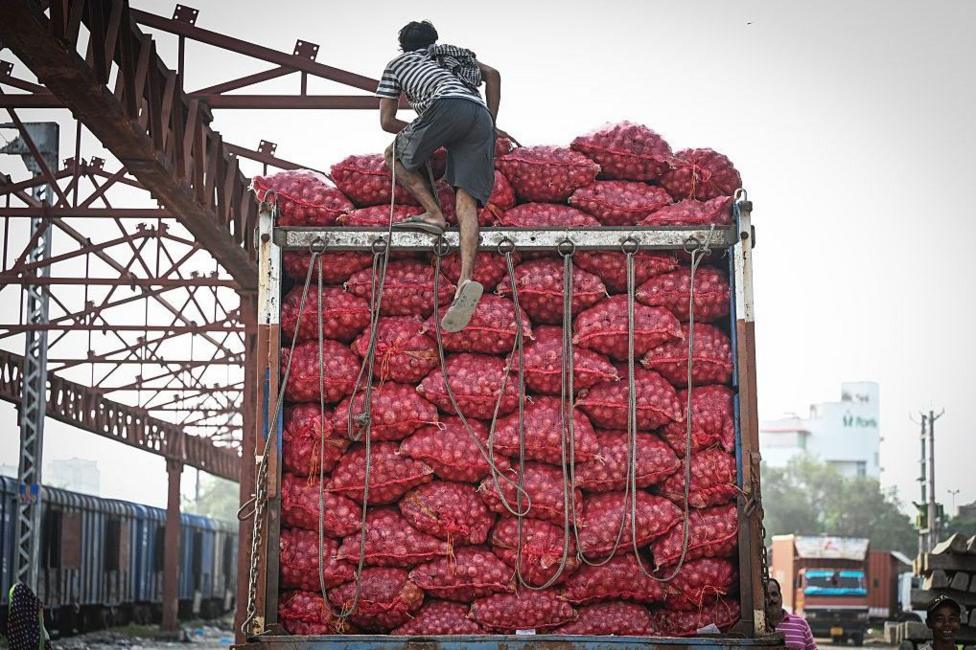
Hindustan Times via Getty Images 洋葱价格飙升,增加了家庭食品预算的压力 食品在印度家庭支出中的占比虽不如从前,但仍是通胀的最大驱动因素,具有显著的经济、社会和政治后果。
Hindustan Times via Getty Images Onion prices have surged, adding to the pressure on household food budgets Food accounts for a smaller share of Indian household spending than it once did, but remains the biggest driver of inflation, with significant economic, social and political consequences.
印度最新的消费者价格指数中,食品和饮料占用于衡量通胀的商品和服务篮子的36.75%。
dia's latest consumer price index, food and beverages account for 36.75% of the basket of goods and services used to measure inflation.
这较前一系列的45.86%大幅下降,反映了随着印度人在服务、交通、医疗、教育和其他非食品项目上支出增加,消费模式发生了变化。
That is down sharply from 45.86% under the previous series, reflecting changing consumption patterns as Indians spend more on services, transport, healthcare, education and other non-food items.
然而,食品价格的大幅上涨仍能显著推动总体通胀率,并对收入留给调整空间很小的人群产生不成比例的影响。
Yet a sharp increase in food prices can move the overall inflation rate significantly, while disproportionately affecting people whose incomes leave little room for adjustment.
“印度这样的贫穷国家,调整能力要低得多,”孟买英迪拉·甘地发展研究所经济学副教授拉杰斯瓦里·森古普塔(Rajeswari Sengupta)表示,并指出家庭收入中仍有相当大一部分用于食品支出。不断上涨的食品价格对穷人打击最大。数据印证了这一点。
"Adjustability for a poor country like India is significantly lower," says Rajeswari Sengupta, an associate professor of economics at Mumbai-based Indira Gandhi Institute of Development Research, pointing to the fact that a substantial proportion of household income is still spent on food. Rising food prices hurt the poor the most The numbers bear this out.
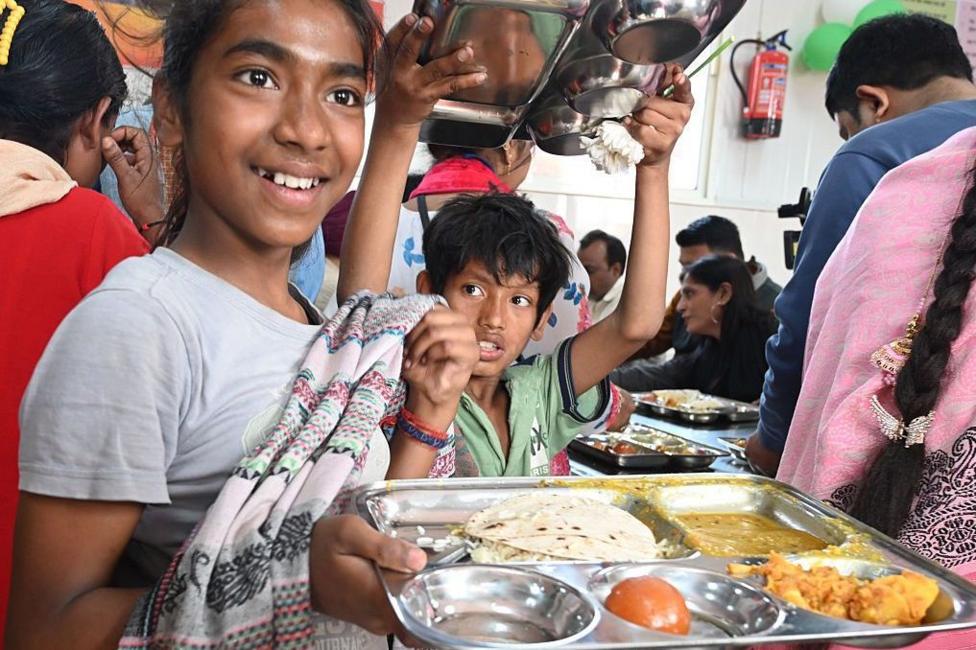
据分析公司 Crisil 首席经济学家达尔马基尔蒂·乔希(Dharmakirti Joshi)测算,10 月份,农村地区最底层 20% 的家庭面临 6.9% 的通胀率,而最富裕 20% 的家庭为 6.5%。在城市地区,相应比率分别为 6.1% 和 5.3%。即使是一顿简单饭菜的成本,也能看出这种压力。
According to calculations by Dharmakirti Joshi, chief economist at analytics firm Crisil, the bottom 20% of rural households faced inflation of 6.9% in October, against 6.5% for the richest 20%. In urban India, the corresponding rates were 6.1% and 5.3%. The pressure is visible even in the cost of a simple meal.
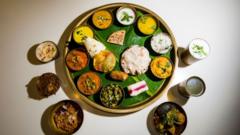
Crisil 的“烙饼米饭价格指数”分析显示,10 月份,一份家庭自制的素食大餐盘(thali,一种餐盘套餐)成本同比上涨 12%,主要受洋葱、番茄、蔬菜、食用油、大米和烹饪用气价格上涨推动。非素食大餐盘成本上涨 9%。
Crisil's Roti Rice Rate analysis found that the cost of a home-cooked vegetarian thali - a meal platter - rose 12% year-on-year in October, driven by higher prices of onions, tomatoes, vegetables, edible oil, rice and cooking gas. A non-vegetarian thali became 9% more expensive.
据 Crisil 情报总监普尚·夏尔马(Pushan Sharma)称,大米价格同比上涨约 10%,豆类 8%,食用油 13%,液化石油气 10%。“推动涨价的不再是少数几种商品,而变得更加广泛,”他说。
Rice prices were up about 10% year-on-year, pulses 8%, edible oil 13% and LPG 10%, according to Pushan Sharma, director of intelligence at Crisil. "It's no longer a few commodities that are driving this increase, it's becoming a little more broad-based," he says. When onion prices spike, households can cut back on their consumption to some extent.
洋葱价格飙升时,家庭在一定程度上可以减少消费。但替代大米、豆类和食用油要困难得多。
But substituting rice, pulses and cooking oil is considerably harder. And food inflation is not just about what farmers produce.
食品通胀不仅关乎农民生产什么,还关乎食品储存、加工和运往市场的效率。各个环节的薄弱都可能将季节性短缺转化为价格急剧飙升——将过剩转化为浪费。例如,洋葱特别容易出现季节性价格波动。
It is also about how efficiently that food is stored, processed and moved to the market. Weaknesses at each stage can turn seasonal shortages into sharp price spikes - and gluts into waste. Onions, for instance, are particularly susceptible to seasonal price swings.
冬作物——即季风后播种、春季收获的冬季作物——约占洋葱产量的三分之二,于 3 月和 4 月收获,并储存数月。随着库存减少,价格可能在下一季作物到来前大幅上涨。
The rabi crop - winter crops, sown after the monsoon and harvested in spring - which accounts for roughly two-thirds of onion production, is harvested in March and April and stored for several months. As stocks dwindle, prices can rise sharply before the next crop arrives.
与此同时,西红柿价格往往在夏季飙升,当时一些市场的到货量下降,或高温胁迫影响产量。
Tomatoes, meanwhile, tend to see price spikes during the summer months, when arrivals decline in some markets or heat stress affects production.
Sharma表示,易腐食品常常导致食品通胀突然飙升,而大米和小麦等主食的价格往往上涨较为缓慢,但可能维持高位更长时间。
Sharma says perishables are often responsible for the sudden spikes in food inflation, while prices of staples such as rice and wheat tend to rise more gradually but can stay higher for longer.
“易腐食品导致了波动。非易腐食品,如大米和小麦,才是从结构上推高成本的因素,”他说。
"The perishables are what caused the volatility. The non-perishables, like rice and wheat, are the ones that structurally increase the cost," he says.
经济学家表示,印度仍缺乏足够的基础设施来分拣、分级、储存和加工其大部分易腐农产品。
Economists say India still lacks adequate infrastructure to sort, grade, store and process much of its perishable produce.
例如,西红柿在丰收时可能过剩,农民难以以合理价格出售,几个月后消费者却要面对价格大幅上涨。
Tomatoes, for example, can become so abundant during a glut that farmers struggle to sell them at remunerative prices, only for consumers to face sharply higher prices months later.
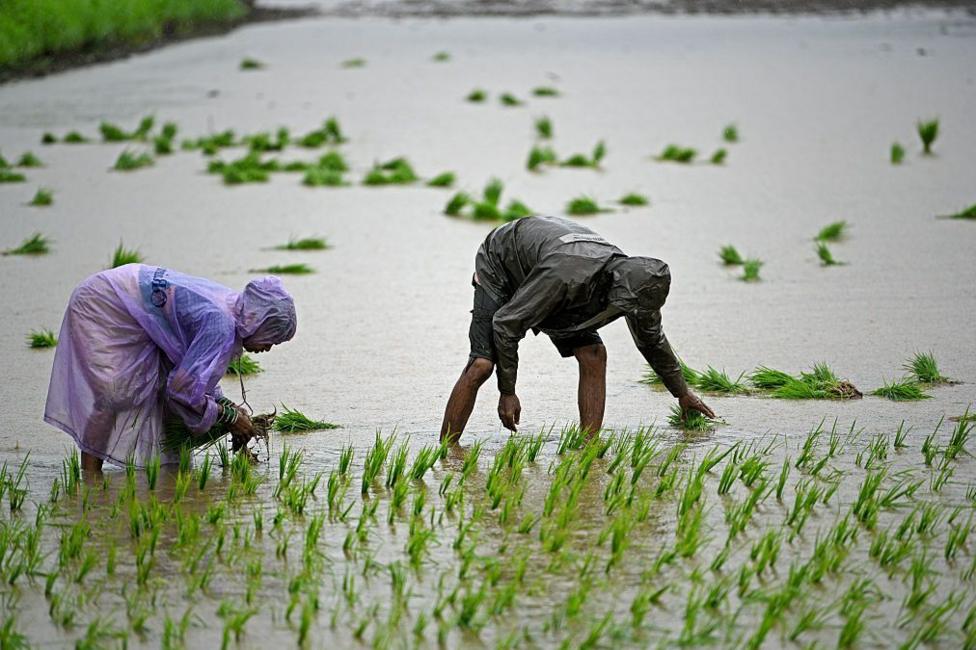
Bloomberg via Getty Images 由于近60%的农田依赖降雨,印度仍易受不稳定季风的影响。Sharma表示,更好的储存和加工可以将部分过剩转化为番茄酱等产品,从而在丰收与短缺之间平滑极端波动。还有其他压力。
Bloomberg via Getty Images With nearly 60% of its farmland dependent on rainfall, India remains vulnerable to erratic monsoons Better storage and processing could help turn some of that surplus into products such as puree, smoothing the extremes between abundance and scarcity, according to Sharma There are other pressures. Energy shocks feed into the cost of transport, irrigation and agricultural inputs.
能源冲击会推高运输、灌溉和农业投入品的成本。化肥价格可能上涨。全球食用油市场也很重要,因为印度严重依赖进口。不过,印度确实有一些抵御食品通胀最严重影响的保护措施。
Fertiliser prices can rise. Global edible-oil markets matter because India relies heavily on imports. To be true, India, however, has some protection against the worst effects of food inflation.
谷物政府储备远高于规定的最低水平,覆盖近8亿人的免费粮食计划为应对价格上涨提供了缓冲。大米储备尤其充足。Sengupta表示,还存在更广泛的经济风险。
Government stocks of cereals are comfortably above prescribed minimum levels, and the free-food programme covering nearly 800 million people offers a cushion against rising prices. Rice stocks are particularly ample. There is a wider economic risk, says Sengupta. "Food inflation may begin with a supply shock, but its effects can spread.
“食品通胀可能始于供给冲击,但其影响可能会扩散。发现工资不再足以支付基本生活成本的工人可能会要求更高薪酬。面临更高劳动力成本的企业可能会提高价格。始于食品价格上涨的现象可能逐渐演变为更普遍的通胀压力——即中央银行试图防止的熟悉的工资-价格螺旋,”她说。对印度而言,这造成了一个特别棘手的平衡难题。
Workers who find that their wages no longer cover basic living costs may seek higher pay. Businesses facing higher labour costs may raise prices. What begins as a rise in the price of food can gradually become a more general inflationary pressure - the familiar wage-price spiral that central banks try to prevent," she says. For India, this creates a particularly difficult balancing act.
农业是一个相对低生产率的部门,政府长期以来一直试图通过为某些农作物设定最低支持价格(MSP)来保护农民——即承诺收购农产品的价格底线,帮助农民抵御市场崩盘。
Agriculture is a relatively low-productivity sector, and the government has long sought to protect farmers by setting minimum support prices (MSPs) for certain crops - a price floor at which it promises to buy produce, helping farmers guard against a market crash.
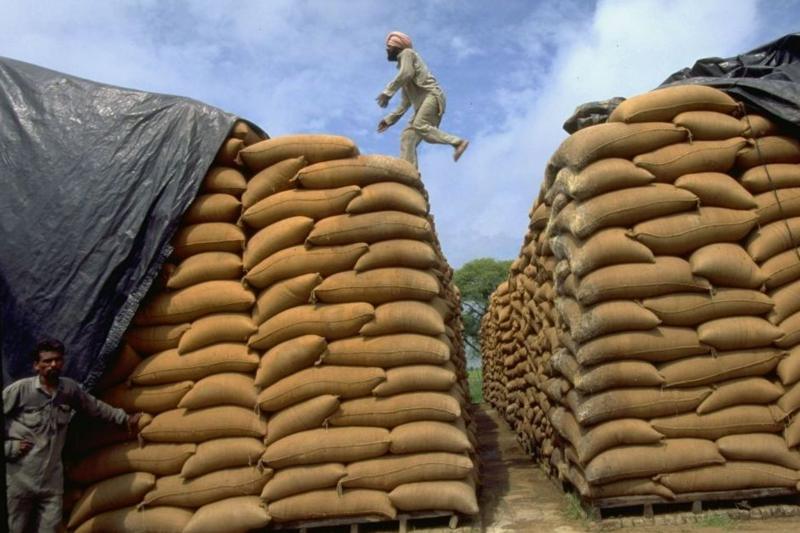
罗伯特·尼克尔斯伯格/盖蒂图片社 印度拥有充足的缓冲粮食库存 与此同时,食品价格在政治上极为敏感。洋葱、西红柿等主食价格急剧上涨会迅速激怒消费者,促使政府采取限制出口、限制贸易商囤积量或其他压低价格的措施。印度食品消费模式变化的大背景,使得当前的通胀更值得关注。
Robert Nickelsberg/Getty Images India has ample buffer food stocks At the same time, food prices are politically sensitive. Sharp increases in the price of staples such as onions and tomatoes can quickly anger consumers, prompting governments to step in with measures such as restricting exports, limiting how much traders can stockpile, or otherwise trying to bring prices down. The broader story of India's changing food consumption makes the current inflation more interesting.
家庭饮食结构与十年前已有不同。对2011-12年和2023-24年消费调查的分析显示,谷物在食品支出中的占比大幅下降,最贫困家庭尤为明显,反映了补贴粮食计划的影响。
Households are eating differently from a decade ago. An analysis of the 2011-12 and 2023-24 consumption surveys shows that the share of cereals in food spending has fallen sharply, particularly among the poorest households, reflecting the impact of subsidised food programmes.
与此同时,研究显示,奶制品、水果和肉类等营养丰富食品的消费在各收入群体中均有增加,最贫困群体增幅最大。
Meanwhile, consumption of nutrient-rich foods such as dairy, fruit and meat has increased across income groups, with the biggest gains among the poorest, the study revealed.
印度的食品篮子正变得更加多元。但多元化只有在普通印度人买得起时才有意义。归根结底,食品通胀关乎什么端上了餐桌——以及什么不得不被舍弃。
India's food basket is becoming more diverse. But diversity is meaningful only if ordinary Indians can afford it. Ultimately, food inflation is about what makes it to the plate - and what has to be left out.