在拖累共和党在即将到来的中期选举中获胜几率的所有因素中,通胀似乎是最重要的一个。根据Real Clear Politics汇总的民调结果,70.1%的美国人不认可唐纳德·特朗普总统对通胀的处理方式,仅有27.3%的人认可。通胀也一直位列选民最关心的两三个议题之一。
Of all the factors dragging down Republicans’ odds of success in the coming midterms, inflation seems to be the most important. According to the Real Clear Politics aggregation of polling results, 70.1% of Americans disapprove of President Donald Trump’s handling of inflation, and just 27.3% approve. Inflation also consistently ranks as one of the top two or three issues on voters’ minds.
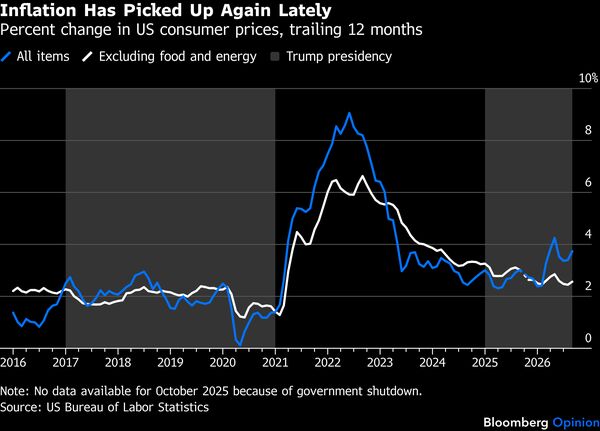
看看过去几年美国通胀的图表,这一切似乎有点奇怪。截至9月,通胀同比为3.7%,自特朗普于2025年1月重返白宫以来确实有所上升,但幅度并不大。所谓的核心通胀——剔除波动较大的食品和能源价格,以更好地反映潜在趋势——实际上有所下降。食品和能源价格在美国人的日常生活中当然非常重要,因此核心通胀下降没有多少政治分量是可以理解的。但特朗普在通胀问题上的支持率似乎与乔·拜登总统在2022年中期时大致相同或略差,而当时的通胀要严重得多,一度突破9%。
Look at a chart of inflation in the US over the past few years, and this all seems a little odd. At 3.7% year-over-year as of September, inflation is definitely up since Trump returned to office in January 2025, but not by a huge amount. So-called core inflation, which excludes volatile food and energy prices to give a better read on underlying trends, is actually down. Food and energy prices are, of course, very important in Americans’ daily lives, so it’s understandable that the core-inflation drop doesn’t carry much political weight. But Trump’s approval ratings on inflation appear to be about the same as or slightly worse than President Joe Biden’s in mid-2022, when inflation was much, much worse, briefly topping 9%.
美国人对经济的悲观程度超过大多数经济指标所显示的水平,已成为今年秋天反复出现的主题。但对特朗普在通胀问题上极度不满的一种解释可能很简单:他的行为显然让情况变得更糟,而拜登在其任内那轮规模大得多的通胀浪潮中究竟有多大责任,则不那么清楚。
That Americans are gloomier about the economy than most economic indicators say they should be has been a recurring theme this fall. But one explanation for the extreme dissatisfaction with Trump on inflation may simply be that his actions have obviously made it worse, whereas it was less clear how culpable Biden was for the much bigger inflation wave during his tenure.
通胀的成因并非已有定论的问题。经济学家米尔顿·弗里德曼在1970年有一句名言:“通胀在任何时候、任何地方都是一种货币现象。”意思是说,在后金本位时代,通胀主要属于央行的职责范围。但他指的是持续性通胀,而不是像2021至2022年那样暂时却显著的时期。回过头看,美联储对2021年的物价上涨反应可能过于迟缓,但此后确实相当有力地提高了利率。而且在整个这一时期,执掌美联储的人由特朗普于2018年任命、又由拜登于2022年续任,因此要厘清党派责任有点困难。
What causes inflation is not an entirely settled question. Economist Milton Friedman famously said in 1970 that “inflation is always and everywhere a monetary phenomenon,” meaning that in this post-gold-standard era, it’s mostly the purview of central banks. But what he meant was persistent inflation, not a temporary yet significant episode like that of 2021-2022. In retrospect, the Federal Reserve was probably too slow in reacting to the price increases of 2021, but it did raise interest rates pretty forcefully after that. It was also led throughout this period by a man appointed by Trump in 2018 and reappointed by Biden in 2022, so it’s a little hard to sort out partisan culpability.
2020年和2021年的财政刺激在战时之外堪称史无前例,是另一个可能的通胀元凶,而且具有两党性质。大部分刺激措施是在特朗普任总统期间实施的,但当时一些知名经济学家警告说,拜登新当选后于2021年3月推动国会通过的1.9万亿美元“美国救援计划”——当时经济已在快速增长——属于过度刺激。
The fiscal stimulus of 2020 and 2021, which was unprecedented outside of wartime, is another likely inflation culprit that was bipartisan in nature. Most of the stimulus was enacted while Trump was president, but some prominent economists warned at the time that the $1.9 trillion American Rescue Plan pushed through Congress by newly elected Biden in March 2021 — with the economy already growing rapidly — was overkill.
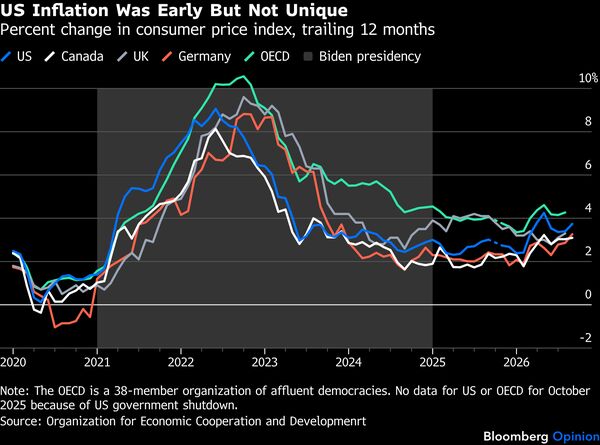
2021年美国通胀上升速度快于其他发达经济体,这一事实似乎佐证了上述观点。不过到2022年,世界其他地区也赶了上来。
The fact that inflation rose faster in the US than in other developed economies in 2021 seemed to back this up. By 2022, though, the rest of the world had caught up.
俄罗斯于2022年2月入侵乌克兰,导致欧洲能源价格飞涨,但对能源丰富的美国来说问题没那么大,这是欧洲通胀持续时间比美国更久的原因之一。总体来看,呈现出的图景是一场全球性的通胀浪潮,美国参与其中并起了推波助澜的作用,而非美国独有的现象。此后关于2021至2022年通胀上升的研究强调,新冠疫情期间及之后全球行为方式发生了巨大转变,导致供应链瓶颈和价格急剧上涨。
Russia’s invasion of Ukraine in February 2022, which sent European energy prices skyrocketing but was less of an issue for the energy-rich US, was one reason inflation persisted longer in Europe than here. Overall, the picture is of a global inflation wave that the US participated in and contributed to, not a uniquely American phenomenon. Subsequent research on the 2021-2022 inflation increase has emphasized the huge global shifts in behavior during and after the Covid-19 pandemic that led to supply-chain bottlenecks and sharp price increases.
有助于为这场讨论提供依据的一个新数据系列,是旧金山联邦储备银行经济学家亚当·夏皮罗的“供给驱动与需求驱动的PCE通胀”指标。该指标将美国经济分析局个人消费支出数据中的价格变化加以分解,依据是这些价格变化是否伴随着支出的增加(需求驱动)或减少(供给驱动)。如果价格变化或支出变化在统计上与基于长期趋势预测的数值无法区分,那么这些价格变化就被归类为来源不明。
A new data series that has helped inform this discussion is Federal Reserve Bank of San Francisco economist Adam Shapiro’s “supply- and demand-driven PCE inflation,” which breaks down price changes in US Bureau of Economic Analysis personal consumption expenditures data by whether they’re accompanied by spending increases (demand driven) or decreases (supply driven). If either the price or spending changes are statistically indistinguishable from values predicted based on long-run trends, the price changes are classified as ambiguous in origin.
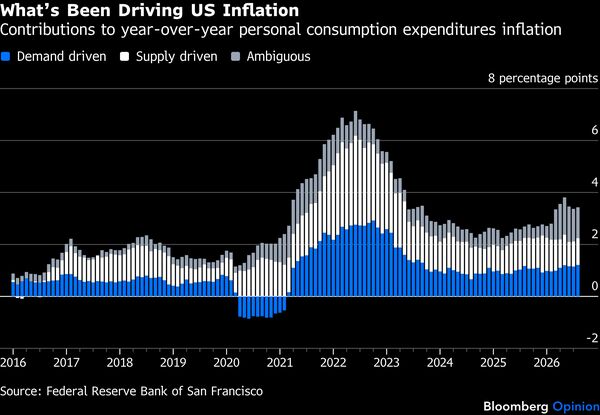
按照这一视角,2021至2022年的通胀浪潮主要是供给约束造成的,尽管需求也推动了许多价格上涨。2025年通胀的小幅上升也在一定程度上更像是供给因素而非需求因素所致,可能主要归因于特朗普的关税。今年更大幅度的上升主要由夏皮罗的体系归类为原因不明的那部分所驱动,但如果你一直关注时事,这些原因似乎并没有那么不明。
In this view, the inflation wave of 2021-2022 was primarily about supply constraints, although demand drove a lot of price increases, too. The modest uptick in inflation in 2025 was also somewhat more of a supply story than a demand one, probably attributable mainly to Trump’s tariffs. This year’s bigger increase is driven mostly by what Shapiro’s system classifies as ambiguous causes, but the cause doesn’t seem that ambiguous if you’ve been paying attention to current events.
汽油和柴油价格上涨,是因为特朗普选择攻击伊朗,而伊朗则选择试图切断通过霍尔木兹海峡的海上交通作为回应;由于柴油在运输其他商品方面至关重要,柴油价格上涨正开始传导到其他商品的价格中。不过,美国人的能源消费仅略有减少,因为经济增长保持住了,失业率也维持在低位,这在一定程度上要归功于正在支撑需求的数据中心投资热潮。
Gasoline and diesel prices are up because Trump chose to attack Iran, and in response Iran chose to try to cut off marine traffic through the Strait of Hormuz, with the diesel price increase beginning to filter into the prices of other goods because it’s so central to transporting them. Americans have reduced energy consumption only slightly, though, as growth has held up and unemployment stayed low, thanks in part to a data-center investment boom that is propping up demand.
或者类似的情况——在庞大的美国经济中,总有多种难以剥离的力量在起作用,总统通常会为经济结果获得比其实际应得的更多的赞誉和指责。但伊朗战争与燃油价格之间不可否认的联系,以及特朗普未能说服除其最铁杆支持者以外的任何人认为这场战争是个好主意(甚至他的副总统和长子都表示过怀疑),意味着完全有理由责怪他。
Or something like that — there are always multiple hard-to-disentangle forces at work in the gigantic US economy, and presidents usually get more credit and blame for economic outcomes than they truly deserve. But the indisputable link between the Iran war and fuel prices, and Trump’s failure to persuade anyone but his most die-hard supporters that the war was a good idea (even his vice president and eldest son have expressed doubts), means it’s entirely reasonable to blame him.
总统和其他共和党人反复试图将责任推回给拜登,后者确实主管过一轮大幅涨价,这很可能部分是他的过错,但他在通胀明显降温之际卸任,这一做法反而让他们看起来更应受指责。
The repeated attempts by the president and other Republicans to shift the blame back to Biden, who did in fact preside over a big increase in prices that was probably partly his fault but left office with inflation clearly on the wane, if anything leaves them looking even more blameworthy.
其他因素包括:特朗普政府和共和党控制的国会的决定导致数百万美国人的医疗成本大幅上升;由于多种原因导致的金融不安全感上升,其中一些原因早于特朗普执政;以及可能存在的不切实际的信念,即特朗普在2024年竞选途中承诺终结通胀,意味着要将物价恢复到疫情前的水平。但我想,最简单的答案或许才是最好的——特朗普因通胀受到指责,是因为通胀上升是他的过错。
Other factors at work here include big increases in health care costs for several million Americans caused by decisions by the Trump administration and Republican Congress; rising financial insecurity for a number of reasons that in some cases predate Trump; and possibly the unrealistic belief that ending inflation as Trump promised on the 2024 campaign trail would entail rolling back prices to pre-pandemic levels. But I wonder if the simplest answer isn’t the best — Trump is being blamed for inflation because it’s his fault that it has been rising.