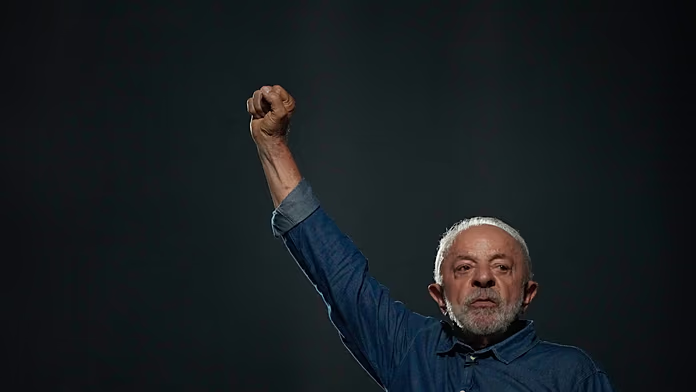
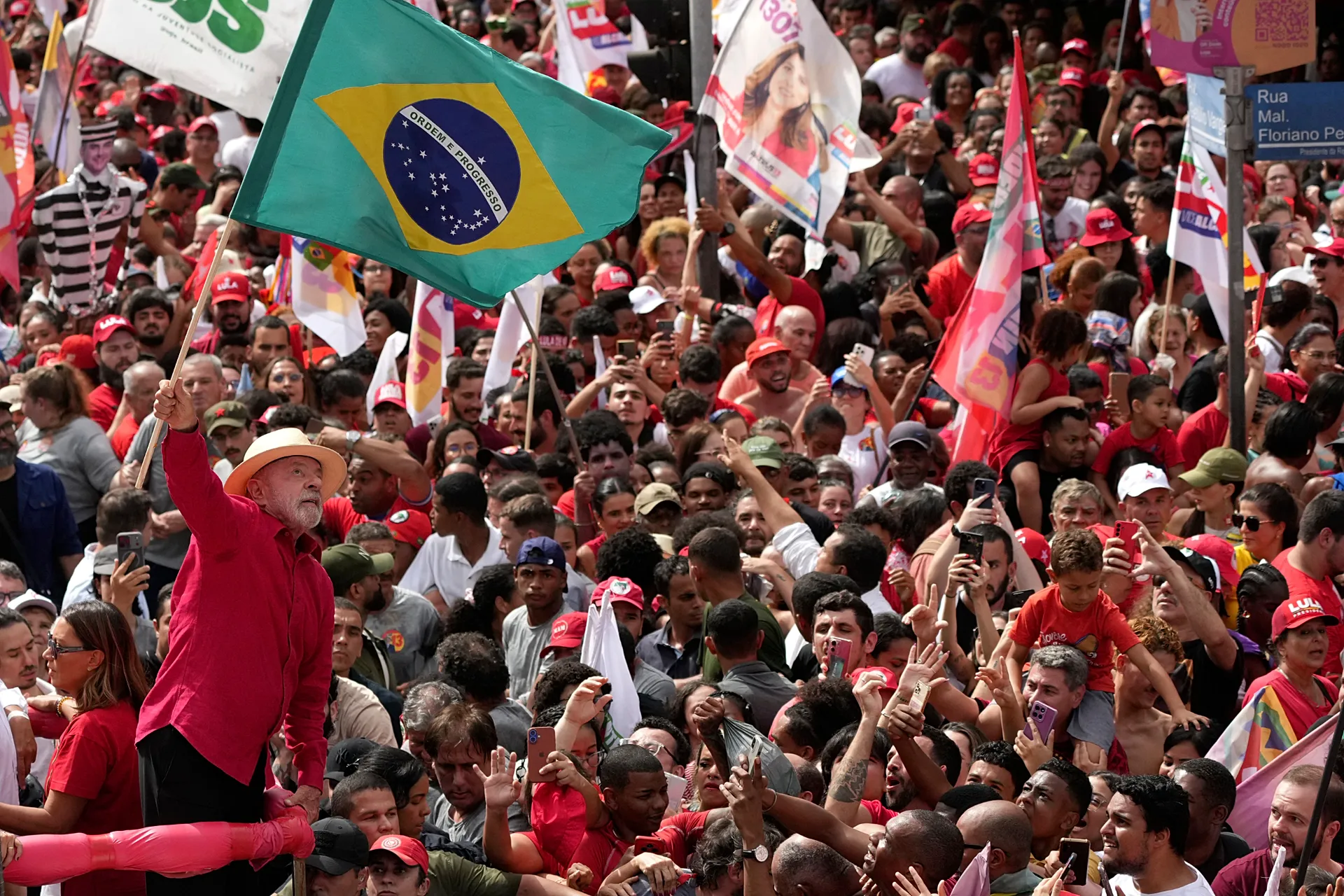
在首轮投票中落败后,卢拉·达席尔瓦在第二轮投票中实现了历史性逆转,再次当选巴西总统。重返他从未真正离开过的普拉纳尔托宫,这位工人党(PT)领袖打破了不利的先例:自1989年巴西恢复总统直接选举并引入两轮投票制以来,从未有首轮落后的候选人在第二轮中反败为胜。
After losing in the first round, Lula da Silva pulled off a historic comeback to be re-elected president of Brazil in the second round. Back in the Palácio do Planalto, which he had never left, the leader of the Workers' Party (PT) defied unfavourable precedent: since 1989, the year when Brazil returned to direct presidential elections and introduced the two-round system, no candidate trailing after the first round had ever gone on to win the second."I owe this to you.
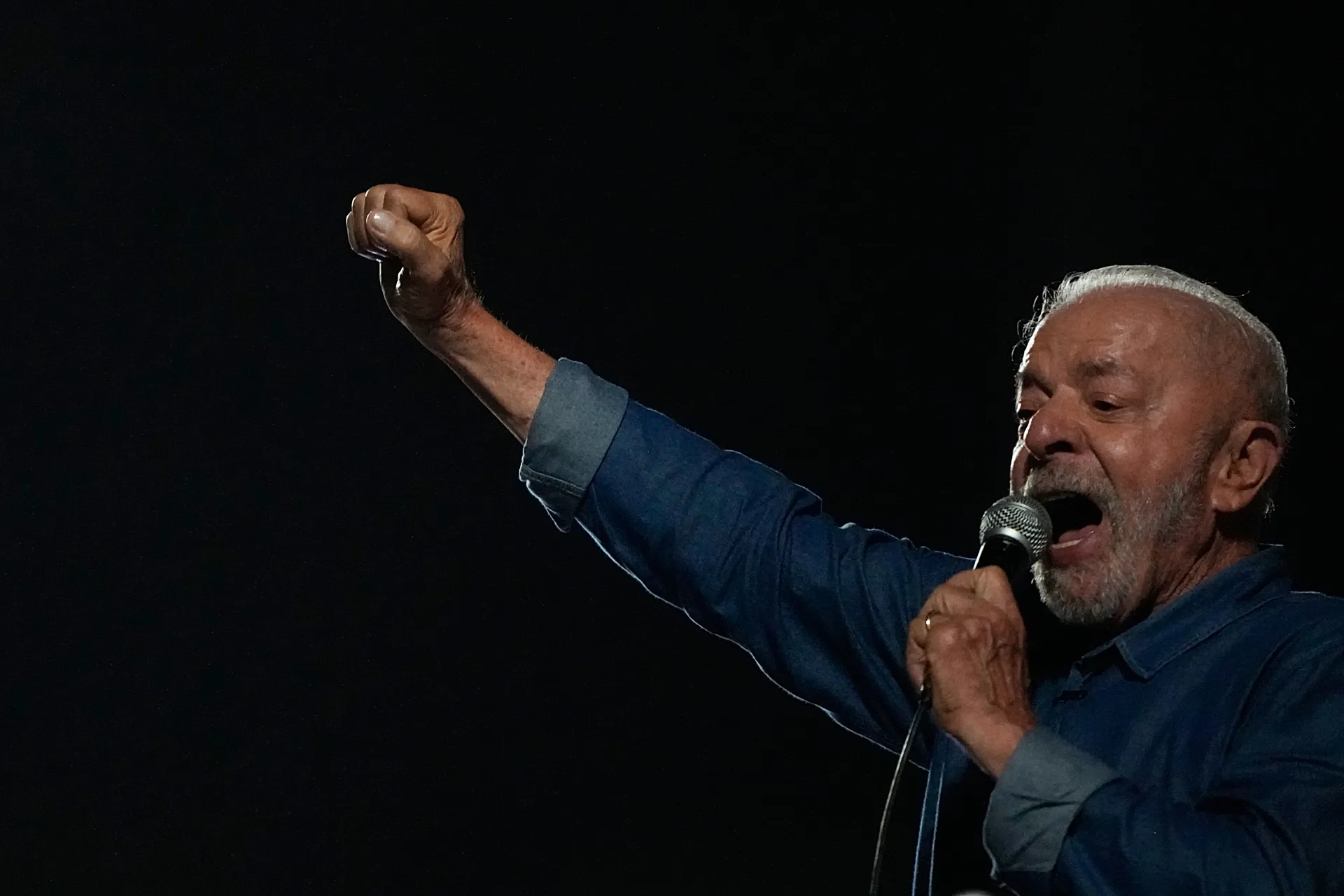
“我要感谢你们。我一直认为上帝对我非常慷慨,因为有那么多比我准备更充分的人,那么多比我拥有更多文凭的人,那么多比我读过更多书的人,那么多比我学习更刻苦的人,”他在获胜演讲中说道,这是他在总统选举后发表的第四次演讲。
I have always thought that God has been very generous to me, because there are so many people better prepared than I am, so many people with more diplomas than I have, so many people who havebooks than I have, so many people who have studied more than I have," he said in his victory speech, his fourth after a presidential election.
这对卢拉来说也是第一次。1989年,他在首轮投票中以13.3个百分点的差距落后于对手费尔南多·科洛尔·德梅洛,并在第二轮中未能缩小差距。
It was a first for Lula, too. In 1989, he finished 13.3 points behind his rival Fernando Collor de Mello in the first round and failed to close the gap in the second.
从工厂工人到工会主义者,从工会主义者到政治家,从政治家到巴西总统。对卢拉来说,似乎从来没有什么是不可能的,他再次用这次选举证明了逆境并非总是不可逾越。
From factory worker to trade unionist, from trade unionist to politician, from politician to president of Brazil. Nothing has ever seemed impossible for Lula, who once again showed with this election that adversity is not always insurmountable."I want to tell you that I am enormously proud.
“我要告诉你们,我感到无比自豪。首先,因为我是唯一一位、一名没有大学文凭的金属工人,以共和国总统的身份,四次通过民主选举当选,呼吁和平,”他对人群说道。
First, because I am the only president of the Republic, a metalworker without a university degree, elected four times, democratically, to call for peace," he told the crowd.
卢拉将于周二迎来81岁生日,他承诺将交出巴西历史上“最好的一个任期”。
Lula, who turns 81 on Tuesday, promised "the best term" in Brazilian history." The day after tomorrow, on the 27th, I will turn 81.
“后天,27号,我就要满81岁了。我想在媒体面前、在你们面前做出承诺。我将交出这个国家历史上任何一位总统任职以来最好的一个任期,”他誓言道。
And I want to make a pledge in front of the press and in front of you. I am going to deliver the best term any president has ever served in the history of this country," he vowed.
作为文盲农民父母的第七个孩子,路易斯·伊纳西奥·卢拉·达席尔瓦于1945年10月27日出生在巴西东北部伯南布哥州的加拉纽斯市。
The seventh child of illiterate farmer parents, Luiz Inácio Lula da Silva was born on 27 October 1945 in the Brazilian city of Garanhuns, in the north-eastern state of Pernambuco.
他七岁时随家人迁居圣保罗,14岁时被一所金属加工技术课程录取。在此之前,他已做过街头小贩、擦鞋童和染坊助手。后来他成为一名金属工人,这一职业也是他日后作为工会主义者所捍卫的。“卢拉”最初是个昵称,后来被正式纳入他的名字——他是工人出身成为政治家的典型代表:在军事独裁时期,他作为工会领袖和圣保罗地区金属工人罢工的组织者而崭露头角。
He was only seven when he moved with his family to São Paulo, and 14 when he was admitted to a technical course in metalworking. Before that, he had already worked as a street vendor, shoeshine boy, and dye-shop assistant. He went on to become a metalworker, a profession he later defended as a trade unionist." Lula" began as a nickname and was later officially incorporated into his name – he is the epitome of the worker who becomes a politician: it was as a union leader and organiser of metalworkers' strikes in the São Paulo region, during the military dictatorship, that he made his name.
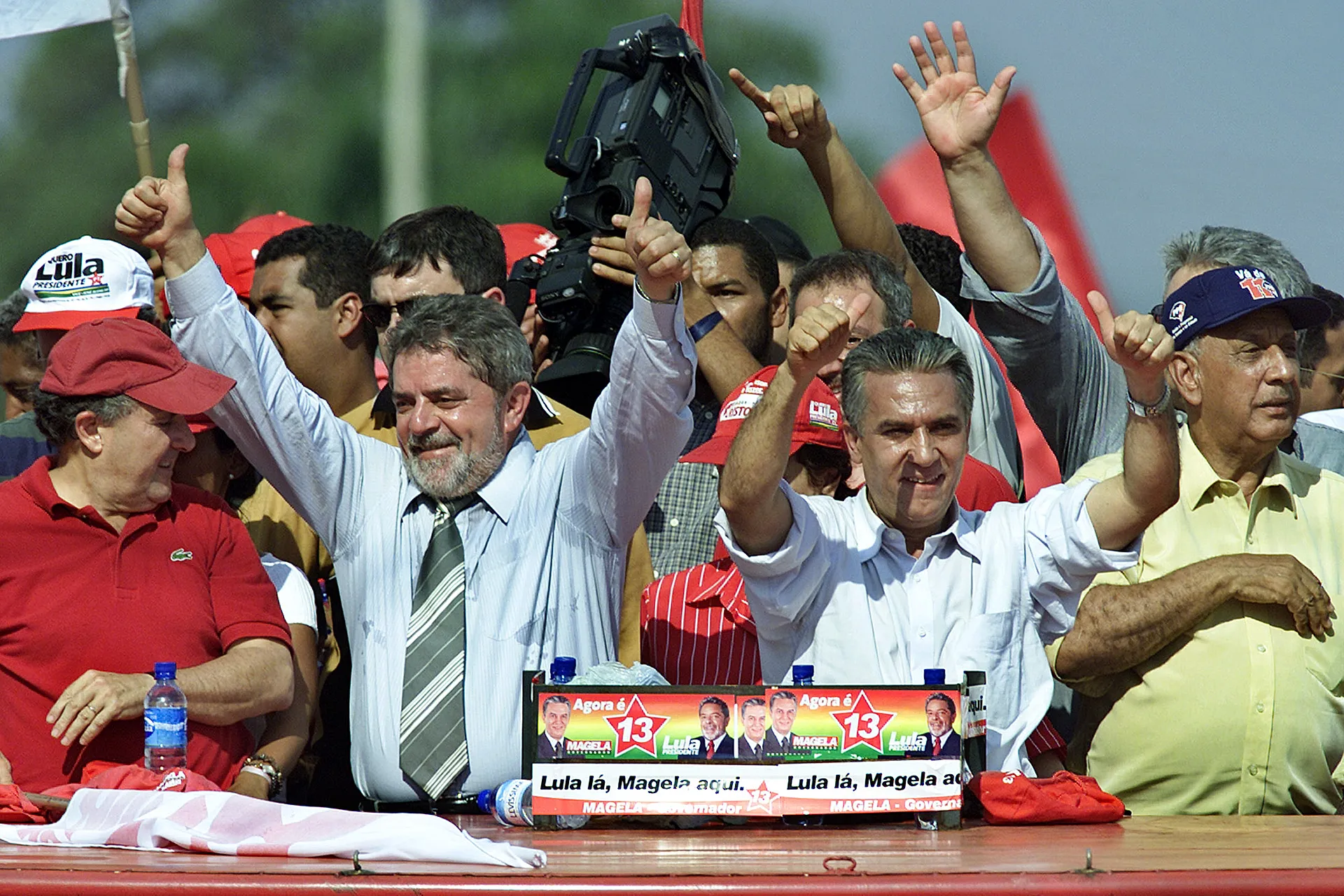
在做金属工人期间,他因工伤失去一根手指,后来这让他在对手中得到了贬义绰号“九指”。正是他领导的1978年至1980年罢工,为1980年工人党(PT)的成立铺平了道路。该党在1985年至1988年巴西民主化进程后,成为巴西左翼的主要力量,卢拉是其领军人物。在1989年、1994年和1998年三次竞选总统失利后,他终于在2002年当选总统,并连任两届。
During his years as a metalworker, he lost a finger in a workplace accident, which later earned him the disparaging nickname “nine fingers” among opponents. It was these strikes, which he led between 1978 and 1980, that paved the way for the founding of the Workers' Party (PT) in 1980. The party would go on to emerge as the main force on Brazil's left after the country's democratisation between 1985 and 1988, with Lula as its leading figure. After losing the presidential elections of 1989, 1994 and 1998, he finally reached the presidency in 2002, where he remained for two terms.
他是首位进入普拉纳尔托宫的工会领袖和体力劳动者。其政治遗产的支持者指出,通过“家庭津贴”(Bolsa Família,2003年推出)和“零饥饿”计划等社会政策举措,他将一个饱受极端贫困和文盲困扰的国家,转变为一个更繁荣、更平等的巴西。卢拉首个任期结束时支持率达57%,2006年以超过5800万张选票连任,创下巴西历史最高得票纪录。这些结果最终强化了卢拉的叙事:国家能在减少贫困和饥饿方面发挥决定性作用。
He was the first trade union leader and manual worker to enter the Palácio do Planalto. Supporters of his political legacy point to the transformation of a country marked by extreme poverty and illiteracy into a more prosperous and more equal Brazil, through social policy measures such as the introduction of the "Bolsa Família" in 2003 and the creation of the "Zero Hunger" programme. Lula ended his first term with an approval rating of 57% and was re-elected in 2006 with more than 58 million votes, the highest tally in Brazil's history. The results would ultimately bolster Lula's narrative that the state can play a decisive role in reducing poverty and hunger.
2014年,在迪尔玛·罗塞夫政府领导下,作为卢拉政治继承人的她,巴西在该国营养不良人口显著减少后,退出了联合国“饥饿地图”。这一转变与一揽子社会和经济政策有关。
In 2014, under the government of Dilma Rousseff, Lula's political successor, Brazil left the United Nations' Hunger Map after a significant reduction in undernourishment in the country. The shift was linked to a package of social and economic policies. Politically, he has always presented himself as a defender of multilateralism, diplomacy and an international order in which decisions are not determined solely by the power of the major powers." War is not the continuation of politics by other means.
在政治上,他始终将自己定位为多边主义、外交以及不单由大国权力决定决策的国际秩序的捍卫者。
It is the total failure of politics. In an interdependent world, to lead is to reconcile the interests of the homeland with those of humanity.
“战争不是政治的其他手段的延续。它是政治的彻底失败。在一个相互依存的世界里,领导就是调和祖国利益与人类利益。这是一个珍视和平与自由的国家代表的思考。这是一个曾反抗军事独裁、捍卫国家免受政变未遂侵害之人的思考。这是一位三度当选总统的工人、曾让巴西退出饥饿地图之人的信念,”他在2026年9月22日于纽约出席第81届联合国大会一般性辩论时宣称。
That is the reflection of someone who represents a nation that cherishes peace and freedom. Someone who fought against a military dictatorship and defended his country against an attempted coup. It is the conviction of a worker elected three times as president who took Brazil off the Hunger Map," he declared on 22 September 2026 in his speech to the 81st United Nations General Assembly in New York.
但围绕卢拉和工人党的腐败丑闻最终追上了他,暂时中断了他的政治生涯。
But the corruption scandals engulfing Lula and the PT would catch up with him, temporarily curtailing his political career.
“洗车行动”调查及由法官塞尔吉奥·莫罗(后来成为博尔索纳罗的司法部长)主导的后续审判,主导了2010年代下半叶。它击倒了众多重量级人物,并将来自各派别的数十名政界人士送进监狱。该调查揭露了一个以半国有石油公司巴西石油公司和建筑巨头奥德布雷希特为中心的复杂贿赂和回扣计划,这成为助长民众对巴西政治阶层不信任、并推动由雅伊尔·博尔索纳罗代表的右翼民粹主义崛起的核心因素。
The "Car Wash" investigation and subsequent trials led by judge Sérgio Moro (later Bolsonaro's justice minister) dominated the second half of the 2010s. It brought down numerous heavyweights and sent dozens of politicians from across the spectrum to prison. The investigation, which exposed a complex bribery and kickback scheme centred on the semi-state oil company Petrobras and the construction giant Odebrecht, was central to fuelling distrust of Brazil's political class and the rise of right-wing populism embodied by Jair Bolsonaro.
2018年3月,卢拉入狱,此前他因涉嫌收受一套公寓作为政治恩惠的回报,被判处九年监禁。
Lula was jailed in March 2018, after being sentenced to nine years in prison for allegedly receiving a flat in exchange for political favours.
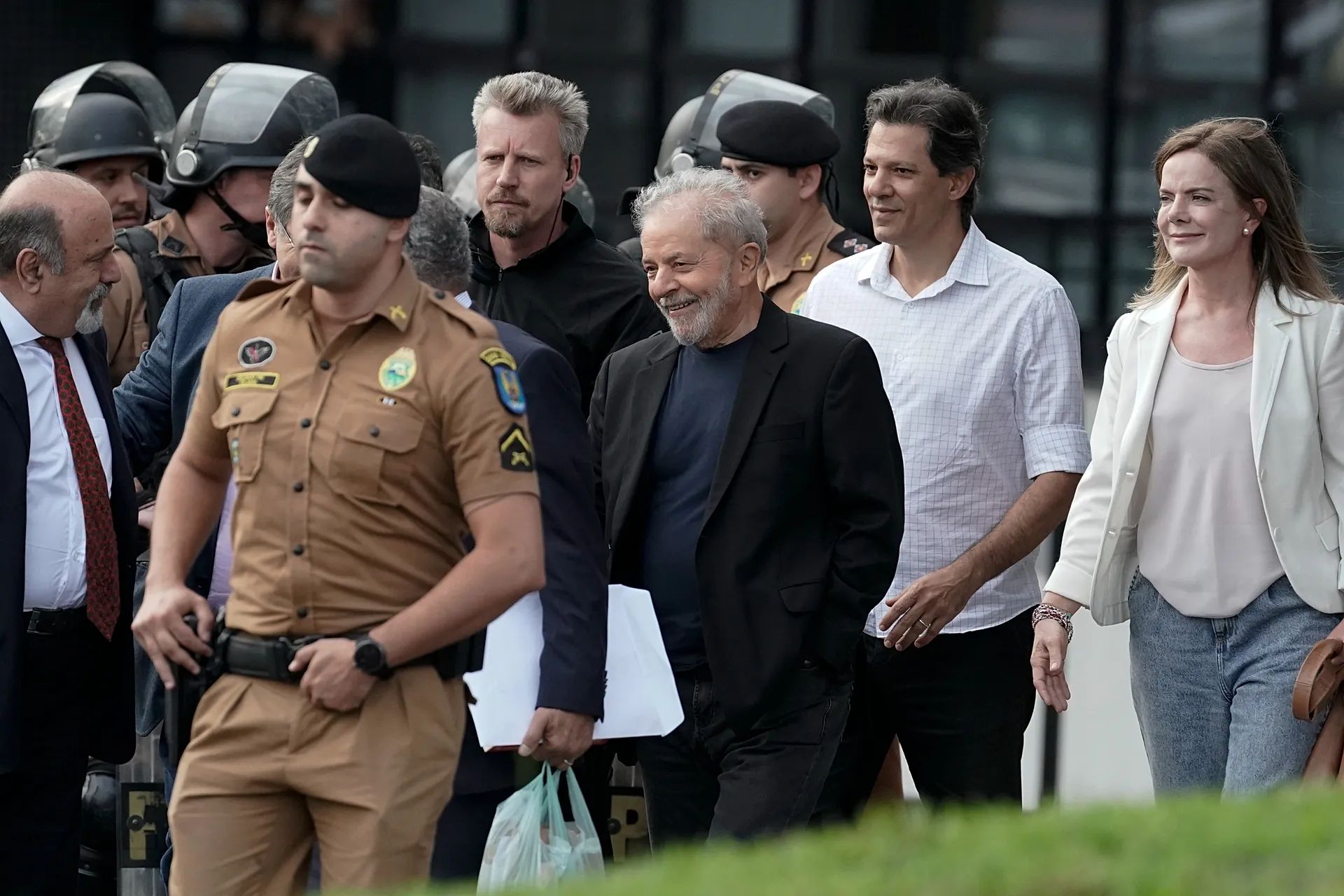
在被羁押580天后,卢拉于2019年11月获释,此前巴西联邦最高法院改变了关于何时开始执行刑罚的判例。2021年,最高法院更进一步,撤销了这位前总统在该案中的定罪,裁定库里蒂巴法院缺乏审判他的管辖权。这为工人党创始人重返总统竞选扫清了障碍,他随后在2022年赢得了大选。他在2026年大选中的胜利,标志着一个由他屡次重返权力核心所定义的政治故事开启了新阶段,尽管前路如今显得更为崎岖。
After 580 days in custody, Lula was released in November 2019, following a change in Supreme Federal Court case law on when a sentence may begin to be served. In 2021, the Supreme Court went further and annulled the former president's convictions in the case, ruling that the court in Curitiba lacked jurisdiction to try him. This cleared the way for the PT founder to return to the presidential race, which he went on to win in 2022. His victory in the 2026 election marks a new phase in a political story defined by his ability to return to power, even if the road ahead now appears somewhat steeper.
卢拉现在治理的巴西,已非他2000年代执政时的那个巴西:国家依然严重两极分化,国会由中右翼主导,博尔索纳罗主义仍拥有显著的选举实力。
The Brazil Lula now governs is not the one he led in the 2000s: the country remains deeply polarised, Congress is dominated by the centre-right and Bolsonarism still commands significant electoral strength.