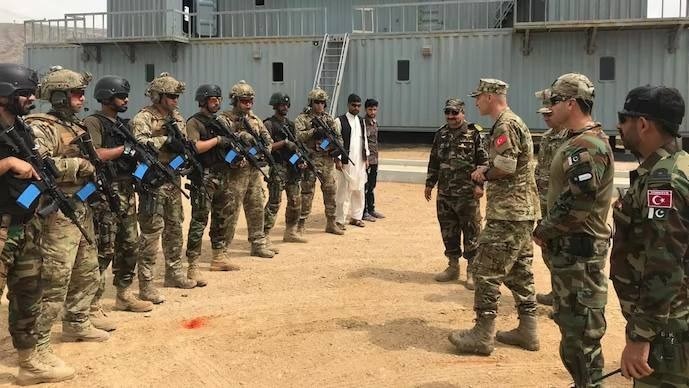
土耳其、巴基斯坦、印度尼西亚和卡塔尔这四个伊斯兰国家签署了《巴德尔国防合作协定》,正式名称为《巴德尔谅解备忘录》。该协定于10月21日在卡塔尔首都多哈签署,距离《麦加国防联盟》成立仅几个月时间,但《巴德尔协定》并非自卫协定。不过,它或许正在为一个独一无二的伊斯兰军工复合体奠定基础。
《巴德尔协定》似乎以阿拉伯语“满月”之意命名(象征四国互补优势融合成一个完整的圆环),同时也指代早期伊斯兰历史上最重要的战役之一——白德尔战役。
The four Islamic nations of Turkey, Pakistan, Indonesia and Qatar signed the Badr Defence Cooperation Pact, officially known as the Badr Memorandum of Understanding. Coming only months after theg of the Mecca Defence Alliance, the Badr Pact that was signed in Doha, the capital of Qatar, is not a self-defence agreement. However, it may just be laying the foundation for a one-of-a-kind Islamic Military Industrial Complex (MIC).The Badr Pact, signed on October 21, seems to be named after the Arabic word for full moon (symbolising how the complementary strengths of the four nations merge to form a complete circle), and is also a reference to the Battle of Badr, one of the most significant battles in early Islamic history.
资深记者兼防务专家桑迪普·乌尼坦在接受《印度今日》数字版采访时将该协定描述为“四个伊斯兰国家在防务工业合作方面的‘四方机制’框架”。乌尼坦表示,与之前的《麦加协定》不同,《巴德尔协定》旨在“整合四国的防务工业基础”。
Speaking to India Today Digital, senior journalist and defence expert Sandeep Unnithan describes the pact as "a 'Quad' framework for defence industrial cooperation among four Islamic countries." Unlike the previous Mecca pact, the Badr pact aims to "integrate the defence industrial base of the four countries", says Unnithan.
就背景而言,尽管四个签署国都拥有相当可观的武装力量,但它们都依赖外国供应商。例如,巴基斯坦空军完全由中国和美国战机组成;印度尼西亚从俄罗斯、美国、法国、中国和韩国采购飞机;卡塔尔则从美国、法国及欧洲其他国家购买武器。即便是拥有高度发达防务工业的土耳其,也在装备美国和欧洲的飞机及坦克。
For context, even though all the four signatories have pretty significant armed forces of their own, they are all dependent on foreign suppliers. Pakistan's Air Force, for instance, is made up entirely of Chinese and American jets, Indonesia buys its planes from Russia, the US, France, China and South Korea, while Qatar buys its weapons from the US, France and the rest of Europe. Even Turkey, which boasts a highly capable defence industry, also operates US and European aircraft and tanks.
《巴德尔协定》并非其签署国之间签署的首个防务合作协定。土耳其、巴基斯坦、印度尼西亚和卡塔尔早已有多项现有的防务合作安排和联合研发项目。那么,《巴德尔协定》的重要性究竟体现在何处?
The Badr Pact is hardly the first defence cooperation agreement its signatories have signed among themselves. Turkey, Pakistan, Indonesia and Qatar already have several pre-existing defence cooperation arrangements and joint development programmes. So, what makes the Badr Pact so important?
这是否能成为乌尼坦所描述的“军事装备清真标准”的基础,从而减少成员国对西方、俄罗斯和中国的武器依赖?巴基斯坦、土耳其、印度尼西亚和卡塔尔的代表在巴德尔协议签署仪式上。为什么巴德尔协议很重要?
And could it be the foundation for what Unnithan describes as a "Halal standard for military hardware",reducing its members’ dependence on the West, Russia and China for arms? Representatives from Pakistan, Turkey, Indonesia and Qatar at theg of the Badr Pact.WHY IS THE BADR PACT IMPORTANT?
巴德尔协议的四个签署国——巴基斯坦、土耳其、印度尼西亚和卡塔尔——已经拥有相当可观的武装力量。但只有一个问题:它们在战斗机、坦克和军舰等关键武器上仍严重依赖外国供应商。
The four signatories of the Badr Pact, Pakistan, Turkey, Indonesia and Qatar, already have significant armed forces of their own. But there's just one problem: they remain heavily dependent on foreign suppliers for critical weapons, including fighter jets, tanks and warships.
例如,巴基斯坦空军装备的是美国、中国和法国的战机及支援机型,包括F-16、歼-10和C-130。即使是其国产的枭龙(JF-17)战机,在发动机和航电等关键部件上仍严重依赖中国供应。
Pakistan's Air Force, for instance, is a combination of American, Chinese and French fighters and support aircraft, including the F-16, J-10 and C-130. Even its homegrown JF-17 remains heavily dependent on Chinese supplies of critical components such as engines and avionics.
这一问题在印度尼西亚和卡塔尔的军队中更为突出。后者缺乏国内军事国防工业。与此同时,雅加达的军队,尤其是其空军,因在全球范围内采购和订购飞机而“出名”(或“臭名昭著”),装备有美国F-16、苏俄制苏霍伊战机、韩国T-50和法国“阵风”,并可能寻求购买中国歼-10等战机。
The problem is even more pronounced in the militaries of Indonesia and Qatar. The latter lacks a domestic military defence industry. Meanwhile, Jakarta's military, especially its Air Force, is famous (or infamous) for operating and ordering aircraft from around the world, flying American F-16s, SovietRussian Sukhois, South Korean T-50s and French Rafales, while potentially looking to buy Chinese jets like the J-10.
即使是拥有先进国防工业的土耳其,仍依赖美国F-16和“台风”战机等外国装备。
Even Turkey, which boasts of an advanced defence industry of its own, remains dependent on foreign equipment such as the American F-16 and the Eurofighter Typhoon.
外国供应商或许乐于用现金换取致命玩具,但这也意味着买方随时面临被切断供应的风险。安卡拉曾吃过苦头:因购买俄罗斯S-400系统,被踢出F-35“闪电II”项目。
Foreign suppliers may be more than happy to provide deadly toys for cash, but this also means that buyers risk being cut off at any moment. Ankara learnt that lesson the hard way, when it was removed from the F-35 Lightning II programme after purchasing the Russian S-400 system.
雅加达也曾吸取过类似教训:1999年至2005年间,美国实施武器禁运,导致其F-16战机的美制备件供应中断。要减少对外国供应商的依赖,需要一个能够自主设计新装备并实现规模化生产的自给自足军工综合体(MIC)。而这正是这些国家通过“白德尔协定”所要实现的目标。印度尼西亚空军以装备来自多个外国供应商的多种飞机而闻名。白德尔协定将如何建立伊斯兰防务工业?
Jakarta learnt a similar lesson when US arms embargoes disrupted supplies of American-made spares for its F-16s between 1999 and 2005. Reducing this dependence on foreign suppliers requires a self-sustaining military-industrial complex (MIC) capable of designing new equipment and producing it at scale. And that is precisely what the countries appear to be aiming for with the Badr Pact. Indonesia's Air Force is known for operating aircraft from a diverse array of foreign suppliers.HOW WILL THE BADR PACT BUILD AN ISLAMIC DEFENCE INDUSTRY?
据防务专家乌尼坦介绍,白德尔协定签署国之间已有多个既有的联合研发项目,其中一些已生产出现役装备。这些项目包括:由土耳其和印度尼西亚联合研发、并已在两国服役的“卡普兰-哈里马乌”中型坦克;基于土耳其“米尔盖姆”设计的巴基斯坦“巴布尔”级护卫舰,两艘在土耳其建造、两艘在卡拉奇建造;已被巴基斯坦采购的土耳其“拜拉克塔尔”TB2战斗无人机。土耳其还向卡塔尔出口了约400辆“埃德尔-亚尔钦”装甲车,而印度尼西亚则采购了土耳其的“阿特马卡”反舰导弹。
According to defence expert Unnithan, the signatories of the Badr Pact already have several pre-existing joint development programmes, some of which have produced military equipment now fielded by their armed forces. These include the KaplanHarimau medium tank, jointly developed by Turkey and Indonesia and in service with both countries, Pakistan's Babur-class corvettes, based on Turkey's MILGEM design, with two built in Turkey and two in Karachi, and Turkey's Bayraktar TB2 combat drones, which have been acquired by Pakistan. Turkey has also exported around 400 Ejder Yalcin armoured vehicles to Qatar, while Indonesia has acquired Turkey's Atmaca anti-ship missile.
那么,这四国能否在彼此间建立一个独立于外国供应商的军工综合体?在接受《印度今日》数字版采访时,乌尼坦列举了几个可能促成这一目标的因素。
So, will the four nations be able to set up an MIC among themselves, independent of foreign suppliers? Speaking to India Today Digital, Unnithan listed out several factors that might enable such a thing."
“卡塔尔拥有雄厚资金,巴基斯坦拥有发达的军工综合体(卡姆拉航空综合体和卡拉奇造船厂),印度尼西亚是一个大市场且经济增长迅速,专注于国产化,”乌尼坦补充道。
Qatar has substantial capital, Pakistan has a developed military industrial complex (PAC Kamra and Karachi shipyard), Indonesia is a large market and a growing economy with a focus on indigenisation," Unnithan added.
这些因素加上土耳其“成熟的国防工业基础(四国中最先进),拥有大量国防出口”,据乌尼坦认为,或许正是打造一个自我维持的军工综合体所需的条件,使其能够在四国之间生产战机、坦克、火炮、雷达及其他致命战争工具。
These, combined with Turkey's "mature defence industrial base (most advanced of the four) with substantial defence exports" could just be what's needed, according to Unnithan, to create a self-sustaining MIC capable of turning out jets, tanks, guns, radars and other deadly tools of war among themselves.
四国有望合作的一个项目是土耳其自主研发的“汗”第五代隐身战机。乌尼坦指出:“印度尼西亚已签约采购约48架‘汗’战机。巴基斯坦也有意向。这是一个卡塔尔资金可能发挥关键作用的项目。” “巴德尔协定”能否将这一潜力转化为一个运作良好的国防工业生态系统,仍有待观察。但土耳其技术、巴基斯坦工业产能,以及卡塔尔和印度尼西亚的资金与市场相结合,开启了多种可能性。
One programme the four countries could potentially collaborate on is Turkey's indigenous Kaan fifth-generation stealth fighter. As Unnithan pointed out, "Indonesia has signed up for around 48 Kaans. Pakistan is also interested. This is a project where Qatari capital could prove crucial". Whether the Badr Pact can translate this potential into a functioning defence-industrial ecosystem remains to be seen. But the prospect of Turkish technology, Pakistani industrial capacity, and Qatari and Indonesian capital and markets coming together opens up several possibilities."
乌尼坦表示:“这是一项涵盖陆海空系统的综合性协定,将帮助四国摆脱对西方和东方军事装备供应商的依赖,并为一个纯粹的伊斯兰军工综合体、军事装备的‘清真’标准创造首个范本。”
This is a comprehensive agreement for land, sea and air systems which will help all four countries diversify from Western and Eastern military hardware suppliers and create the first template for a pure Islamic military industrial complex, a halal standard for military hardware," says Unnithan.
当然,该项目也可能失败。其他国家曾尝试建立本土国防工业,结果好坏参半。例如在20世纪50和60年代,埃及的贾迈勒·阿卜杜勒·纳赛尔曾寻求开发一系列国内军事能力,包括喷气式战斗机、教练机和弹道导弹。
Of course, the project could also falter. Other countries have attempted to build indigenous defence industries with mixed results. In the 1950s and 1960s, for instance, Gamal Abdel Nasser's Egypt sought to develop a range of domestic military capabilities, including jet fighters, trainers and ballistic missiles.
如果成功,“巴德尔协定”最终可能吸引沙特阿拉伯和埃及等额外合作伙伴,并为一个前所未有的国防工业奠定基础。然而,能否兑现“清真”国防工业的承诺,将取决于签署国能多有效地整合资源、共享技术,并将现有合作转化为持续的联合生产。——完——(
If successful, the Badr Pact could eventually attract additional partners, such as Saudi Arabia and Egypt, and lay the groundwork for a defence industry unlike any other. Whether it can deliver on the promise of a 'Halal' defence industry, however, will depend on how effectively its signatories pool their resources, share technology and turn existing cooperation into sustained joint production.- Ends(Written by Shounak Sanyal)