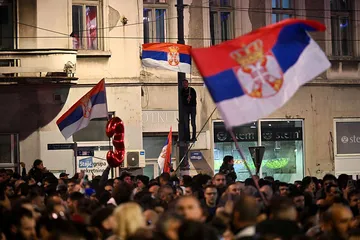
在该国最近的选举中失去权力的亚历山大·武契奇,并非首位因学生起义而倒台的塞尔维亚威权领导人。25多年前推翻斯洛博丹·米洛舍维奇的“奥特波尔!”(抵抗!)运动,是此后席卷前共产主义阵营的民众起义的原型。如果今天的塞尔维亚学生希望将权力转化为变革,则需从这段历史中汲取教训。
Alexander Vucic, who lost power in the country’s recent elections, is not its first authoritarian leader to be undone by a student uprising. The Otpor! (Resistance!) movement that toppled Slobodan Milosevic more than a quarter century ago was the prototype for the popular revolts that have since swept across the former Communist bloc. If today’s Serbian students hope to turn power into change, there are lessons to be learned from that history.
2000年,反米洛舍维奇抗议者想要如何改造国家,目标极其明确。诉求不仅是终结腐败和镇压——这是与当今运动的共同点——还包括修复与西方的关系、加入欧盟,以及解决塞尔维亚青年和中产阶级深深的“错失恐惧症”(FOMO)。
In 2000, it was absolutely clear how the anti-Milosevic protesters wanted to transform their country. The goal was not just to end corruption and repression, the common denominator with today’s movement, but also to repair relations with the West, join the European Union and address a profound sense of FOMO among Serbia’s youth and middle classes.
1989年柏林墙倒塌时,南斯拉夫曾是前共产主义阵营中最繁荣、最开放的社会之一。但到了千禧年之际,米洛舍维奇发动的战争已将其从后共产主义国家的前列拖至末尾,剥夺了年轻塞尔维亚人的未来。
When the Berlin Wall crumbled in 1989, Yugoslavia stood out as one of the most prosperous and open societies of the former Communist bloc. But by the turn of the millennium, Milosevic’s wars had sent it from near the top of the post-Communist pile to near the bottom, robbing younger Serbs of their futures.
其他邻国已纷纷排队申请加入欧盟,当时欧盟似乎是唯一的出路。甚至在雷杰普·塔伊普·埃尔多安领导下的土耳其,也即将启动入盟谈判。美国仍是世界唯一超级大国,并全力投入推广民主的使命。华盛顿尤为渴望看到米洛舍维奇及其与安全部门建立的军事化权贵统治下台,因此向“奥特波尔!”注资数百万美元并提供组织培训。当塞尔维亚强人试图窃取连任大选时,阻止并取代他的基础工作已基本完成。
Other neighbors were already lining up to join the EU, which at the time seemed to be the only game in town. Even Turkey, under Recep Tayyip Erdogan, would soon begin membership talks. The US was still the world's only superpower and fully engaged in its mission of democracy promotion. It was especially keen to see the back of Milosevic, together with the militarized kleptocracy he and his security services had built, so Washington pumped millions of dollars and organizational training into Otpor! By the time Serbia’s strongman tried to steal re-election, the groundwork needed to thwart and replace him had been done.
米洛舍维奇的反对者们组建了一个广泛的政党联盟——塞尔维亚民主反对派(DOS)。他们已为总统职位排好了候选人,并推举前贝尔格莱德市长佐兰·金吉奇出任总理。真正的革命发生在2001年1月,金吉奇在议会巨大多数席位的支持下就职之时。
Milosevic’s opponents had assembled a broad coalition of political parties, the Democratic Opposition of Serbia or DOS. They had candidates lined up for president and — in ex-Belgrade Mayor Zoran Djindjic — prime minister. The real revolution came when Djindjic took office, backed by a huge parliamentary majority, in January 2001.
他组建了一个技术官僚政府,成员是30多岁、曾在麦肯锡咨询公司等海外机构工作的受过西方教育的塞尔维亚人。他们为改革和面向西方制定了明确的路线,包括将米洛舍维奇送往海牙以战争罪指控接受审判。但公众期望很高,改革被证明是痛苦的,金吉奇不得不与米洛舍维奇的安全部门首脑做交易,以使他们置身事外。2003年,当他开始着手打击旧政权腐败背后的有组织犯罪时,他遇刺身亡。
He formed a technocratic government of Western-educated, 30-something Serbs who had been working abroad at the likes of consultancy McKinsey & Co. They set a clear path toward reform and the West, including by sending Milosevic to The Hague to face trial on war crimes charges. But public expectations were high, reform proved painful and Djindjic had to cut deals with Milosevic’s security chiefs to keep them on the sidelines. In 2003, as he began to take on the organized crime behind the old regime’s corruption, he was assassinated.
金吉奇的继任者们始终无法在他失败的地方取得成功。经济进展缓慢,2008年美国和欧洲大部分国家支持科索沃单方面独立,激起了怨恨。旧卫队回归的舞台已经搭好,主角是武契奇——米洛舍维奇时代最后一任新闻部长,也就是宣传部长。
Djindjic’s successors were never able to succeed where he failed. Economic progress was slow and in 2008 the US and much of Europe backed Kosovo's unilateral secession, stirring resentment. The stage was set for a return of the old guard under Vucic, the last minister of information — read: propaganda — in the Milosevic era.
随着金吉奇之后的塞尔维亚陷入失望,欧洲经济体开始停滞,俄罗斯和中国成为可行的替代伙伴,而自由主义的西方自身也开始失去速度和方向。武契奇——一个聪明、冷酷而愤世嫉俗的受控民主倡导者,与匈牙利的欧尔班·维克托类似——是利用这一局面的完美人选。他于2014年4月就职,而就在一个月前,弗拉基米尔·普京吞并了克里米亚,直接挑战西方秩序。事实证明,武契奇在让北京、布鲁塞尔和莫斯科相互博弈方面技艺高超。
As post-Djindjic Serbia slid into disappointment, European economies began to stall, Russia and China became viable alternative partners and the liberal West itself began to lose speed and direction. Vucic — a clever, ruthlessly cynical proponent of managed democracy akin to Hungary's Viktor Orban — was the perfect candidate to take advantage. He assumed office in April 2014, just a month after Vladimir Putin had annexed Crimea in a direct challenge to the Western order. Vucic proved masterful at playing Beijing, Brussels and Moscow against each other.
如今,“学生名单”组织——又一场因对系统性腐败的愤怒而生的青年主导的反抗运动——已经击败了武契奇。但这一次没有美国的鼓励;现任美国政府感兴趣的是破坏民主,而非推广民主。因此,组织性也较弱,也没有金吉奇在一旁待命,随时准备领导一个可执政的联盟。
Now Student List — another youth-led revolt born of fury over systemic corruption — has defeated Vucic. But this time there was no American encouragement; the current US administration is interested in democracy destruction, not promotion. So, there was also less organization and no Djndjic waiting in the wings at the head of a ready-to-govern coalition.
目前尚不清楚接下来可能与更传统的政党结成何种联盟,哪些政治领导人将从“学生名单”中脱颖而出,以及他们在科索沃仍存争议的独立问题、与俄罗斯的关系以及是否重新承诺加入欧盟等问题上将持何种立场。这些都不是他们竞选时的主要议题。他们的关注点更多在国内。
It isn’t yet clear what alliances might now be formed with more traditional parties, which political leaders will emerge from Student List or where they will stand on questions such as how to approach Kosovo’s still contested independence, ties with Russia and any recommitment to joining the EU. These are not the main issues they campaigned on. Their focus is more domestic.
这种混乱中有一种令人耳目一新的纯粹。在某种程度上,这是真正的“我们人民”式民粹主义的一个范例,而非民粹主义头目和威权主义者那种怪诞的“我即人民”式操纵。同样吸引人的是,没有证据表明“学生名单”从华盛顿获得了资金或培训,而且与金吉奇不同,它无需弄脏双手去与安全机构做交易。
There is something refreshingly pure about this chaos. It is, in a way, an example of true “we the people” populism, rather than the grotesque “I the people” manipulations of populist figureheads and authoritarians. There’s something equally attractive about the fact that there’s no evidence Student List got money or training from Washington and that, unlike Djindjic, it didn’t need to get its hands dirty cutting deals with the security apparatus.
然而,2000年亲民主反抗运动获胜后所面临的挑战至今依然存在,尽管形式和地缘政治背景有所不同。“学生名单”面临的问题是:谁将成为塞尔维亚的彼得·马扎尔——这位欧尔班的前追随者今年早些时候在匈牙利选举中获胜,如今正在拆除欧尔班非自由民主体制下被俘获的机构?这是一个艰难且持续的过程,但如果马扎尔任由法院、国家媒体和其他关键机构维持原样——成为欧尔班亲信操控的政治工具——它们就会吞噬他。塞尔维亚也将需要一次类似的清理。
And yet the challenges that faced the pro-democracy revolt after it won in 2000 remain today, even if in a different form and geopolitical context. The question for Student List is: Who will be Serbia’s Peter Magyar, the former Orban acolyte who triumphed in Hungarian elections earlier this year, and is now dismantling the captured institutions of Orban’s illiberal democracy? That’s a bruising and ongoing process, but if Magyar were to leave the courts, state media and other critical bodies as they are, political tools run by Orban's cronies, they would consume him. Serbia will need a similar housecleaning.
武契奇迅速且体面地承认失败,这在当今并非理所当然。他为此值得肯定。但他同时也誓言将比学生运动及其领导人预想的更早卷土重来,击败他们,因此他的镇定自若,或许反映出一个深知对手将面临何种陷阱的人的自信——因为那些陷阱是他亲手设下的。除非“学生名单”的教授们能找到属于他们的马扎尔或金季奇,否则武契奇的预言很可能成真。
Vucic acknowledged his defeat quickly and with grace, which is far from a given today. He deserves recognition for that. But he also pledged to return to beat the student movement and its leaders sooner than they think, so his equanimity may reflect the confidence of a man who knows the booby traps that await his opponents — because he put them there. Unless Student List's professors can find their own Magyar or Djindjic, Vucic’s prediction could well prove correct.