今天的通讯全部关于民主党中期选举大胜带来的经济后果。我先从即将就任的国会的意识形态色彩说起。
Today’s newsletter is all about the economic consequences of Democrats’ smashing midterm victory. I start with the ideological hue of the incoming Congress.
参议员伯尼·桑德斯和纽约市市长佐兰·马姆代尼(均为民主社会主义者)支持的候选人惊人崛起,可能会让人觉得即将就任的国会将一心一意推行财富税、全民医保和绿色新政等极左议程。
The startling rise of candidates backed by Sen. Bernie Sanders and New York City Mayor Zohran Mamdani, both Democratic socialists, may leave the impression that the incoming Congress will be hellbent on a far-left agenda of wealth taxes, Medicare for All and a Green New Deal.
但未必如此。从为民主党赢得多数席位的候选人来看,民主党可能正在向中间靠拢。
Not so fast. Judging by the candidates who delivered their majorities, Democrats may be moving toward the center.
中间派民主倡导组织“第三条道路”估计,截至周三下午,仅由温和派团体——新民主党联盟、蓝狗联盟或WelcomePAC——背书的候选人已翻转26个选区,另有四个选区极有可能翻转。相比之下,仅由桑德斯的政治行动委员会“我们的革命”背书的候选人仅翻转了三个选区。既得到温和派团体又得到“我们的革命”支持的候选人又翻转了三个选区。
Third Way, a centrist Democratic advocacy group, figures that as of Wednesday afternoon, candidates endorsed exclusively by moderate groups—New Democrat Coalition, Blue Dog Coalition, or WelcomePAC—had flipped 26 districts, with four more highly likely. By contrast, candidates endorsed exclusively by Sanders’s political-action committee, Our Revolution, had flipped just three. Candidates backed both by a moderate group and Our Revolution flipped another three.
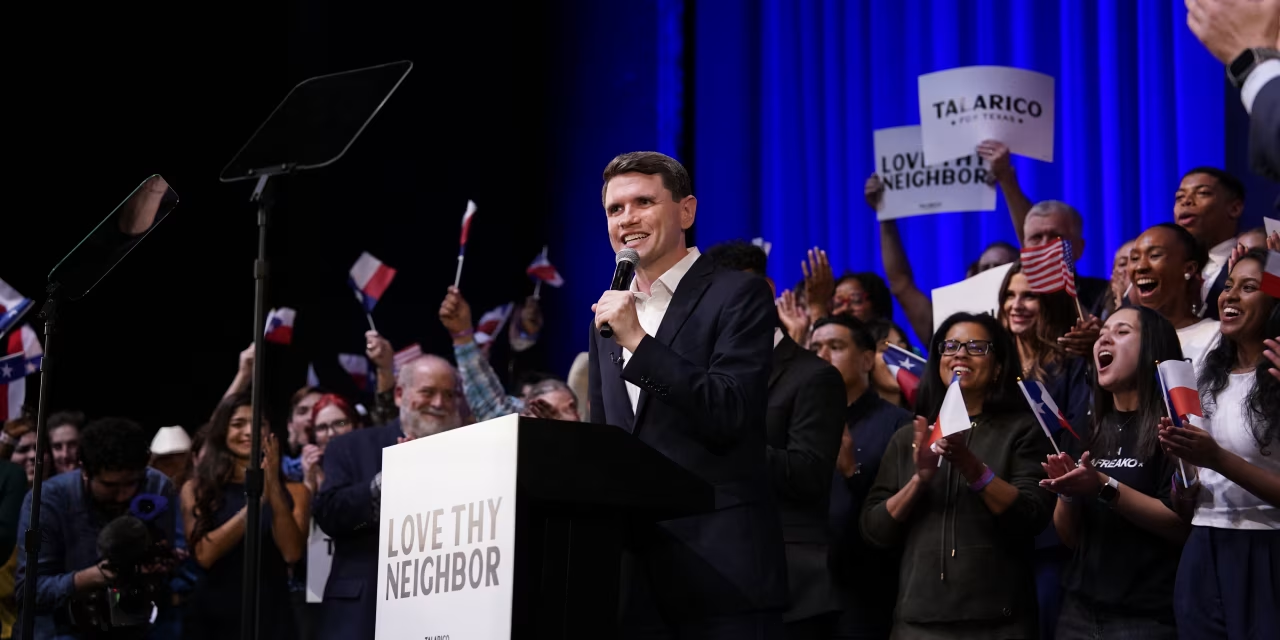
与此同时,在参议院,中左翼候选人翻转了五个州(南卡罗来纳州、北卡罗来纳州、堪萨斯州、俄亥俄州和爱荷华州),左翼候选人仅翻转一个州(缅因州)。中间派和左翼都声称得克萨斯州的詹姆斯·塔拉里科是自己人;他的纲领看起来相当温和。明尼苏达州和密歇根州由“我们的革命”支持的进步派候选人赢得,但这两个州本来就是民主党的。
Meanwhile, in the Senate, center-left candidates flipped five states (South Carolina, North Carolina, Kansas, Ohio and Iowa), left-wing candidates just one (Maine). Centrists and leftists both claim Texas’ James Talarico as one of their own; his platform looks pretty moderate. Minnesota and Michigan, won by Our Revolution-endorsed progressives, were already Democratic.
参议院的得票差距也讲述了类似的故事:中间派民主党人平均比2024年民主党总统候选人卡玛拉·哈里斯高出21个百分点;进步派仅高出5个百分点。温和派在其所在州的得票率比民主党众议院候选人高出5个百分点;进步派则落后5个百分点,这是“第三条道路”的估计。
Senate vote margins tell a similar story: Centrist Democrats outran 2024 Democratic presidential candidate Kamala Harris by an average of 21 percentage points; progressives by just 5. Moderates ran 5 points ahead of Democratic House candidates in their states; progressives ran 5 points behind, Third Way estimates.
尽管涌现了如此多的温和派,但许多民主党党团中的新面孔将来自美国民主社会主义者及其他极左团体,因为他们在深蓝地区赢得了初选。国会进步派核心小组表示,其成员人数已增加25人。
Despite that tidal wave of moderates, many new faces in the Democratic caucus will hail from Democratic Socialists of America and other far-left groups, by virtue of having won primaries in deep-blue regions. The Congressional Progressive Caucus says its ranks have grown by 25 members.
那么,该党面临的问题是:谁来设定其优先事项。如果它向左倾斜,以满足社会主义者和进步派的要求,那么它在红州和摇摆州刚刚建立的立足点可能会在下一次选举中消失。
The question for the party, then, is who sets its priorities. If it tilts left to satisfy the socialists and progressives, the foothold it just established in red and purple America could melt away at the next election.
一个不祥的逆风:人工智能今年提振了经济和股市,从周三的反弹来看,投资者预计在民主党控制的国会下情况将继续。我的建议是:不要赌这个。
An ominous headwind: AI has buoyed the economy and stocks this year, and judging by Wednesday’s rally, investors expect more of the same under a Democratic Congress. My advice: Don’t bet on it.
从特朗普总统到各州首府,共和党对人工智能采取的是宽松监管,有时甚至是不加干预。据Evercore ISI称,得克萨斯州、佐治亚州和俄亥俄州占美国所有计划中的数据中心容量的40%以上。这三个州刚刚选出了对数据中心持怀疑态度的民主党州长。在国会,民主党可能会推动安全护栏,这可能会减缓人工智能的推广,并增加其法律责任。
From President Trump to state capitols, Republicans applied a light touch, sometimes no touch, to AI. Texas, Georgia and Ohio account for more than 40% of all planned data-center capacity in the U.S., according to Evercore ISI. All three just elected Democratic governors skeptical of them. In Congress, Democrats could press for safety guardrails that could slow AI rollouts and increase their legal liability.
还有无形因素:民主党不信任人工智能背后的科技大亨,尤其是埃隆·马斯克,他花费近5亿美元试图击败他们。硅谷全力支持特朗普,为他的事业捐款,培养他的支持,包括他的地理重新品牌化,甚至他对人工智能的首选称呼“超级智能”。这不可避免地会影响民主党对待该行业的方式。
And then there is the intangible: Democrats don’t trust the tech bros behind AI, least of all Elon Musk, who spent almost half a billion dollars trying to defeat them. Silicon Valley went all in on Trump, donating to his causes, cultivating his support, his geographical rebrandings and even his preferred moniker for AI, “super intelligence.”That can’t help but color how Democrats approach the industry.
“拥有社交媒体算法的亿万富翁,拥有有线新闻网络的亿万富翁,拥有在我们屏幕上争斗的政客的亿万富翁,他们希望我们互相残杀,”塔拉里科本周在胜选演说中宣称。“我们的团结对他们的财富和权力构成威胁。”但也许对增长不是这样:如果人工智能陷入困境,为什么股市周三会反弹?我的同事表示,投资者正在赌增长将超越人工智能。对经济和选民而言,两大拖累是关税和与伊朗的战争。国会无法迫使特朗普放弃其中任何一项,但可能能够达成以他结束战争或撤销关税为条件的协议。
“The billionaires who own the social-media algorithms, who own the cable-news networks, who own the politicians fighting on our screens, they want us at each other’s throats,” Talarico declared at his victory speech this week. “Our unity is a threat to their wealth and their power.”But maybe not for growth: If AI is in trouble, why did stocks rally Wednesday? My colleagues say investors are betting on growth broadening beyond AI. Two major drags on the economy, and voters, are tariffs and the war with Iran. Congress can’t force Trump to abandon either, but may be able to strike deals contingent on him ending the war or rolling back tariffs.
Evercore 估计,已经在筹备中的新关税和医疗补助(Medicaid)支出削减可能会使明年经济增长下降0.6个百分点。但假设特朗普与民主党达成一项协议,推迟或撤销部分削减并增加国防开支,这可能会带来0.4至1个百分点的增长助力。
Evercore estimates that new tariffs and spending cuts to Medicaid already in the pipeline could trim 0.6 percentage point from growth next year. But suppose Trump were to do a deal with Democrats that delays or undoes some of those cuts and boosts defense. That could deliver a tailwind of 0.4 to 1 percentage point.
此外,不增税:共和党人试图将选举聚焦于税收问题,但未能得逞。这并不意味着更高的税收即将到来。民主党在竞选中并未主张增税。(事实上,他们希望撤销关税。)各州的选票表明,选民也不想要增税。加利福尼亚州临时5%财富税的“反对”票最近以55%对45%领先“赞成”票,当时已计票61%。其他州选举倡议传递了类似信息:佛罗里达州提高房产税免税额;田纳西州禁止全州范围内的房产税;北卡罗来纳州对所得税设上限;爱荷华州要求两个立法机构以超多数票才能提高所得税。
Also, no new taxes: Republicans tried, to no avail, to make the election about taxes. That doesn’t mean higher taxes are in the offing. Democrats didn’t campaign on them. (In fact, they want to roll back tariffs.) The message from the states is that voters don’t want them either. The “no” vote on California’s temporary 5% wealth tax was recently ahead of the “yes” vote 55% to 45%, with 61% of the vote counted. Other state-ballot initiatives sent a similar message: an increased property tax exemption in Florida; a prohibition on statewide property taxes in Tennessee; a cap on income taxes in North Carolina; a supermajority in both legislative chambers to raise income taxes in Iowa.
失败者:我们的孙辈。听总统说,民主党可能面对两种特朗普:一位是固执的“否决先生”,另一位是与桑德斯有共同点的交易达成者。这里有一个预测:如果交易达成者占据上风,那不会涉及削减开支或增税。
The losers: our grandchildren. To listen to the president, Democrats could be dealing with one of two Trumps: a defiant Mr. Veto, or the dealmaker who shares common ground with Sanders. Here’s a prediction: If the dealmaker prevails, it won’t involve cutting spending or raising taxes.
民主党的可负担性愿景并不便宜。Evercore 估计,撤销对食品券和医疗补助的削减并恢复《平价医疗法案》(Obamacare)补贴,未来十年将花费7100亿美元至1.55万亿美元。特朗普希望为国防再增加3000亿美元。
Democrats’ vision of affordability doesn’t come cheap. Undoing cuts to food stamps and Medicaid and restoring Obamacare subsidies would cost $710 billion to $1.55 trillion over a decade, Evercore estimates. Trump wants $300 billion more for defense.
我的同事最近记录了所有赤字鹰派如何消亡,而我们的债务和赤字正好达到了临界水平。根据广告追踪公司AdImpact的数据,2018年有140条政治广告谈论债务或赤字。而今年只有30条。赤字在今年竞选话题中排名第52。
My colleagues recently chronicled how all the deficit hawks died out, just as our debts and deficits reached critical levels. In 2018, 140 political ads talked about the debt or deficit, according to ad-tracking firm AdImpact. This year, just 30 did. The deficit ranked No. 52 among topics in this year’s campaigns.
除非债券市场的“警惕者”发声,否则将是我们的子孙后代为今天的交易买单。
Unless the bond vigilantes speak up, it will be our children and grandchildren paying for today’s deals.
也许不是汽油:一项学术研究并不支持“汽油价格导致共和党失利”的假设。哥本哈根大学政治学家克里斯托弗·亨策尔·多斯高德(Christoffer Hentzer Dausgaard)将高油价对家庭收入的县一级影响与共和党得票率进行了比较。令人惊讶的是,他没有发现任何影响。“我没有发现‘钱包投票’最简单形式的迹象,即选民根据价格从自己预算中扣除的金额比例来惩罚总统所在的党派……这符合经典研究结果,即美国人更多地根据国家经济而非自身财务状况投票。”
Maybe it wasn’t gasoline: The assumption that gasoline prices cashiered Republicans isn’t supported by one scholarly study. Christoffer Hentzer Dausgaard, a political scientist at the University of Copenhagen, compared county-level effects of high prices on household income with Republican vote share. Surprisingly, he found no effect. “I find no sign of ‘pocketbook voting’ in its simplest form, where voters punish the president’s party in proportion to what prices take out of their own budgets…That fits the classic finding that Americans vote more on the national economy than on their own finances.”
选民的声音:本周二,我的同事们奔赴全国各地,直接听取选民对经济的看法。“我们只是受够了,”缅因州利斯顿市64岁居民罗恩·贝鲁布(Ron Berube)说,他在2020年投票支持苏珊·柯林斯参议员(参议员,缅因州,共和党),但今年投票给了她获胜的民主党挑战者特洛伊·杰克逊。“很多人对特朗普感到厌倦。他们承受不起。他们什么都承受不起。”该州超过三分之二的选民告诉美联社,特朗普的关税政策损害了该州的经济。
Voices from the polls: My colleagues fanned out across the country Tuesday to hear directly from voters on the economy. “We’re just fed up,” said Ron Berube, a 64-year-old Lewiston, Maine, resident, who voted for Sen. Susan Collins (R., Maine) in 2020 but this year voted for her victorious Democratic challenger, Troy Jackson. “A lot of people are sick of Donald Trump. They can’t afford it. They can’t afford anything.”More than two-thirds of voters in the state told the AP that Trump’s tariff policies have hurt the state’s economy.
达林·加德(Darin Gadd)是俄亥俄州哥伦布市一名59岁的退役军人,他在2020年和2024年都支持特朗普。周二,他再次投票给共和党。但他对总统感到厌倦。加德在他兄弟的建筑公司兼职,并将许多材料成本上升归咎于关税。“一张胶合板过去是4.50美元,现在要30多美元,”他说。
Darin Gadd, a 59-year-old retiree from the military in Columbus, Ohio, backed Trump in 2020 and 2024. On Tuesday, he again voted Republican. But he is fed up with the president. Gadd works part time for his brother’s construction company and blamed tariffs for raising the cost of many materials. “A sheet of plywood used to be $4.50, now it’s $30-something,” he said.
迈阿密地区27岁的零售经理斯蒂芬妮·埃尔南德斯(Stephanie Hernandez)周二只投票给民主党,她希望民主党能推动逆转她认为特朗普最有害的政策,包括关税和移民突袭。
Stephanie Hernandez, a 27-year-old retail manager in the Miami area, voted exclusively for Democrats on Tuesday, who she hoped would push to reverse what she considers Trump’s most harmful policies, including tariffs and immigration raids.
埃尔南德斯说,她所在的零售商因关税问题面临供应困难,导致部分产品无法获得。“关税显然是我希望取消的东西。”
Hernandez said the retailer where she works has faced supply issues triggered by tariffs, resulting in some products becoming inaccessible.
周四 周五 对你刚才读到的内容有什么想法?或者对更广阔的世界有什么看法?请与我分享。
“The tariffs would be something that I would like to obviously do away with.”Thursday Friday Thoughts on what you just read? Or on the wider world?
保罗·凯德罗斯基,他撰写一份以人工智能为中心的通讯,回应周二关于健康保险的笔记,以及这个潜伏的通胀问题:你将不断上升的保险成本主要视为通胀和薪酬问题,而大多忽视了美国医疗体系为何如此昂贵,这正中了美国医疗生态系统中掠夺者的下怀。美国医疗体系在结构上无法控制成本。太多讨论忽略了其掠夺性和榨取性的本质,转而谈论诸如更高薪酬之类的东西,而这些最终都转化为向一个税收优惠过度、如今已接近国内生产总值五分之一的部门的转移支付。
Please share them with me. Paul Kedrosky, who writes his own AI-centric newsletter, responds to Tuesday’s note on health insurance, the sleeper inflation issue: You treat rising insurance costs primarily as an inflation and compensation problem, while mostly ignoring why the U.S. system is so expensive, which plays into the hands of the U.S. health ecology’s predators. The American healthcare system is structurally incapable of controlling costs. Too many discussions miss the larcenous and extractive nature of it, substituting things—like higher compensation—that end up as transfers to an indefensibly tax-advantaged sector now approaching one-fifth of GDP.
读者里奇·贝蒂写道:你写到了健康保险的成本。这由医疗费用的快速上涨所驱动。而这又是大量州和联邦财富转移到医疗领域的结果。国会可以削减联邦支出。总统很少否决支出法案。所以请不要对国会在遏制失控联邦支出方面的巨大责任姑息迁就。
Reader Rich Batey writes: You write about the cost of health insurance. That’s driven by the rapidly rising cost of medical care. And that’s a result of the massive state and federal wealth transfers into the healthcare sector. Congress can curb federal spending. Presidents rarely veto spending bills. So please stop giving Congress a pass on its huge responsibility to curb runaway federal spending.
我是《华尔街日报》的首席经济评论员。我在美国和世界各地撰写经济、市场和政治报道已有40多年。
I’m The Wall Street Journal’s chief economics commentator. I’ve been writing about economics, markets and politics for more than 40 years, in the U.S. and from around the world.
WSJ经济每周两次为您带来必要的洞察、新闻和评论。请将反馈发送至 wsjeconomics@wsj.com(如果您在收件箱中阅读此内容,可以直接回复)。马特·格罗斯曼为本期通讯做出了贡献。
WSJ Economics brings you essential insights, news and commentary, twice weekly. Send your feedback to wsjeconomics@wsj.com (if you’re reading this in your inbox, you can just hit reply). Matt Grossman contributed to this newsletter.