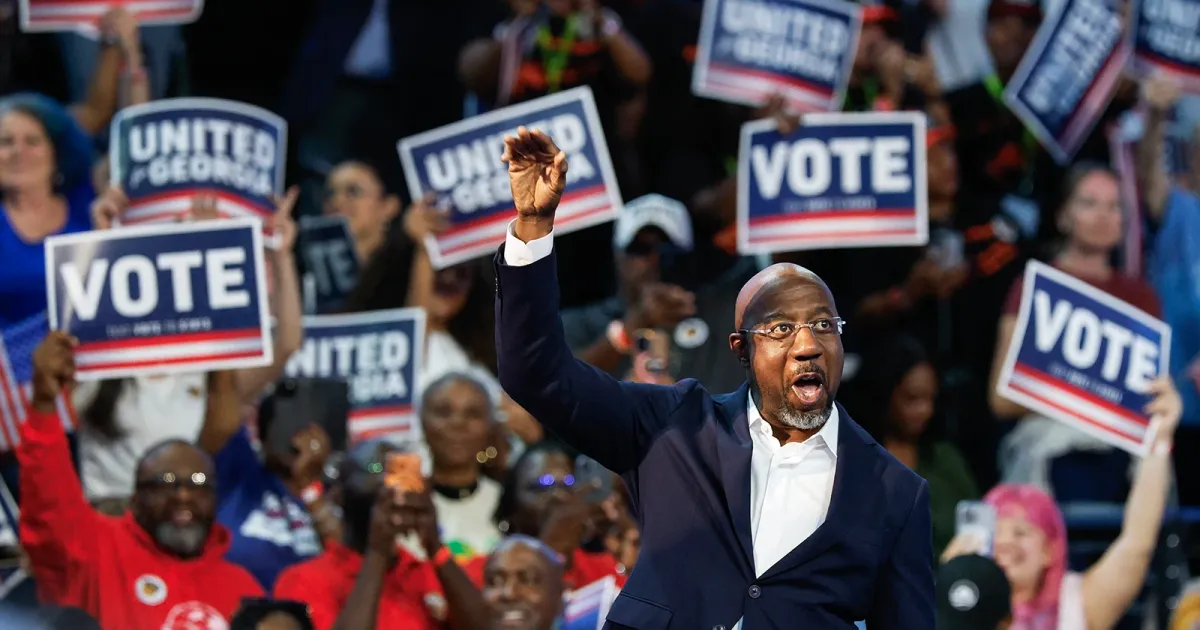
中期选举前几周,佐治亚州民主党参议员拉斐尔·沃诺克做客NBC新闻《会见新闻界》节目,恳请本党抓住独特机遇,在深南部赢得选举,并坚称民主党人“绝对”能在南卡罗来纳州和密西西比州这样的红州获胜。
A couple of weeks before the midterm elections, Democratic Sen. Raphael Warnock of Georgia appeared on NBC News’ “Meet the Press” and implored his party to take advantage of unique opportunities to win elections in the Deep South, insisting that Democrats can “absolutely” win in red states such as South Carolina and Mississippi.
事实证明,沃诺克所言非虚——而现在他希望继续推进。NBC新闻在中期选举次日报道:佐治亚州民主党参议员拉斐尔·沃诺克强调,本党需要投资南方各州,此时深红州密西西比州的参议院选情仍然胶着,胜负难料。
It turns out, Warnock knew what he was talking about — and now he wants to keep going. NBC News reported the day after the midterms: Sen. Raphael Warnock, D-Ga., emphasized the need for his party to invest in Southern states as the race for Senate in deep-red Mississippi remains too close to call.
“我长期以来一直在告诉我的党,它需要投资南方,”沃诺克在接受CNN采访时说。“在国会建立可持续的民主党多数席位的道路,恰恰要经过南方。”
“I have been telling my party now for a long time that it needs to invest in the South,” Warnock said in an interview on CNN. “The road to a sustainable Democratic majority in the Congress goes right through the South.”
沃诺克面临的质疑是可以理解的。当林登·B·约翰逊签署1964年《民权法案》时,传说这位民主党总统转过身说:“南方要有一代人离我们而去了。”这话的意思并不隐晦:当时,深南部被认为是民主党的堡垒,尽管它由白人保守派“迪克西民主党人”构成,而随着民主党成为民权党,这些人开始转向共和党。这一转变并非一夜之间发生,但假以时日,共和党对深南部的钳制变得显而易见——以至于民主党政治中的许多人认为,甚至不值得尝试在该地区取得成功,视之为对有限资源的无谓浪费。
The skepticism that Warnock has faced is understandable. When Lyndon B. Johnson signed the Civil Rights Act of 1964, legend has it that the Democratic president turned and said, “There goes the South for a generation.”The point was hardly subtle: At the time, the Deep South was recognized as a Democratic stronghold, though it was made up of white conservative “Dixiecrats,” who started moving toward the Republican Party as Democrats became the party of civil rights. The change didn’t happen overnight, but in time, the GOP’s stranglehold on the Deep South was obvious — to the point that many in Democratic politics didn’t see the point in even trying to succeed in the region, viewing it as a pointless waste of limited resources.
然而,在2026年选举日之后,沃诺克希望看到一次重新评估,而选举结果也支持了他的主张。
After Election Day 2026, however, Warnock wants to see a reassessment, and the results bolster his case.
以参议院选战为例,情况就非常引人注目:民主党候选人在弗吉尼亚州、北卡罗来纳州、南卡罗来纳州、佐治亚州和得克萨斯州获胜——而在这五场选战中的四场,获胜优势达到两位数。密西西比州的参议院选战最终也很有可能加入民主党胜利的名单,甚至路易斯安那州和佛罗里达州的选战也证明,其竞争激烈程度远超大多数观察人士的预期。
The Senate races, for example, tell a striking story: Democratic candidates won in Virginia, North Carolina, South Carolina, Georgia and Texas — and in four of those five races, the margin of victory was double digits. There’s a very real possibility that Mississippi’s Senate race will ultimately join the list of Democratic victories, and even the contests in Louisiana and Florida proved far more competitive than most observers expected.
在得克萨斯州和佐治亚州的州长选战中,以及大量其他较低级别职位的选战中,也有相关的民主党成功故事,因为南方选民的转向程度出人意料地偏向蓝色(民主党)。
There were related Democratic success stories in gubernatorial races in Texas and Georgia, as well as plenty of down-ballot contests, as Southern voters shifted to an unexpected degree in a blue direction.
《纽约时报》的贾梅尔·布伊周三上午在评估选举结果时,将此描述为“南方的一场地震”,并补充说:“有了投资——以及保护投票权的法律——整个地区都可能变成蓝色。”预计在未来几天、几周和几个月里,会有大量诸如此类的讨论。
Assessing the election results Wednesday morning, The New York Times’ Jamelle Bouie described this as “an earthquake in the South,” adding, “With investment — and with laws protecting the right to vote — the whole region could be blue.”Expect a whole lot of conversations along these lines in the coming days, weeks and months.