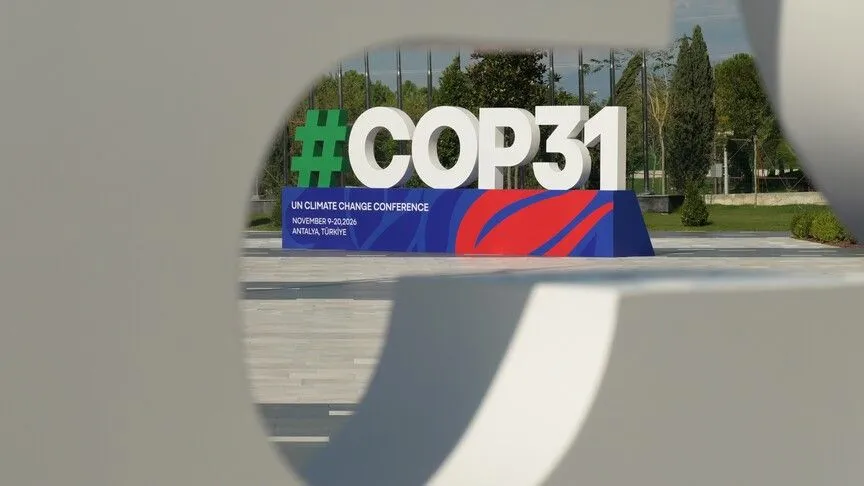
在经历了一年毁灭性洪水、致命热浪和长期干旱之后,各国政府将于下周齐聚土耳其地中海城市安塔利亚,出席联合国年度气候大会。
Following a year of devastating floods, deadly heat waves and prolonged droughts, governments will gather in Türkiye’s Mediterranean city Antalya next week for the UN's annual climate conference.
被称为“COP31”的11月9日至20日大会将汇聚世界领导人、谈判代表、气候专家、科学家、企业领袖和民间社会代表,共同探讨如何削减排放、为向清洁能源转型提供资金,以及保护社区免受日益严重的气候影响。
Known as COP31, the Nov. 9–20 conference will bring together world leaders, negotiators, climate experts, scientists, business leaders and civil society representatives to discuss how to cut emissions, fund the transition to clean energy and protect communities from worsening climate impacts.
土耳其将主办会议并担任主席国,环境、城市化和气候变化部长穆拉特·库鲁姆被提名为COP31主席。澳大利亚气候变化与能源部长克里斯·鲍文将主导谈判。世界领导人峰会定于11月11日至12日举行。
Türkiye will host the conference and hold its presidency, with Environment, Urbanization and Climate Change Minister Murat Kurum nominated as COP31 president. Australian Climate Change and Energy Minister Chris Bowen will lead negotiations. A World Leaders’ Summit is scheduled for Nov. 11–12.
据库鲁姆透露,已有91位国家元首和政府首脑确认出席,预计将有196个国家的代表和近300位部长参会。
According to Kurum, 91 heads of state and government have confirmed their attendance, with representatives from 196 countries and nearly 300 ministers expected.
土耳其总统雷杰普·塔伊普·埃尔多安、巴西总统路易斯·伊纳西奥·卢拉·达席尔瓦和英国首相安迪·伯纳姆均在预计出席的领导人之列。以下是您需要了解的要点。
Turkish President Recep Tayyip Erdogan, Brazilian President Luiz Inacio Lula da Silva and UK Prime Minister Andy Burnham are among the leaders expected to attend. Here is what you need to know.
首届联合国气候COP于1995年在柏林召开。三十多年后,各国政府将在安塔利亚举行第31届联合国气候变化框架公约缔约方大会。
The first UN climate COP took place in Berlin in 1995. More than three decades later, governments will meet in Antalya for the 31st Conference of the Parties to the UN Framework Convention on Climate Change.
年度会议为谈判减排、适应措施以及落实这些措施所需的财政和技术支持提供了论坛。
The annual meetings provide a forum for negotiating emissions cuts, adaptation measures and the financial and technical support needed to deliver them.
最具深远影响的成果是2015年《巴黎协定》,该协定承诺各国将升温幅度控制在比工业化前水平高出2摄氏度以内,并努力限制在1.5摄氏度以内。这一雄心与当前计划之间的差距依然巨大。
Their most consequential outcome was the 2015 Paris Agreement, which committed countries to holding warming well below 2C above pre-industrial levels while pursuing efforts to limit it to 1.5C. The gap between that ambition and current plans remains considerable.
10月27日联合国气候变化评估发现,目前的承诺预计将使2035年全球温室气体排放量比2019年水平减少约6%。
An Oct. 27 UN Climate Change assessment found that current pledges are expected to reduce global greenhouse gas emissions by around 6% by 2035 compared with 2019 levels.
如果所有现有承诺得到全面落实,这一减排幅度可能增加至约9%。
Full implementation of all current pledges could increase that reduction to around 9%.
联合国气候变化事务执行秘书西蒙·斯蒂尔在随附声明中表示:“集体进展显然仍然不足。”
“Collective progress remains clearly insufficient,” UN climate chief Simon Stiell said in the accompanying statement.
联合国环境规划署的《2026年排放差距报告》单独预测,即使国家气候承诺得到全面落实,本世纪升温仍将达到约2.6摄氏度。
The UN Environment Programme’s 2026 Emissions Gap Report separately projects warming of around 2.6C this century even if national climate pledges are fully implemented.
其将1.5摄氏度暂时超标幅度降至最低的路径要求,到2030年全球排放量较2025年水平下降18%,到2035年下降45%。
Its pathway with the lowest temporary overshoot of 1.5C requires global emissions to fall 18% by 2030 and 45% by 2035 from 2025 levels.
该路径还依赖增加二氧化碳清除量,以在本世纪末将升温拉回至1.5摄氏度。
It also relies on increasing carbon dioxide removal to bring warming back to 1.5C by the century’s end.
土耳其主席国的《行动议程》涵盖10个主题:清洁能源转型与电气化;零废弃与甲烷减排;气候适应型城市;绿色工业化;青年与教育;粮食安全;海洋;动态且有韧性的卫生体系;里约协同;以及气候实施桥梁。融资、技术和能力建设支持贯穿所有主题。
The Turkish presidency’s Action Agenda covers 10 themes: clean energy transition and electrification; zero waste and methane reduction; climate-resilient cities; green industrialization; youth and education; food security; oceans and seas; dynamic and resilient health systems; Rio synergies; and the Climate Implementation Bridge. Finance, technology and capacity building support work across all themes.
该议程与正式谈判同步进行,旨在动员自愿伙伴关系、投资和切实可行的解决方案。
The agenda runs alongside formal negotiations, seeking to mobilize voluntary partnerships, investment and practical solutions.
拟议的2035年目标包括:将电力在全球最终能源消费中的占比提高至35%,将建筑能耗强度至少降低25%,将全球循环材料利用率提高至至少15%。
Proposed 2035 targets include increasing electricity’s share of global final energy consumption to 35%, reducing energy use intensity in buildings by at least 25%, and raising the global circular material use rate to at least 15%.
废弃物目标旨在到2035年将年度城市固体废物产生量的预计增幅减半。
The waste target seeks to halve the projected increase in annual municipal solid waste generation by 2035.
其他优先事项包括普及气候教育、韧性农业、更强大的卫生体系和海洋生态系统保护。
Other priorities include universal climate education, resilient agriculture, stronger health systems and marine ecosystem protection.
里约协同主题寻求在气候变化、生物多样性和土地退化方面加强合作,而气候实施桥梁旨在帮助各国开发出可吸引融资的项目。
The Rio synergies theme seeks closer cooperation on climate change, biodiversity and land degradation, while the Climate Implementation Bridge aims to help countries develop projects ready to attract financing.
谈判代表面临关于谁应为气候行动提供资金、如何摆脱化石燃料依赖以及如何将国家承诺转化为落地项目的争议。
Negotiators face disputes over who should finance climate action, how to move away from fossil fuels and how to turn national pledges into projects on the ground.
发展中国家既需要资金削减排放,也需要资金应对日益严重的气候影响。
Developing countries need funding both to cut emissions and to prepare for worsening climate impacts.
联合国环境规划署(UNEP)2026年《适应差距报告》于11月4日发布,指出到2035年,发展中国家的适应需求每年约为3050亿美元。
UN Environment Programme's (UNEP) 2026 Adaptation Gap Report, released Nov. 4, puts their adaptation needs at around $305 billion annually by 2035.
2024年,发达国家提供的国际公共适应资金仅达282亿至317亿美元,而这些资金用于洪水防御、可靠供水和预警系统等措施。
International public adaptation finance from developed countries reached just $28.2 billion - $31.7 billion in 2024, money needed for measures such as flood defenses, reliable water supplies and early warning systems.
联合国环境规划署表示,即使实现第30届缔约方大会(COP30)到2035年将适应资金增加两倍(即三倍于基准)的呼吁,经通胀调整后也仅能覆盖估算需求的20%至29%。
Even delivering COP30’s call to triple adaptation finance by 2035 would cover only 20%–29% of estimated needs after adjusting for inflation, UNEP said.
联合国环境规划署执行主任英格·安德森警告:“世界尚未准备好适应当前的气候条件,更遑论应对1.5摄氏度升温超标将带来的后果。”
“The world is not ready to adapt to current climactic conditions, never mind what overshoot of 1.5°C will bring,” UNEP Executive Director Inger Andersen warned.
在化石燃料问题上,各国仍缺乏一项共同商定的转型路线图。巴西于11月3日提出了自己的方案,但这些是东道国自愿贡献的提案,而非经谈判达成的、对各国具有约束力的共同计划。
On fossil fuels, countries still lack a collectively agreed transition roadmap. Brazil presented its own proposals on Nov. 3, but these are voluntary presidency contributions, rather than negotiated commitments binding countries to a common plan.
此前的联合国气候峰会已确立了减排目标、融资承诺和支持脆弱国家的机制,尽管落实情况仍参差不齐。
Previous UN climate summits have established emissions targets, financing commitments and mechanisms to support vulnerable countries, although implementation still remains uneven.
1997年在日本举行的第3届缔约方大会(COP3)通过的《京都议定书》,为工业化经济体设定了具有约束力的减排目标。然而,美国从未批准该条约。
The Kyoto Protocol, adopted at COP3 in Japan in 1997, set binding emissions reduction targets for industrialized economies. However, the US never ratified the treaty.
2015年第21届缔约方大会(COP21)通过的《巴黎协定》,将发达国家和发展中国家纳入共同框架,将升温幅度控制在远低于2摄氏度,并努力限制在1.5摄氏度以内。各国同意每五年提交一次更新的国家气候计划。
The Paris Agreement, adopted at COP21 in 2015, brought developed and developing countries into a shared framework to hold warming well below 2C while pursuing efforts to limit it to 1.5C. Countries agreed to submit successive national climate plans every five years.
2022年在埃及举行的COP27会议上,财政支持进一步凸显重要地位,各国同意设立损失与损害基金,用于援助特别易受气候影响的发展中国家。
Financial support gained further prominence at COP27 in Egypt in 2022, where countries agreed to establish a loss and damage fund for developing nations particularly vulnerable to climate impacts.
2023年在迪拜举行的COP28会议呼吁“在能源系统中逐步摆脱化石燃料”,并提出到2030年将全球可再生能源装机容量增加两倍(即达到目前的三倍)。
COP28 in Dubai in 2023 called for “transitioning away from fossil fuels in energy systems,” alongside tripling global renewable energy capacity by 2030.
2024年在巴库举行的COP29会议上,各国设定目标,到2035年每年为发展中国家动员至少3000亿美元资金,由发达国家带头。发展中国家批评这一数额不足。
COP29 in Baku in 2024, countries set a goal of mobilizing at least $300 billion annually for developing countries by 2035, with developed countries taking the lead. Developing nations criticized the amount as insufficient.
2025年在巴西贝伦举行的COP30会议通过了59项适应指标,并呼吁到2035年将适应资金至少增加两倍(即达到目前的三倍)。然而,各国未能就化石燃料过渡路线图达成一致,留下一个关键问题未解,待安塔利亚会议进一步商议。
COP30 in Belem, Brazil, in 2025 adopted 59 adaptation indicators and called for at least tripling adaptation finance by 2035. However, countries failed to agree on a fossil fuel transition roadmap, leaving a key issue unresolved ahead of Antalya.