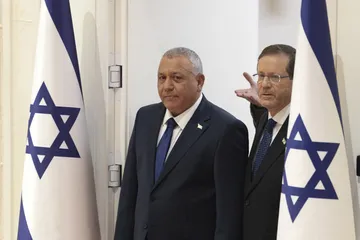
尽管他的政党及其选举盟友在以色列10月27日的大选中未赢得最多议会席位,反对党领袖加迪·艾森科特获得了组建新政府的首个机会,从而有望出任总理。这是在以色列总统艾萨克·赫佐格得出结论后发生的,他认为这位前军方首脑最有可能组建一个能够在议会(即克内塞特)通过必要的信任投票的执政联盟。
Though his party and its electoral allies didn’t win the most parliamentary seats in Israel’s Oct. 27 general election, opposition leader Gadi Eisenkot has been given the first chance to form a new government and thus emerge as prime minister. That was after Israeli president Isaac Herzog concluded the former military chief had the best shot at forming a ruling coalition that can survive a requisite vote of confidence in the Knesset, Israel’s parliament.
以色列选举中从未有任何政党赢得绝对多数席位,因此要成为总理,政治领袖必须与其他政党谈判,组建一个可持续的执政联盟。近年来,以色列政治的分歧使这一考验变得尤其困难。艾森科特能否成功存在不确定性,这便是明证。如果他不成功,现任总理本雅明·内塔尼亚胡可能获得第二次组建政府的机会,如果两人都失败,新的选举将在所难免。
No party has ever won an outright majority in an Israeli election, so to become prime minister, a political leader must negotiate with other parties to assemble a sustainable governing coalition. In recent years, the divisions in Israeli politics have made that an especially difficult test. That’s evidenced by the uncertainty over whether Eisenkot will succeed. If he doesn’t, the incumbent prime minister Benjamin Netanyahu might get the second chance to form a government, and if both fail, a new election is in the cards.
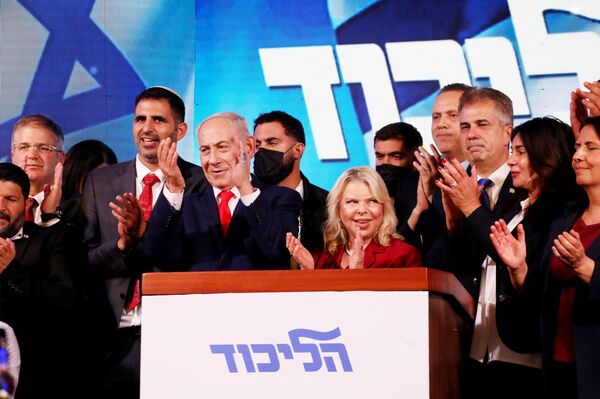
内塔尼亚胡的利库德党,连同与其结盟的右翼和宗教政党,在克内塞特的120个席位中赢得了53个。艾森科特的中右翼“直路党”及其盟友赢得了48个席位。其余19个席位由代表以色列阿拉伯少数群体的两个政党控制。
Netanyahu’s Likud party, together with the right-wing and religious parties aligned with it, won 53 of 120 seats in the Knesset. Eisenkot’s center-right Yashar party and its allies took 48. The remaining 19 seats are controlled by two parties representing Israel’s Arab minority.
这一过程载于以色列的一项基本法中,这些基本法共同构成了该国最接近宪法的文件。
The process is laid out in one of Israel’s Basic Laws, which together form the closest thing the country has to a constitution.
在选举结果公布后的七天内,以色列总统在与克内塞特内有代表的政党协商后,要求议会的一名成员组建新政府。通常,总统的职责大多是礼仪性的,他会指派克内塞特最大派系的领袖。但这并非强制要求,今年也并非首次不遵循这一惯例。
Within seven days of the publication of election results, after consulting with parties represented in the Knesset, Israel’s president asks a member of the assembly to form a new government. Typically, the president, whose role is largely ceremonial, taps the leader of the largest Knesset faction. But that’s not required, and this year wasn’t the first time the custom wasn’t followed.
人们普遍认为,总统应当指派最有可能组建一届能在议会初始信任投票中存活下来的政府的党领袖。赫佐格在艾森科特获得新当选议会67名议员支持之后任命了他,而内塔尼亚胡获得46名议员支持。
It’s generally understood that the president is meant to tap the party leader with the best prospect of forming a government that will survive an initial vote of confidence in the Knesset. Herzog gave Eisenkot the nod after he secured the endorsement of 67 members of the newly elected Knesset compared to 46 for Netanyahu.
一名党领袖有28天时间——可再延长14天——来组建一届稳定的政府。如果该领袖失败,总统可以将任务交给另一个人,该人有28天时间。如果再次失败,议会多数议员可以要求总统指派第三名候选人,该候选人有14天时间完成任务。如果所有努力都失败,三个月后将举行新的选举。
A party leader has 28 days — which can be extended by another 14 days — to succeed in forming a durable government. If that leader fails, the president can assign the task to someone else, who has 28 days. In the event of another failure, a majority of Knesset members can ask the president to tap a third candidate, who gets 14 days to complete the job. If all efforts fail, a new election is held in three months.
在此过程中,现任总理——本例中为内塔尼亚胡——继续以看守身份执政。
While this process plays out, the incumbent prime minister — Netanyahu, in this case — continues to govern in a caretaker capacity.
艾森科特66岁,是贫穷摩洛哥移民的儿子,在偏远的工人阶级港口城市埃拉特长大。他从步兵一路晋升,最终成为参谋长,从2015年到2019年指挥以色列军队四年。
Eisenkot, 66, is the son of poor Moroccan immigrants who grew up in the remote working-class port of Eilat. He rose through the ranks of the infantry to eventually become military chief, commanding Israel’s forces for four years through 2019.
艾森科特于2022年底进入议会,是政治新手,当时他被纳入内塔尼亚胡组建的战时内阁,此前2023年10月7日的哈马斯袭击引发了一场大规模冲突。这位前将军八个月后辞职,称内塔尼亚胡的决策受到“政治考量”的影响。艾森科特在战争中失去了儿子加尔和两个侄子。
Having entered the Knesset in late 2022, Eisenkot was a newcomer to politics when he was included in the war cabinet Netanyahu formed after the Hamas attacks of Oct. 7, 2023 precipitated a major conflagration. The ex-general resigned eight months later, saying Netanyahu’s decisions were being influenced by “political considerations.”Eisenkot lost a son, Gal, and two nephews in the war.
他的政党名称在希伯来语中意为“直接”或“诚实”。他风格直率而沉着,与善于言辞、善于上镜的内塔尼亚胡形成对比。但他的政策不会立即让以色列走向完全不同的方向,至少在与邻国紧张关系方面不会。
His party’s name means straightforward or honest in Hebrew. He has a plainspoken and somber style, in contrast to the articulate and telegenic Netanyahu. But his policies wouldn’t immediately take Israel in an entirely different direction, at least when it comes to its fraught relations with its neighbors.
与内塔尼亚胡一样,艾森科特在安全问题上持鹰派立场。值得注意的是,他是以色列军队“达希亚学说”的设计者,该学说以黎巴嫩首都贝鲁特的一个街区命名,伊朗支持的黎巴嫩民兵组织真主党曾将总部设于此。该学说涉及摧毁民用基础设施,迫使当地居民离开,以便以色列能更好地打击其敌人。以色列军队因将同样的策略应用于加沙地带而遭到其他政府和人权组织的广泛批评,在最近的战争中,加沙地带有数万平民丧生。
Like Netanyahu, Eisenkot is hawkish on security issues. Notably, he was the architect of the Israeli military’s Dahiya doctrine, named for the Beirut neighborhood where the Iran-backed Lebanese militia Hezbollah had its headquarters. It involves destroying civilian infrastructure and forcing local populations to leave so that Israel can better target its enemy. Israeli forces have been widely criticized by other governments and rights groups for applying the same strategy to Gaza, where tens of thousands of civilians died in the recent war.
与内塔尼亚胡一样,艾森科特反对建立巴勒斯坦国。然而,他反对内塔尼亚胡政府在约旦河西岸扩建以色列定居点的激进策略,约旦河西岸是巴勒斯坦人希望纳入未来独立国家的一部分领土。他谴责了定居者的暴力行为,并誓言予以打击。他还表示,他将寻求与以色列邻国达成外交解决方案,以换取部队撤出。
Like Netanyahu, Eisenkot opposes the formation of a Palestinian state. However, he rejects the Netanyahu government’s aggressive strategy of expanding Israeli settlements in the West Bank, part of the territory Palestinians wish to make part of a future, independent state. He has denounced settler violence and vowed to crack down on it. And he’s said he’d seek diplomatic solutions with Israel’s neighbors in exchange for troop withdrawals.
艾森科特支持美以对伊朗的初步攻击,但他警告说,除非伊朗试图加速建造核武器,否则不应重启战斗。他拒绝了内塔尼亚胡关于军事干预可以推翻伊朗政权的观点,并更专注于消除该国的核计划。
Eisenkot has supported the initial US-Israel assault on Iran, though he cautioned against renewing the fighting absent an Iranian attempt to rush toward building a nuclear weapon. He has rejected Netanyahu’s notion that military intervention can topple the regime in Iran and is more focused on eliminating the country’s nuclear program.
对艾森科特来说,一条道路是依靠以色列阿拉伯政党的支持。理论上,它们可能加入执政联盟。然而,艾森科特暗示,他对合作伙伴的条件包括承认以色列为犹太国家,并承认哈马斯为恐怖组织,而阿拉伯政党一直不愿这样做。
One path for Eisenkot would be to rely on the support of the Israeli Arab parties. In theory, they might join a ruling coalition. However, Eisenkot has suggested his conditions for partners include that they recognize Israel as a Jewish state and Hamas as a terrorist group, which the Arab parties have been reluctant to do.
仅凭其阵营的成员,艾森科特就能组建一个少数政府,该政府将依赖不在联合政府内的阿拉伯政党,在首次信任投票中支持它,并且大概率在未来的任何此类投票中也予以支持。然而,这也可能面临困难,因为来自艾森科特本人阵营成员、七席的以色列贝特努党领导人阿维格多尔·利伯曼反对任何此类安排。
With just the members of his bloc, Eisenkot could form a minority government that would rely on the Arab parties, sitting outside the coalition, to support it in an initial confidence vote and, presumably, any such vote in the future. That, however, could also prove difficult given the opposition to any such setup from Avigdor Liberman, leader of the seven-seat Israel Beytenu party, a member of Eisenkot’s own bloc.
或者,艾森科特可以尝试拉拢足够多的内塔尼亚胡选举阵营成员,组建执政联盟。加入联盟的诱因可能包括内阁及其他政府职位的提议,以及对某个政党或政客特定事业的支持。具体而言,艾森科特可以尝试拉拢代表以色列极端正统派犹太人的一个或两个政党:沙斯党和犹太经文妥拉统一派。这些谈判将面临困难,因为这些政党反对对极端正统派男子实行强制兵役,而艾森科特的阵营已承诺强制执行这一政策。
Alternatively, Eisenkot could try to peel away enough members of Netanyahu’s electoral bloc to form a ruling coalition. The enticements to join a coalition can include offers of cabinet and other government positions as well as support for the particular causes of a party or a politician. Specifically, Eisenkot could try to bring in one or both of the parties representing Israel’s ultra-Orthodox Jews: Shas and United Torah Judaism. Those negotiations would be difficult given that they oppose mandatory military service for ultra-Orthodox men, a policy Eisenkot’s camp has vowed to enforce.
如果他获得第二次组建政府的机会,内塔尼亚胡可以尝试拉拢艾森科特选举阵营中各政党的成员,以达到多数。
If he’s given the second chance to form a government, Netanyahu could try to pick off members of the parties in Eisenkot’s electoral bloc to get to a majority.
此类谈判可能面临困难,因为他至少需要八名叛逃者,而且反对派成员中对总理及其部分盟友的敌意根深蒂固。他们批评其政府未能实现内塔尼亚胡针对伊朗及其地区代理人(包括哈马斯)承诺的“全面胜利”;批评其削弱司法机构;以及批评其无视最高法院的一项裁决,即极端正统派男子免于服兵役的做法不公平。
Such negotiations would likely prove difficult given that he’d need at least eight defectors and that antipathy toward the prime minister and some of his allies runs deep among members of the opposition. They criticize his government for failing to deliver the “total victory” Netanyahu has promised against Iran and its regional proxies, including Hamas; for weakening the judiciary; and for disregarding a Supreme Court ruling that the exemption of ultra-Orthodox men from the draft is inequitable.
以色列阿拉伯政党已表示,不会支持由内塔尼亚胡领导的政府,内塔尼亚胡声称这些政党从选举舞弊中获益。
The Israeli Arab parties have indicated they would not support a government led by Netanyahu, who claims the parties benefited from electoral foul play.
赫佐格可能会鼓励埃森科特和内塔尼亚胡组建所谓的国家统一政府。以色列上一次组建此类政府是在2020年中期,当时内塔尼亚胡本应担任总理18个月,然后将职务交给他的合作伙伴、卡霍尔拉万党的本尼·甘茨。但该政府于同年12月垮台。
Herzog could encourage Eisenkot and Netanyahu to form a so-called government of national unity. Under the last such government in Israel, formed in mid-2020, Netanyahu was supposed to serve as prime minister for 18 months before handing the job to his partner, Benny Gantz of the Kahol Lavan party. But the government collapsed in December that year.