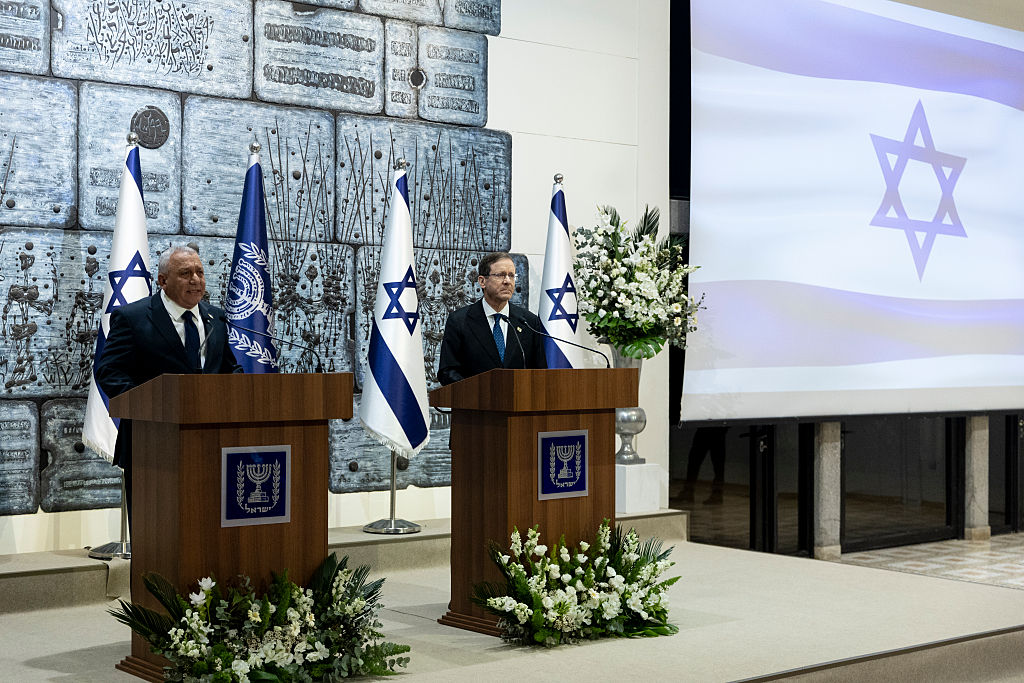
以色列总统以撒克·赫佐格周日指示前军方参谋长、中右翼政党“直路党”领导人加迪·艾森科特组建下一届政府。这是确定下一任总理所需的几个步骤中的第一个,但这一可能持续数月的进程,可能会让本雅明·内塔尼亚胡在可预见的未来继续执政。
Israeli President Isaac Herzog on Sunday tasked Gadi Eisenkot, a former military chief and the leader of the center-right Yashar party, with forming the country’s next government. It’s the first of several steps necessary to determine the next Prime Minister—but a potentially months-long process could leave Benjamin Netanyahu in power for the foreseeable future.
在赫佐格的同意下,艾森科特获得了28天时间,即至12月6日,并可申请14天延期,以组建一支能够赢得议会信任的政府。议会是以色列的立法机构。一旦他通知总统和议会已组建政府,议员们必须在七天内召开会议进行信任投票。如果政府赢得该次投票,即可就职。
With Herzog’s nod, Eisenkot was given 28 days, through Dec. 6, with a possible 14-day extension, to assemble a government that can win the confidence of the Knesset, Israel’s parliament. Once he notifies the President and the Knesset that he has formed a government, the lawmakers must meet within seven days for a confidence vote. The government takes office if it wins that vote. First, Eisenkot would need to bring together rival political parties with disparate policy views and governing priorities in order to form a voting majority.
首先,艾森科特需要将政策立场和治理优先事项各异的敌对政党团结起来,以组成投票多数。各政党加入其联盟,实际上就是支持艾森科特担任下一任总理。但在他获得所需席位之前,仍需克服多个障碍。以下是以色列为选出下一任总理将采取的进程的所有相关信息。以色列的选举结果决定了什么?
By joining his coalition, parties are effectively endorsing Eisenkot as the next Prime Minister. But he has several obstacles to overcome before he can get the number of seats that he needs. Here’s everything to know about the process Israel will undertake in its efforts to name its next Prime Minister. What did Israel’s election results decide? In last month’s election, no party bloc secured the 61 seats needed to form a majority in the 120-seat parliament.
上个月的选举中,没有任何政党联盟赢得组建多数政府所需的61个席位。议会共有120个席位。这意味着未来领导层的大部分问题尚未决定,但进程仍在进行中。议会选举每四年举行一次,最近一次选举于10月27日举行。
This means that little has been decided about future leadership. But the process is still in motion. Knesset elections are scheduled to occur every four years, with the most recent taking place Oct. 27. Voters must be physically present on Election Day, with extremely rare absentee exceptions, and it is a public holiday.
选民必须亲自到场投票,极少数缺席投票除外,选举日为公共假日。据《大西洋月刊》报道,估计有6.7万名居住在国外的以色列公民今年回国投票。以色列公民投票给他们希望执政的政党,而非特定候选人。根据得票比例,各政党随后被分配一定数量的议会席位。
According to The Atlantic, an estimated 67,000 Israeli citizens living outside of the country traveled back this year in order to cast their ballots. Israeli citizens vote for the political parties that they want to govern—not specific candidates. Based on the percentage of votes cast, each party is then allotted a certain number of representatives in the Knesset. Despite Netanyahu's poor approval rating, his Likud party and its far-right and ultra-Orthodox allies, such as Otzma Yehudit (Jewish Power), secured the most votes and won 53 seats.
尽管内塔尼亚胡的支持率不高,但他的利库德党及其极右翼和正统派犹太教盟友,例如犹太力量党,获得了最多选票,赢得了53个席位。议会中支持艾森科特的四个犹太人领导的政党——他的直路党,以及联合党、民主党和以色列我们的家园党——获得了48个席位。两个阿拉伯人领导的政党占据剩余的19个席位,创下历史新高。
The four Jewish-led parties of the Knesset backing Eisenkot—his Yashar party, in addition to the B'Yachad, the Democrats, and Yisrael Beytenu parties—earned 48. Two Arab-led parties hold the remaining 19—a record high. “If you just count the number of votes for each party, Netanyahu's party got the most votes, but because it's a parliamentary system, and you need a simple majority to form a government, he was far away from actually establishing a government,” Steven Cook, a senior fellow at the Council on Foreign Relations, tells TIME.
“如果你只计算每个政党的得票数,内塔尼亚胡的政党获得了最多选票,但因为这是议会制,而且组建政府需要简单多数,他距离实际组建政府还很远,”外交关系协会高级研究员史蒂文·库克对《时代》杂志说。
To form a government, the parties must now negotiate an alliance that can secure enough support to win a confidence vote in the Knesset.
要组建政府,各政党现在必须谈判结成联盟,以获得足够支持,在议会赢得信任投票。通常,这需要达到或超过61个席位,但如果一些政党弃权,也可以更少。
Typically, this requires meeting or exceeding 61 seats, but it can also be fewer if some parties abstain. Either Netanyahu’s bloc or Eisenkot’s bloc could reach a majority by joining forces with both Arab-led parties, giving them 72 or 67 seats, respectively.
内塔尼亚胡阵营或艾森科特阵营,如果与两个阿拉伯人领导的政党联手,都能达到多数,分别获得72个或67个席位。或者,两个敌对阵营如果联合起来,将拥有101个席位——但任何此类协议都需要就谁担任总理进行谈判。
Alternatively, the two rival blocs would hold 101 seats if they joined together—but any such agreement would require negotiations over who would serve as Prime Minister. Netanyahu would likely press to stay on.
内塔尼亚胡可能会坚持留任。对手领导人也可以同意轮流担任总理,就像希蒙·佩雷斯和伊扎克·沙米尔在1984年至1988年间所做的那样。内塔尼亚胡过去曾表示愿意这样做,2020年曾向本尼·甘茨提出过这样的提议,但未能实现。在向议会提交新政府提案之前,必须做出这一决定。
Rival leaders can also agree to take turns as Prime Minister, as Shimon Peres and Yitzhak Shamir did between 1984 and 1988. Netanyahu has shown willingness in the past, extending such an offer to Benny Gantz in 2020, though it did not go through. The decision would need to be reached before a proposition for the new government could be submitted to the Knesset. Parties within an electoral bloc can also negotiate separately.
选举联盟内的政党也可以单独进行谈判。例如,艾森科特或内塔尼亚胡都可以争取某个阿拉伯领导的政党,而不一定需要说服另一方。不过,联盟内的政党往往在政策和代表性问题上持有相似立场。选举结果也可能在新政府组建之前改变议会的控制权。
For example, either Eisenkot or Netanyahu could court one of the Arab-led parties without needing to necessarily sway the other. However, parties within a bloc tend to share similar outlooks on policy and representation. The election results can also shift control of parliament before a new government is formed. Shira Efron, a senior fellow at Rand, a global policy think tank, says that voters should take note of Tuesday’s announcement that the opposition bloc agreed to appoint Matan Kahana, who belongs to Eisenkot’s Yashar party, as the next Knesset Speaker and Avigdor Lieberman, leader of Yisrael Beytenu, as Head of Foreign Affairs and Defense Committee, reflecting a distinct vision for parliament and a willingness to begin the work.
兰德公司高级研究员希拉·埃夫龙表示,选民应注意周二的公告:反对派联盟同意任命属于艾森科特的“直路”党的马坦·卡哈纳为下一任议长,以及以色列我们党领导人阿维格多·利伯曼为外交与国防委员会主席,这反映了对议会的独特愿景,以及开始工作的意愿。
“They have already been able to enact a few things already, fulfilling promises in terms of taking over the Knesset agenda,” Efron says.
“他们已经能够实现一些事情,在掌控议会议程方面兑现了承诺,”埃夫龙说。“在政府甚至还未组建、而他仍是总理之际,这已经在削弱内塔尼亚胡。所以,对于任何希望看到政府更迭的人来说,这是件好事。”为什么选择艾森科特来组建以色列下一届政府?
“This is weakening Netanyahu already, before a government is even formed, and while he is still Prime Minister. So this is a positive thing for anyone who wants to see a change in government.”Why was Eisenkot chosen to form Israel’s next government? While the presidency is largely ceremonial in Israel, their power is particularly pronounced in the aftermath of an Israeli election.
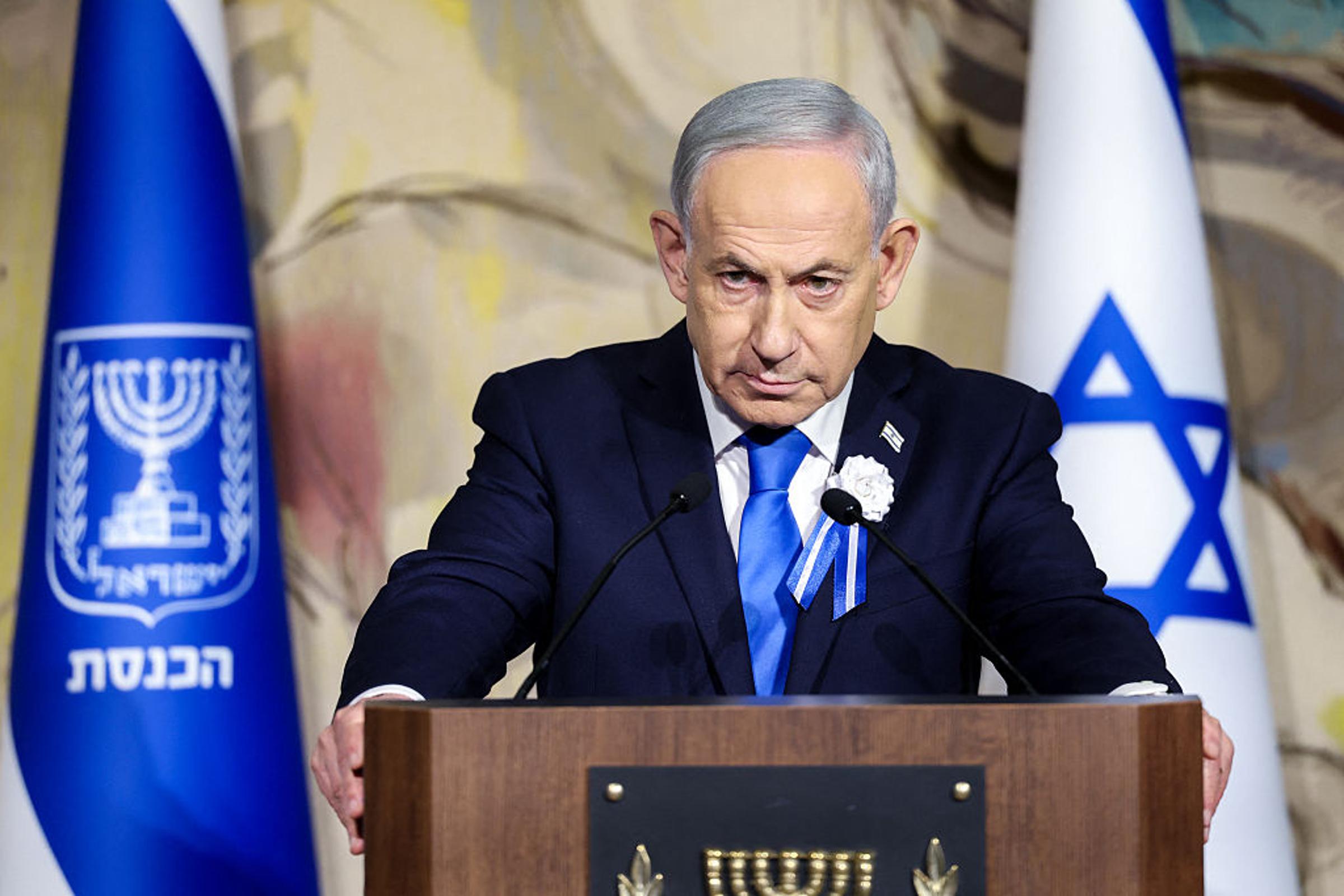
虽然以色列的总统职务大多是礼仪性的,但在以色列选举之后,他们的权力尤其突出。他们会与各政党领袖磋商,并选出他们认为最有可能成功将各方不同的政党凝聚在一起、组建执政联盟的人选。
They consult with the leaders of each political party and pick the person who they believe is most likely to successfully bring together disparate parties to form a governing coalition. “More often than not, it's been the leader of the party with the most votes,” says Cook.
“多数情况下,选票最多的政党领袖会被选中,”库克说。“在这种情况下,那就是内塔尼亚胡。”不过,还考虑了另一个因素:上周磋商期间,120名议员中有67人向赫尔佐格支持艾森科特,而只有46人支持内塔尼亚胡。
“In this case, that's Netanyahu.”Another factor, however, was taken into account: 67 out of 120 Knesset members endorsed Eisenkot to Herzog during consultations last week, while only 46 endorsed Netanyahu. “President Herzog came to the conclusion that although Netanyahu has the most votes of any party, Gadi Eisenkot had a better chance to form the necessary coalition,” Cook says.
“赫尔佐格总统得出结论,尽管内塔尼亚胡的政党得票最多,但加迪·艾森科特组建必要联盟的机会更大,”库克说。
Herzog’s tapping of Eisenkot is not an endorsement.
赫尔佐格任命艾森科特并非表示支持。相反,这表明赫尔佐格认为艾森科特是组建政府的最清晰路径。
Rather, it signifies that Herzog sees Eisenkot as the clearest path to forming a government. Cook says it boils down to a simple point: “More Israelis voted for parties that oppose Netanyahu than voted for parties that support Netanyahu.”
库克说,这归结为一个简单的观点:“投票给反对内塔尼亚胡政党的以色列人,多于投票给支持内塔尼亚胡政党的以色列人。”多数选民支持寻求取代内塔尼亚胡的政党,即使这些政党对接下来该做什么意见不一。
A majority of voters backed parties seeking to replace Netanyahu, even if those parties disagree on what should come next. “Obviously, there's a range of complications associated with that,” he says, “which is what is making coalition-building difficult.”
“显然,这伴随着一系列复杂问题,”他说,“这正是让组建联合政府变得困难的原因。”组建政府面临哪些障碍?
What barriers stand in the way of forming a government?
尽管艾森科特获得了67名议会议员的支持,但这并不意味着他组建政府会一帆风顺。
Even though Eisenkot received the endorsement of 67 Knesset members, that does not mean it’s smooth sailing for him to create a government.
艾森科特组建政府最清晰的路径,是争取两个阿拉伯领导政党——联合名单和拉姆党——的支持,以获得他们的19个席位。
The clearest path to government for Eisenkot would be securing support from the two Arab-led parties—the Joint List and Ra’am—to gain their 19 seats.
但这一路径因一些支持他的政党反对与阿拉伯领导政党组建执政联盟而变得复杂。
This is complicated by the fact that some of his backing parties are opposed to forming a governing coalition with Arab-led parties.
据《以色列时报》报道,民主党主席亚伊尔·戈兰是四个支持艾森科特的犹太领导政党中,唯一公开支持与联合名单和拉姆党组建联盟的领导人。纳夫塔利·贝内特和利伯曼都是民族主义领导人,反对依赖阿拉伯合作伙伴的想法。
According to the Times of Israel, Yair Golan, Chairman of the Democrats, is the only leader of the four Jewish-led parties backing Eisenkot to publicly support a coalition with the Joint List and Ra’am. Naftali Bennett, leader of the B'Yachad party, and Lieberman are both nationalist leaders who oppose the idea of becoming reliant on Arab partners.
阿拉伯领导政党历史上一直避免正式参与执政联盟——2021年除外,当时拉姆党加入了一个寻求赶下内塔尼亚胡的联盟。
Arab-led parties have historically avoided formal participation in governing coalitions—aside from 2021, when Ra’am joined a coalition seeking to oust Netanyahu.
库克指出,它们仍可以从“外部”承诺支持,这意味着与艾森科特一起投票,并让他在议会中获得多数,而不加入他的联盟。
Cook points out that they can still pledge support from “the outside,” which means voting alongside Eisenkot, and giving him the majority in parliament, without joining his coalition.
“过去有过这样的例子,而且并不十分稳定,但这是一种可能性,”库克说。
“There’s examples of that happening in the past, and it has not been very stable, but that's one possibility,” Cook says.
联合名单表示,将支持由外部支持的替代政府,但利伯曼明确拒绝了依赖阿拉伯领导政党外部支持的政府。
The Joint List has said it would support an alternative government from outside the coalition, but Lieberman has rejected outright a government reliant on outside support from Arab-led parties.
库克补充说,另一种可能性是,艾森科特邀请拥有合计13个席位的极端正统派政党加入他的联合政府。
Another possibility, Cook adds, would be if Eisenkot invited the ultra-Orthodox parties, with a combined 13 seats, to join his coalition.
但鉴于极端正统派政党反对犹太经学院学生强制服兵役,这可能会更加困难。10月31日,艾森科特在社交媒体上分享了一篇帖子,阐述了他对任何希望加入他即将组建的“国家紧急政府”的政治派别提出的四项核心要求,其中包括对所有以色列人实行国民服役的任务。内塔尼亚胡能否继续执政?
But that would likely be even more difficult, given that the ultra-Orthodox parties oppose compulsory military service for yeshiva students. On Oct. 31, Eisenkot shared a post on social media that outlined his four core demands for any political faction looking to join his upcoming “national emergency government,” including a mandate of national service for all Israelis. Can Netanyahu stay in power?
在未来几周里,随着艾森科特努力组建合适的联合政府,内塔尼亚胡将默认继续担任看守政府的领导人。
In the coming weeks, as Eisenkot works to form a suitable coalition, Netanyahu will remain by default at the head of the outgoing government.
他也可以自由进行联络,试图组建自己的联合政府,这可能涉及说服那些在与赫尔佐格的初步谈话中未支持他的人。
He is also free to make outreach efforts in the attempt to form his own coalition, which might involve swaying those who did not endorse him in their initial conversations with Herzog.
如果艾森科特在规定时间内无法组建联合政府,且所有可能的延期都已用尽,赫尔佐格可以指定另一名议员尝试组建政府——例如内塔尼亚胡——或者告诉议会,他看不到前进的道路。如果指定了其他人,他们将有28天时间尝试,且不允许延期。
If Eisenkot is unable to form a coalition in the allotted time, with all potential extensions tapped, Herzog can choose another member of the Knesset to try—such as Netanyahu—or tell the parliament that he does not see a path forward. If someone else is named, they would be given 28 days to make an attempt, without the possibility of an extension.
如果第二名候选人失败,或者赫尔佐格通知议会,他看不到组建政府的可能性,议员们有21天时间,以多数票请求将任务交给一名愿意的议员。该候选人随后将有14天时间组建政府。
If a second candidate fails, or Herzog informs the Knesset that he sees no possibility of forming a government, lawmakers have 21 days to request, by majority, that a willing Knesset member be given the task. That candidate would then have 14 days to form a government.
如果没有候选人获得所需的支持,或者最后一次尝试失败,议会将自动解散,选举必须在90天内举行。内塔尼亚胡将继续领导看守政府,直到新政府成立。
If no candidate receives the required backing, or that final attempt fails, the Knesset is automatically dissolved and elections must take place within 90 days. Netanyahu would continue heading the outgoing government until a replacement is established.
这种僵局对以色列来说并非新鲜事:2019年至2022年间,该国举行了五次选举,各政党努力寻找共同点。
This kind of deadlock would not be new for Israel: Between 2019 and 2022, the country held five elections as parties struggled to find common ground.
埃弗龙表示,现在未能组建联盟可能被视为对反对派的挫折,因为几个月后再次举行选举并不“一定意味着他们会表现得更好”。她还补充说,长期的选举周期——以及它带来的不确定性——很可能也不受以色列选民和立法者的欢迎。
Failing to form a coalition now could be seen as a setback for the opposition, Efron says, because another election in a few months does not “mean necessarily they're going to fare any better.”A prolonged cycle of elections—and the uncertainty it would bring—would likely be unpopular with Israeli voters and lawmakers, as well, she adds.
如果有机会组建自己的政府,内塔尼亚胡将面临艰难的挑战:艾森科特及其盟友已承诺不与他同组政府,并指责他在2023年10月7日哈马斯袭击前忽视了警告。
If given the chance to form his own government, Netanyahu would face an uphill battle: Eisenkot and his allies have vowed not to sit in government with him and have accused him of ignoring warnings ahead of Hamas’s attacks on Oct. 7, 2023.
为了领导,内塔尼亚胡可能会联系四个已承诺支持艾森科特的政党中更偏右的成员。贝内特和利伯曼过去曾与他合作。如果内塔尼亚胡能说服他们,支持他比与阿拉伯领导的政党合作更不令人反感,那么他们的席位将使他获得执政所需的多数。
In an effort to lead, Netanyahu would likely reach out to more right-leaning members of the four parties that have pledged support to Eisenkot. Bennett and Lieberman have worked with him in the past. If Netanyahu is able to convince them that supporting him is less objectionable than collaborating with the Arab-led parties, then their seats would give him the majority needed to govern.
虽然这场竞争似乎取决于艾森科特和内塔尼亚胡的说服力,但贝内特和利伯曼等领导人最终可能决定谁来执政以色列。他们的选择可能取决于他们更愿意做出哪种妥协。
While the contest may appear to hinge on the persuasive powers of Eisenkot and Netanyahu, leaders like Bennett and Lieberman could ultimately decide who governs Israel. Their choice may come down to which compromise they are more willing to make.