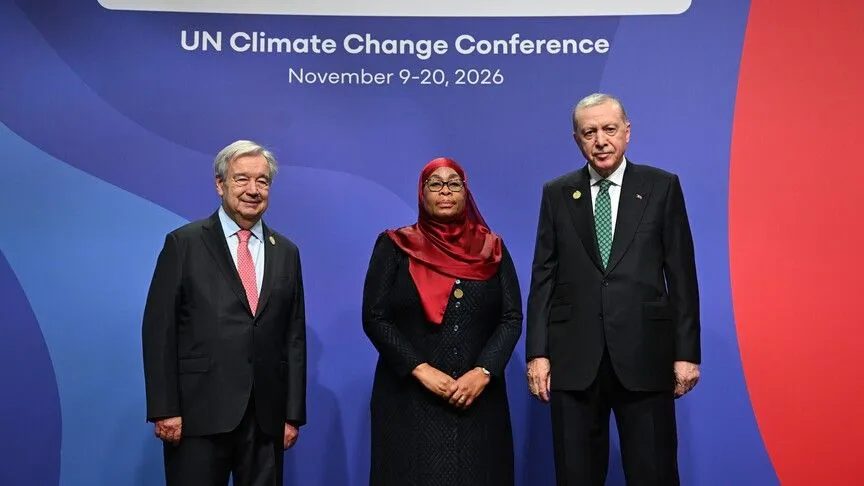
坦桑尼亚总统萨米娅·苏卢胡·哈桑周三呼吁提供更易获得的气候资金,并建立公平的全球碳市场,同时表示非洲的能源转型必须把获得可负担电力放在首位。
Tanzanian President Samia Suluhu Hassan urged more accessible climate finance and a fair global carbon market on Wednesday, indicating that Africa's energy transition must put access to affordable power first.
哈桑在土耳其南部城市安塔利亚举行的COP31峰会上说:“我们需要的是《巴黎协定》第六条下透明的碳市场机制。”此次峰会将持续至11月20日。
"What we need is a transparent carbon market mechanism under Article 6 of the Paris Agreement," Hassan said at the COP31 summit in Türkiye's southern city of Antalya that will run through Nov. 20.
她表示,该机制应确保公平的碳定价、公平的利益分享和环境完整性。
She said the mechanism should ensure fair carbon pricing, equitable benefit sharing and environmental integrity.
哈桑说,坦桑尼亚与其他发展中国家一样,面临长期干旱、降雨难以预测和海平面上升等问题。她估计,气候冲击每年给坦桑尼亚造成约占国内生产总值2%至3%的损失。
Hassan said her country, like other developing nations, faces prolonged droughts, unpredictable rainfall and rising sea levels. She estimated that the climate shocks cost Tanzania about 2% to 3% of its gross domestic product annually.
这个东非国家的经济严重依赖自然资源和雨养农业,使其极易受到气候变化影响。据联合国教科文组织统计,非洲最高峰乞力马扎罗山的冰川自1912年首次测绘以来,表面积已减少91%。干旱还扰乱了电力供应。
The East African country's economy relies heavily on natural resources and rain-fed farming, leaving it highly exposed to climate change. Glaciers on Mount Kilimanjaro, Africa's highest peak, have lost 91% of their surface area since they were first mapped in 1912, according to UNESCO. Drought has also disrupted power supplies.
哈桑说:“尽管在经历气候冲击方面存在相似之处,但必须认识到各国国情的差异。”她还表示,气候行动必须以公平、气候正义和“共同但有区别的责任”原则为指导。哈桑提出了坦桑尼亚的三项优先事项。
"Despite the similarities in experiencing the climate shocks, differences in national circumstances have to be recognized," said Hassan. She added that climate action must be guided by equity, climate justice and the principle of "common but differentiated responsibilities." Hassan set out three priorities for Tanzania.
第一项是“充足、可预测且可获得”的气候资金。她说,发展中国家需要更多赠款和优惠贷款,尤其是在适应方面,还需要技术转让和能力建设。
The first was "adequate, predictable and accessible" climate finance. She said developing countries need more grants and concessional loans, particularly for adaptation, along with technology transfer and capacity building.
她还强调了非洲在产生碳信用方面的潜力,并提到坦桑尼亚在交通、废物管理和可再生能源领域的机会,以及该国约4810万公顷(1.19亿英亩)的森林。她表示,碳市场还应为当地社区带来更多资源。
She also highlighted Africa's potential to generate carbon credits, citing opportunities in Tanzania's transport, waste management and renewable energy sectors, as well as its forests, which cover about 48.1 million hectares (119 million acres). She said carbon markets should also generate more resources for local communities.
接下来谈到她的第二项优先事项,哈桑敦促加大对非洲能源转型的投资。
Turning to her second priority, Hassan urged greater investment in Africa's energy transition.
“对非洲而言,能源正义意味着确保公平获得负担得起、可靠和可持续的能源,”她说。
"For Africa, energy justice means ensuring equitable access to affordable, reliable, and sustainable energy," she said.
哈桑表示,坦桑尼亚正在实施一项国家能源契约,以扩大电力覆盖,尤其是农村地区,并敦促增加私人投资和可负担的融资。
Hassan said Tanzania is implementing a National Energy Compact to expand electricity access, especially in rural areas, and urged more private investment and affordable financing.
根据该能源契约,坦桑尼亚的目标是到2030年将电力覆盖率提高到75%。另一项国家战略的目标是到2034年实现80%的清洁烹饪解决方案普及率。
Tanzania aims to raise electricity connectivity to 75% by 2030 under the Energy Compact. A separate national strategy targets 80% access to clean cooking solutions by 2034.
今年8月,哈桑为2115兆瓦的朱利叶斯·尼雷尔水电站项目揭幕,政府报告称坦桑尼亚的总装机发电容量已达到4646兆瓦。
In August, Hassan inaugurated the 2,115-megawatt Julius Nyerere Hydropower Project, with the government reporting that Tanzania's total installed generation capacity reached 4,646 megawatts.
哈桑已将清洁烹饪列为一项重大政策优先事项。据UONGOZI研究所称,约82%的坦桑尼亚家庭主要使用木柴或木炭做饭。联合国工业发展组织估计,该国每年损失37.2万公顷森林。
Hassan has made clean cooking a major policy priority. About 82% of Tanzanian households primarily use firewood or charcoal for cooking, according to the UONGOZI Institute. The UN Industrial Development Organization estimates that the country loses 372,000 hectares of forest annually.
她的第三项优先事项是包容性和气候韧性发展。她说,坦桑尼亚未来25年的发展愿景侧重于创新、工业化以及为年轻人提供绿色技能和就业机会。
Her third priority was inclusive and climate-resilient development. She said Tanzania's development vision for the next 25 years focuses on innovation, industrialization and green skills and jobs for young people.
“让COP31成为一个转折点,从承诺转向落实,从雄心转向行动,从承诺转向可衡量的成果,”她说。
"Let COP31 mark a turning point from promises to delivery, from ambition to action, and from commitments to measurable results," she said.