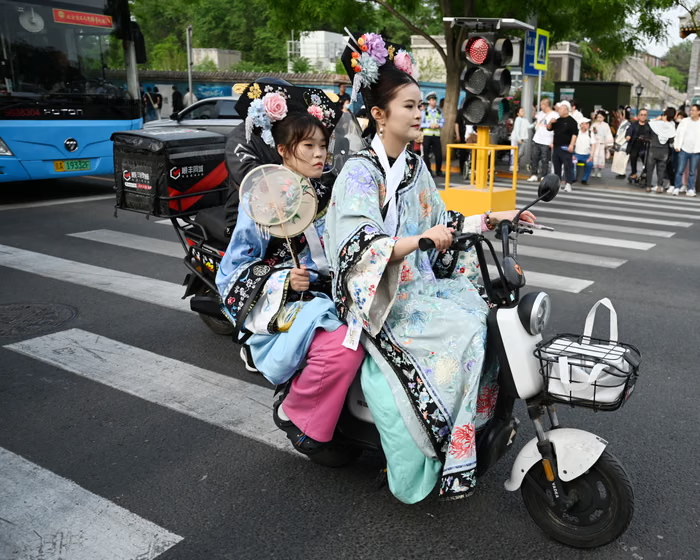
电气化竞赛已成为今年联合国气候峰会的一个核心主题:增加电力使用(尤其是来自清洁能源的电力)有望改善世界各地人们的日常生活。
The race to electrification has emerged as a key theme of this year’s UN climate summit: increasing the use of electricity – particularly from clean sources – has the potential to improve daily life for people around the world.
峰会的共同主办方目前正试图让各国承诺,到2035年将电力使用量占所有能源使用的比例提高到35%。全球目前的这一数字为23%,但一些国家已经在阔步前进。在10万名代表、谈判代表和世界领导人在土耳其安塔利亚敲定细节之际,《卫报》采访了挪威、卢旺达和中国的三位人士,以了解在电气化程度更高的国家,生活是什么样子的。
The summit’s co-hosts are now trying to get countries to promise to increase their electricity use to 35% of all energy used by 2035. The global figure currently stands at 23%, but some countries are already striding ahead. As 100,000 delegates, negotiators and world leaders thrash out the details in Antalya, Turkey, the Guardian spoke to three people in Norway, Rwanda and China to find out what life looks like in more highly electrified countries.
挪威奥斯陆的一名上班族 挪威是迈向100%电气化竞赛的世界领头羊。今年9月,新售汽车中创纪录地有98.81%是电动汽车,水力发电则产生了所有电力的90%。但随着包括来自新数据中心在内的能源需求迅速上升,当局警告称,该国很快可能面临电力赤字和更高的能源价格。
An office worker in Oslo, Norway Norway is a world leader in the race to 100% electrification. In September, a record 98.81% of new cars sold were electric, and hydropower produces 90% of all electricity. But with rapidly rising energy demands, including from new datacentres, authorities warn that the country could soon face a power deficit and higher energy prices.
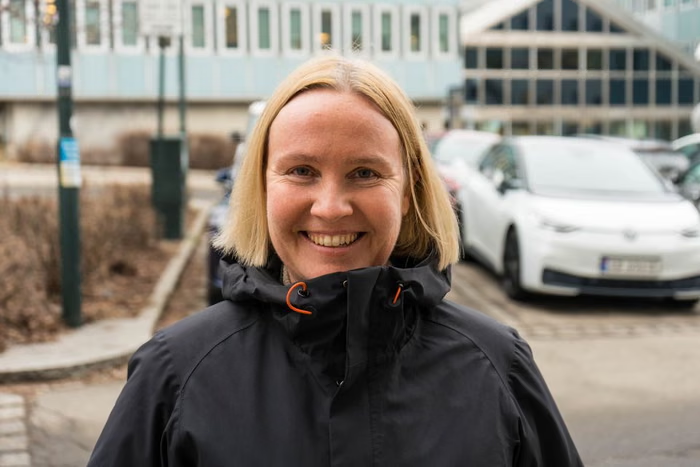
现年47岁的乌尼·贝尔格(Unni Berge)与丈夫和两个 teenage 儿子住在奥斯陆,担任挪威电动汽车协会的传讯负责人。她描述了电力如何在典型的一天中发挥作用:“我在我的三居室公寓里使用电,并且我有区域供暖(即通过本地网络从集中源而不是单个锅炉将热量输送到各处,为住宅和建筑物供暖)。对于电力,我们连接到挪威国家电网,该电网主要由水力发电提供。
Unni Berge, 47, lives in Oslo with her husband and two teenage sons and works as the head of communications at the Norwegian EV Association. She describes how electricity features in a typical day: “I use electricity in my three-bedroom flat and I have district heating [where heat is transported around a local network from a centralised source rather than individual boilers to heat homes and buildings]. For electricity we are connected to the Norwegian central grid, which is mainly hydropower.
“我住在一个相当节能的公寓里,所以我们的电费相对较低。10月份,我们在公寓的电费上花费了730挪威克朗(约合57英镑),9月份则是500克朗。
“I live in a rather energy-efficient flat, so our electricity bills are comparatively low. In October, we spent 730 Norwegian kroner [£57] on electricity for our apartment, and in September it was 500 kroner.
“我乘公交车上班。奥斯陆的公交车几乎全都是纯电动的。我虽然也有一辆电动汽车,但因为市中心对汽车有很多限制,开着车去奥斯陆市中心上班根本行不通。在我住的那条街上,每五分钟就有一趟公交车,所以我根本不需要规划时间。我走出门,车就来了。
“I go to work by bus. Almost all the buses in Oslo are fully electric. I also have an electric car, but driving in the middle of Oslo for work is not an option because we have a lot of restrictions on cars in the city centre. In my street, the bus comes every fifth minute, so I don’t have to plan. I go outside and a bus comes.
“我主要在周末使用电动汽车。很多行程都是开车带我两个分别18岁和15岁的孩子去参加体育活动。我还带了一支手球队,所以我要开车去参加很多手球比赛和锦标赛。
“I mostly use my electric car on weekends. A lot of the trips are driving to sports activities with my two children, who are 18 and 15. I also train a handball team, so I use it to go to a lot of handball matches and tournaments.
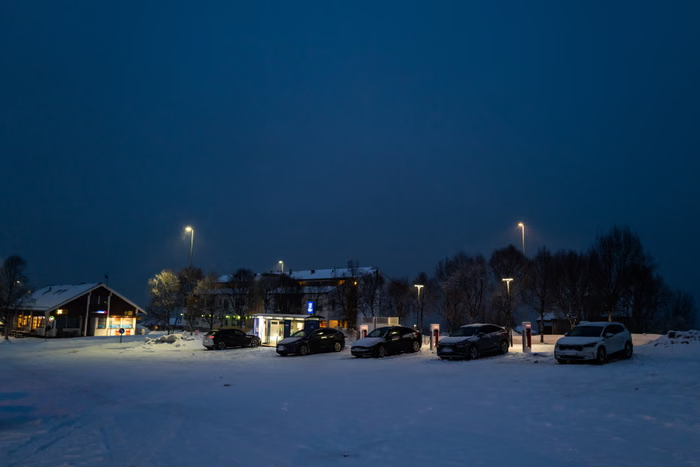
“我们用车库里的充电盒给汽车充电。和奥斯陆大多数公寓车库一样,我们在那里建设了集体充电系统。如果每个人同时充电,速度就会变慢,但在实际中这种情况不会发生。
“We charge our car with a charging box in our garage where, like most apartment garages in Oslo, we have built a collective charging system. If everyone put their charging on at the same time it would go slow, but in practice that doesn’t happen.
“我的电动汽车电池容量很大,所以我每两到三周充电一次。当然,我们要支付电费和系统费,但这比汽油和柴油便宜得多。
“I have a large battery on my EV so I charge it once every two to three weeks. Of course we pay for the electricity and a system fee, but it’s much cheaper than petrol and diesel.
“我的办公室使用的是区域供暖,这在奥斯陆的大型建筑中很常见,然后我们用电来照明和使用电脑。办公室内部食堂用电做午餐。我在工作中使用微软Copilot,这是一个非常实用的工具,但当然这也带来了重大问题——如果所有人都更多地使用人工智能,能源需求就会变得过高。
“In my office, we have district heating, which is quite common in Oslo in larger buildings, then we use electricity for light and computers. Lunch is made in my office in the internal canteen with electricity. At work I use Microsoft Copilot, which is a really helpful tool, but of course there are big questions there – energy demands will get too high if everyone is using AI more.
“我回到家里,用电做晚饭、看电视并去看电影。我在挪威西海岸的一个小村庄长大,当时我们除了用电,还用木柴取暖。但公平地说,电是挪威生活的一个普遍部分,而且这种情况已经持续很长时间了。
“I come home and use electricity to make dinner, watch television and go to the cinema. Growing up in a small village on the western coast of Norway, we also used wood for heating as well as electricity. But it is fair to say that electricity is common part of Norwegian life and has been for a long time.
“发生变化的是,我们的交通运输行业现在也靠日益增多的电力驱动:乘用车、公交车以及渡轮。这一切发生得相当快。重型货车也越来越多地采用电力驱动,所以这当然改变了整个系统和社会。”
“What has changed is that our transport sector is also now run on a rising amount of electricity: passenger cars, buses and also ferries. That happened quite fast. Heavy goods vehicles are also increasingly electric, so of course that changes the system and society.
“也许是因为乌克兰战争以及更极端的天气条件,人们开始意识到自己对电力的依赖程度相当高,因此近年来围绕如何为危机做准备展开了辩论。在以往的停电中,一些人曾将他们的电动汽车当作电池来为电器供电。
“Perhaps because of the war in Ukraine and more extreme weather conditions, people are becoming aware that they are quite dependent on electricity, so in recent years there has been debate on how to prepare for a crisis. In previous power cuts, some people have used their electric cars as a battery to power electric equipment.

“关于电价也有很大的辩论。在挪威,我们拥有近乎百分之百的可再生电力,即便如此,我们还是接入了欧洲电网。因此,天然气价格仍然会影响我们的电价。当遇到干旱的冬季时,电价就会上涨,因为如果雪量减少,水力发电获得的水源就会变少。数据中心的不断增加也是消费者开始感到疑惑的一个问题——这种发展将会是什么样的,以及它消耗了多少能量。”
“There is also a big debate about electricity prices. In Norway we have nearly 100% renewable electricity, but even so we are connected to the European grid. So the gas prices still influence our electricity prices. And when we have dry winters, electricity prices rise because if we have less snow, the hydropower gets less water. Rising numbers of datacentres is also something consumers are starting to wonder about – what this development is going to look like and how much energy it is using.”
卢旺达基加利的一名电动摩托车出租车司机 六年前,卢旺达政府通过减免电动自行车和汽车的许多税费,并为运营充电站的企业提供激励措施,开启了对电动交通的大力推广。
An e-motorbike taxi driver in Kigali, Rwanda Six years ago, the Rwandan government embarked on an enthusiastic promotion of e-mobility by removing a number of taxes on e-bikes and vehicles and offering incentives for businesses operating charging stations.
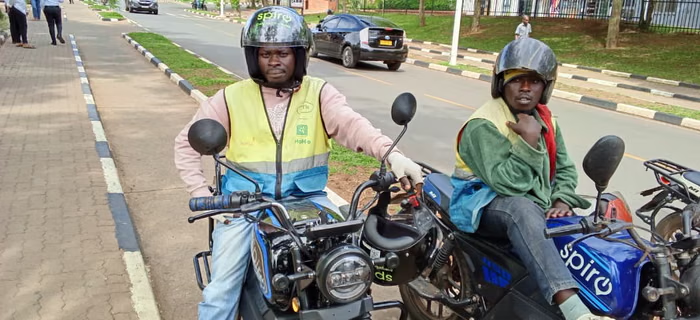
政府还禁止在首都兼卢旺达最大城市基加利登记新的化石燃料摩托车,并在车辆采购中优先考虑电动汽车。
The government has also banned registration of new fossil fuel-powered motorcycles in Kigali, the capital and Rwanda’s largest city, and is prioritising EVs in its vehicle acquisition.
克拉韦尔·哈巴古森加(Claver Habagusenga)是一名住在基加利电动摩托车出租车司机。他分享了典型的一天:“我的一天从早上5点开始,深夜结束。我的第一项工作是全面清洁摩托车、检查胎压、查看刹车是否正常、核实电池健康状况。我渐渐了解到,在卢旺达的道路上行驶需要严格的纪律,因为交通法规执行严格,违规会招致沉重的罚款。
Claver Habagusenga is an e-motorbike taxi driver living in Kigali. He shares a typical day: “My day begins at 5am and ends late in the evening. My first job is a general clean of my bike, checking tyre pressure, seeing if the brakes are in order, verifying battery health. I have come to learn that riding on Rwandan roads requires strict discipline, as traffic regulations are strictly enforced and a breach attracts heavy fines.
“在过去的五年里,我学会了使用电磁炉准备早餐。过去,我习惯使用木炭炉,这会耽误我的饭菜和工作。此外,木炭炉产生的浓烟会影响我的全家人,而且每天的燃料开销也很大。”
“In the last five years, I have learned to prepare my breakfast using an induction cooker. In the past, I used to use a charcoal stove, which would delay my food and my work. Besides, a charcoal stove would affect my entire family with heavy smoke, and also cost me heavily in fuel each day.
“吃过早饭后,忙碌就开始了。首先,我冲向最近的换电站,以防电池没电。我每天的工作时间都不固定。有些乘客是老客户。两个月前,基加利的三户家庭与我签约,让我每天负责安全接送他们的三个幼儿上下学。
“After my breakfast, the hustle begins in earnest. First, I rush to the nearest swap stations in case my battery is down. I have a varied working schedule daily. Some of my passengers are permanent clients. Two months ago, I was contracted by three families in Kigali to safely transport their three nursery kids to and from school each day.
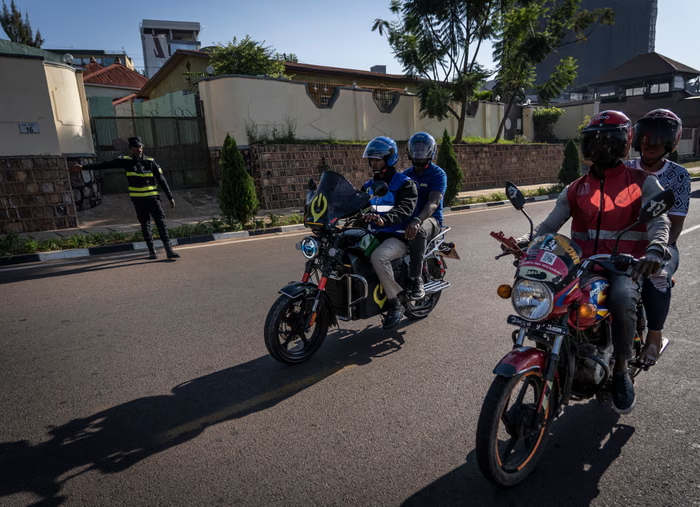
“三年前,我有一辆燃油摩托车,每个周六醒来都要去加油站给摩托车换机油、清理空气滤清器以及进行其他保养,费用大约是1.15美元[85便士]。我喜欢骑电动摩托车,因为它不仅是自动挡的,而且没有噪音。我总是劝开燃油摩托车的同事改用电动车。
“Three years ago, I owned a petrol motorbike and I would wake up every Saturday to visit petrol stations to have my bike oil changed, air filter cleaned and other maintenance, at a cost of around US$1.15 [85p]. I love riding an electric motorbike because it’s automatic and isn’t noisy. I always advise my colleagues with fuel bikes to switch to electric ones.
“能在这样一个致力于保护环境的国家工作和生活,我感到很幸运,也很荣幸能与同事分享我的想法和经验。
“I feel privileged to work and live in a country that has the commitment of protecting the environment and feel honoured to share my ideas and experience with colleagues.
“午餐时间是高峰期,特别是首都。许多电动摩托车手常犯一个主要问题:许多人刚买车,缺乏驾驶技能,却总是行色匆匆。
“Lunchtime is rush hour, especially in the capital. There is one major problem that many electric motorbike riders are guilty of: many have just acquired bikes and are lacking skills, yet are always in a rush.
“有时我会省掉午餐,但时间允许的话,我会去任何一家餐馆。那是讨论我们这行不可预测性的时候,生活成本与日俱增,更不用说高通胀让大多数人苦不堪言。
“Sometimes I skip lunch, but when time allows I’ll be in any restaurant. It’s the time to talk about the unpredictability of our business, the cost of living rising daily, let alone high inflation making the majority of us suffer.
“我每天的工作变得更忙了,因为我的乘客更多了,对于他们来说,电动摩托车比燃油摩托车更便宜。
“My daily work has become busier because I have more passengers, since an EV motorbike is cheaper for them compared to a fuel bike.
“我今天行驶的每一公里,花费只是汽油摩托车手燃料开销的一小部分,大幅削减了日常能源支出和碳排放。
“Each kilometre I make today costs a fraction of what a petrol-powered motorcycle rider spends on fuel, cutting daily energy expenses significantly, and carbon emissions.
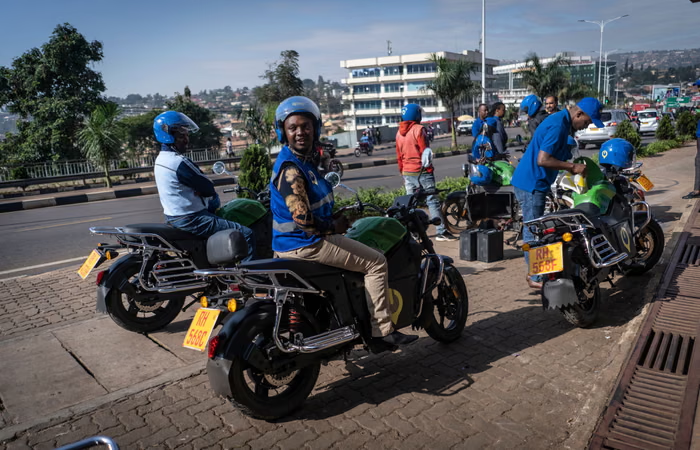
“我的电动摩托车年道路税只需2.03美元,而燃油摩托车则要收6.77美元。这意味着我可以给客户提供优惠的价格,而且客户也很喜欢坐我们的车,因为它们是可以追踪的。
“My electric motorbike costs $2.03 for an annual road licence, while a fuel motorbike is charged $6.77. It means I can offer good prices to my clients, and also clients love to use our bikes since they are trackable.
“我一天去换三次电池,每次换电池收费1.69美元。我一直记得,当我开燃油摩托车的时候,一天可以用3升燃料,赚取6.09美元的利润,但今天我骑电动自行车一天能赚11.50美元。
“I visit battery swap stations three times a day and I am charged $1.69 per battery swap. I always remember that when I had a petrol bike, I could use 3 litres of fuel a day and make a profit of $6.09, but today I earn $11.50 a day with an electric bike.
“周日是和家人一起休息的时间。对我来说,重要的是我们拥有了更清洁的摩托车,其拥有成本更低,而且比我曾经依赖的燃油车运行得更好。
“On Sunday, it is time for rest with my family. For me, what matters is that we have cleaner motorbikes that also cost less to own, and operate better than the fuel one I once depended on.
“我现在的花销减少了。这就是我和家人唯一在乎的事情。”中国上海的一名记者 从超市门外接入充电桩的一排排踏板车,到在大街小巷穿梭不息的公交车大军,电动汽车以惊人的速度占领了中国的道路。
“I spend less today. That is all that matters to me and my family.”A journalist in Shanghai, China From rows of scooters plugged into charging pods outside supermarkets to armies of buses shuttling back and forth on high streets, electric vehicles have taken over China’s roads with astonishing speed.
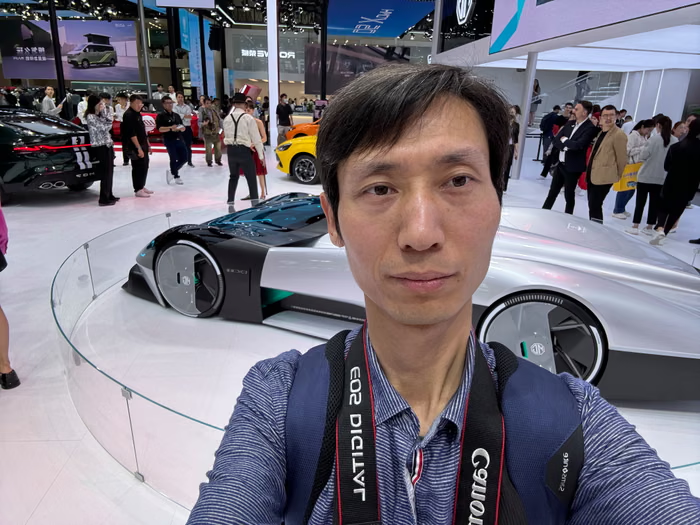
总部位于上海的新闻媒体CnEVPost的创始人张帕特(Phate Zhang)描述了他典型的一天:“我通常在早上6点30分醒来,为一天做准备。吃过早饭后,接送孩子上学的事就迫在眉睫了。
Phate Zhang, the founder of the Shanghai-based news outlet CnEVPost, describes his typical day: “I usually wake up at 6.30am to get ready for my day. After breakfast, school runs are looming large.
“我家有三辆电动踏板车,这种类似Vespa的两轮车非常适合跑腿办事。我骑一辆送我6岁的女儿去学校,学校有两个街区远。与我们同住的父亲骑另一辆送我9岁的儿子去学校,学校大约在4公里外。我妻子骑第三辆去最近的地铁站乘车上班。
“My family own three electric scooters, Vespa-like two-wheelers perfect for running errands. I ride one to take my six-year-old daughter to her school, which is two blocks away. My father, who lives with us, rides another to ferry my nine-year-old son to his school, which is about 4km away. My wife rides the third to the nearest subway station to catch the train to work.
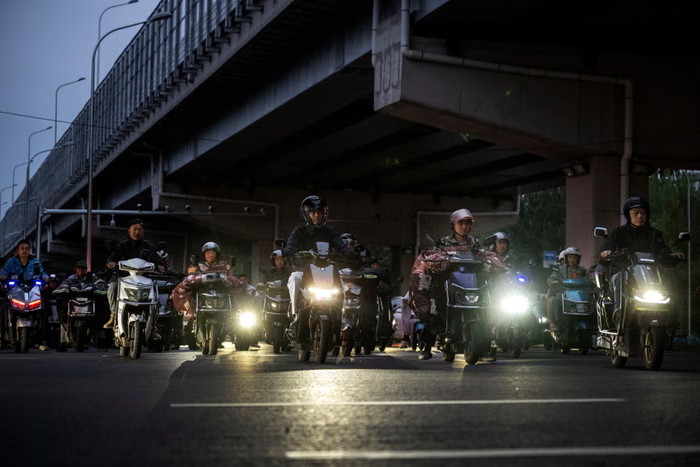
“我回到家后便开始工作。我的工作主要涉及为我在2020年创立的个人网站撰写关于中国电动汽车公司的资讯报道。这也是我买电动汽车以取代旧柴油车的时候,因为我意识到用电给汽车提供动力会便宜得多。此外,由于政府推广电动汽车的政策,我免费获得了上海的车牌——如果购买化石燃料汽车,车牌大约需要花费9万元人民币[合1万英镑]。我平均每个月花200元人民币[合22英镑]给汽车充电。如果我买另一辆柴油车,账单大约会多出400元人民币。”
“When I get home, I start work. My job mostly involves writing news reports about Chinese EV companies for my own website, which I founded in 2020. That was also when I bought my EV to replace my old diesel car because I realised it would be much cheaper to power my car with electricity. Plus, I could get a number plate in Shanghai – which would cost about 90,000 yuan [£10,000] for a fossil-fuelled car – for free thanks to a government policy to promote EVs. I spend an average of 200 yuan [£22] charging my car each month. If I had gone for another diesel car, the bill would be about 400 yuan more.
“我的父亲负责下午接送两个孩子上下学,让我能专心工作。接送完后,他总会把电动滑板车插在楼下公共自行车库的充电桩上充电,确保第二天电量充足。给一辆滑板车充满电通常只需0.6元(约合7便士),续航可达20公里。
“My father takes care of the school runs in the afternoon for both of my children to allow me to focus on work. Once that is done, he always makes sure that his scooter is charged up for the next day by plugging it into a charging pod in the communal bike garage under our apartment building. It normally costs 0.6 yuan [7 pence] to charge one scooter fully, which would be enough to cover 20km.
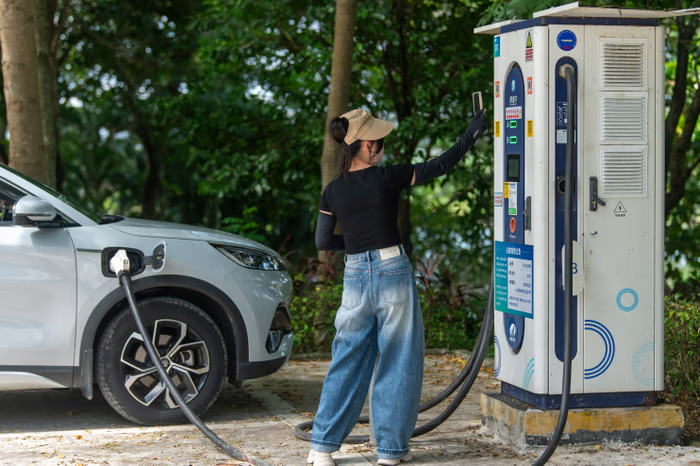
“周末中午,我和妻子通常开车送女儿去上游泳课,随后带着姐弟俩去商场或公园度过一个轻松的下午。如今在上海,家庭拥有新能源汽车已非常普遍,商业区停车场通常都有大量充电桩。只需扫描二维码,充电即刻开始。
“At the weekend, my wife and I usually drive our daughter to her swimming lesson at noon, and then take her and her brother out for a relaxing afternoon in a shopping mall or park. It is so common for families in Shanghai to own an EV nowadays, and there are usually plenty of charging pillars in the parking lots in commercial districts. Just scan a QR code, and your charging starts.
“一年有几次,我会开车带全家回中部老家的农村。单程约800公里,耗时12小时左右,途中会在服务区停几次充电休息。2020年我第一次开新能源车回家时,村里还没有充电桩,但现在家方圆3公里内至少有三个。去年10月,我在村附近的主干道上还看到了许多电动卡车——这是中国更多类型车辆正在摆脱化石燃料的一个积极信号。”
“A couple of times a year, I drive my whole family back to our rural home town in central China. A one-way journey covers about 800km and takes 12 hours or so, including several stops at service areas for charging and rest. When I went home with my EV for the first time in 2020, there weren’t any charging pillars in my village, but now there are at least three within 3km of our house. In October, I also saw many electric trucks on the main road near my village – a promising sign that more types of vehicles are switching away from fossil fuel in China.”