美国人对人工智能感到焦虑。在中期选举中,他们通过投票表达了减缓其扩张的意愿。10个州的40项地方投票提案承诺收紧对数据中心建设的限制,获得了压倒性的公众支持。在其中30场选举竞争中,限制数据中心发展的措施获得了超过70%的选票。皮尤研究中心2026年的一项调查发现,约52%的美国人对人工智能在日常生活中日益增长的应用感到担忧多于兴奋,这一比例高于2021年的37%。只有9%的人感到兴奋多于担忧,约六成受访者表示希望对人工智能在其生活中的使用方式拥有更多控制权。
Americans are anxious about artificial intelligence. In the midterm elections, they voted to slow down its expansion. Forty local ballot measures in 10 states promise to tighten restrictions on data-center construction, with overwhelming public support. Measures to limit development of data centers won more than 70% of the vote in 30 of these electoral contests. A 2026 survey by Pew Research Center found that about 52% of Americans were more concerned than excited about the growing use of AI in daily life, up from 37% in 2021. Only 9% were more excited than concerned, and roughly six in ten said they wanted more control over how AI is used in their lives.
对人工智能的焦虑源头众多:日益强大的系统的安全性及控制它们的能力;对工作被取代的恐惧;监控与隐私丧失;不断上涨的虚假信息和深度伪造浪潮;数据中心消耗的巨量电力和水资源;以及拥有前沿人工智能模型的寥寥几家公司垄断财富与权力。还有地缘政治因素。
The sources of anxiety about AI are many: the safety of increasingly powerful systems and the ability to control them; the fear of job displacement; surveillance and the loss of privacy; a rising tide of misinformation and deep fakes; the enormous amounts of electricity and water that the data centers consume; and the concentration of wealth and power in a handful of companies that own the frontier AI models. And there is geopolitics.
直到现在,对人工智能在大国竞争中作用的焦虑主要局限于政策圈子。但英伟达首席执行官黄仁勋于周四辞职,并可能卷入一起潜在的间谍丑闻,这一可能性将这种焦虑带入了更广泛的公众视野,引发了关于人工智能以及美中竞争的狂热。
Until now, anxiety about the role of AI in geopolitical competition has largely been confined to policy circles. But the possibility that Jensen Huang, who resigned as chief executive of Nvidia on Thursday, may have been compromised in a potential espionage scandal has brought that anxiety into the broader public sphere, fueling a frenzy over AI and the competition between the United States and China.
中国处于可以说是世界上最具影响力的两大经济和政治发展的中心:其在全球贸易中的主导地位及其强大的人工智能能力。中美均为人工智能超级大国,但优势领域不同。美国在算力方面领先,这主要得益于英伟达的先进芯片。中国在人工智能模型方面正在迅速追赶。这种竞争的经济和地缘政治影响巨大。
China is at the center of arguably two of the world’s most consequential economic and political developments: its dominance in global trade and its formidable AI capabilities. China and America are AI superpowers, but their strengths differ. America leads in computing power, thanks largely to Nvidia’s advanced chips. China is catching up fast in AI models. The economic and geopolitical implications of this competition are enormous.
这种竞争还有另一个维度:中国的贸易主导地位带来的经济影响,以及人工智能在经济中日益增长的作用,可能会相互强化,产生比单独任何一个因素更大的冲击。中国的贸易主导地位众所周知。二十年前,经济学家大卫·奥特、大卫·多恩和戈登·汉森给这种焦虑起了个名字,他们创造了“中国冲击”一词,用来形容21世纪初中国对美出口大幅增加的影响。
There is another dimension to this competition: the economic effects of China’s trade dominance and the rising role of AI in the economy could reinforce each other and produce greater impact than either would have alone. China’s trade dominance is well-known. Two decades earlier, the economists David H. Autor, David Dorn, and Gordon H. Hanson gave that anxiety a name when they coined the term “China Shock” to describe the impact of the massive increase in Chinese exports to the U.S. in the early 2000s.
这一激增导致美国制造业急剧萎缩,并使美国某些地区失去了200多万个就业岗位。在过去二十年里,所谓的“中国冲击”已波及全球,中国出口在世界范围内激增,而中国进口却没有出现同等幅度的增长。
The surge contributed to a sharp decline in American manufacturing and the loss of more than two million jobs in certain regions of the United States. Over the past two decades, the so-called China Shock has gone global, as Chinese exports have surged around the world without a comparable rise in China’s imports.
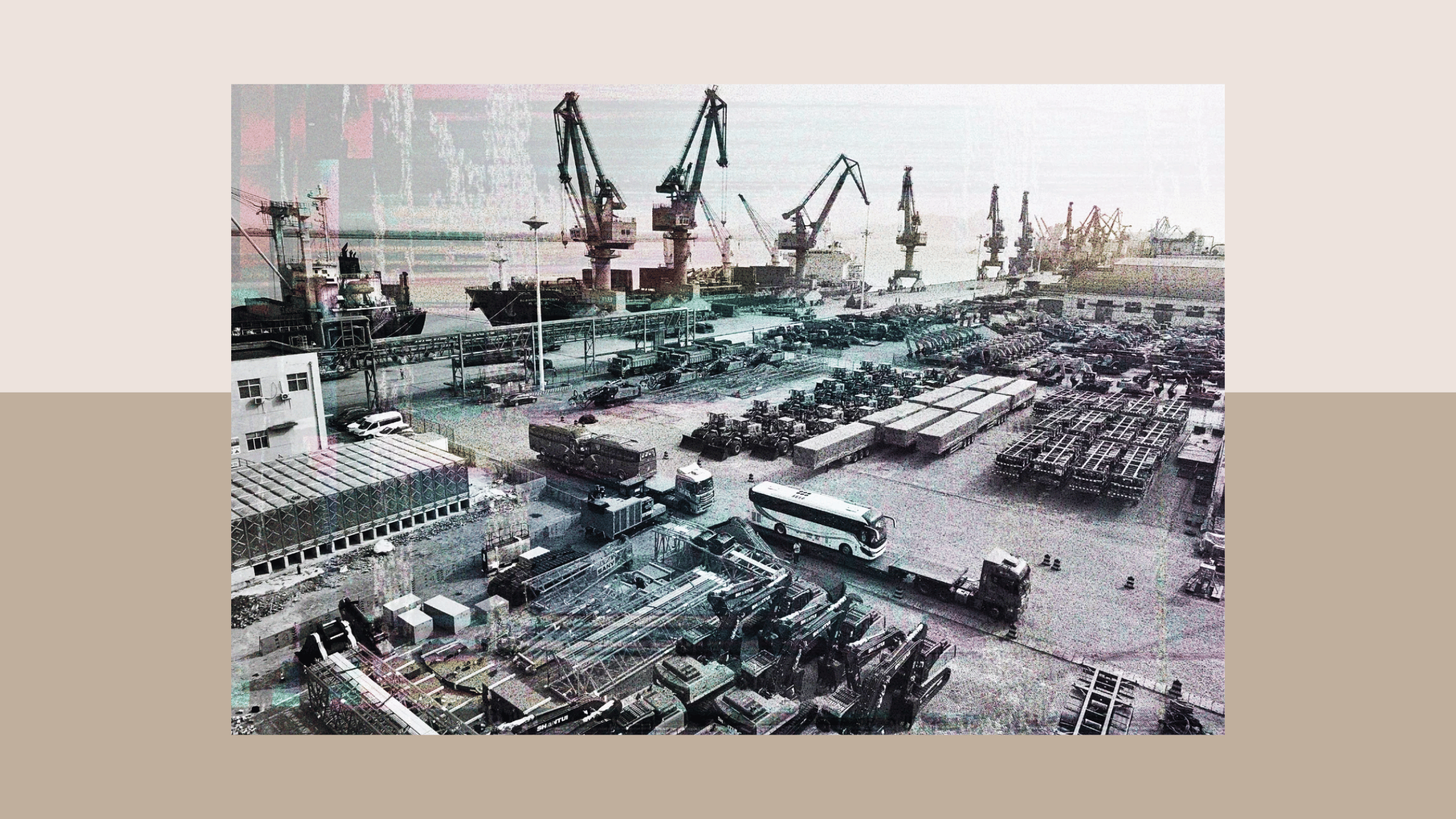
世界可能很快就会经历两个巨大经济冲击的汇聚,它们在方向和规模上相互强化:“中国冲击”和“人工智能生产率冲击”。由人工智能驱动的生产率增长后果仍有争议。但人们担心的是,人工智能将使公司能够在不增加就业、不提高普通民众收入的情况下大幅增加产出。“中国冲击”也有类似效应。中国已成为电动汽车、电池、太阳能电池板、人工智能和机器人技术等先进制造领域的主导力量。但中国竞争力的增强导致中国出口在全球激增,却没有带来中国进口的相应全球激增。
The world may soon experience the convergence of two enormous economic shocks, each reinforcing the other in terms of their direction and magnitude: The China Shock and the AI Productivity Shock. The consequences of AI-driven productivity growth remain contested. But the fear is that AI will enable companies to dramatically increase output without employing more people or raising the income of ordinary citizens. The China Shock has a similar effect. China has become a dominant force in advanced manufacturing in electric vehicles, batteries, solar panels, artificial intelligence, and robotic technology. But China’s growing competitiveness has led to a global surge of Chinese exports without a corresponding global surge of Chinese imports.
在“中国冲击”之上,“人工智能生产率冲击”可能会进一步扩大全球供需差距,造成世界从未见过的规模的新经济失衡和压力。
On top of the China Shock, the AI Productivity Shock could further widen the gap between global supply and demand, and create new economic imbalances and strains on a scale the world has not witnessed.
“中国冲击”与“人工智能生产力冲击”有一个关键的共同特征:两者都可能在没有产生相应需求增长的情况下,造成产出过剩。在中国,生产增长快于消费;而在人工智能方面,人们担心该技术将创造财富却不创造就业。在这两种情况下,收益往往流向资本所有者——在中国的案例中,也流向政府——而不是工人和家庭。
The China Shock and the AI Productivity Shock share one critical feature: both can produce a glut of output without generating a corresponding increase in demand. In China, production has grown faster than consumption; with AI, the fear is that the technology will generate wealth without creating jobs. In both cases, the gains tend to flow to the owners of capital—and in China’s case, also to the government—rather than to workers and households.
但经济学的铁律依然成立:供给需要需求,只有当足够多的人拥有购买其生产产品的收入时,经济才能吸收大幅增加的产出。经济学家长期将其描述为有效需求问题:即认识到供给不会自动创造其自身的需求。要实现这一点,更大的生产和供给必须转化为更多的就业和更高的收入。
But the iron law of economics still holds: supply requires demand, and an economy can absorb a large increase in output only if enough people have the income to buy what it produces. Economists have long described it as a problem of effective demand: the recognition that supply does not automatically create its own demand. For that to happen, greater production and supply have to translate into more jobs and higher incomes.
人工智能是否会造成这种失衡,目前仍有争议。乐观者指出早期的自动化浪潮。拖拉机和电子表格等技术取代了某些类型的工作,但最终帮助创造了其他类型的工作,并为工人带来了就业和额外收入。只有时间才能告诉我们,与早期技术有显著差异的人工智能,是否会遵循这一模式。我们所知道的是,这种技术进步的乐观情景,尚未在中国带来就业和家庭购买力的增益。
Whether AI will create such an imbalance is still a matter of debate. Optimists point to earlier waves of automation. Technologies such as the tractor and the spreadsheet displaced certain kinds of work but eventually helped create other kinds of work and generated jobs and additional income for workers. Only time will tell whether AI, which differs significantly from earlier technologies, will follow that pattern. What we do know is that this optimistic scenario of technological progress has yet to deliver the gains in employment and household purchasing power in China.
中国现在被视为世界领先的技术强国之一。在一些行业,中国工厂的产量超过全球需求总和。中国生产全球超过80%的太阳能电池板,其工厂一年能生产的组件数量约为全球安装总量的两倍。在电池领域,中国的制造产能已经超过当前全球需求的两倍。一项预测表明,到2030年,仅中国一国生产的电池就可能超过全球使用总量。
China is now regarded as one of the world’s leading technological powers. In some industries, China’s factories are producing more than the global demand put together. China makes more than 80% of the world’s solar panels, and its factories can turn out roughly twice as many modules in a year as the entire planet installs. In batteries, China’s manufacturing capacity is already more than double the current global demand. One projection suggests that, by 2030, China alone could produce more batteries than the whole world will use.
中国的技术进步,在工厂能生产什么方面远比在家庭能负担得起购买和消费什么方面更为显著。该国青年失业率上升,国内消费停滞不前。根据官方统计,2025年8月,中国16至24岁城镇青年失业率攀升至创纪录的18.9%。实际数字很可能高得多。
But China’s technological advancement is far more visible in what its factories can produce than in what its households can afford to buy and consume. Youth unemployment in the country is rising, and domestic consumption has stagnated. The unemployment rate among urban Chinese aged 16 to 24 climbed to a record 18.9 % in August 2025, according to official statistics. The real figure is likely to be much higher.
经济进步由生产和消费两方面的进步共同定义。这两项人类活动同步推进、相互促进。生产率提高带来产出增加,进而提高收入,使家庭能购买更多产出产品。历史上,在AI时代到来之前,情况一直如此。中国冲击和AI生产率冲击可能会切断这种联系。中国冲击之所以具有颠覆性、且持续产生颠覆性影响,在于中国出口规模与其从世界其他地区采购规模之间存在巨大差距。中国的进口主要由其无法在本土充分生产的农产品、矿产和能源产品组成。
Economic progress is defined by progress in both production and consumption. These two areas of human activity move in tandem with each other and are mutually reinforcing. Faster productivity leads to rising output, which raises incomes and allows households to buy more of what is being produced. Historically, before the age of AI, this has been the case. The China Shock and the AI Productivity Shock may break that connection. What made, and continues to make, the China Shock so disruptive is the immense disparity between the scale of China’s exports and its purchases from the rest of the world. China’s imports consist largely of agricultural products, minerals, and energy products that it cannot produce in sufficient quantities on its soil.
中国出口降低了国外消费者的价格,这是支出端的受益。但家庭需要收入才能消费,而收入来自经济的生产端。然而,中国经济并没有通过增加从世界其他地区的进口、提振它们的生产,为世界其他地区带来相应的收入增长。中国拥有全球约35%的制造业产能,却仅占全球消费的约11%。中国的家庭消费仅占其GDP的39%,而美国这一比例为68%。这种失衡不可持续——对中国和世界都是如此。
China’s exports lower prices for consumers abroad, a benefit on the expenditure side. But households need income to consume, and that income comes from the production side of the economy. But the Chinese economy is not generating a corresponding increase in income for the rest of the world by importing more from them and boosting their production. China has roughly 35% of the world’s manufacturing capacity but accounts for about just 11% of global consumption. Household consumption in the country amounts to a mere 39% of its GDP, compared with 68% in America. This imbalance is unsustainable—for both China and the world.
国内消费疲软迫使中国企业加大对外销售,往往以惨烈的低价竞争。更便宜的进口商品让海外消费者受益,但当当地企业倒闭或裁员时,工人收入减少,买得起的东西也随之变少,包括来自中国的商品。从长远看,“中国冲击”对中国自身构成风险。中国在这样的条件下越有效地扩大生产,就越有可能在未来削弱对其产品的需求。如果世界其他地区企业倒闭、失业率上升,对中国经济几乎没有好处。
Low domestic consumption forces Chinese businesses to sell more abroad, often at cutthroat prices. Cheaper imports benefit consumers abroad, but when local companies close or cut jobs, workers lose income and can no longer afford to buy as much, including goods from China. In the long run, the China Shock poses a risk to China itself. The more efficacious China is at expanding production under these conditions, the more it risks undermining demand for its products in the future. There is very little benefit to the Chinese economy if businesses fail and unemployment rises in the rest of the world.
如果单边贸易走得太远,最终会反噬当下从中受益的国家。紧张局势已在发展中国家显现。经济学家Shoumitro Chatterjee和Arvind Subramanian认为,新一轮“中国冲击”的“真正受害者”将是低收入和中等收入国家,那里仍有数亿人依靠制造业就业和向上流动。从东南亚到拉丁美洲,大量廉价中国商品涌入,已开始导致当地工厂倒闭,并引发新一轮关税和反倾销案件。
Taken too far, one-sided trade eventually backfires on the country that benefits from it today. The strains are already visible across the developing world. The economists Shoumitro Chatterjee and Arvind Subramanian argue that the “real casualties” of a new China Shock will be low-and middle-income countries, where hundreds of millions of people still depend on manufacturing for jobs and upward mobility. From Southeast Asia to Latin America, a flood of cheap Chinese goods has begun to shutter local factories and provoke a wave of new tariffs and anti-dumping cases.
中国本不必以这种方式发展经济。其快速的GDP增长、令人印象深刻的技术实力和庞大的人口,本可使其成为国内外商品大得多的市场。北京本可以加强对公民的社会保障网,减轻家庭在医疗和养老储蓄方面的负担。相反,它单一聚焦于通过向企业提供丰厚补贴、在许多项目中偏向资本而非劳动,来扩大生产。
China need not have grown its economy this way. Its rapid GDP growth, its impressive technological prowess, and its vast population could have made it a much larger market for goods made at home and abroad. Beijing could have strengthened the social safety net for its citizens, and eased the burden on households of paying for healthcare and saving for retirement. Instead, it has focused singularly on expanding production by offering lavish subsidies to businesses and favoring capital over labor in many of its programs.
对许多中国家庭而言,这些负担沉重。中国家庭自付医疗费用约占全国医疗总费用的三分之一,这一比例高于大多数富裕国家。国家对数亿农村居民的支持尤为微薄,他们的养老金依然微乎其微。全国最低基础养老金于2025年上调至每月仅143元,约合每天1美元,而农村平均养老金发放额仅为每月约246元,低于世界银行的贫困标准。
For many Chinese families, those burdens are heavy. Chinese households pay roughly a third of the country’s healthcare costs out of their own pockets, a higher share than in most rich countries. State support is particularly meager for the country’s hundreds of millions of rural residents, whose pensions remain minimal. The national minimum basic pension was raised to just 143 yuan a month in 2025, about a dollar a day, while the average rural payout is only around 246 yuan a month, below the World Bank’s poverty standard.
这些政策选择的累积结果,使中国公民作为工人对经济的重要性大于作为消费者,因为他们生产的多于消费的。这种失衡的迹象令人震惊。正如我在其他地方所写,劳动者报酬在农业、工业和公用事业总经济投入中的占比,从1987年的21%下降至2023年的15%。
The cumulative result of these policy choices has made Chinese citizens more important to the economy as workers than as consumers, as they produce more than they consume. The signs of this imbalance are staggering. As I have written elsewhere, the share of labor compensation relative to total economic inputs in agriculture, industry, and utilities dropped from 21% in 1987 to 15% in 2023.
中国制造业产出中工资所占比例位居世界最低水平。最低工资与人均GDP的比率从2000年的0.37降至2024年的0.27,导致中国法定月最低工资低于越南等低收入邻国。收入增速在GDP快速增长中相对滑落,根源于中国的经济体制。迄今为止,人工智能和机器人技术对中国公民就业和收入的全部影响尚未完全显现。考虑到这些技术进步的速度,其综合效应可能在几年内而非几十年内加剧现有的失衡。
Wages as a share of manufacturing output in China are among the lowest in the world. The ratio of the minimum wage to GDP per capita fell from 0.37 in 2000 to 0.27 in 2024, leaving China’s statutory monthly minimum wage below that of lower-income neighbors such as Vietn The relative slide in income growth amid rapid GDP growth is rooted in the Chinese economic system. So far, the full effects of AI and robotic technology on employment and incomes of Chinese citizens have yet to be fully registered. Given how fast these technologies are progressing, their combined effect could compound existing imbalances within years rather than decades.
中国企业为销售超出国内市场吸纳能力的产品而展开的激烈竞争,已向全球经济发出冲击波。随着人工智能和机器人技术让这些企业在不相应增加就业或工资的情况下生产更多,这两种冲击将相互强化、放大。世界对“中国冲击”与“AI生产力冲击”叠加影响准备不足。
The fierce competition among Chinese companies to sell more than their home market can absorb is already sending shock waves through the global economy. As AI and robotics would allow these companies to produce still more without a corresponding increase in jobs or wages, the two shocks will reinforce and amplify each other. The world is ill-prepared for the combined impact of the China Shock and the AI Productivity Shock.
对中国而言,明智的做法是聚焦经济的收入端,首先缩小城乡居民之间的不平等,多在人身上投入,而不是在楼宇和机器上。对西方而言,审慎的做法是重新思考如何在大多数人依靠工作与报酬紧密挂钩的经济体中,分享人工智能带来的收益。
For China, the wise course of action is to focus on the income side of its economy, beginning with reducing the inequities between rural and urban citizens and spending more on people rather than on buildings and machinery. For the West, it is prudent to rethink how to share the gains from AI in economies where most people depend on a watertight relationship between work and compensation.
中国的工厂和人工智能技术能够创造丰裕。这种丰裕能否转化为更大的共同福利、并支撑长期增长,是个大问题。中西方决策者需要立即行动、通力合作,将更强的生产能力转化为共同繁荣。
China’s factories and AI technology can generate abundance. Whether that abundance translates into greater common welfare and sustains long-term growth is the big question. Policymakers in China and the West need to act now and work together to turn greater productive capacity into shared prosperity